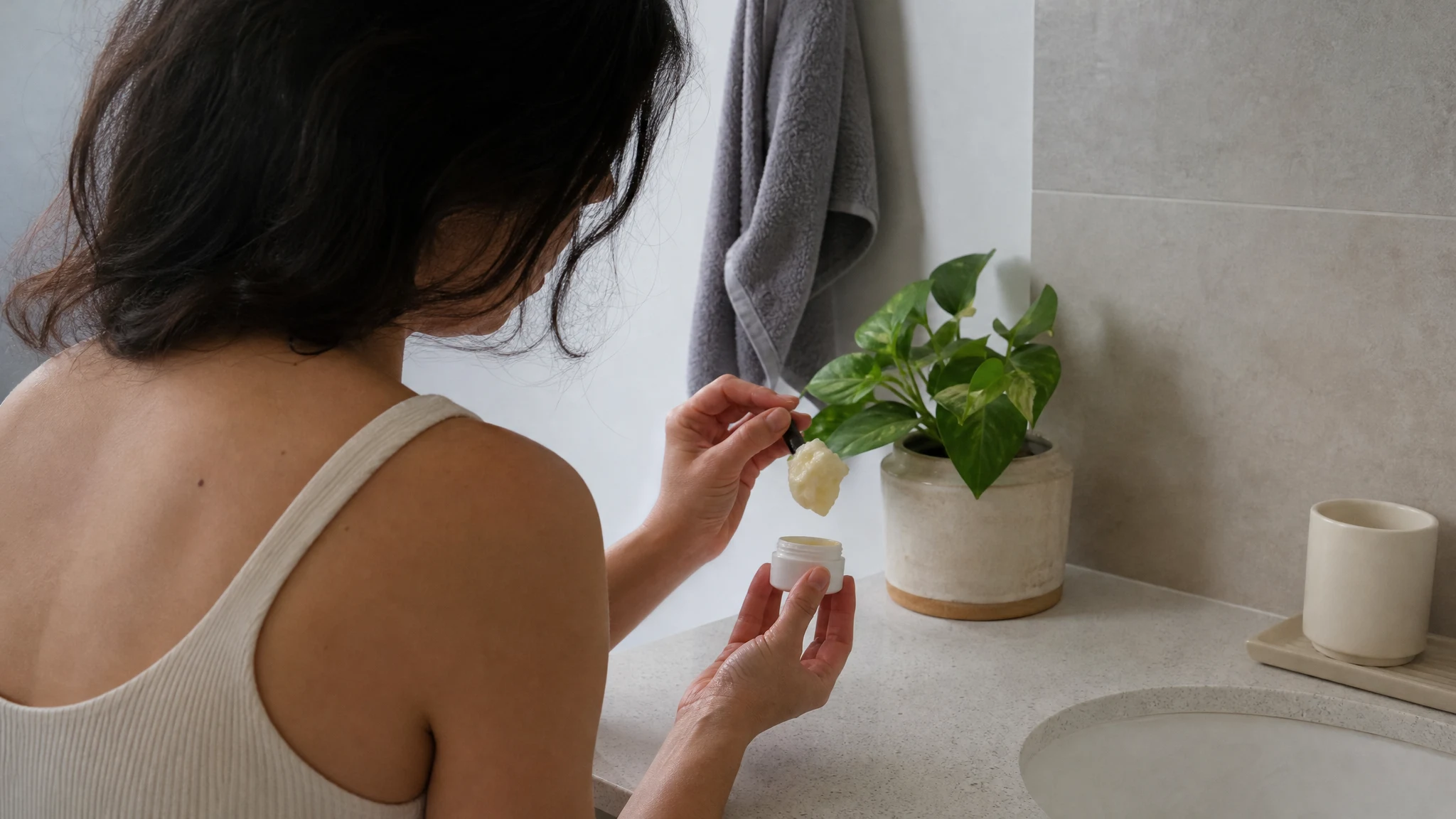
Vetiver Deodorant Balm Without Baking Soda
A vetiver deodorant balm is a pleasure: soft, dry-feeling, smelling of smoky roots and warm earth. It is also worth being clear about what it is. This is a scented balm for your underarms. It is not an antiperspirant, and we make no claim that vetiver changes underarm odour. What it does do, very nicely, is smell like vetiver.
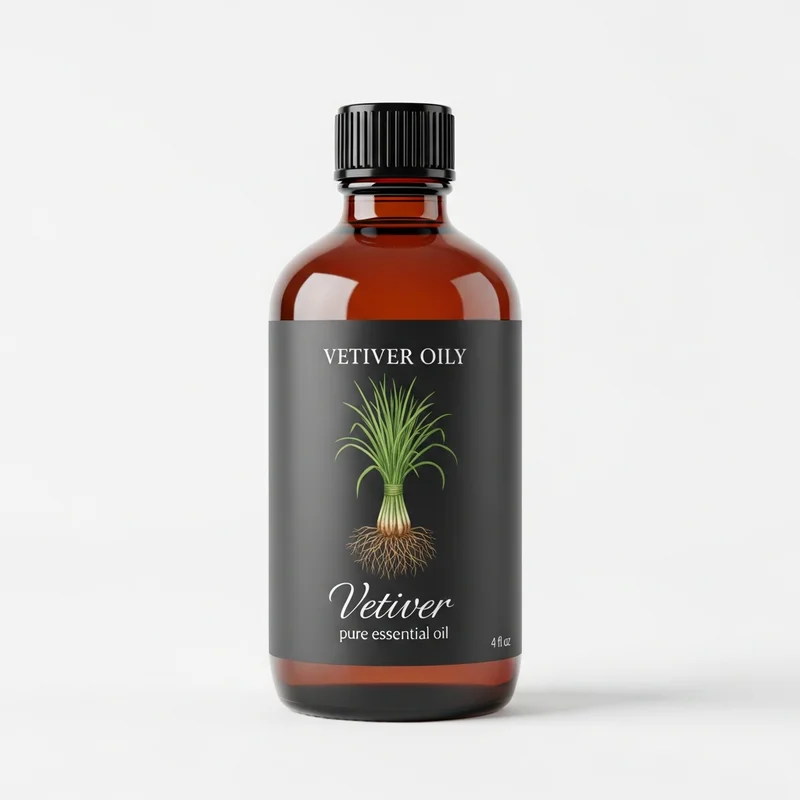
Vetiver Essential Oil
Our own Vetiver Essential Oil, in sizes from 0.5 oz to bulk.
From $20.99
Shop Now →Sweat and smell are different jobs
The FDA's page on cosmetics and drugs lists deodorants among cosmetics, and treats deodorants that are also antiperspirants as products that must meet both cosmetic and drug requirements. A balm of butter, oil and starch sits on the cosmetic side. If you want less wetness, that is an antiperspirant's job, and if sweating is heavy or has recently changed, it is a question for a doctor.
Smell has its own cause. A 2018 paper in eLife describes the underarm's secretion as odourless; the pungent smell appears when bacteria, notably Staphylococcus hominis, take up an odourless precursor and convert it into a sulphurous compound. So the fragrance in a balm like this sits alongside that process, adding its own scent, and we do not suggest it interrupts anything.
Why we leave out baking soda
Most homemade deodorants use baking soda, and we skip it for a reason rooted in skin pH. A multicentre study of 330 volunteers by Lambers and colleagues put natural skin surface pH at about 4.7 on average, found that skin below pH 5.0 had better barrier function, moisturisation and less scaling, and reported that an alkaline pH of 8 to 9 promotes dispersal of the skin's resident bacteria. The study measured forearm skin and did not test baking soda. Since baking soda is alkaline, our reasoning is that a daily layer of it moves underarm skin away from its comfortable acid range. That is an argument from mechanism rather than a measured rate, and if you get on well with a baking-soda product, there is no need to change.
How much vetiver
Fragrance is the most common allergen in deodorants. A 2008 review in the Journal of Clinical and Aesthetic Dermatology found fragrance in 97 of 107 deodorants and antiperspirants examined, and noted that a history of a rash from a scented deodorant raises the risk of fragrance allergy about 2.4-fold. That is why the dose here is small.
Our own guidance for vetiver is 0.5% to 2% in a carrier with a patch test. For underarms, the Tisserand Institute lists 0.5 to 1.2% for facial cosmetics and deodorants, and 0.2 to 1% for reaction-prone skin. Where the two overlap we pick the lower range, so for this balm we recommend 0.5% to 1%, and 0.5% if you have ever reacted to a scented product. A large German patch-test series of 10,930 people found 8.3% reacted to at least one of twelve essential oils, though its abstract names only six oils as above 1% and does not say how vetiver fared, so we simply say to test first.
The formula, by weight
| Ingredient (per 100 g) | Amount | Role |
|---|---|---|
| Shea butter | 35 g | Firm base |
| Coconut oil | 40 g | Soft, spreadable fat |
| Arrowroot powder | 24 g | Dry, powdery feel |
| Vetiver essential oil | 1 g (1%), or 0.5 g for a gentler dose | Fragrance |
The batch on our published Certificate of Analysis has a relative density of 0.993, so 1 g is close to 1 ml. Vetiver is thick, so weigh it.
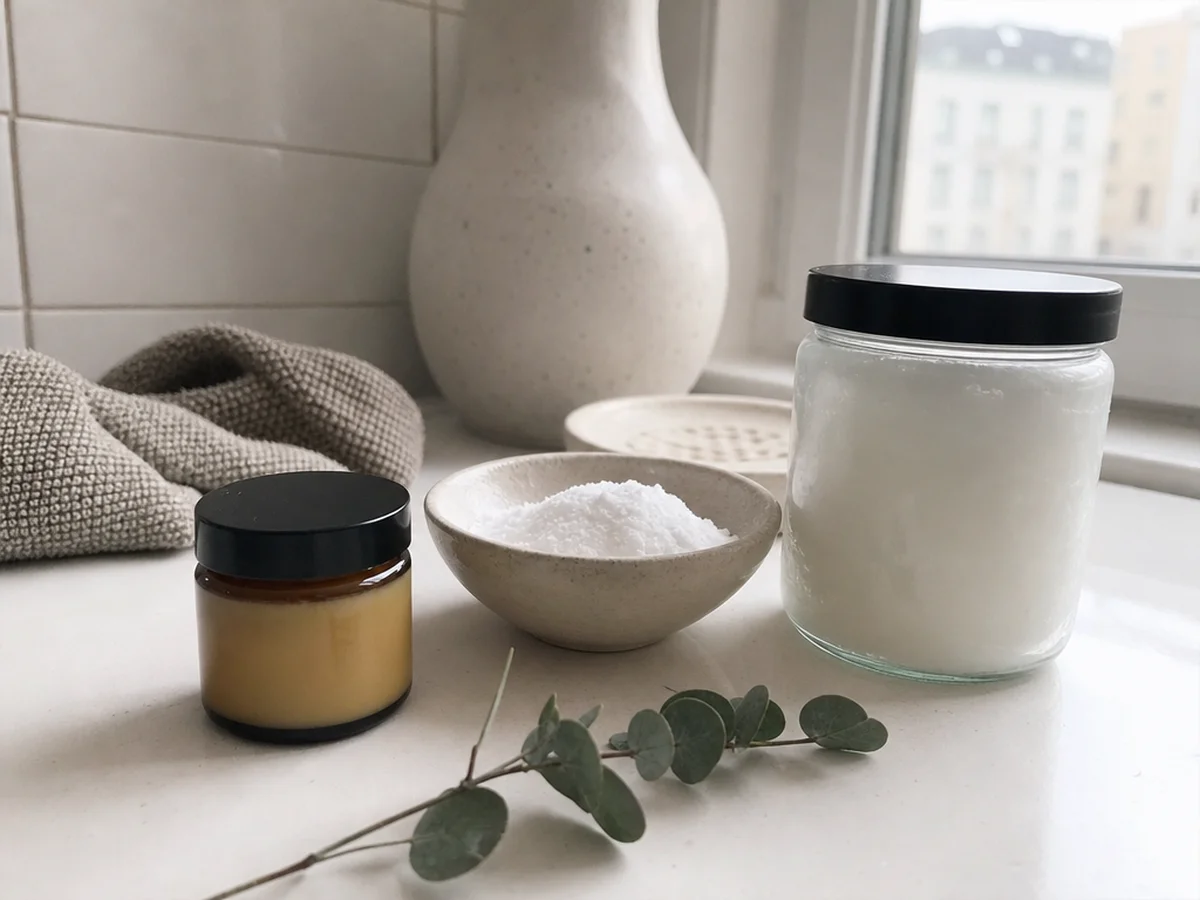
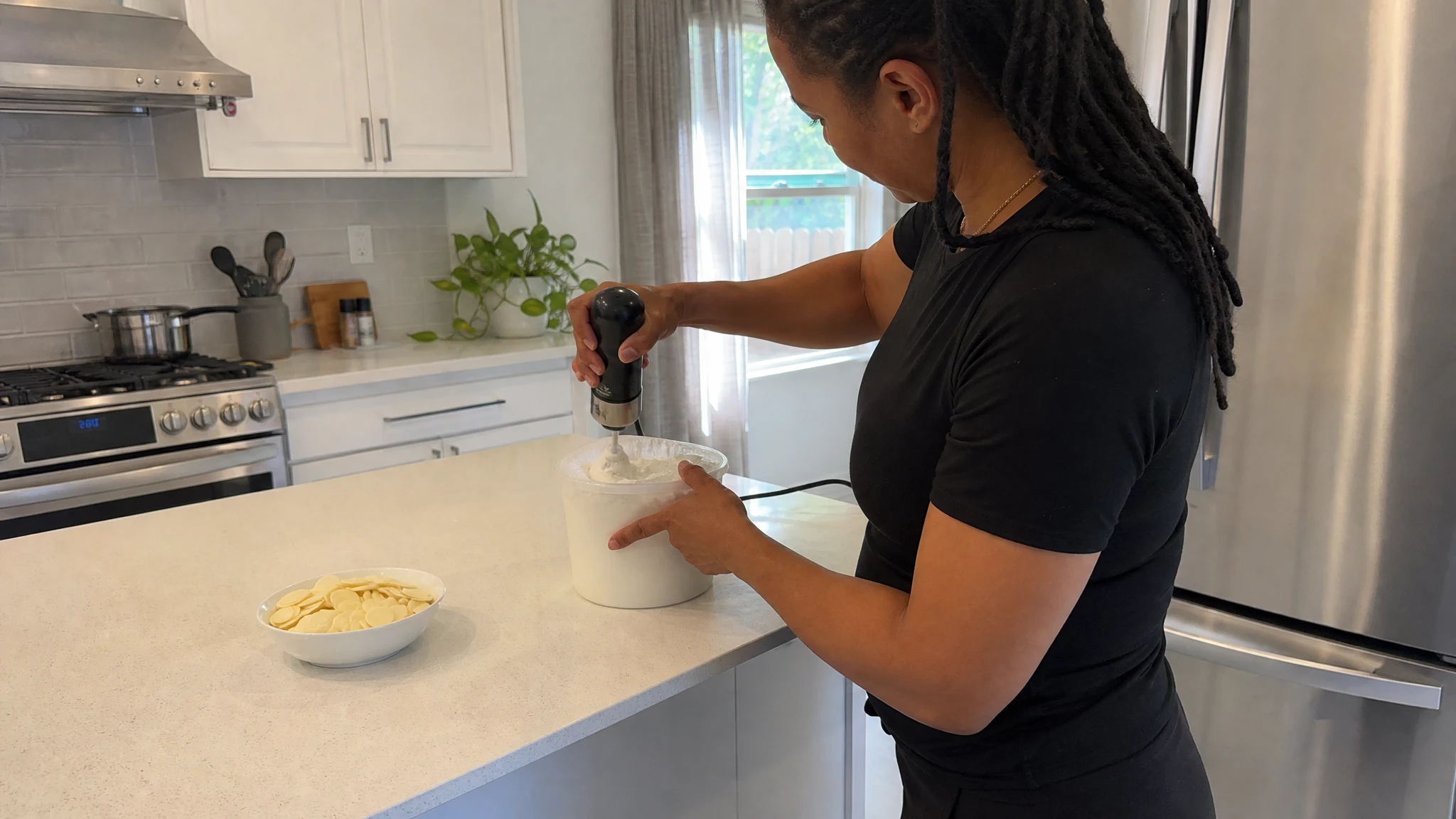
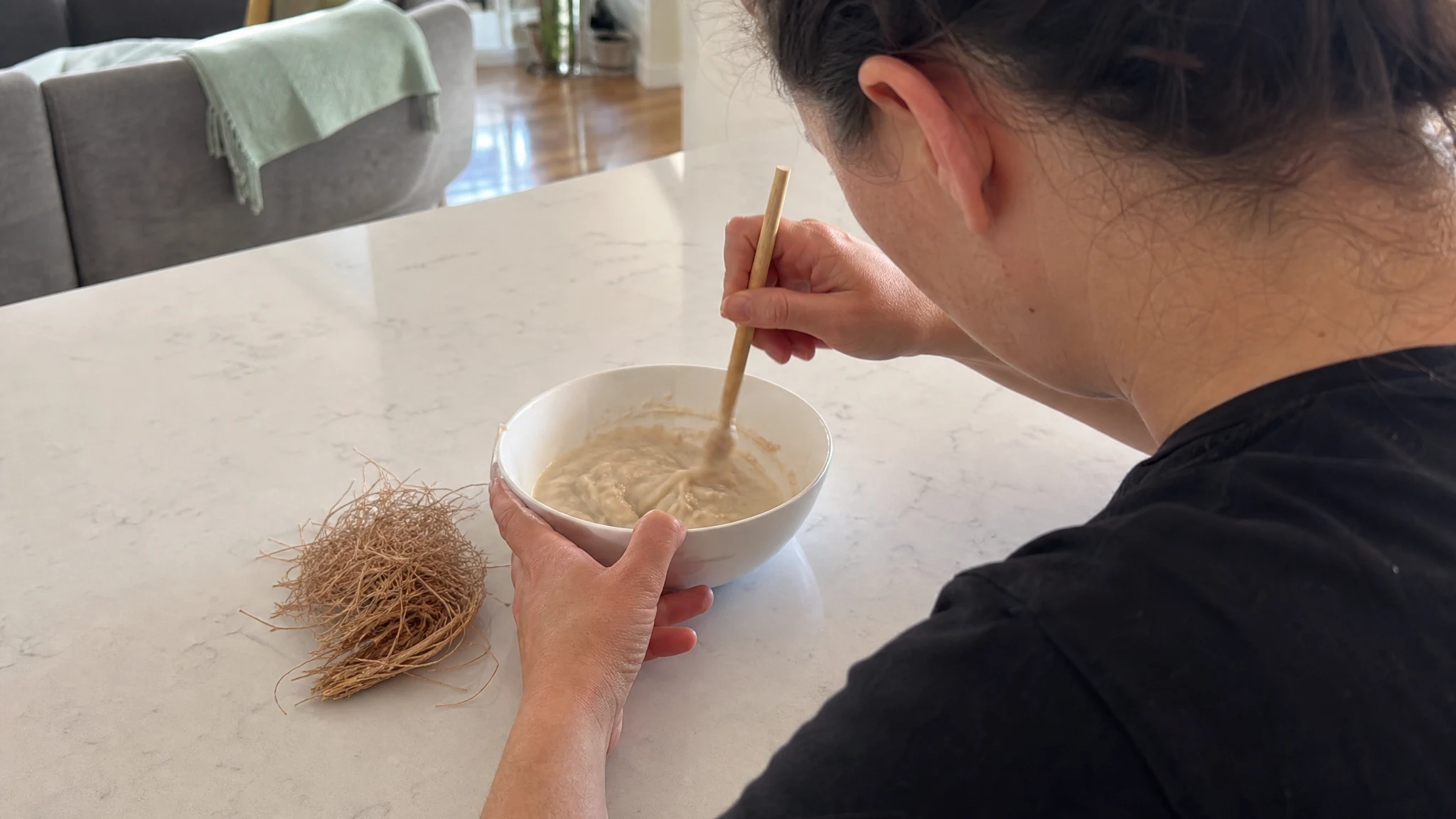
- Melt the shea butter and coconut oil together in a heatproof jar set in hot water.
- Remove it from the heat and stir in the arrowroot until no lumps remain.
- When the mixture has thickened slightly but still pours, stir in the vetiver. Adding it late keeps heat from carrying the scent away.
- Pour into a clean jar, leave it uncovered for an hour, then close it.
There is no water in the formula, so it does not need the preservative system a water-based product would. Fats do turn rancid with heat and time, so make small batches. Shea butter, coconut oil and arrowroot come from a food or cosmetic-ingredient supplier, as we sell only the vetiver.
Keep the jar somewhere cool, since a warm bathroom can soften the balm, and use a small spatula or clean fingers each time so the last scoop is as clean as the first. A small tin you finish in a few weeks is better than a large tub that lingers.
What it feels like
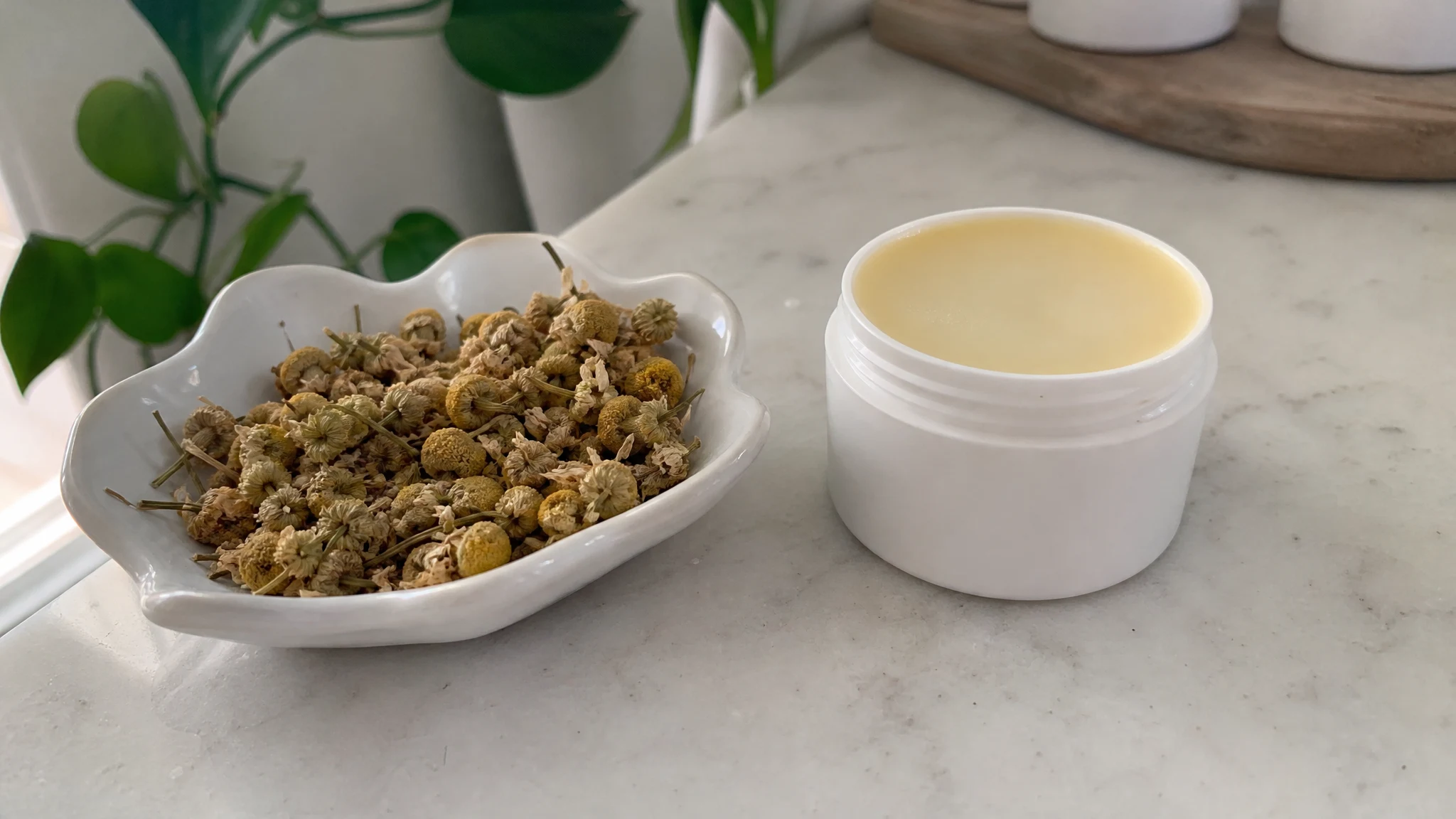
This is a soft, slightly powdery balm, and the arrowroot is what gives it the dry feel. It should glide on thinly, so warm a pea-sized amount between your fingertips and smooth it on rather than dragging it. If it feels heavy or leaves a visible film, you have used too much, so take less next time. The scent is the other half of the experience: deep, earthy and smoky-sweet, and quieter on skin than in the bottle.
Using it, and who should skip it
Patch test first on the inner forearm and wait a day. Apply a pea-sized amount to clean, dry skin, and avoid freshly shaved or broken skin. Skip it if a scented deodorant has ever given you a rash, if the underarm currently shows a rash or burning, or if your sweating or body odour has suddenly changed. In the first two cases a fragrance-free product and a dermatologist are the right next steps, and in the third a doctor.
For the rest of our dilution thinking, see the safety guide. For how vetiver behaves as a base note, read our layering post, and for grooming blends with more of a scent focus, vetiver for men. Storage tips for the oil itself are in our storage guide.
Treat it as a lovely, honest scented balm, and it will do that job beautifully.
Vetiver Essential Oil
Vetiver Essential Oil from our own shop, in sizes from 0.5 oz to bulk.
From $20.99
Shop Now →Sources & Further Reading
- Minhas GS et al., 2018: Structural basis of malodour precursor transport in the human axilla
- FDA: Is It a Cosmetic, a Drug, or Both? (Or Is It Soap?)
- Lambers H et al., 2006: Natural skin surface pH is on average below 5, which is beneficial for its resident flora
- Zirwas MJ, Moennich J, 2008: Antiperspirant and Deodorant Allergy Diagnosis and Management
- Tisserand Institute: Dilution for essential oils
- Geier J et al., 2022: Contact sensitization to essential oils: IVDK data of the years 2010-2019