Vetiver Foot Soak Recipe: Salts, Carrier and Safety
Pour a few drops of vetiver oil into a basin of warm water and watch what happens: nothing much. The oil beads up, floats on the surface and clings to your skin as you step in. That is the whole reason a good foot soak starts with a carrier oil and salts, and not with the dropper. What follows is a small, scented soak worked out by weight, with the thinking behind each choice.
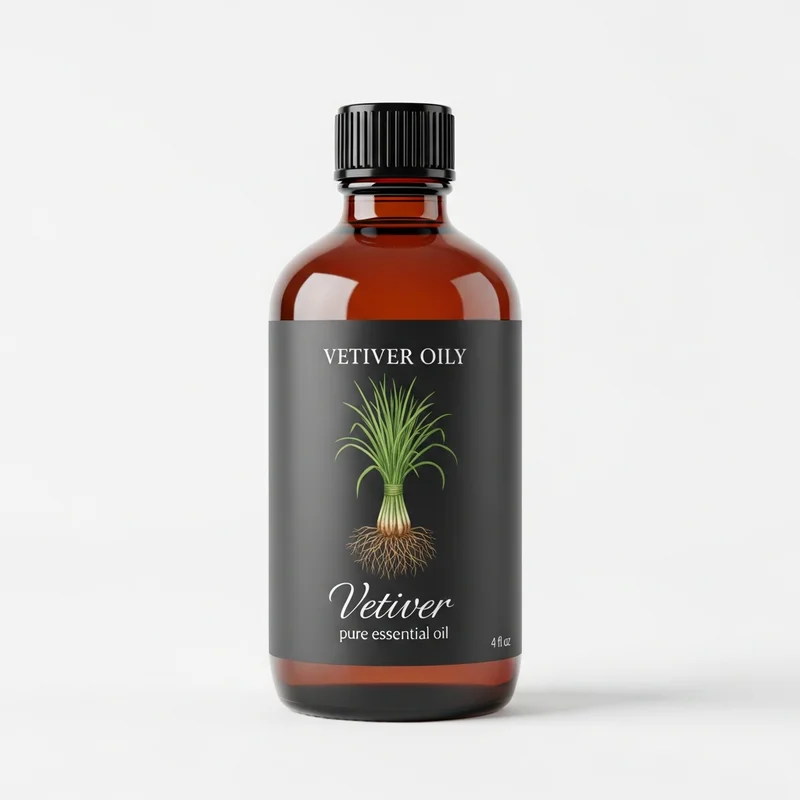
Vetiver Essential Oil
Our own Vetiver Essential Oil, in sizes from 0.5 oz to bulk.
From $20.99
Shop Now →Start with who should not soak
This comes before the recipe because it matters more. The US Centers for Disease Control and Prevention's advice for people with diabetes is to wash feet every day in warm, not hot, water, and it adds plainly: "Don't soak your feet" (Your Feet and Diabetes, CDC). If that is you, a soak of any kind, scented or not, is a conversation for your physician or a podiatrist.
The same caution makes sense for anyone with reduced feeling in the feet, since you cannot judge the water temperature by touch, and for open cuts, cracked skin, a swollen or warm foot, or pregnancy. That is our reasoning from the CDC's advice, not a quotation from it, and the right person to ask is a clinician. Foot pain itself is a question for a physician or podiatrist. We sell an external cosmetic oil, and a soak is simply a pleasant way to enjoy its aroma.
What the Epsom salt is for
Most foot soak recipes call for Epsom salt, and it is worth being clear about why. A 2017 review in Nutrients found oral magnesium well supported but called absorption of magnesium through the skin "a scientifically not yet proven form of magnesium application" (Gröber et al., Myth or Reality-Transdermal Magnesium?). So we treat the salt as texture and tradition. It makes the water feel silky, it gives the soak a ritual shape, and it carries the oil blend through the basin. That is plenty of reason to use it.
Why the carrier does the work
Published dilution ranges are written as a percentage of the product that touches skin. The Tisserand Institute lists 2-4% for bath products, which it says include wash-off products, 1-3% for body oils and lotions, 0.5-1.2% for facial cosmetics and deodorants, and 0.2-1% where skin is sensitive or impaired (Dilution for essential oils, Tisserand Institute). Our own guidance for vetiver is 0.5% to 2% in a carrier oil, with a patch test first. Feet are often dry or calloused and the oil film stays in place for the whole soak, so we start at the lower end, at about 1%.
The formula, worked by weight
This is a formulation built from the figures above and simple arithmetic, for one soak. It has no water in the mix, so there is nothing to preserve.
- Epsom salt: 100 g
- Fine sea salt: 25 g
- Carrier oil, such as jojoba or sweet almond, from a carrier-oil supplier: 10 g
- Vetiver essential oil: 0.1 g, which is 1% of the carrier weight
On the batch our Certificate of Analysis covers, relative density is 0.993 at 20 °C, so 0.1 g is about 0.1 ml. By the rough convention of 20 drops to the millilitre that is around two drops, though vetiver is thick and its drops run large, so a scale that reads to 0.01 g beats counting.
- Weigh the vetiver into the carrier oil and stir until the colour is even. Warming the bottle slightly helps a thick oil pour.
- Fold the oil blend through the mixed salts with a spoon until they look evenly damp.
- Tip the mix into a basin of warm water, deep enough to cover feet and ankles, and stir.
Expect a quiet, earthy, smoky-sweet scent and not a loud one. That is a feature. If you want more aroma in the room, diffuse some vetiver nearby instead of raising the oil in the blend; our diffuser guide covers timing.
Handling the soak
Check the water with a thermometer or a second person's hand if you cannot rely on your own feeling; the CDC says "warm" and gives no figure, so we will not invent one. Keep the soak short and stop when your skin starts to feel dry or wrinkled. Rinse in clean water, dry well, including between the toes, and look your feet over, which is sound advice for everyone. Oil makes tubs and floors slippery, so dry the basin and step out carefully. Keep the oil and the mix away from children and pets.
Setting the scene
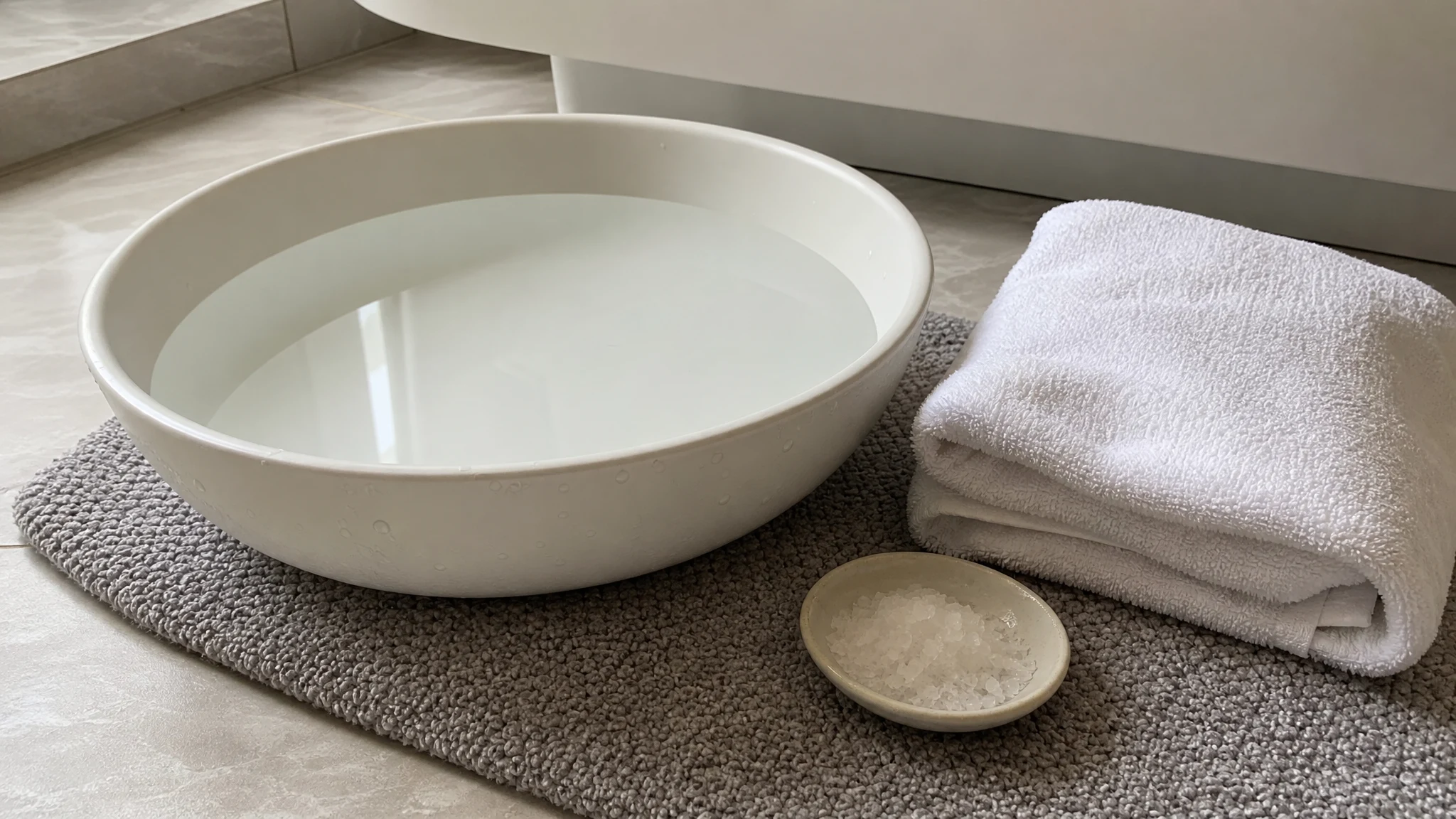
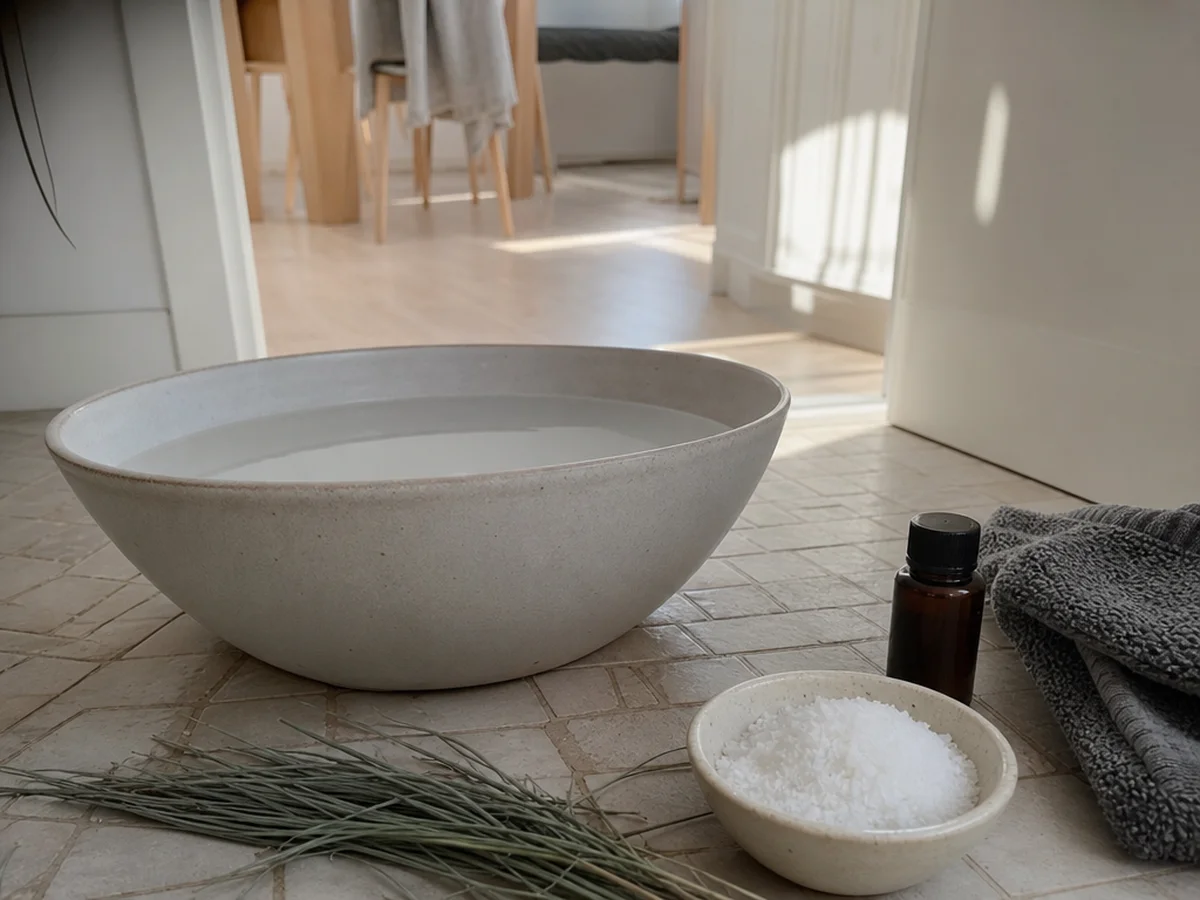
Lay everything out before you fill the basin: a towel within reach, a mat so the floor stays dry, a timer if you like one, and whatever you enjoy sipping while you sit. Part of the pleasure of a foot soak is that nothing is rushed, and setting up first means you are not hopping across a wet floor to find a towel with oily feet.
When the blend meets the water, lean over and take a moment with the steam. Vetiver reads as earthy and smoky-sweet, and warm water carries a quiet version of it up to you. It is a low, rounded smell, nothing like the bright top note of a citrus oil, so if you are used to those, give your nose a minute to tune in.
Cleaning up
Pour the used water away and rinse the basin with warm soapy water, because the carrier oil leaves a film. Wipe the bottle neck before you cap it. Vetiver is thick and slow-pouring, and a dark ring on the bottle neck is the thing most likely to stain a towel or a countertop, so keep the bottle on a tray while you work.
Keeping it simple
We left out a second oil, because every extra oil is another thing to patch test, and a jar of pre-mixed salts to keep for months, because a fresh batch for one evening needs no shelf-life question. If you would rather wear your vetiver than soak in it, a leave-on carrier blend uses the same arithmetic, as in our vetiver massage oil walkthrough, and the carrier oil guide helps you choose what to dilute in.
A foot soak is a small evening ritual, and the best version is the one that is comfortable, quiet and a little bit earthy.
Vetiver Essential Oil
Vetiver Essential Oil from our own shop, in sizes from 0.5 oz to bulk.
From $20.99
Shop Now →Sources & Further Reading
- Your Feet and Diabetes (CDC)
- Myth or Reality-Transdermal Magnesium? (Gröber et al., Nutrients, 2017)
- Dilution for essential oils (Tisserand Institute)