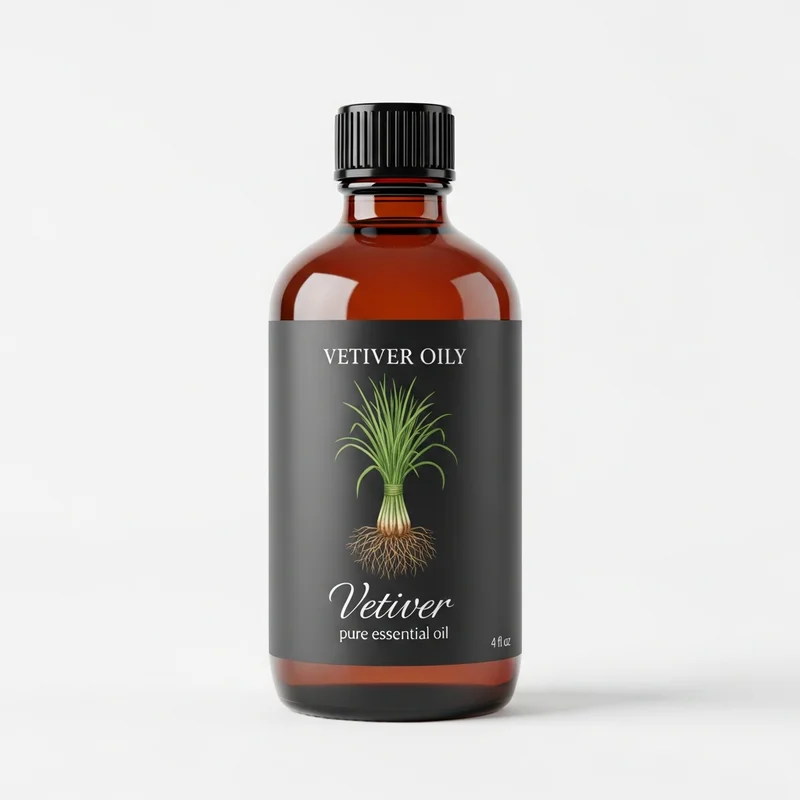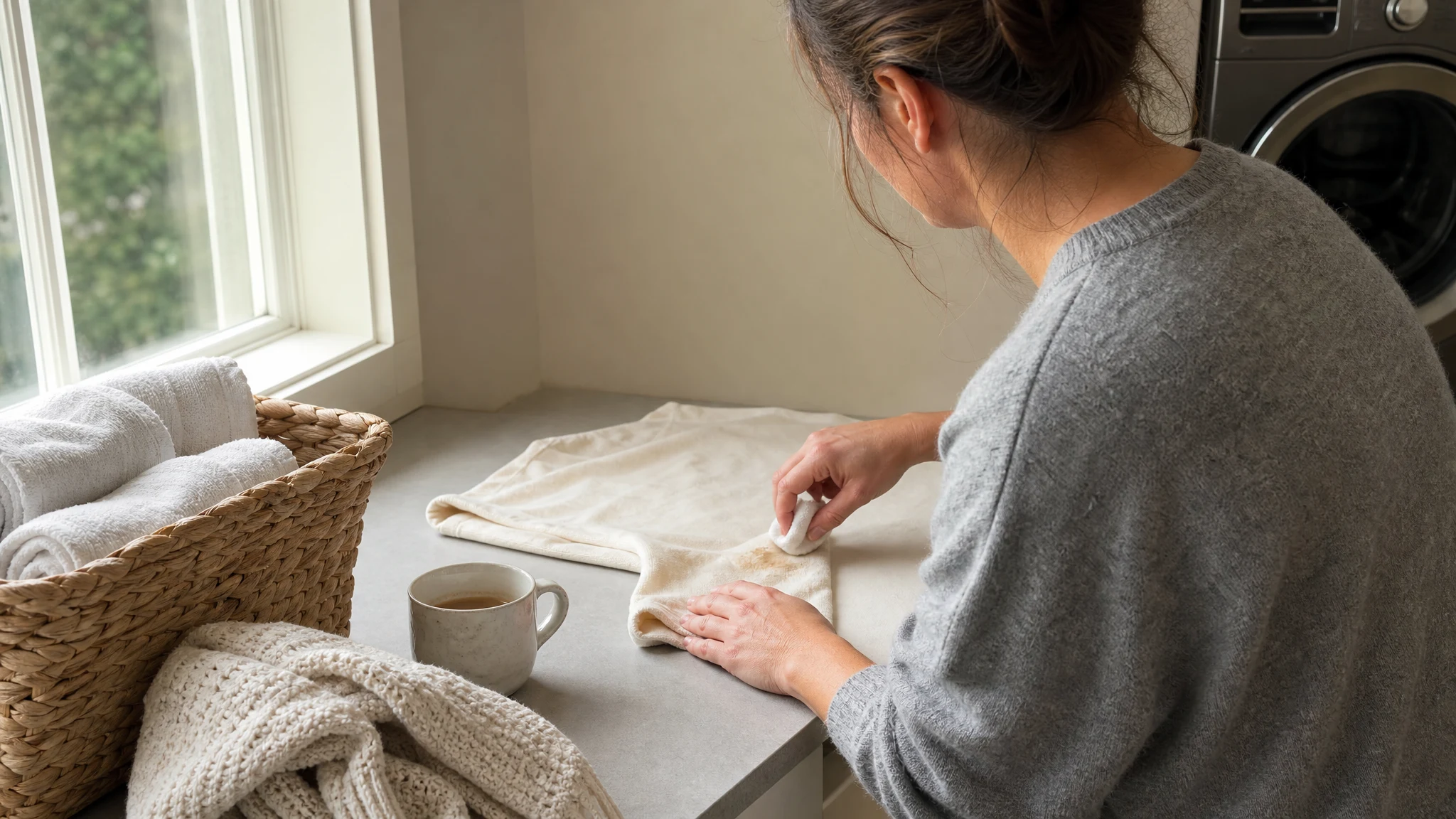
Does Vetiver Oil Stain? Getting It Out of Fabric and Wood
A spot of thick, dark vetiver oil on a sleeve is fixable. Blot, pretreat, wash as the label allows, and check before the dryer. Wood and silk need care.
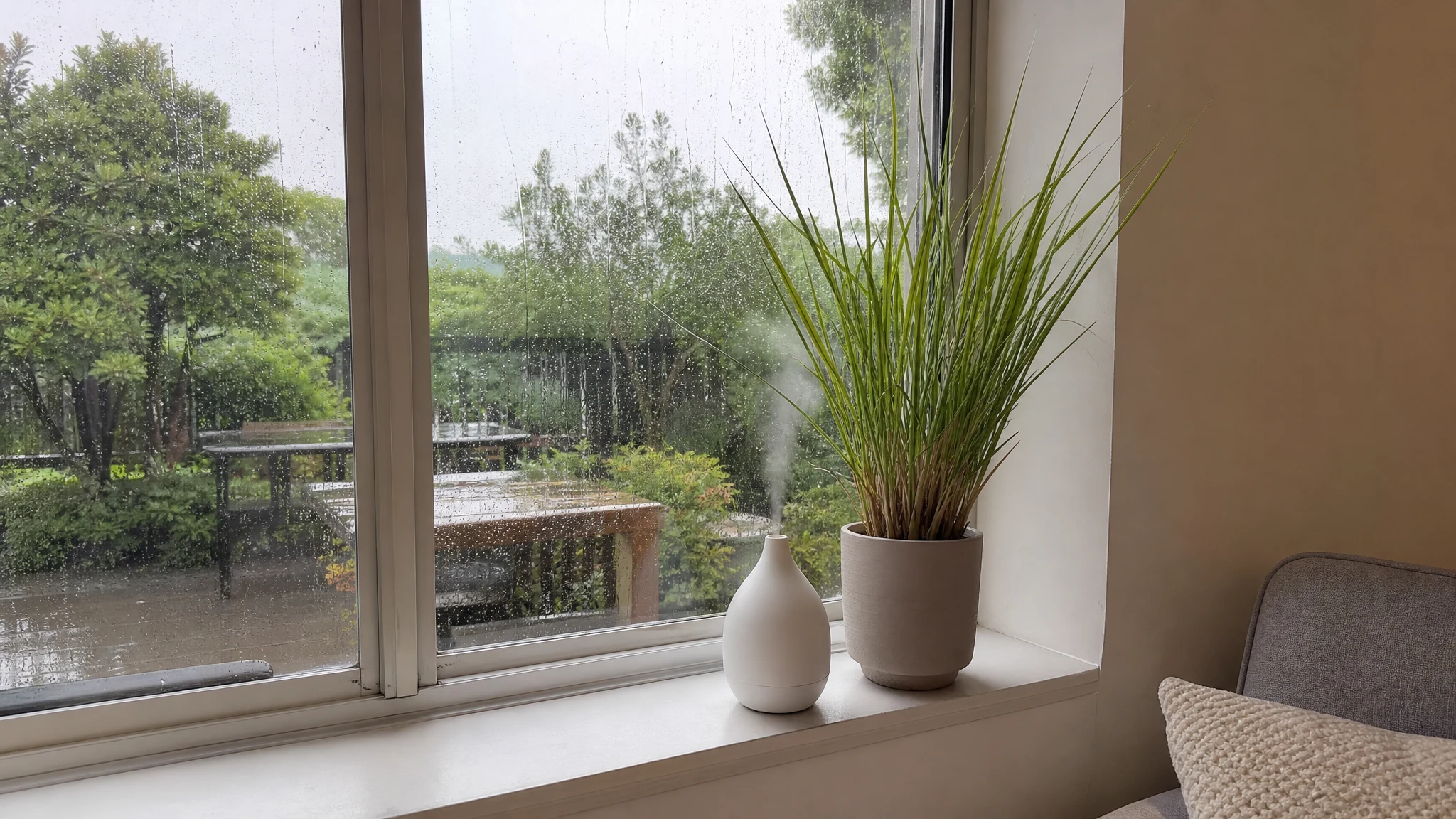
Rain Scent Accord with Vetiver: A Diffuser Blend by Parts
Vetiver already smells of damp earth after rain. See where that smell comes from and how to build a three-oil diffuser accord, worked out in parts.

Vetiver Oil and Hormones: What the Research Covers
Vetiver and hormone balance: nobody has tested it in women. We sort the rat work, the PMS and menopause trials of other oils, and what clinicians advise.

Does Vetiver Oil Repel Mosquitoes? What Studies Found
Vetiver oil has been studied on mosquitoes, and the results are interesting. See what each test did and why it does not add up to a repellent recipe.
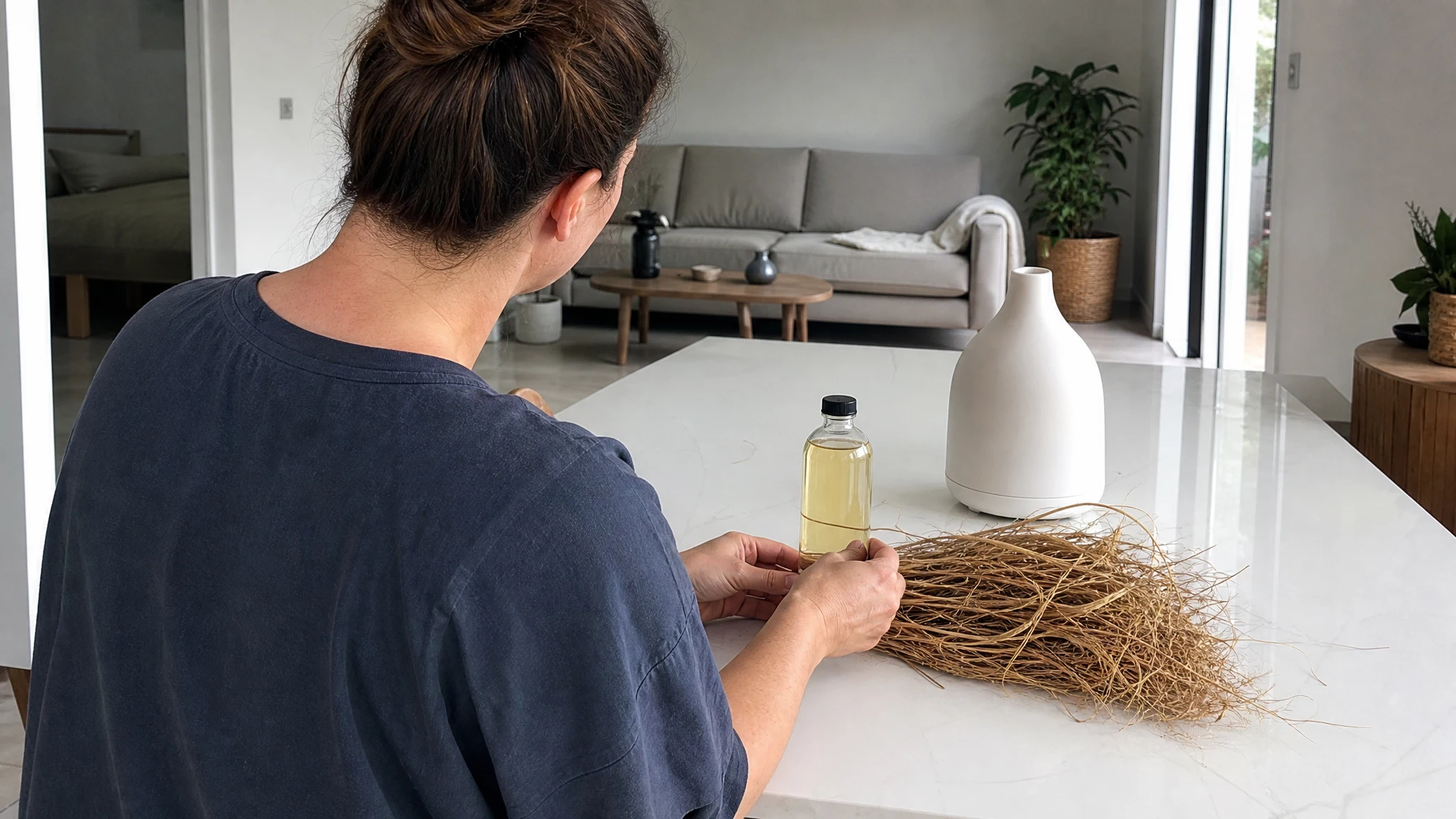
How to Use Vetiver Oil: A First-Timer's Starting Guide
Dark, thick and deeply earthy, vetiver rewards a slow start. Smell it first, then learn how much to dilute, how to patch test and where to go from there.
What Is Vetiver Oil? Origins, Scent and Everyday Uses
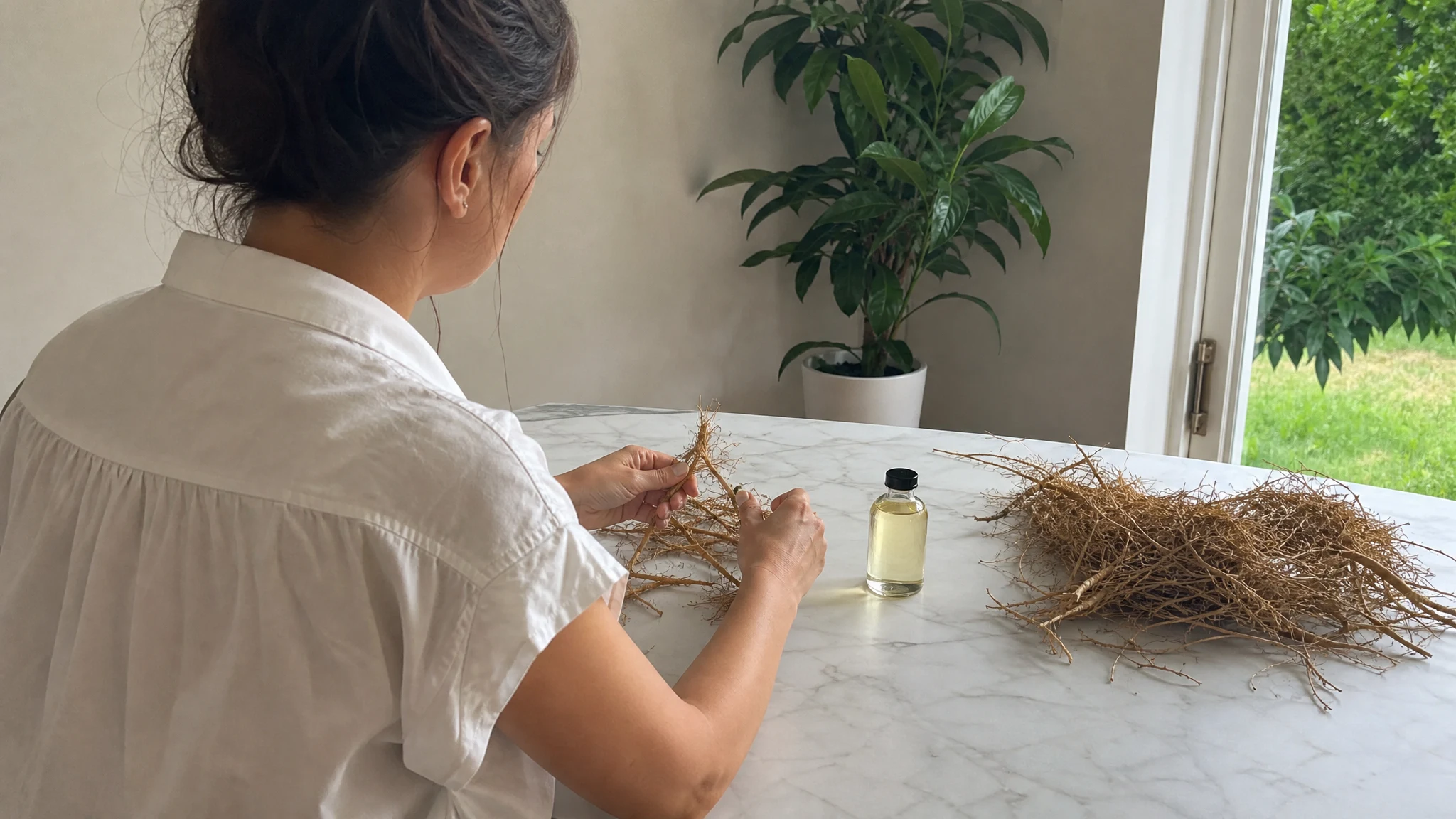
Vetiver oil comes from the roots of a tropical grass and takes a lot of root for a little oil. What it is, how it smells and how to handle it.

Vetiver Shampoo Bar: Scent, pH and Hair Questions
A traditional shampoo bar is soap, and soap is alkaline. Here is what that means for hair, how much vetiver to add to a rinse-off bar, and how to test.
Vetiver After-Shave Balm Recipe, Made by Weight
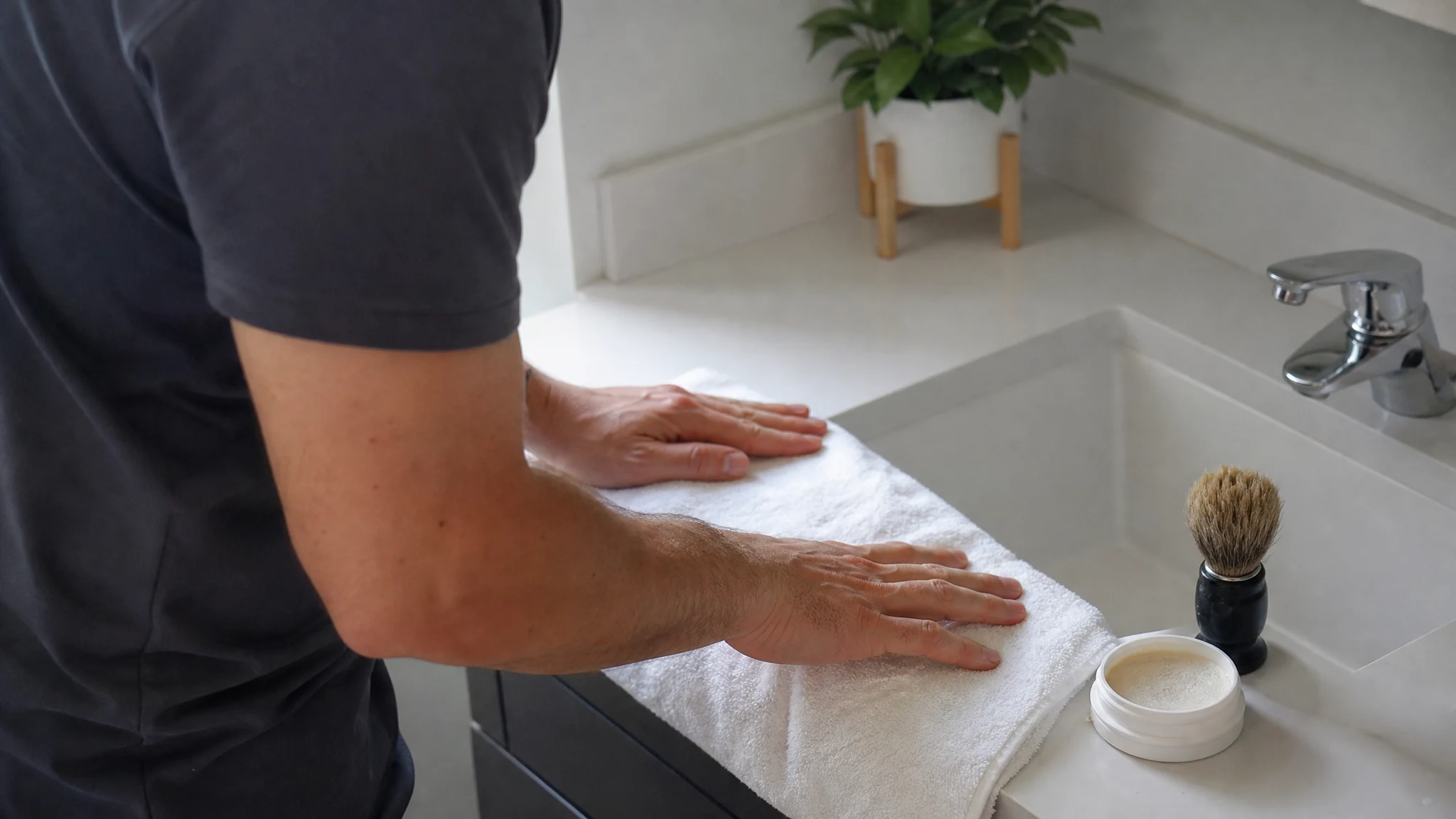
A simple water-free balm with a deep, woody vetiver aroma, written in grams at a low 0.5% dose, plus when to leave the oil out of a freshly shaved face.

Set the Scene: Vetiver Diffuser Blends for Date Night
Vetiver's dark, earthy aroma suits a quiet dinner at home. Three diffuser blends by proportion, how long to run them, and what to know about pets and skin.

Winter Vetiver Blends: Warm, Woody Scents for Cold Nights
Vetiver brings a dark, smoky base to winter blends. Three short ratios, how to diffuse a thick oil, and how to keep the bottle in good shape.
Vetiver Oil FAQ: Smell, Skin, Safety and Choosing
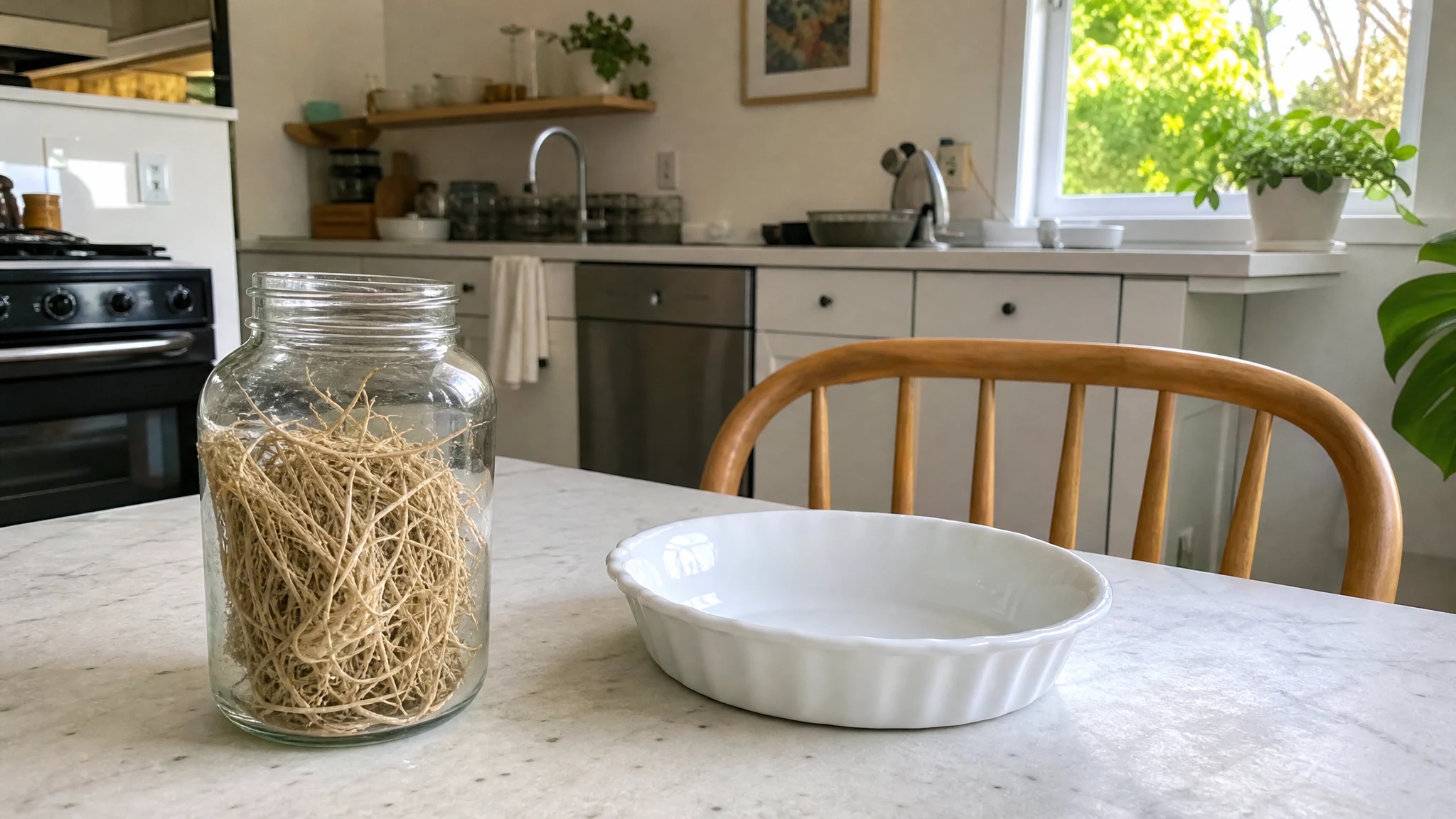
What vetiver smells like, how it ages, how to dilute it, and where the evidence ends on pets, pregnancy and mood. Short answers with sources behind them.

What Does Vetiver Smell Like? Wet Earth, Smoke and Wood
Wet earth, smoke, dry wood and a sweet, creamy base. A plain-English guide to the scent of vetiver oil, and why it shifts by origin and dilution.

Can You Swallow Vetiver Oil? Why We Say No
Vetiver is on a US list of food flavorings, so is it fine to swallow? Here is what that listing covers, what it does not, and who to ask instead.

Vetiver Oil in Pregnancy: What Guidance Exists
No study tests vetiver oil in pregnancy, so guidance comes from the NHS, a midwifery guideline and the Tisserand Institute. What they say and who to ask.

Where Vetiver Oil Comes From: India to Haiti
A grass from India became the backbone of modern perfume. Follow vetiver to Reunion, Java and Haiti, and see why where it grows shapes the oil.
What Makes Vetiver Smell Like Vetiver? A Trace Molecule
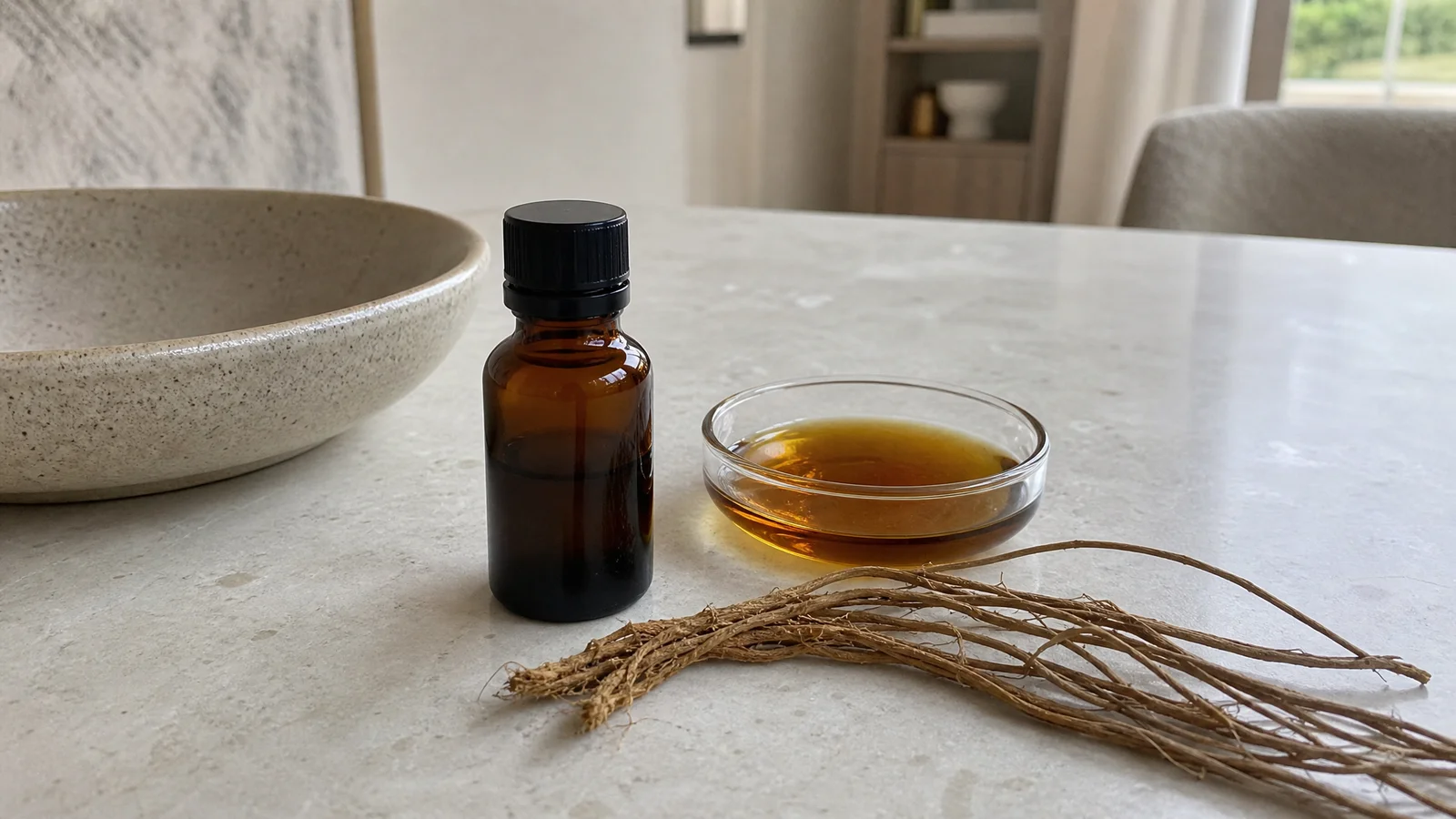
Vetivone and khusimol get the headlines, but a trace molecule detectable at picograms carries vetiver’s signature aura. Here is what that means for you.
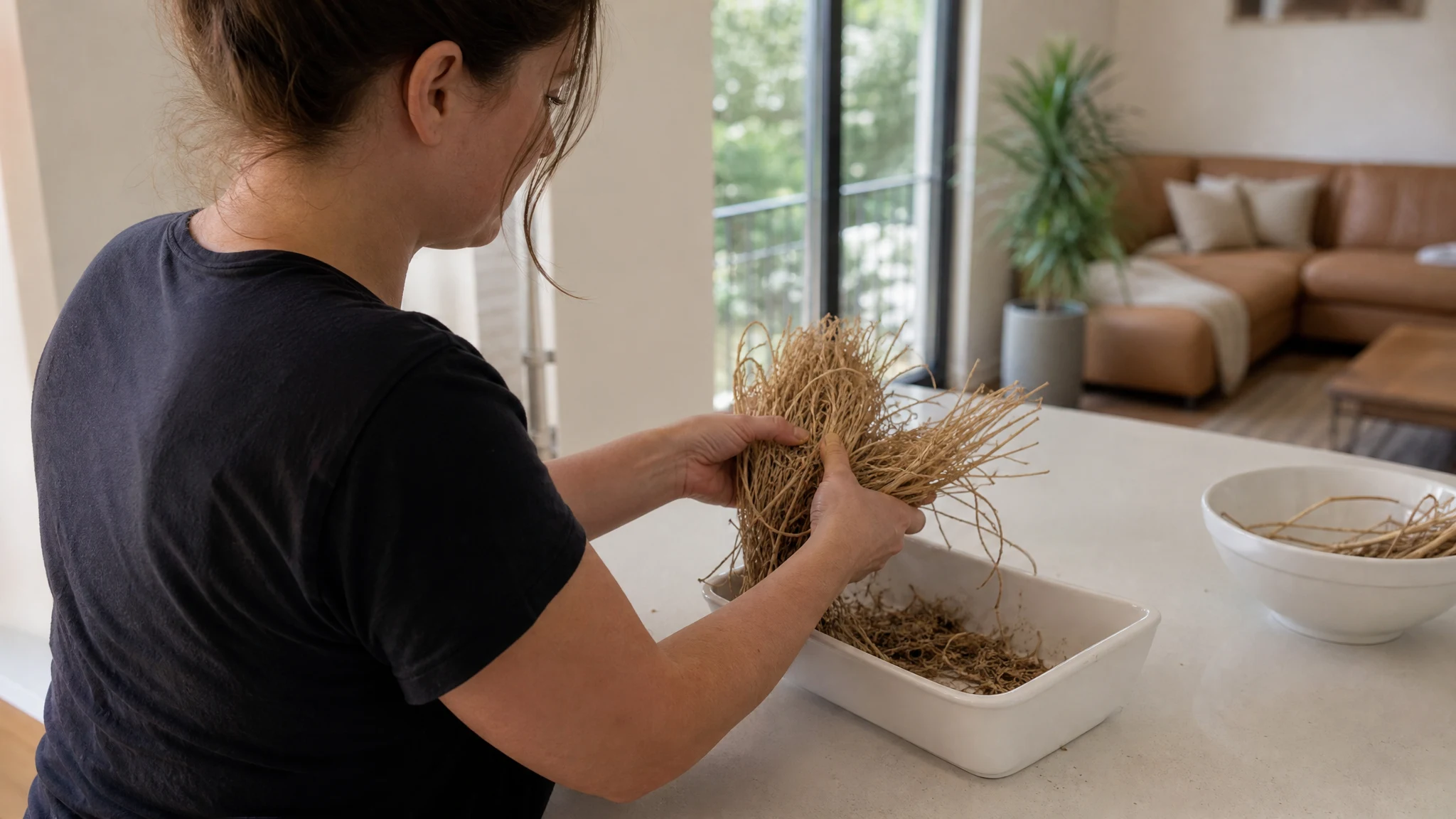
Where Is Vetiver Oil Found Inside the Root?
Why does vetiver oil come from the roots? Anatomy, an eight-month yield peak and a storage trial explain why timing and handling matter so much.
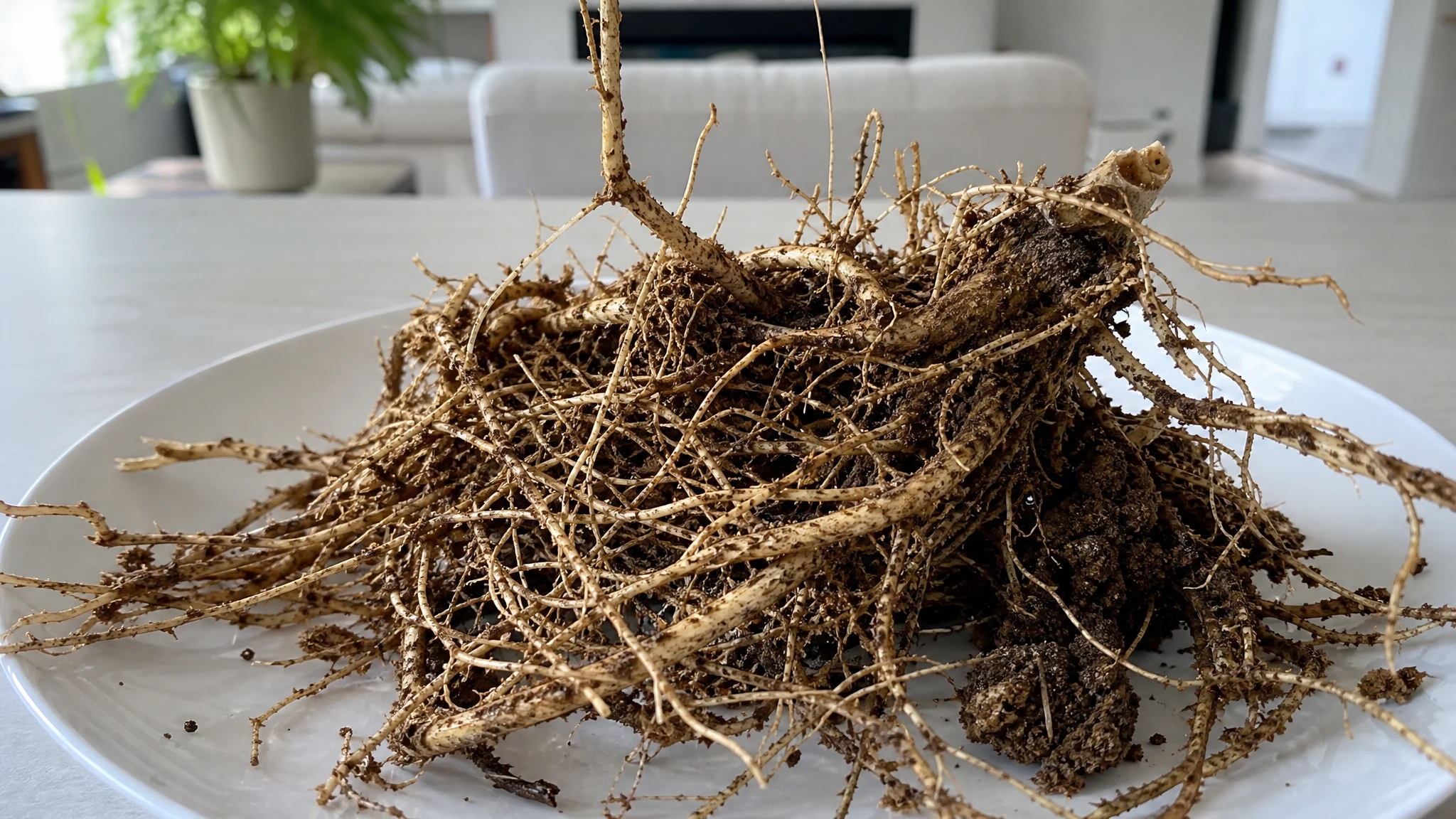
Vetiver Terroir: Does Soil Change the Oil?
Clay for depth, sand for lightness: the soil story is appealing. Here is what shapes vetiver oil, and why a place name alone tells you less than you think.
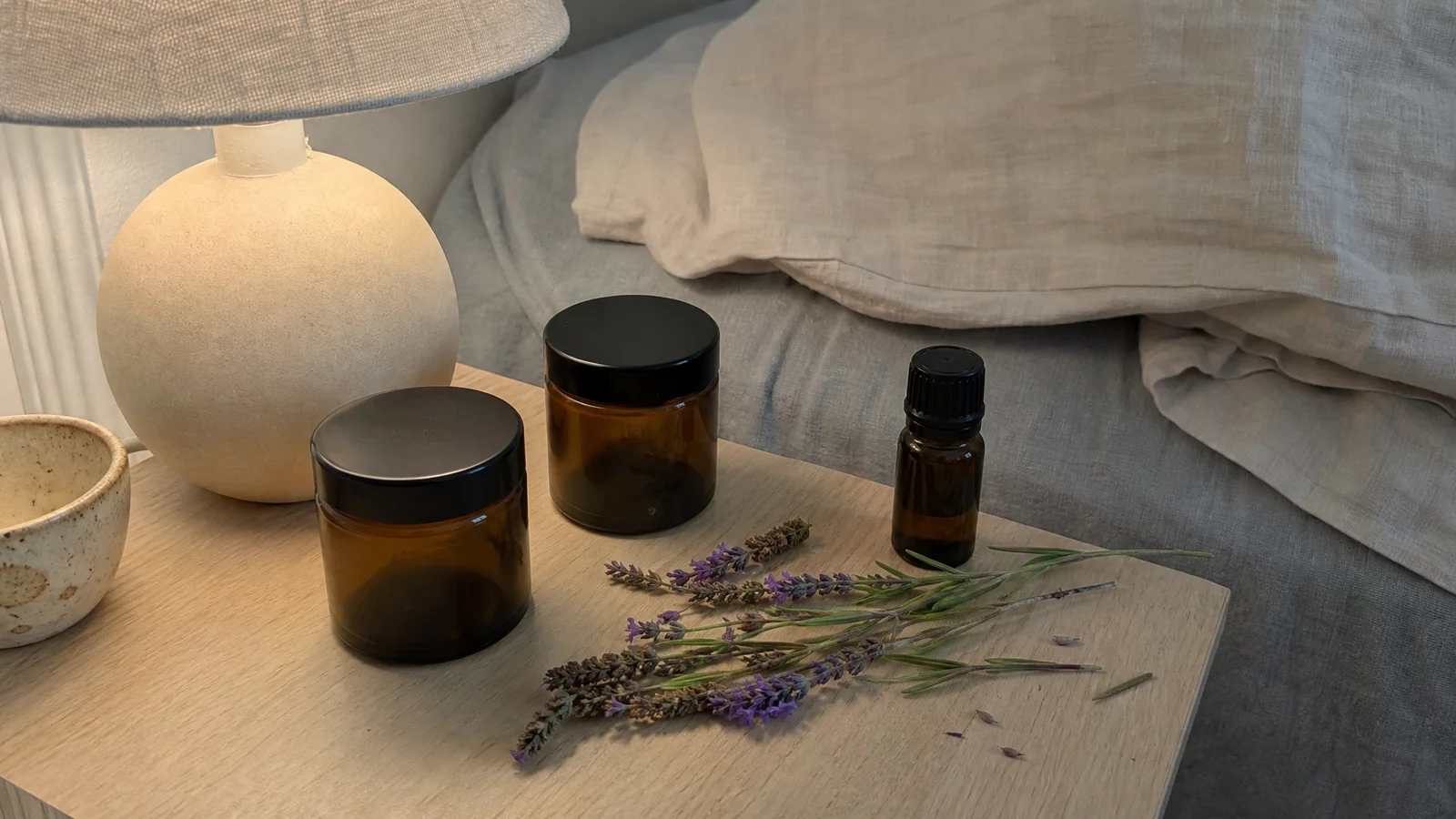
Vetiver and Lavender Balm: A Simple Recipe by Weight
Beeswax, a light carrier oil, deep vetiver and soft lavender: a balm formula by weight, and what the evening-scent studies really tell us.
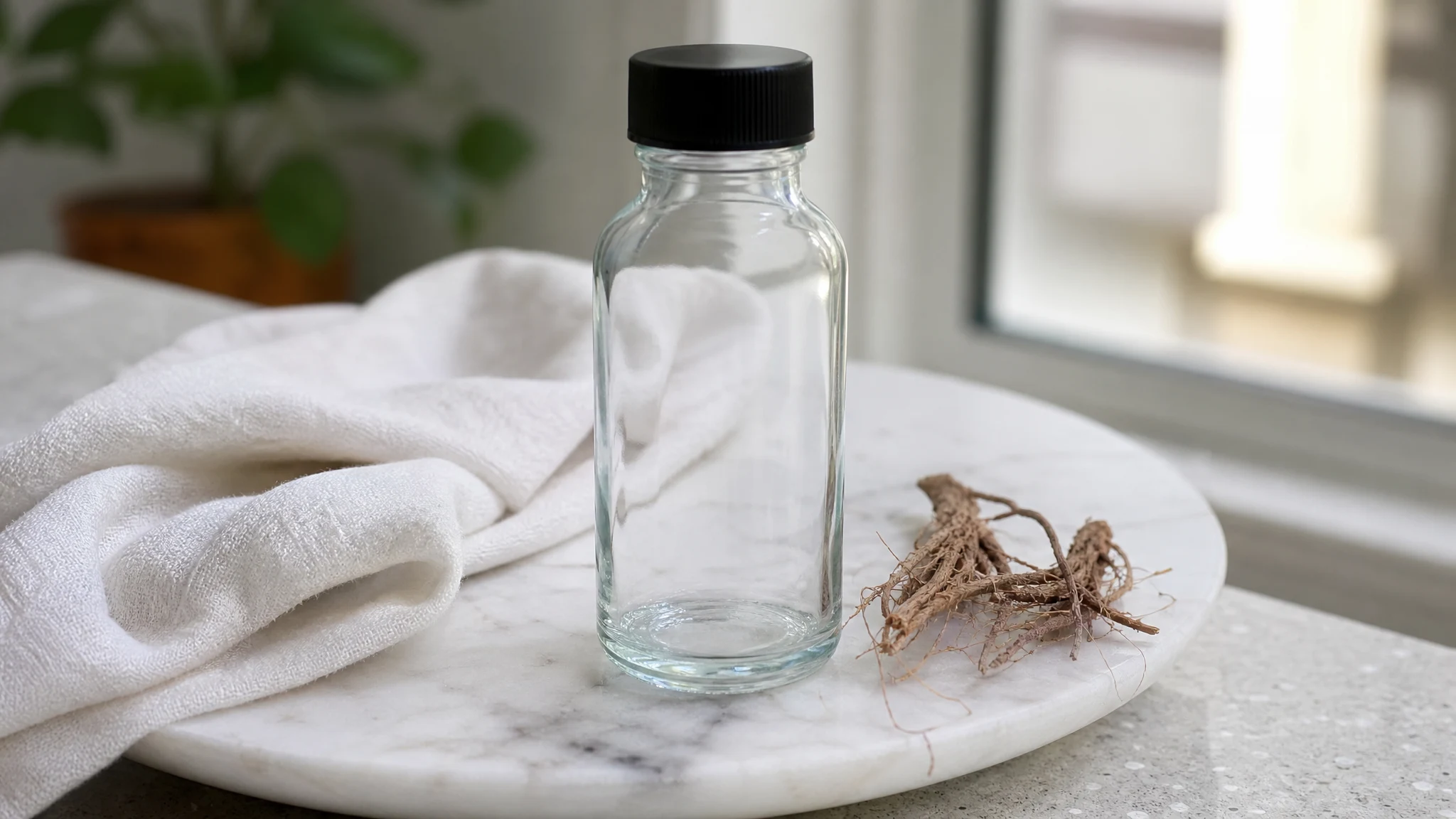
DIY Vetiver Cologne: A Two-Oil Recipe With Alcohol
A vetiver cologne starts as a deep, smoky base. Here is a two-oil formula by weight, and how a little citrus gives it the bright opening it needs.
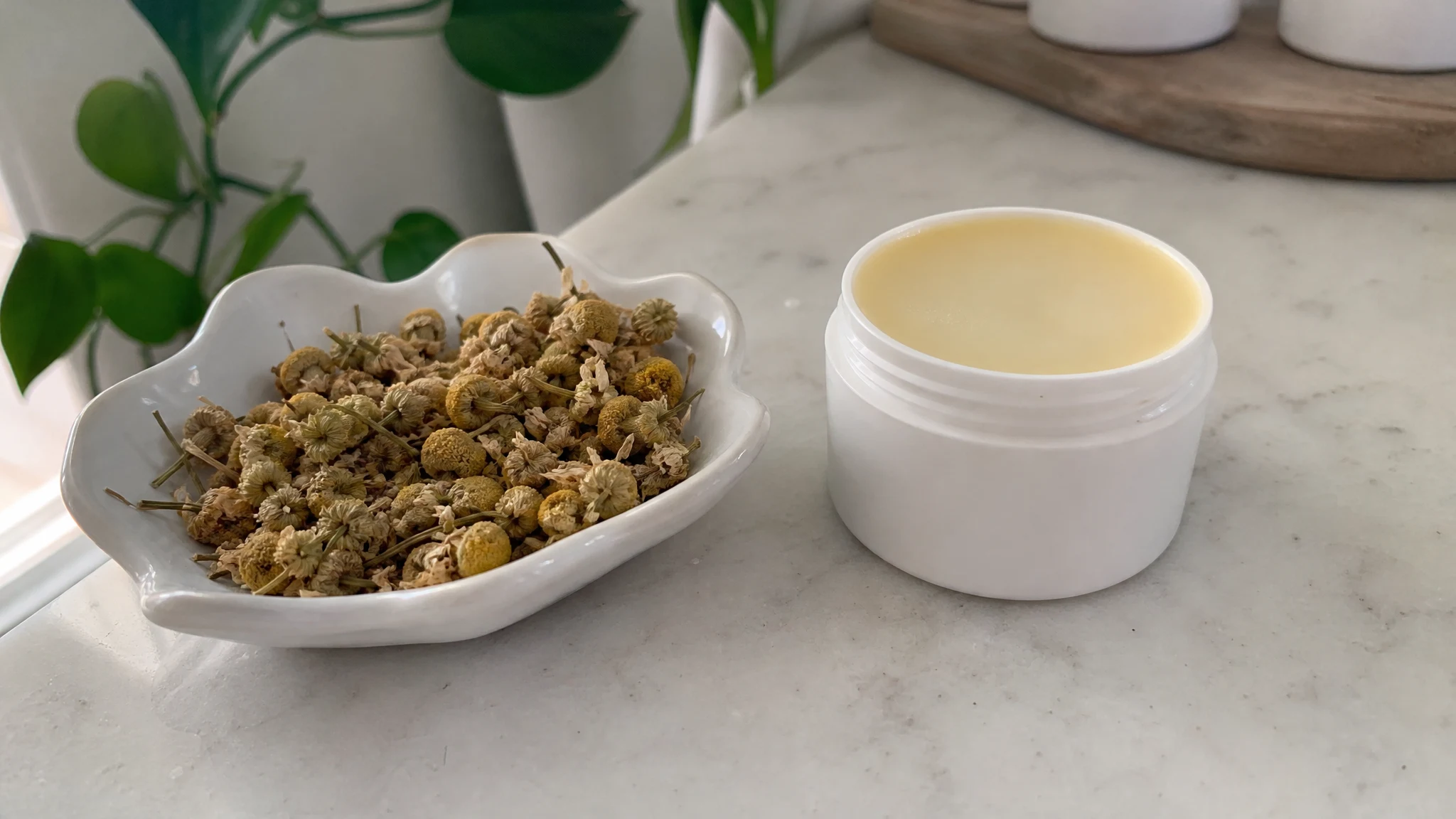
Vetiver and Chamomile Massage Oil: A Simple Recipe
Deep, earthy vetiver with a soft chamomile note in a simple carrier oil. A weight-based recipe at 1.5% and the allergy facts worth knowing first.
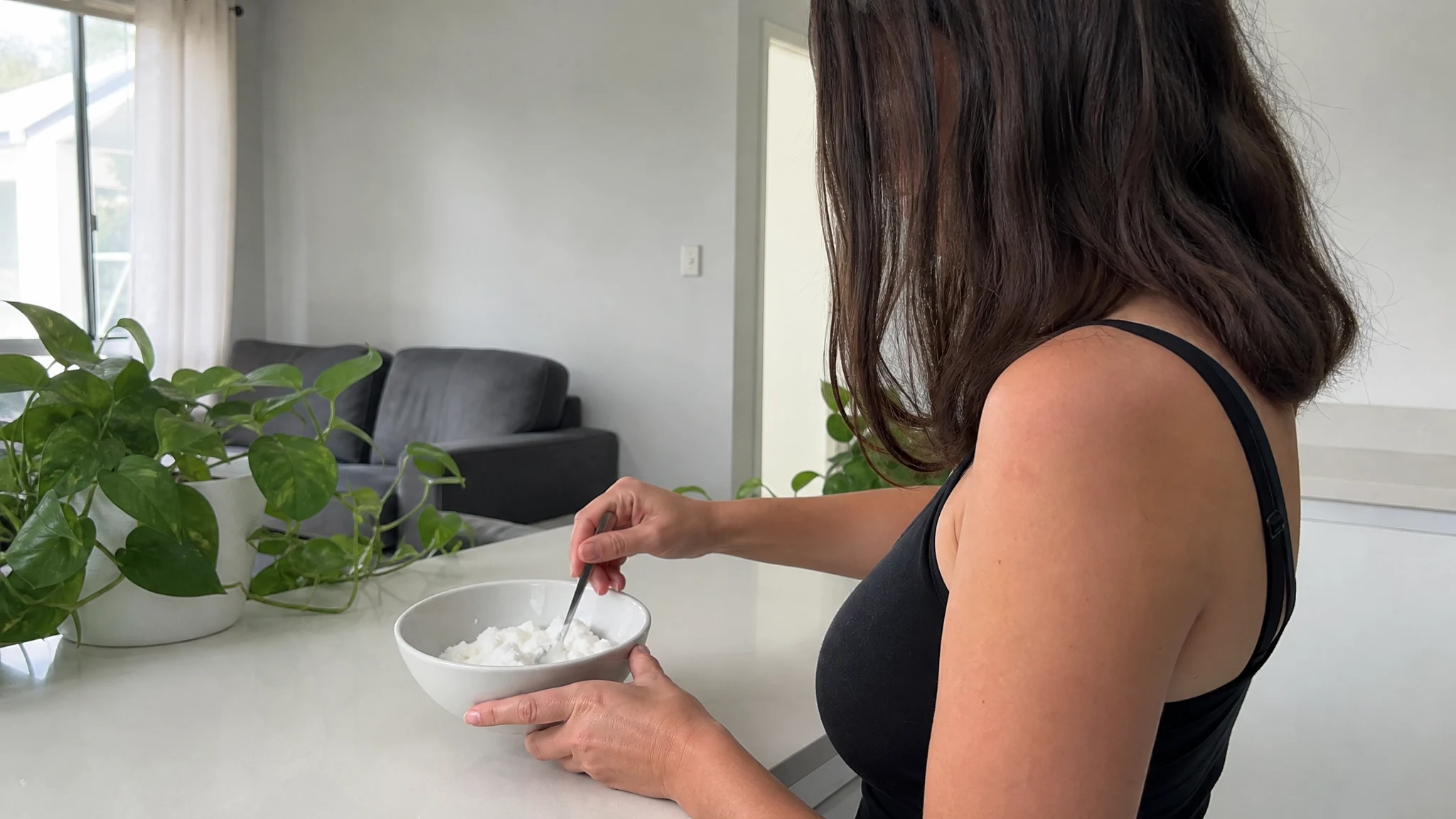
Easy Vetiver Sugar Scrub: Three Ingredients, One Jar
Sugar, coconut oil and a whisper of vetiver make a body scrub that smells like a forest floor. Our weight-based recipe starts at 0.5% and stays simple.
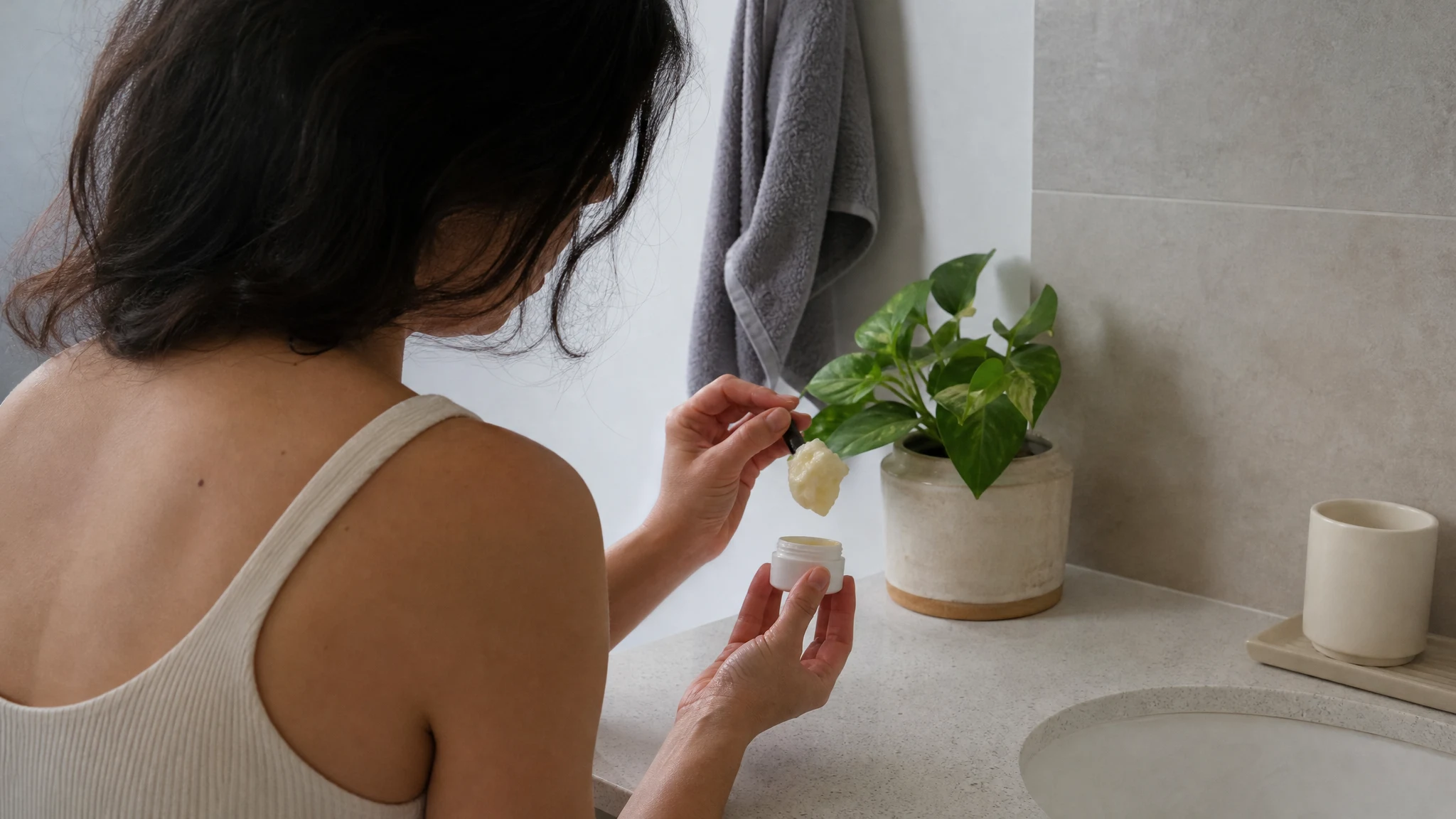
Vetiver Deodorant Balm Without Baking Soda
A scented vetiver balm for underarms, made without baking soda. Our weight-based formula explains the skin pH reasoning and keeps the oil gentle.
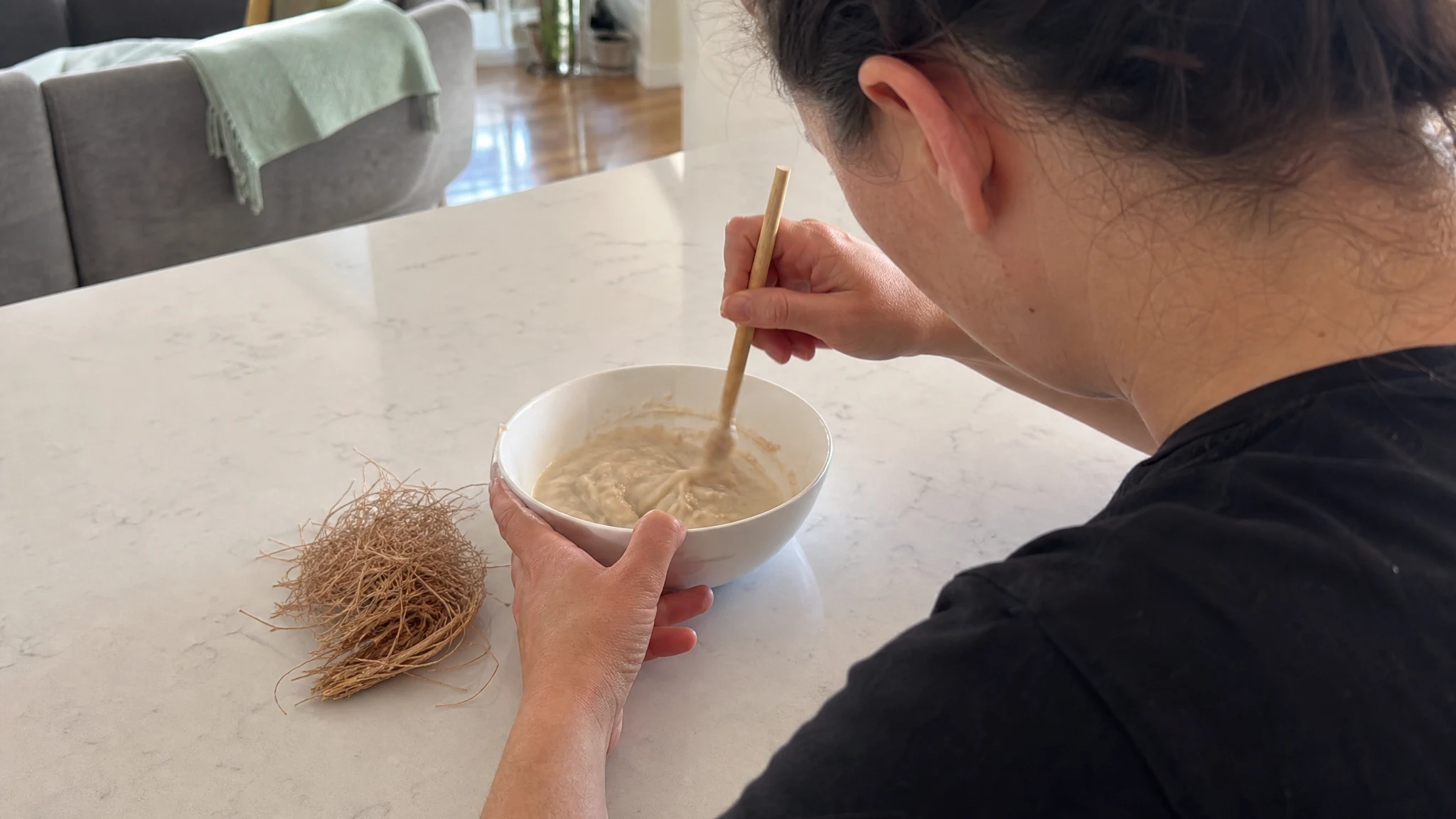
Vetiver Hair Oil Mask: A Coconut Oil Recipe by Weight
A two-ingredient pre-wash hair oil mask: coconut oil does the conditioning, vetiver adds a deep, earthy aroma. Written in grams, with who should skip it.
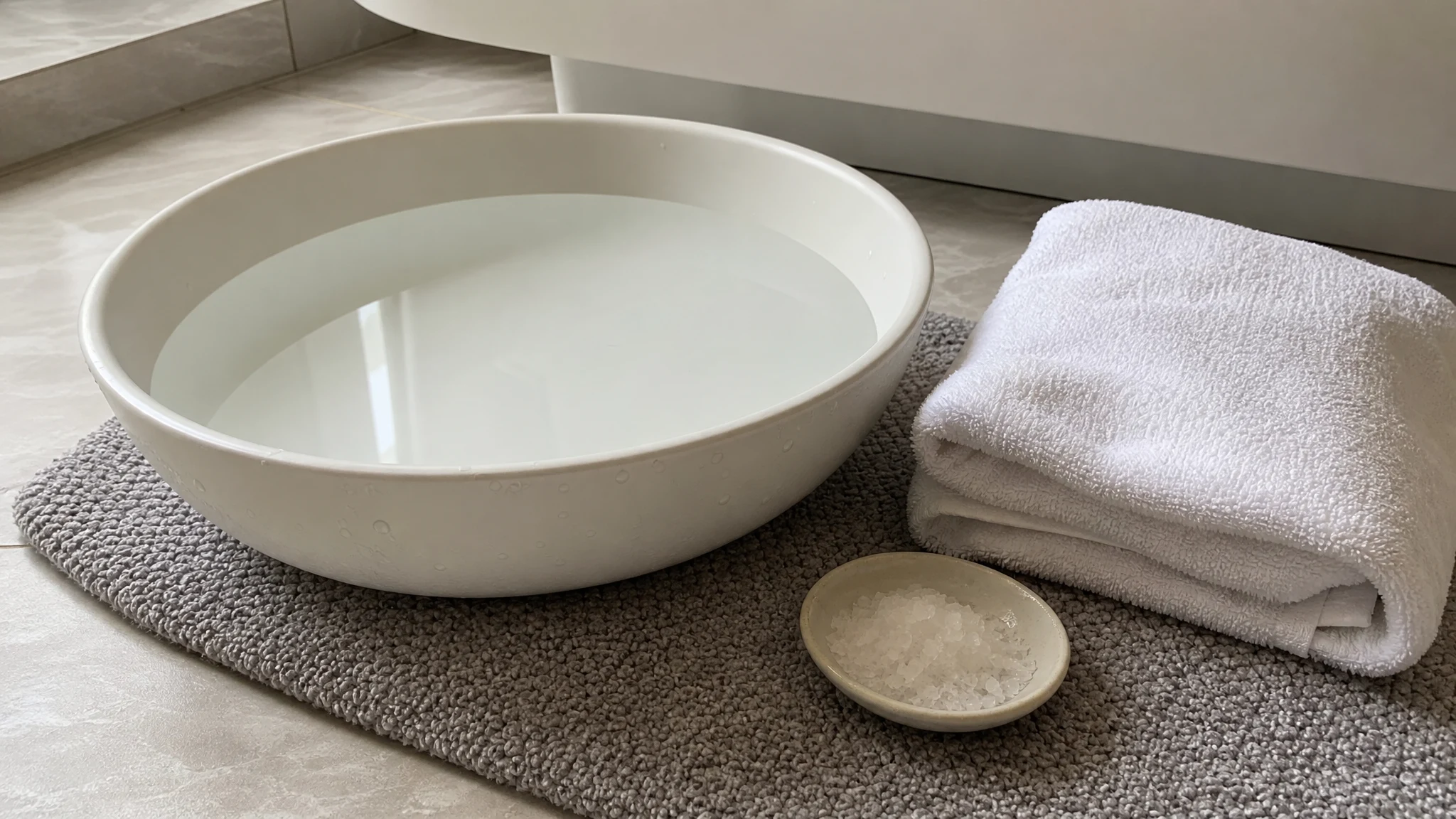
Vetiver Foot Soak Recipe: Salts, Carrier and Safety
Drop vetiver oil straight into a basin and it floats. Here is a salt-and-carrier foot soak worked out by weight, and who should check with a doctor first.
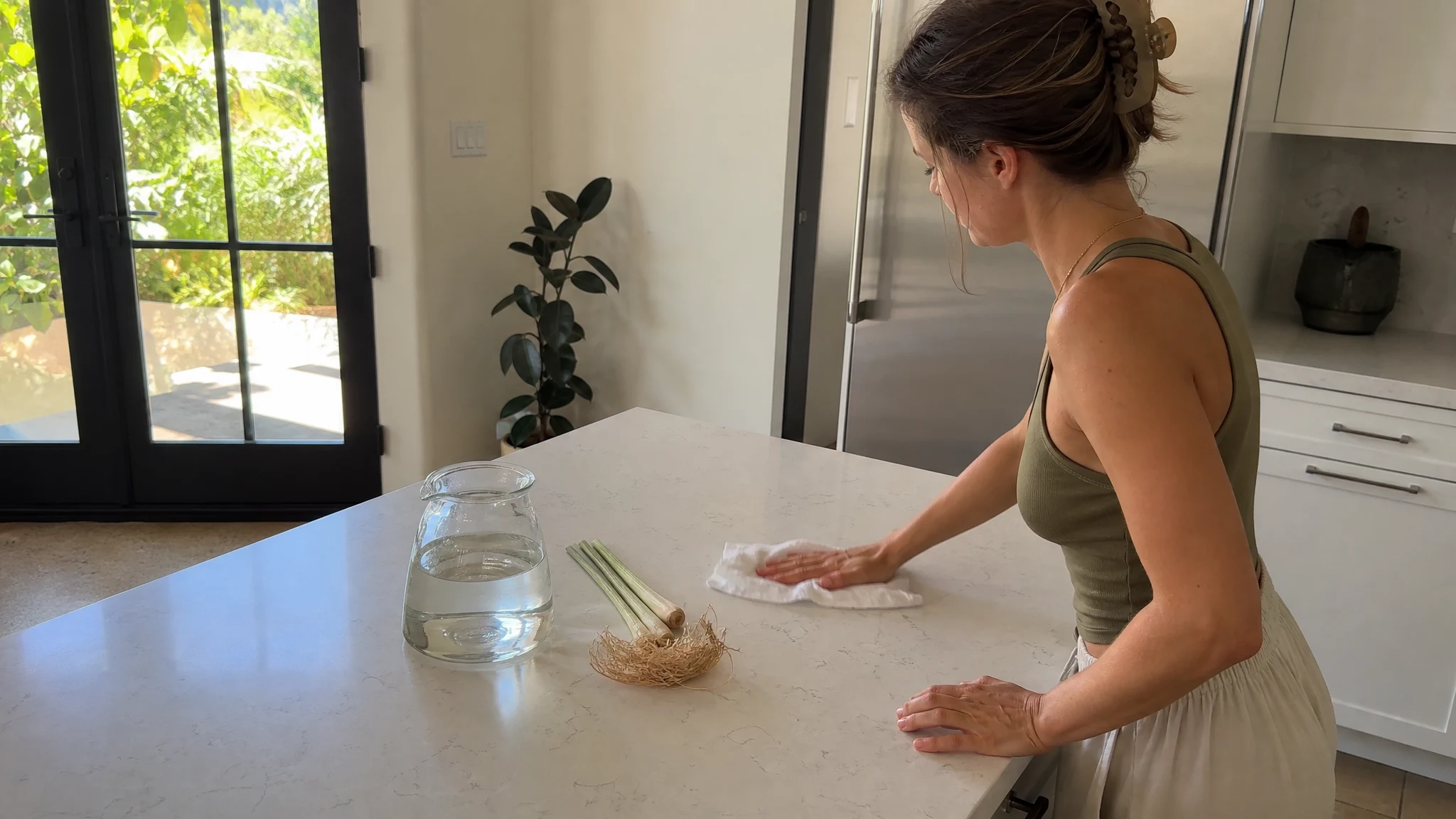
Vetiver and Lemongrass Room Spray: Why We Use Alcohol
Most room spray recipes use water. We build ours on alcohol, with vetiver for earthy depth and a little lemongrass for lift. Weights and cautions inside.
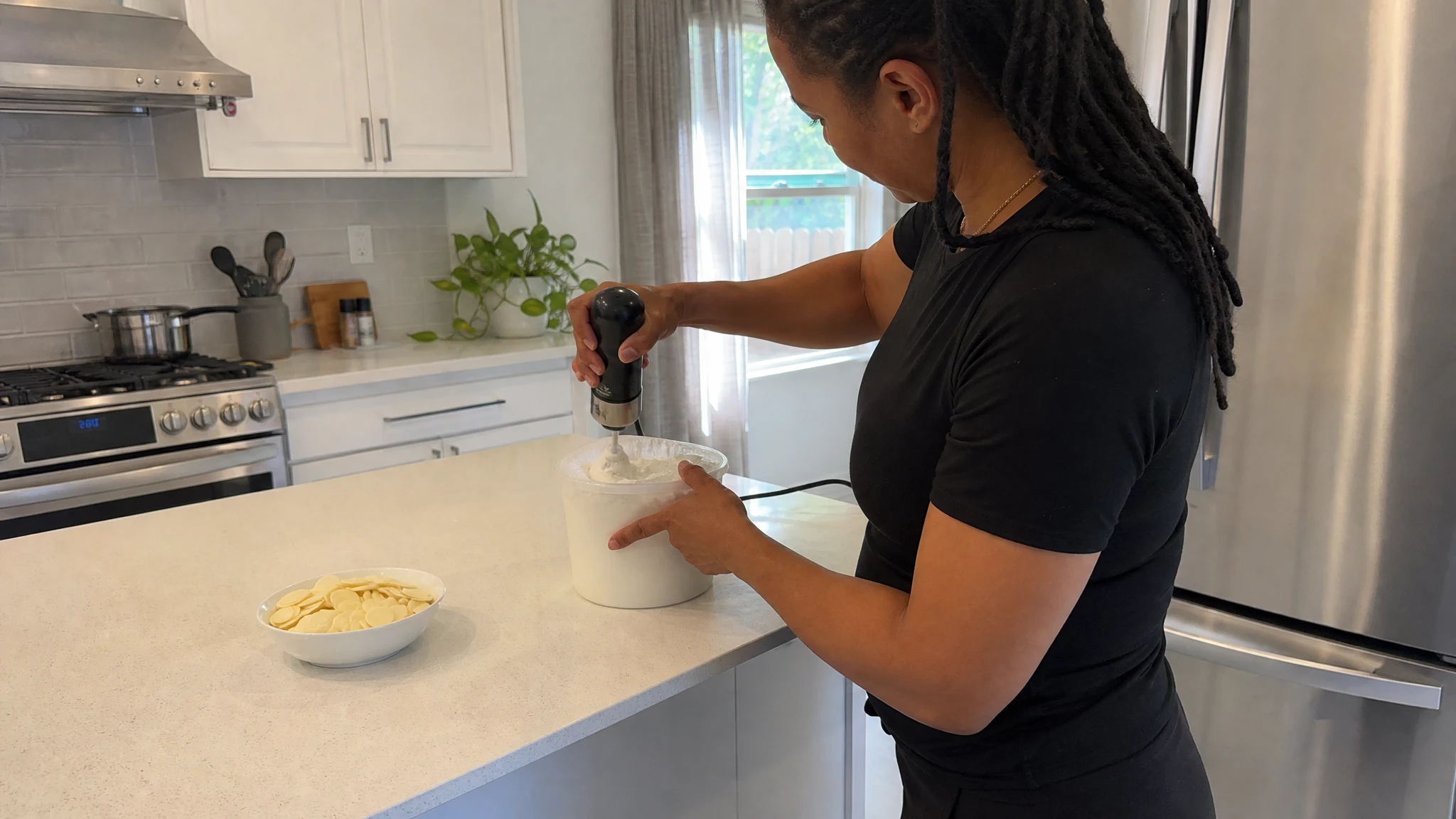
Vetiver Body Butter With Shea and Cocoa Butter
A shea and cocoa butter formula worked out by weight for winter skin, with an optional 1 percent of earthy vetiver. Method, melting points and storage.
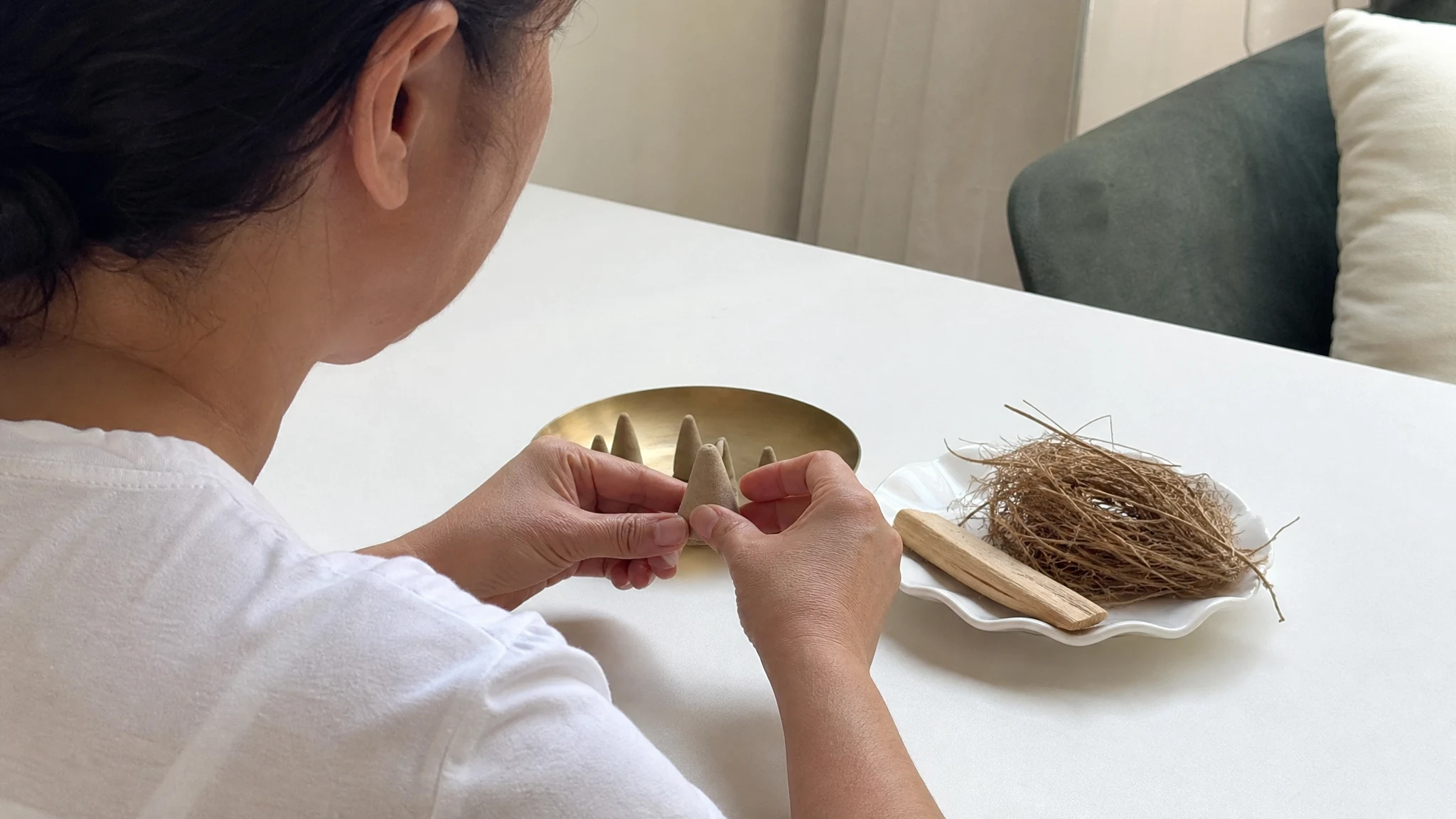
Vetiver and Sandalwood Incense Cones: DIY Recipe
Four ingredients, one test cone and a slow dry. Make vetiver and sandalwood incense at home, and learn how to burn it sensibly in a ventilated room.
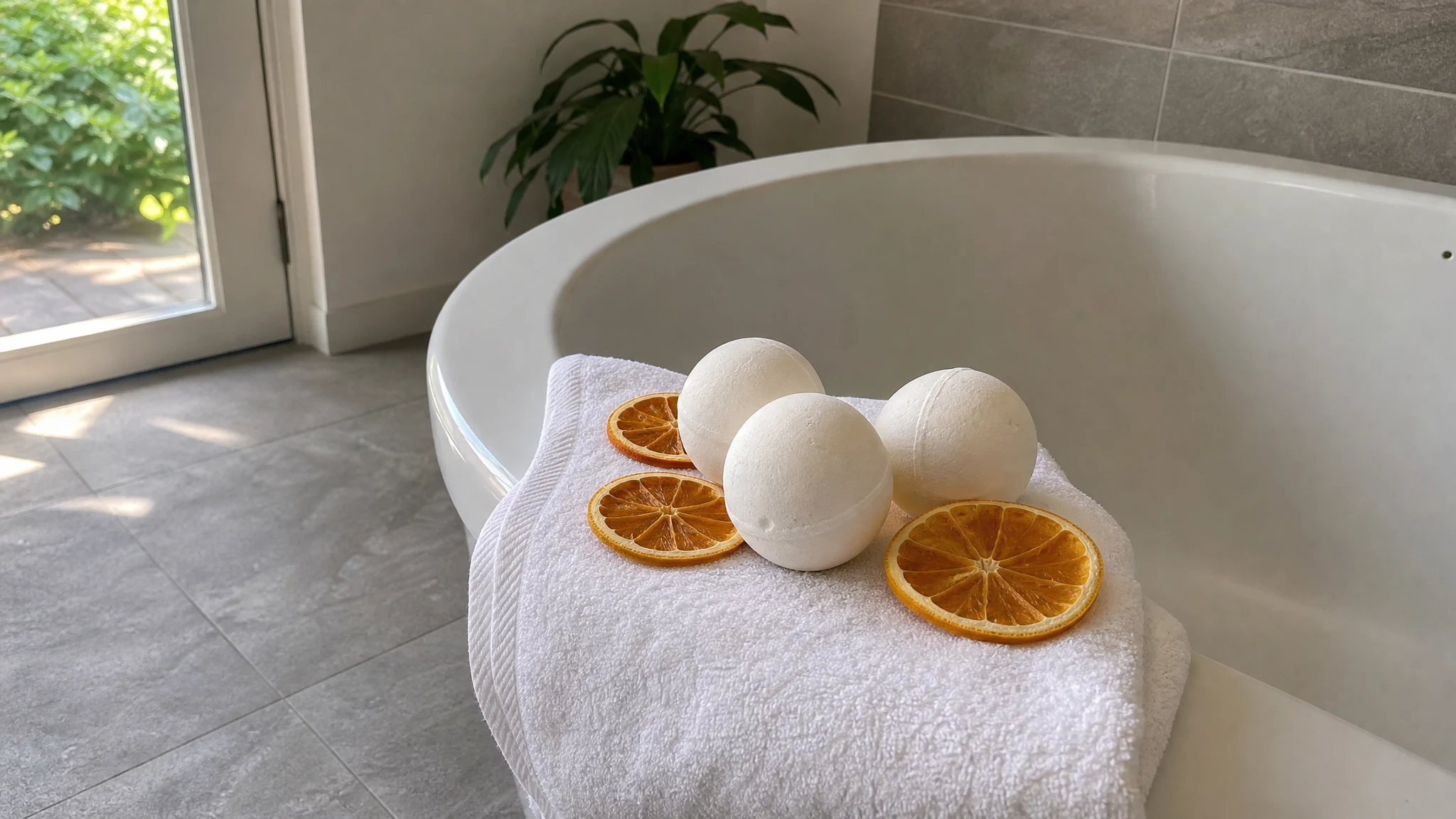
Vetiver and Orange Bath Bombs: A Recipe by Weight
Dark, earthy vetiver meets bright sweet orange in a fizzing bath bomb. A recipe by weight, with the soak habits and skin cautions worth knowing.
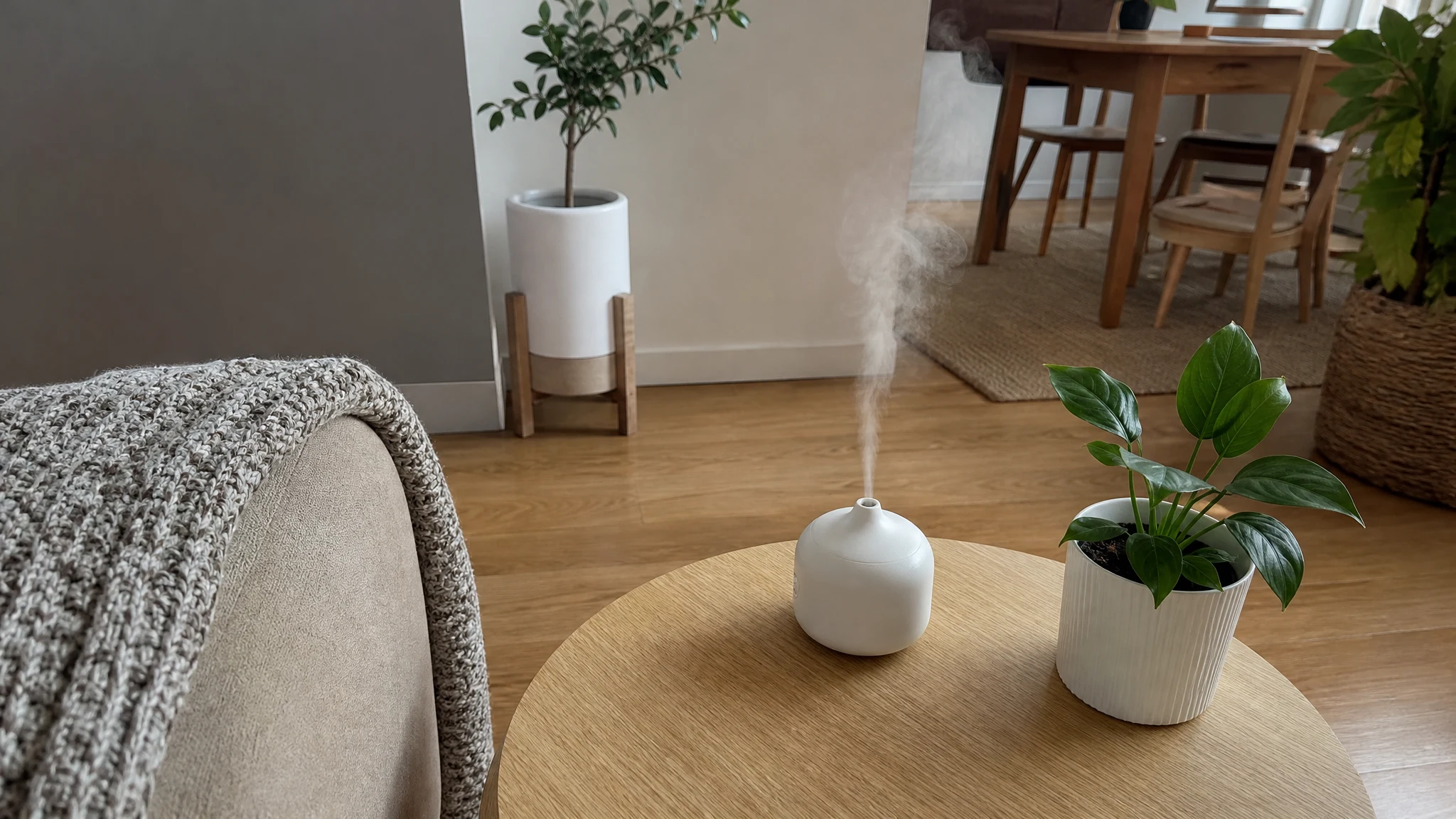
Vetiver in a Diffuser: Tips for a Thick Oil
A thick oil like vetiver clings to the tank and drips in large drops. Here is how to run a diffuser with it, how long, and when to leave the machine off.
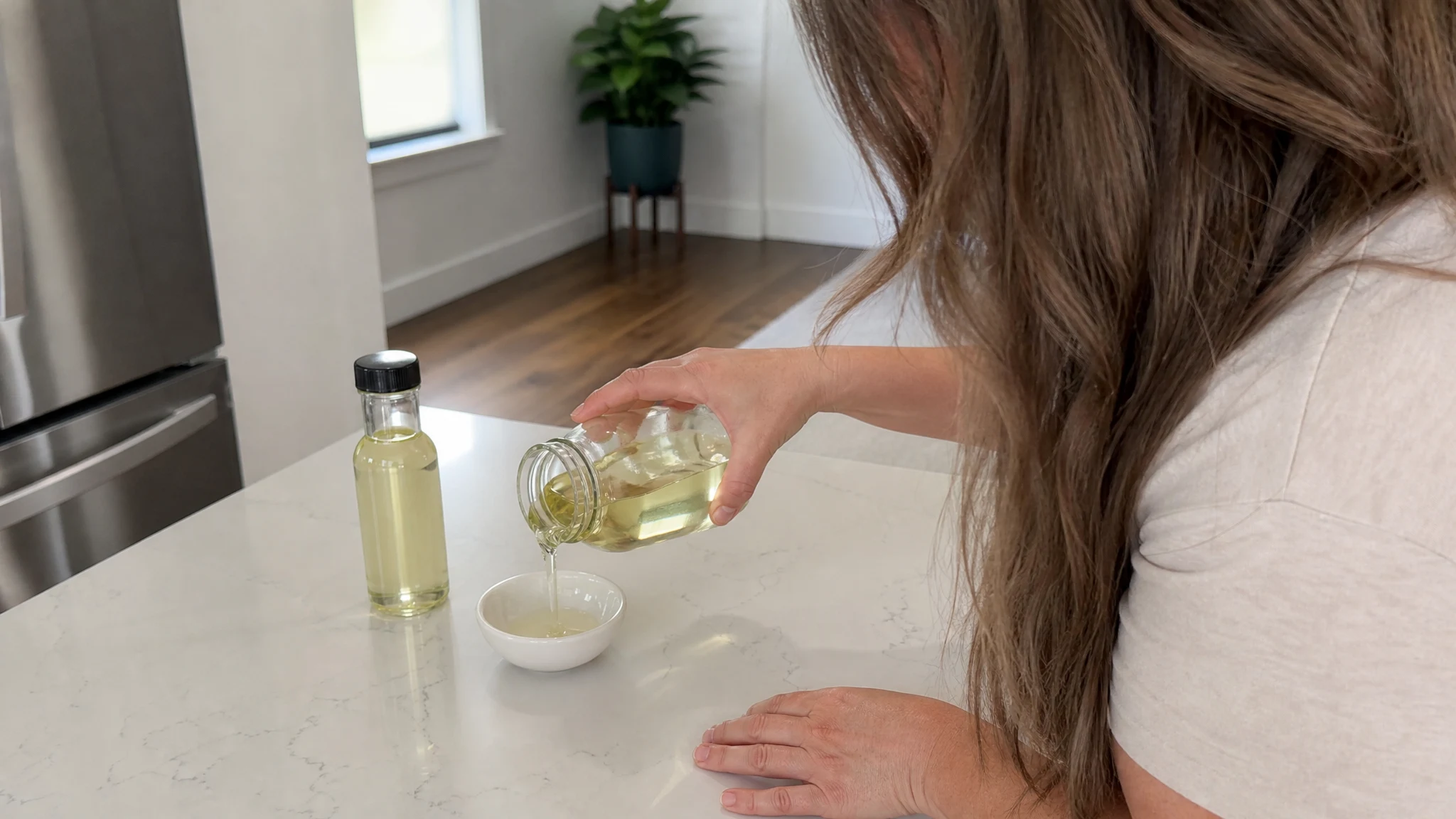
Carrier Oil for Vetiver: How to Choose and How Much
Choose the percentage first and the carrier second. Here is the dilution maths in millilitres and how jojoba and almond differ for a vetiver blend.
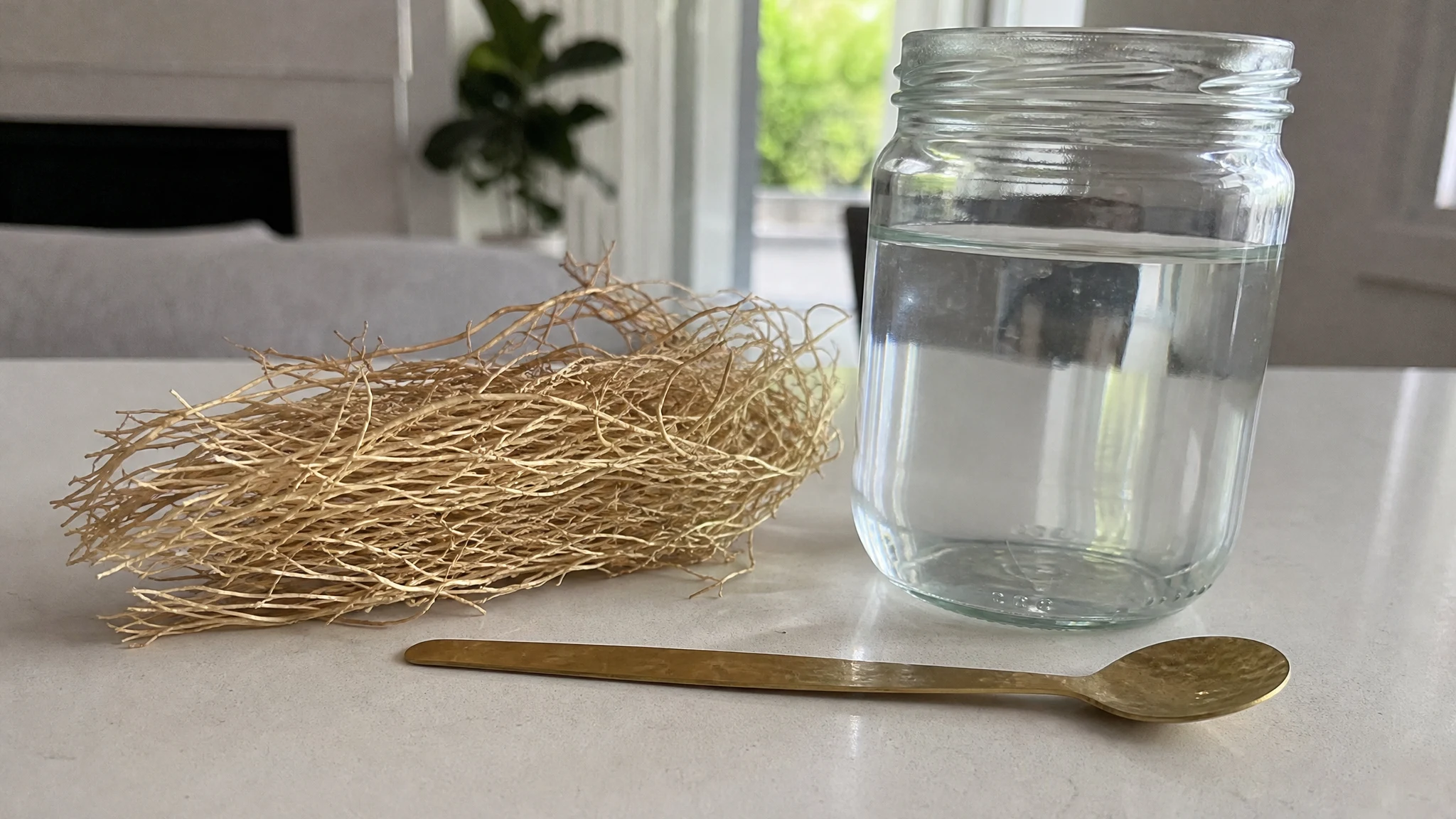
Vetiver Oil for Weight Loss? Separating Claims From Scent
Slimming blends and appetite tricks keep circulating online. Here is what researchers and regulators say, and what vetiver oil is genuinely lovely for.

5 Vetiver Oil Claims, and How to Check Each One
Grades, secret compounds, lab reports, clinical studies. Five claims that cluster around vetiver oil, and the one question that tests each of them.

Vetiver Oil and Termites: What Lab Studies Found
Lab studies found vetiver oil and nootkatone kept Formosan termites away. Here is what was tested, why it is not a home treatment, and who to call.
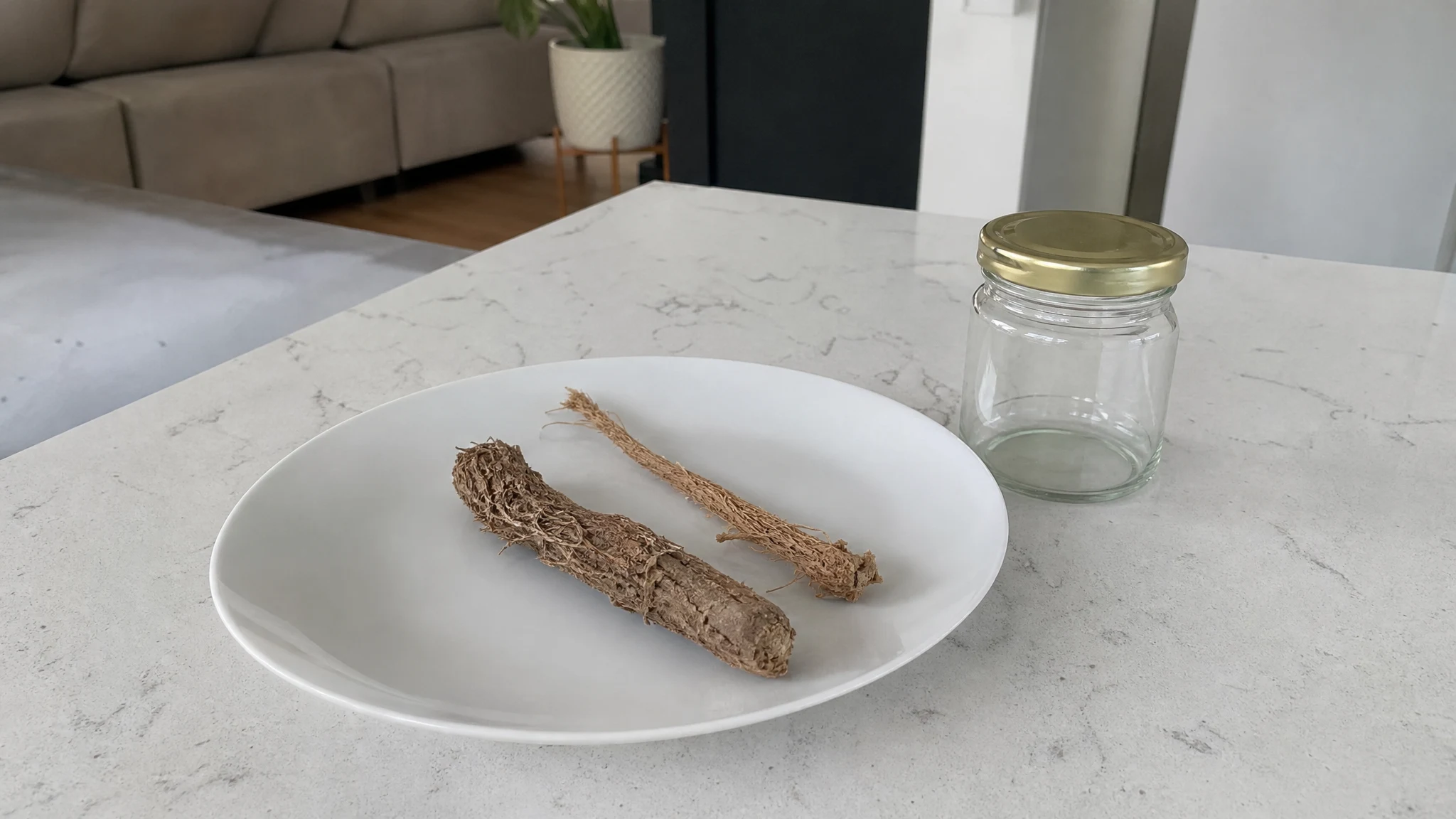
Is Thicker Vetiver Oil Better? What the Pour Tells You
Vetiver oil pours like honey, but thickness alone will not tell you if a bottle is good. Here is what changes it and what is worth checking instead.

Summer Vetiver Blends: Keeping a Heavy Oil Light
One part vetiver in ten can anchor a bright, airy summer blend. Two citrus-and-herb formulas worked out in parts, plus the citrus rule worth knowing.
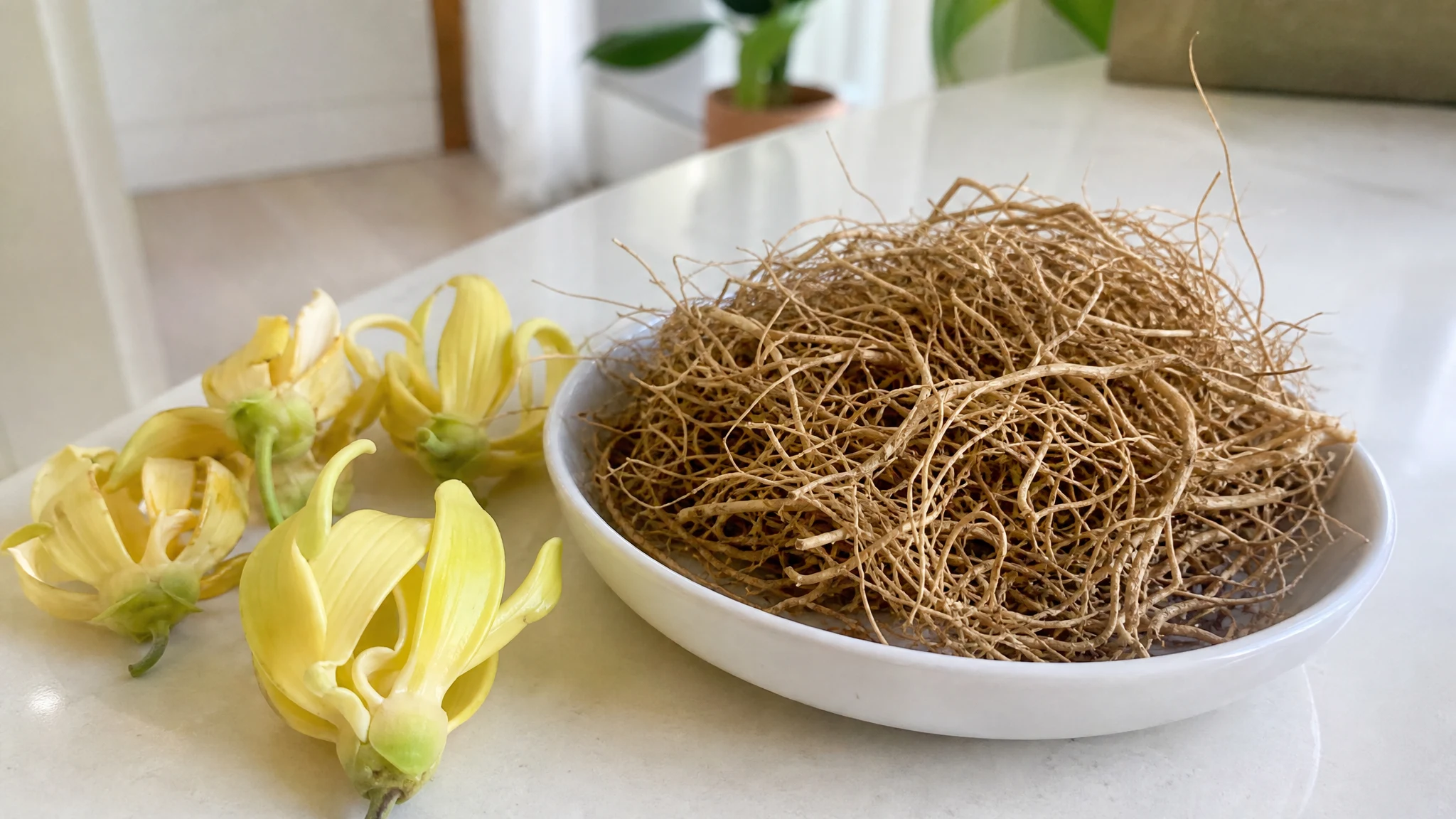
Vetiver vs Ylang Ylang: Earthy Root Oil or Floral Bloom?
Ylang ylang has small human studies and a clearer skin caution; vetiver has rat studies and a deep base-note scent. We compare them and how to choose.
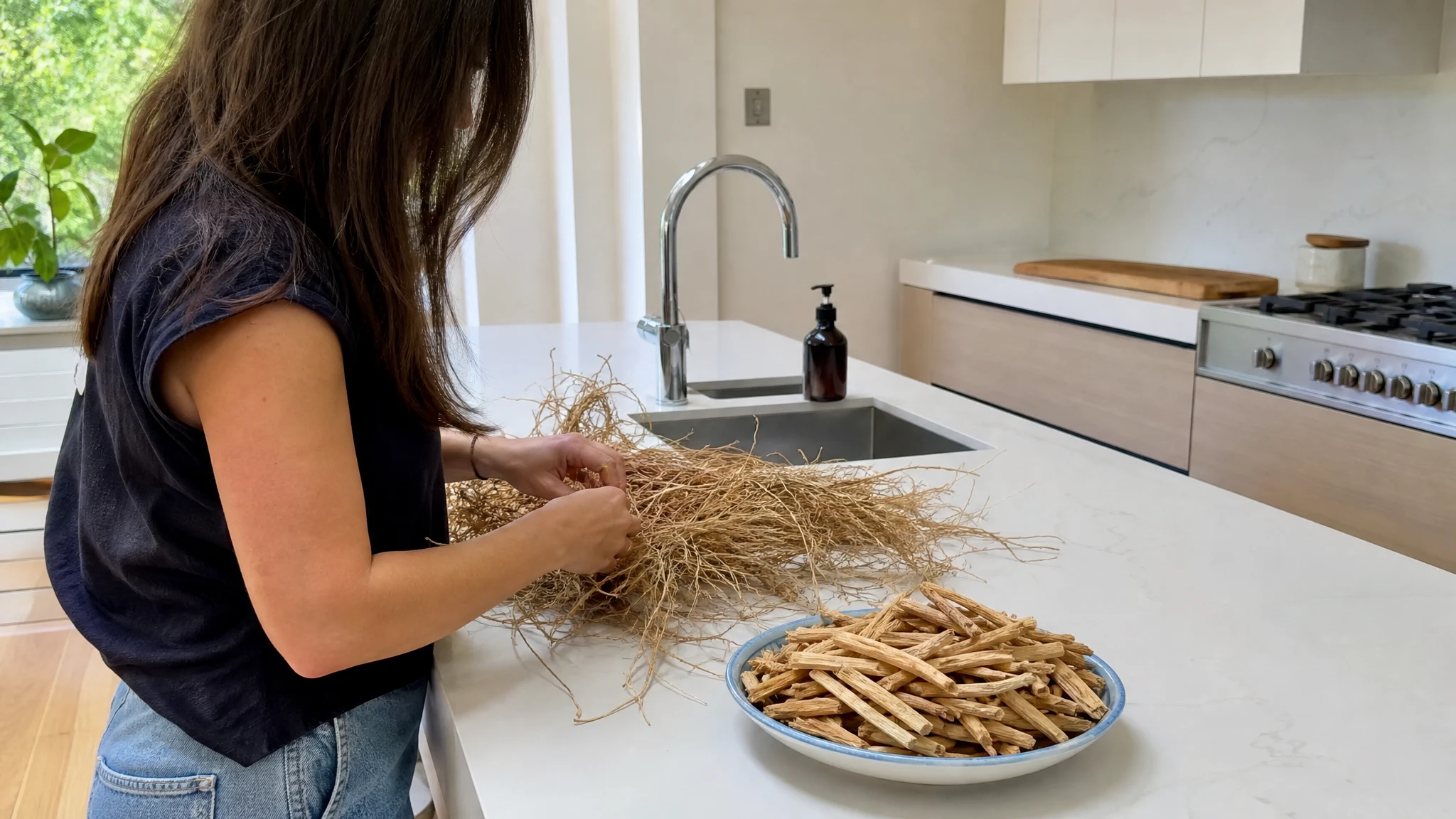
Vetiver vs Sandalwood: Which Woody Base Fits Your Blend?
A 2021 lab check found none of six sandalwood oils met the standard. We compare vetiver and sandalwood on scent, labels and skin, and how to buy either.
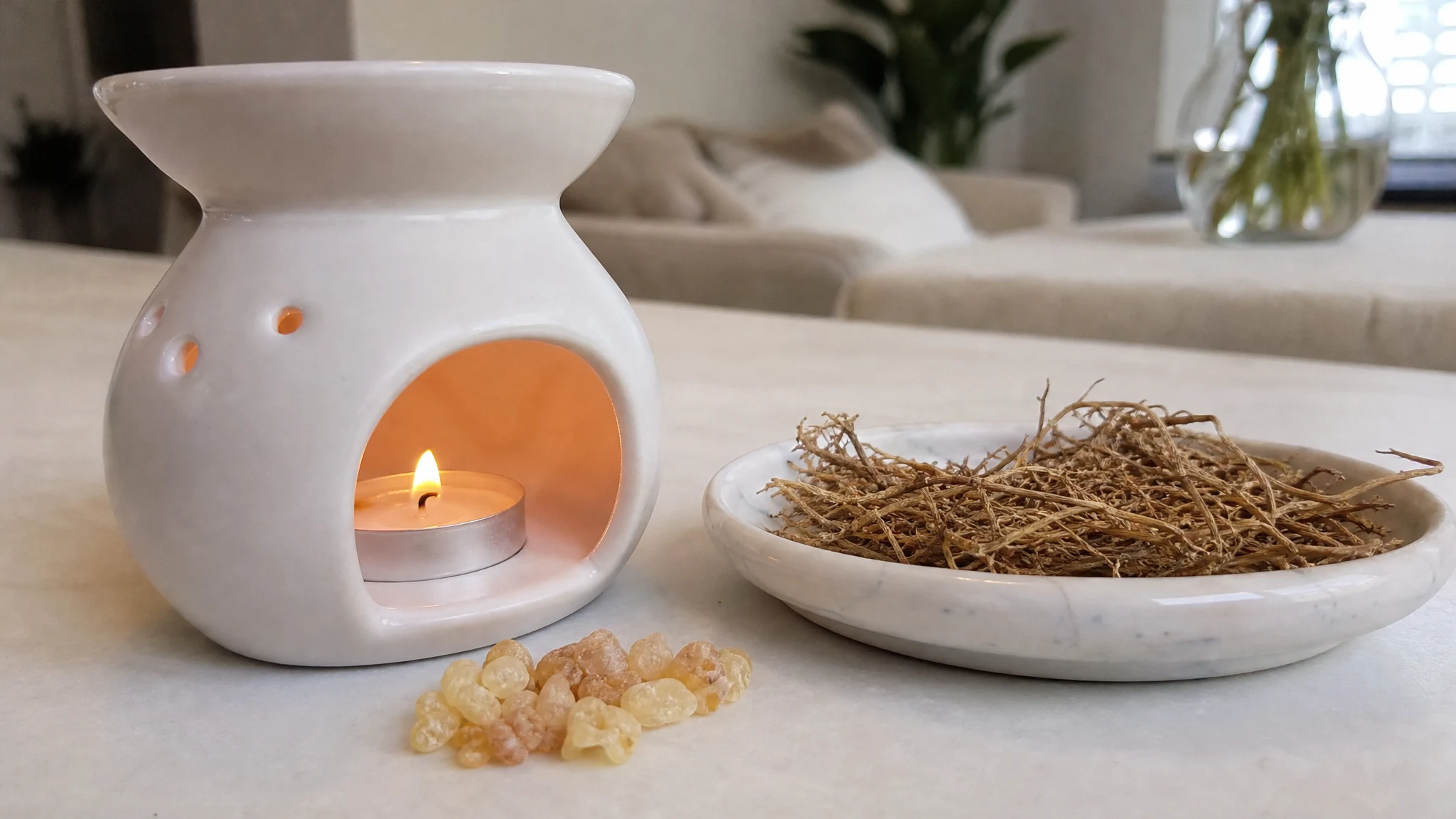
Vetiver or Frankincense for Meditation: Choosing by Scent
Neither oil has been tested on meditation. Both have a story, though. We compare the research, the scent and the practical side, so you can pick by nose.
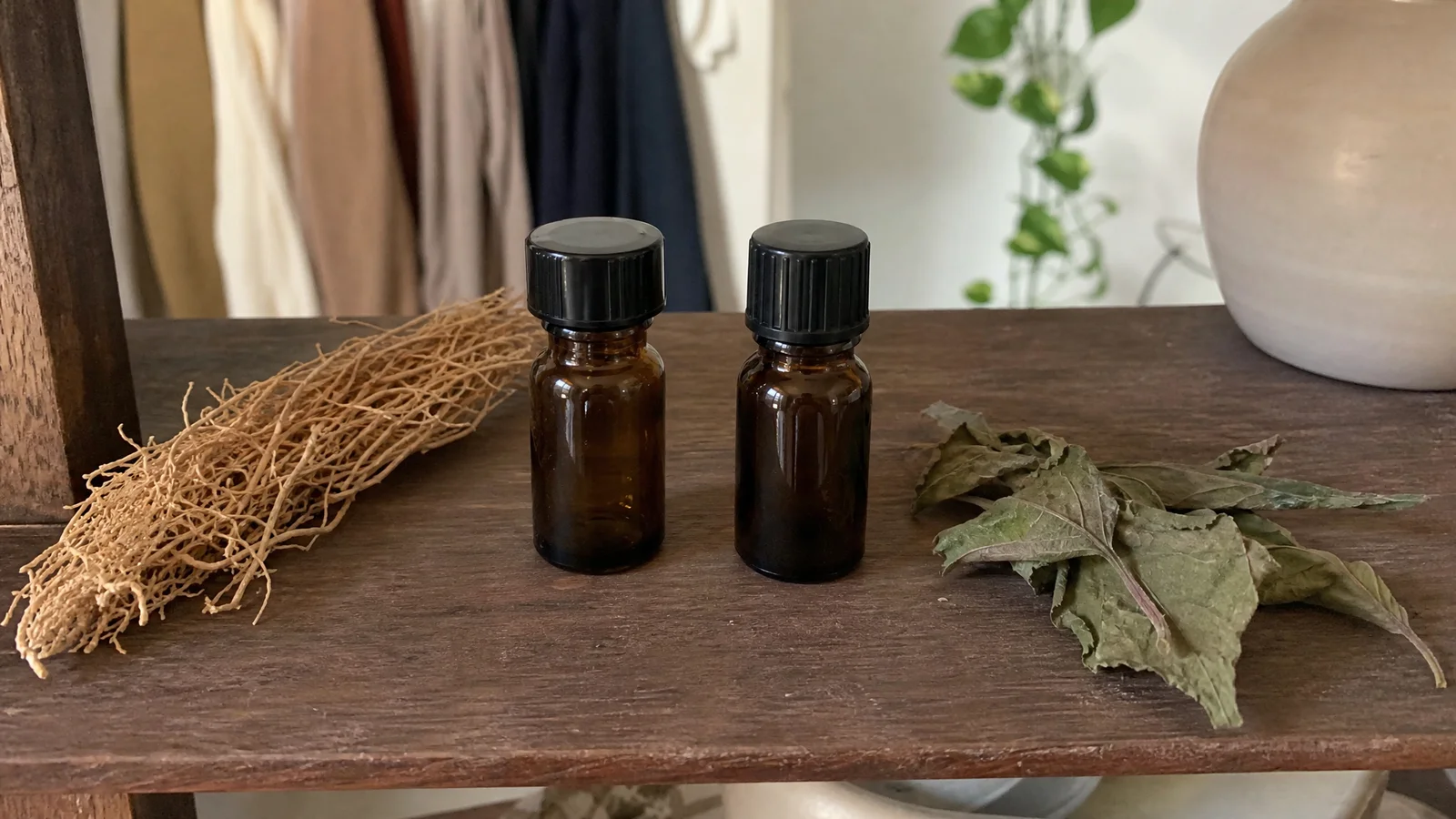
Vetiver vs Patchouli: Root Oil or Leaf Oil?
Both are earthy, but vetiver comes from roots and patchouli from leaves. We compare their character, what a perfumer uses each for, and how to choose.
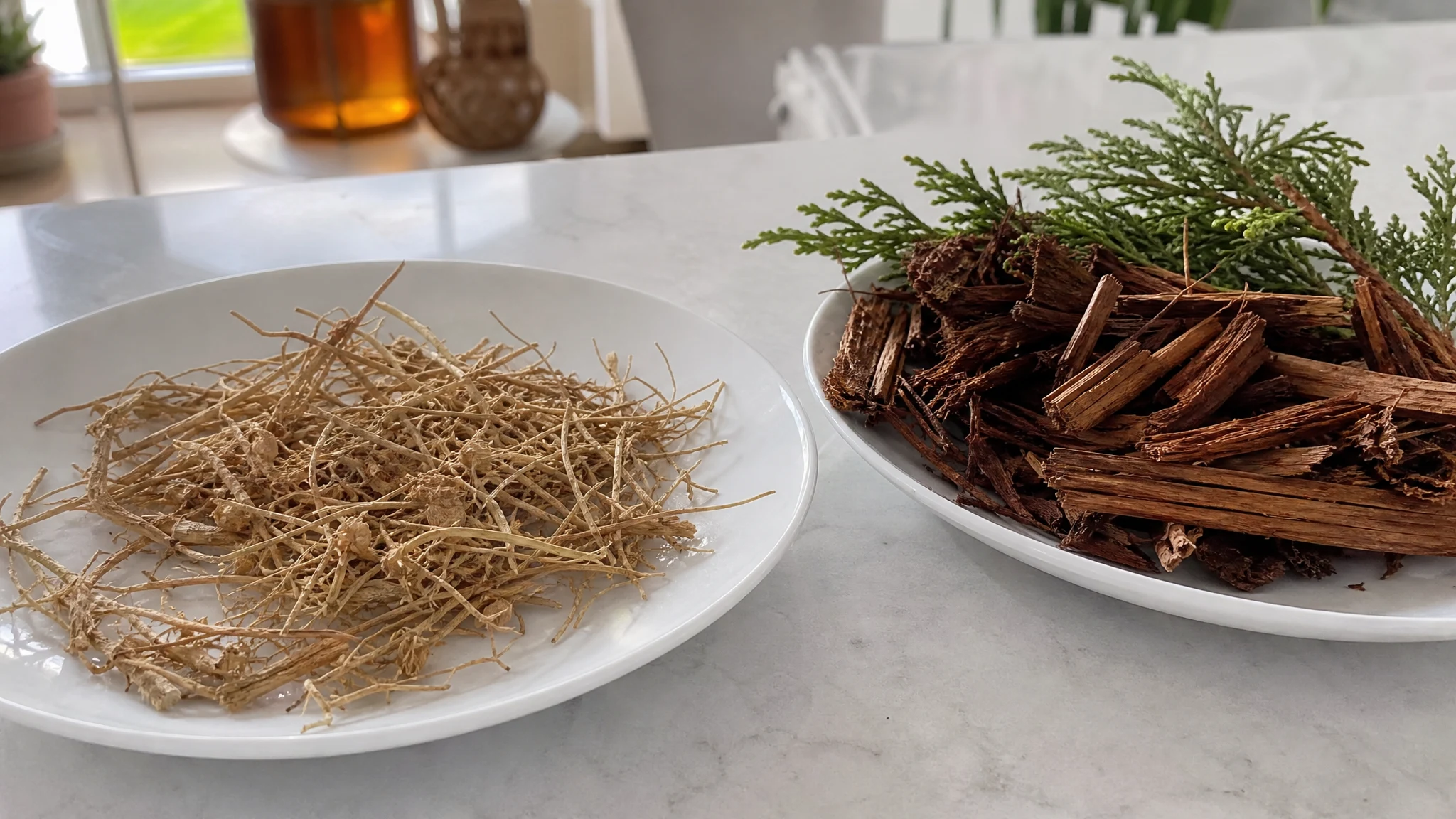
Vetiver vs Cedarwood Oil: Two Woody Scents Compared
Vetiver or cedarwood for sleep? No study settles it. Compare how the two woody oils smell, why 'cedarwood' means many oils, and what research exists.
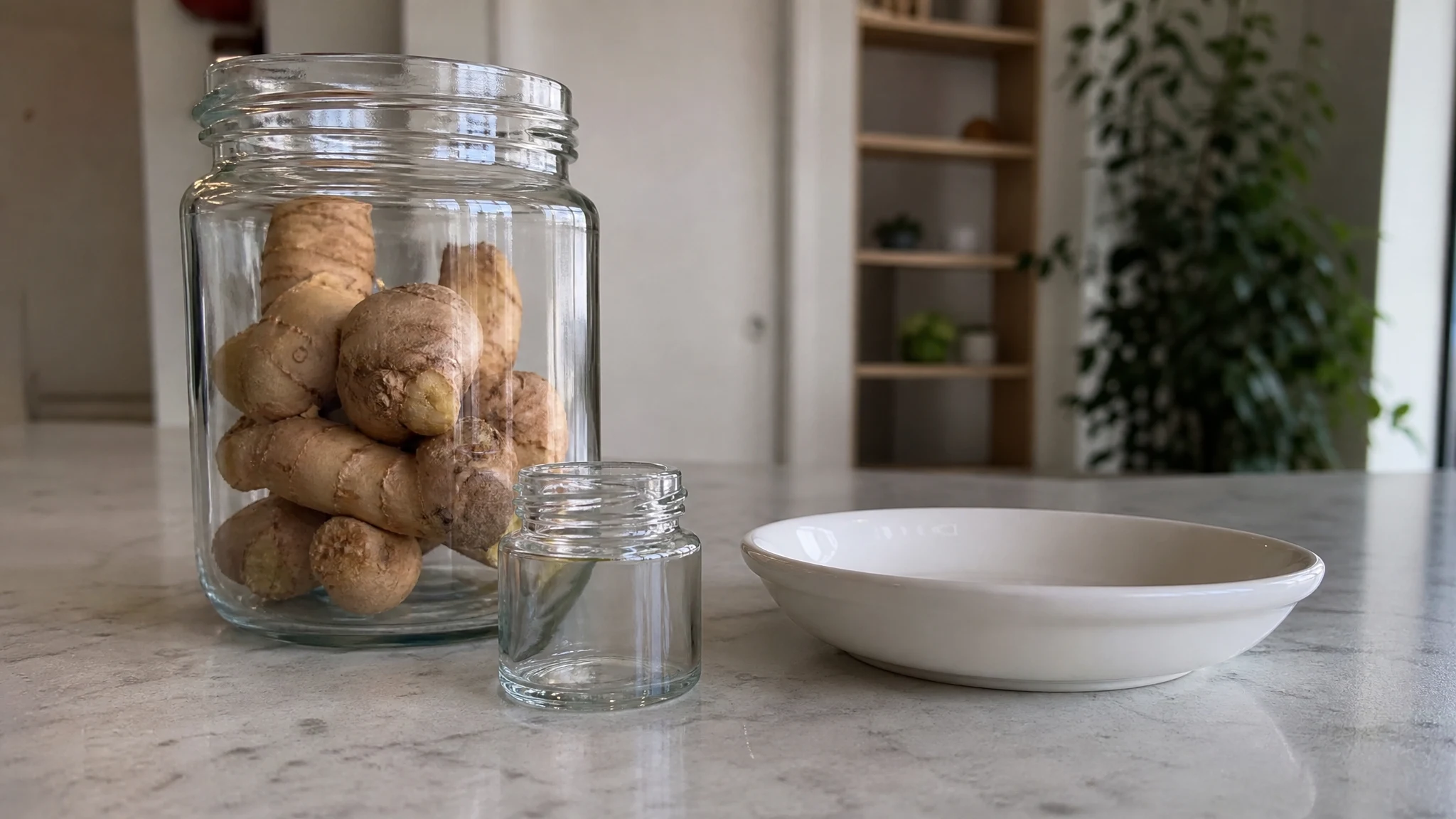
Vetiver Roller Blends: How Much Oil Per 10 ml Bottle
Vetiver is thick and lingers, so a little goes far in a roller. See the arithmetic for a 10 ml bottle, why we start low, and what to look for in a carrier.
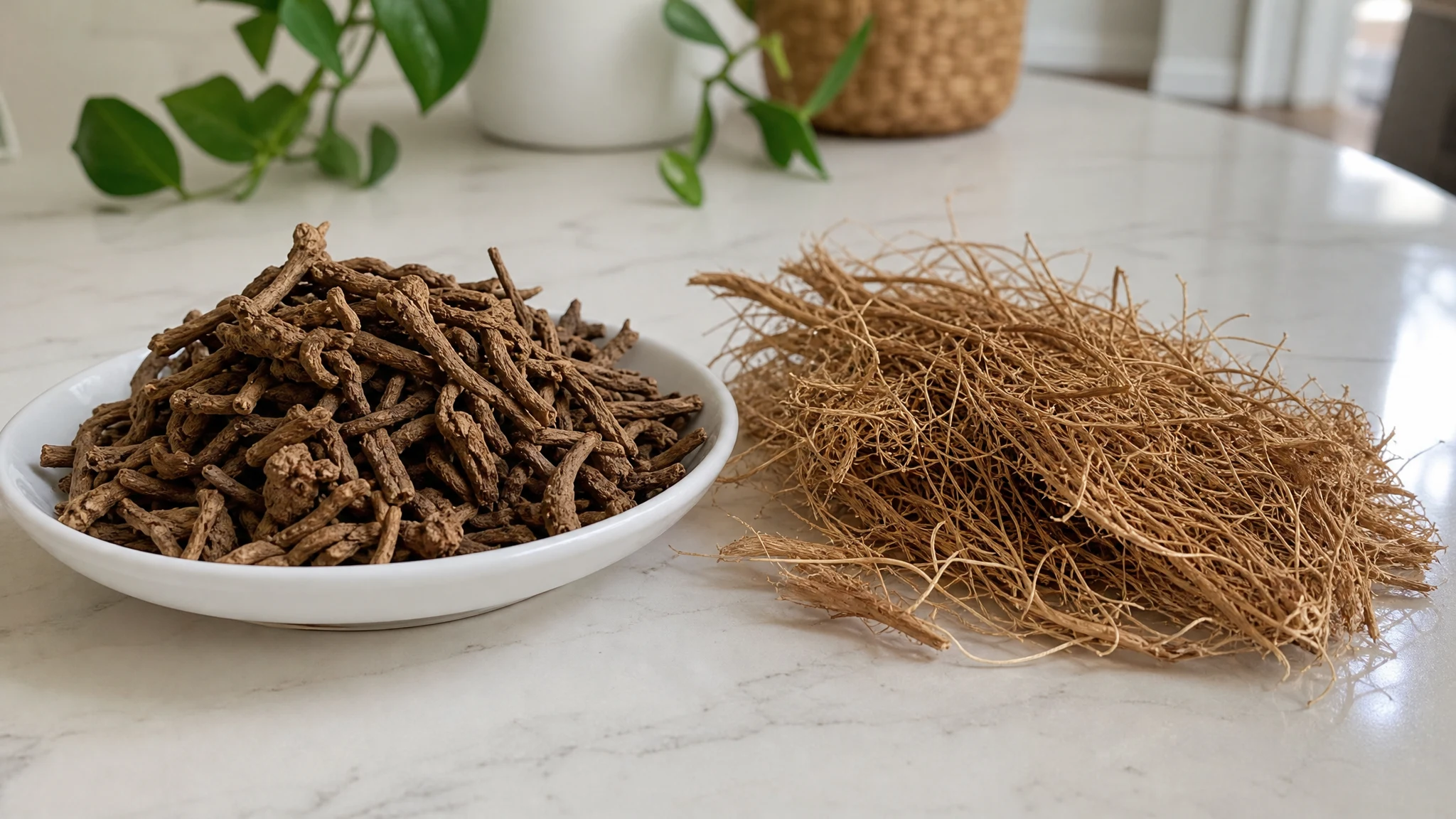
Vetiver Oil vs Valerian Root: What Sets Them Apart
Valerian is a swallowed root extract; vetiver is an aromatic oil. We explain what each has been studied for and why they do not substitute for each other.
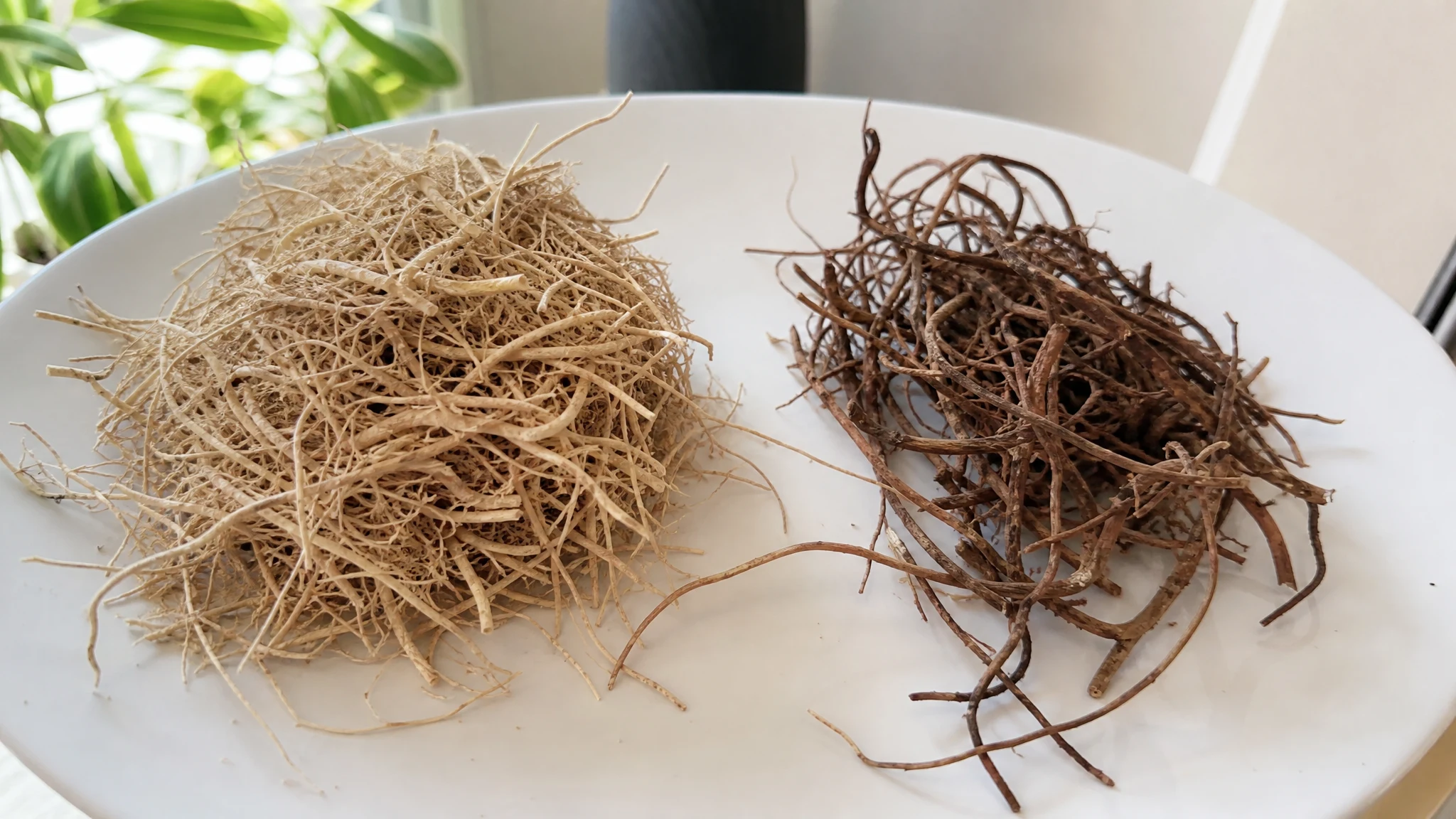
Vetiver vs Spikenard: Two Root Oils, Two Supply Stories
Both are earthy root oils, yet their supply stories differ sharply. We cover spikenard's conservation status, the lab papers, and how to buy either.
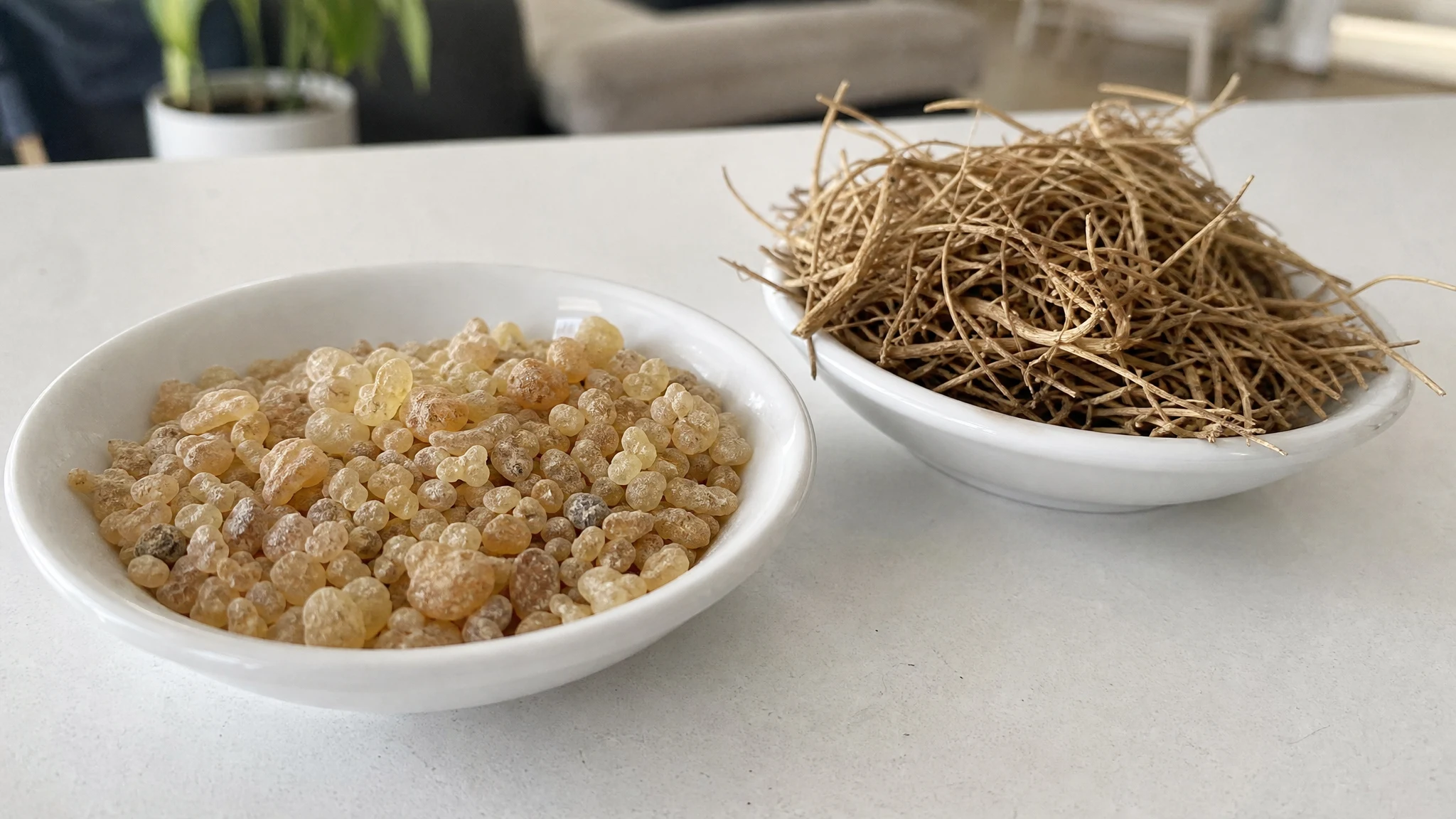
Vetiver vs Myrrh Oil: Which Base Note Suits You?
The famous myrrh wound study used a different species, and vetiver's lab work points to scent. We compare these two base notes and how to choose.

How Vetiver Oil Is Made: From Root to Bottle
Vetiver oil is steam-distilled from roots, and each step before and after the still leaves a mark. Follow the journey and learn what to ask about a bottle.

Diffusing Vetiver Oil: Which Diffuser Suits a Thick Oil?
No trial has tested a vetiver diffusing routine, but a few good sources help. Here is how to match device, run time and room to a thick, slow-pouring oil.

Vetiver Oil and Inflammation: Lab Studies vs Massage
Vetiver oil calmed inflammation signals in mouse cells, but no one has tested it for pain. We explain the lab work, the massage question and what to do.
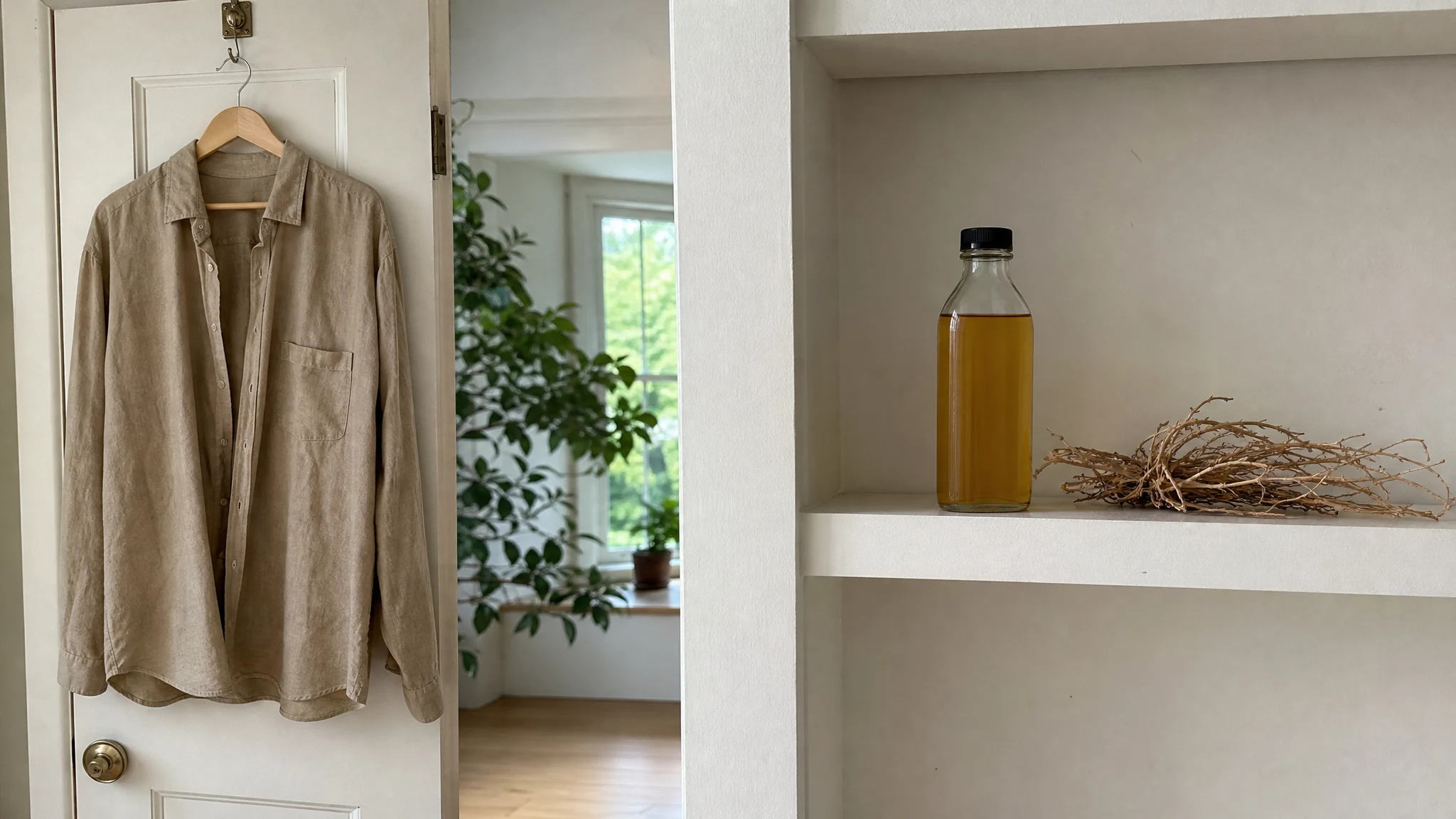
Is Vetiver Just for Men? What the Perfume Shelf Shows
Is vetiver really a men's scent? See how it shows up in perfume, how to use a little in cologne or a balm, and why we start at a low dilution.

Vetiver vs Lavender Oil: Which Scent Fits Your Evening?
Lavender has plenty of human research; vetiver has very little. We lay out what each has been tested for and how their scents differ, so you can choose.
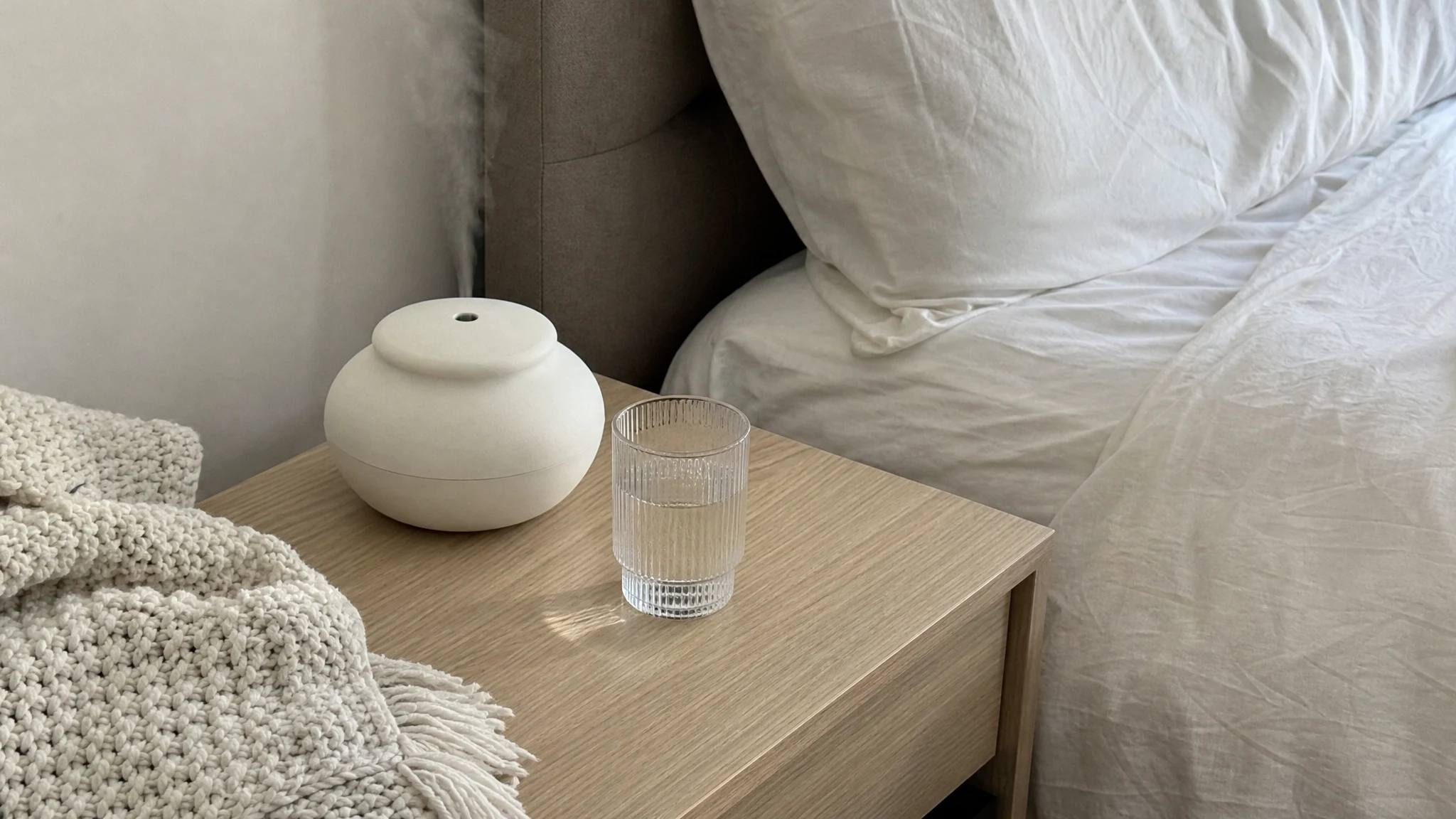
Vetiver and Sleep: What the Research Does and Doesn't Show
Vetiver has a calming reputation, but the sleep studies point different ways. We walk through a rat study and a nurse trial and what placebo taught us.

Vetiver Oil for Meditation: Using Scent as a Cue
No study shows vetiver deepens meditation, but a steady scent can be a lovely cue to sit. How to use it lightly and what belongs to tradition.
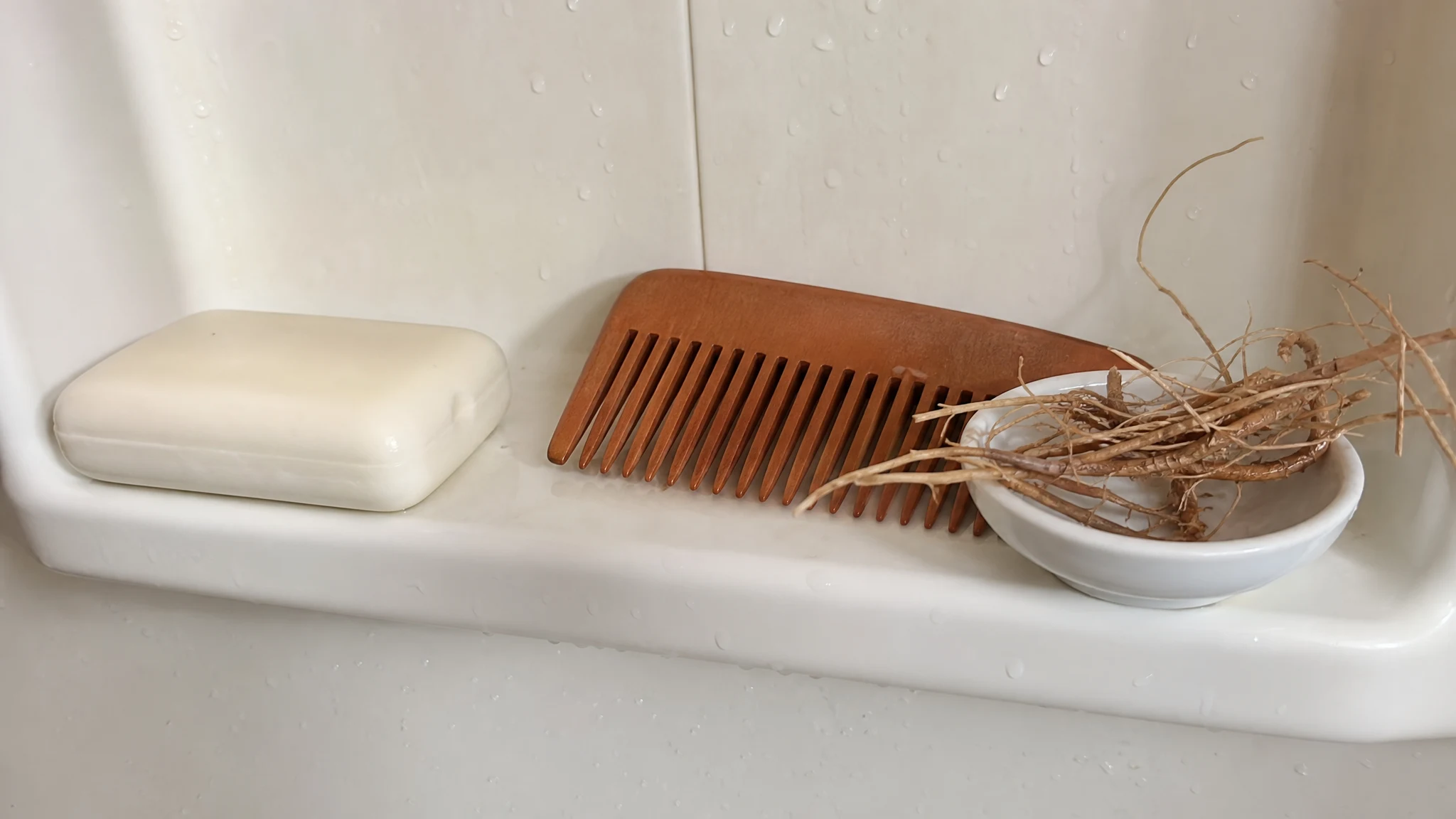
Vetiver Oil on the Scalp: What Research Covers
No one has tested vetiver oil on the scalp. We cover what dermatology sources say, what other oils were studied for, and how to scent a hair product.
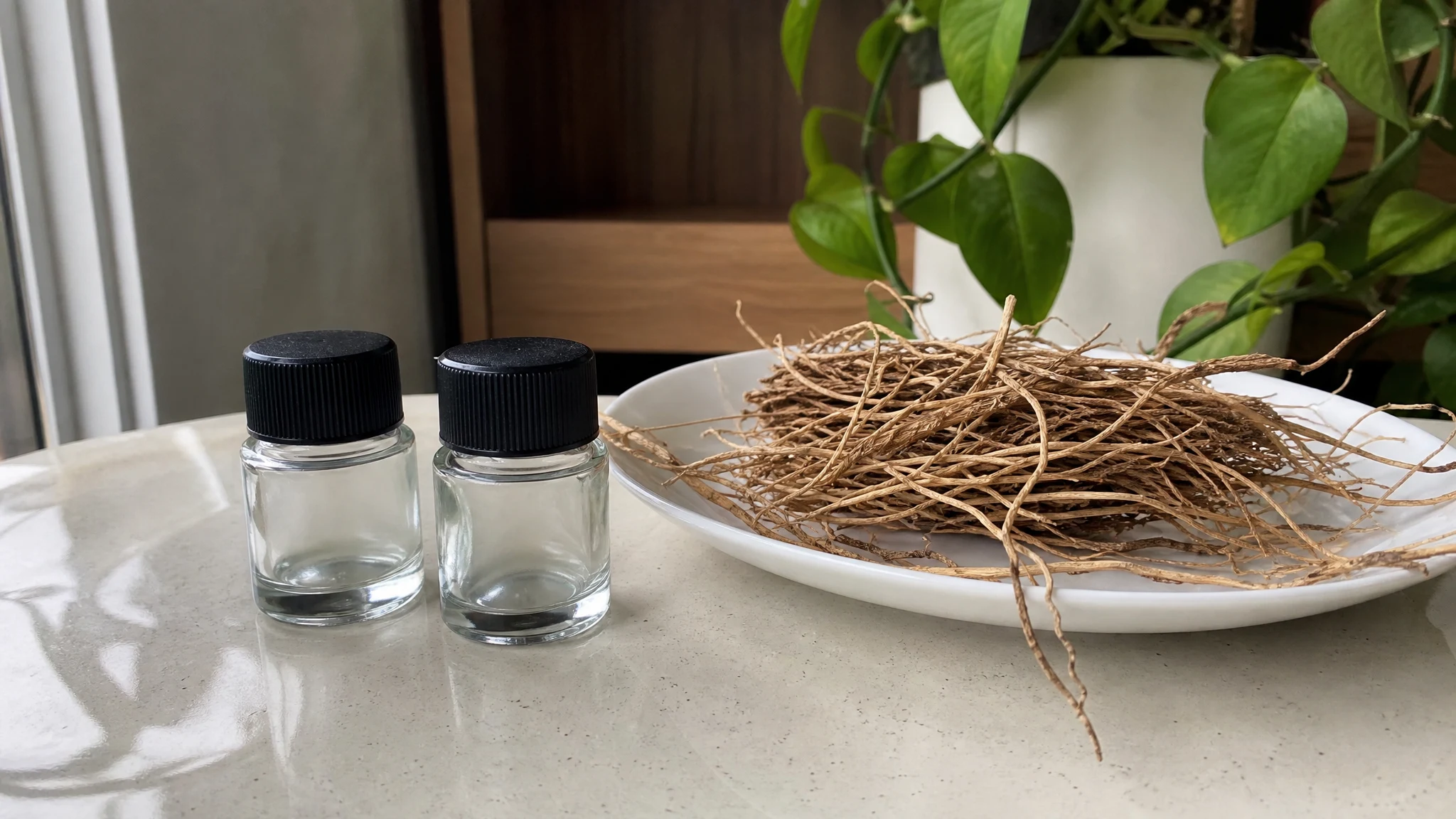
Vetiver Oil vs CBD Oil: What Each One Actually Is
Vetiver is a fragrance root oil and CBD is a cannabis extract, so they cannot be ranked for anxiety. Here is what each has been studied for.

Vetiver Oil and Pets: Dogs, Cats and Birds at Home
Vetiver is not on the usual pet-caution lists, but no one has tested it in animals either. Veterinary guidance on diffusers, skin and birds, explained.

Vetiver Oil for Anxiety: What the Research Shows
Vetiver is known as a calming oil, but the evidence is mostly rat studies. We explain what the research shows and how to enjoy the aroma sensibly.
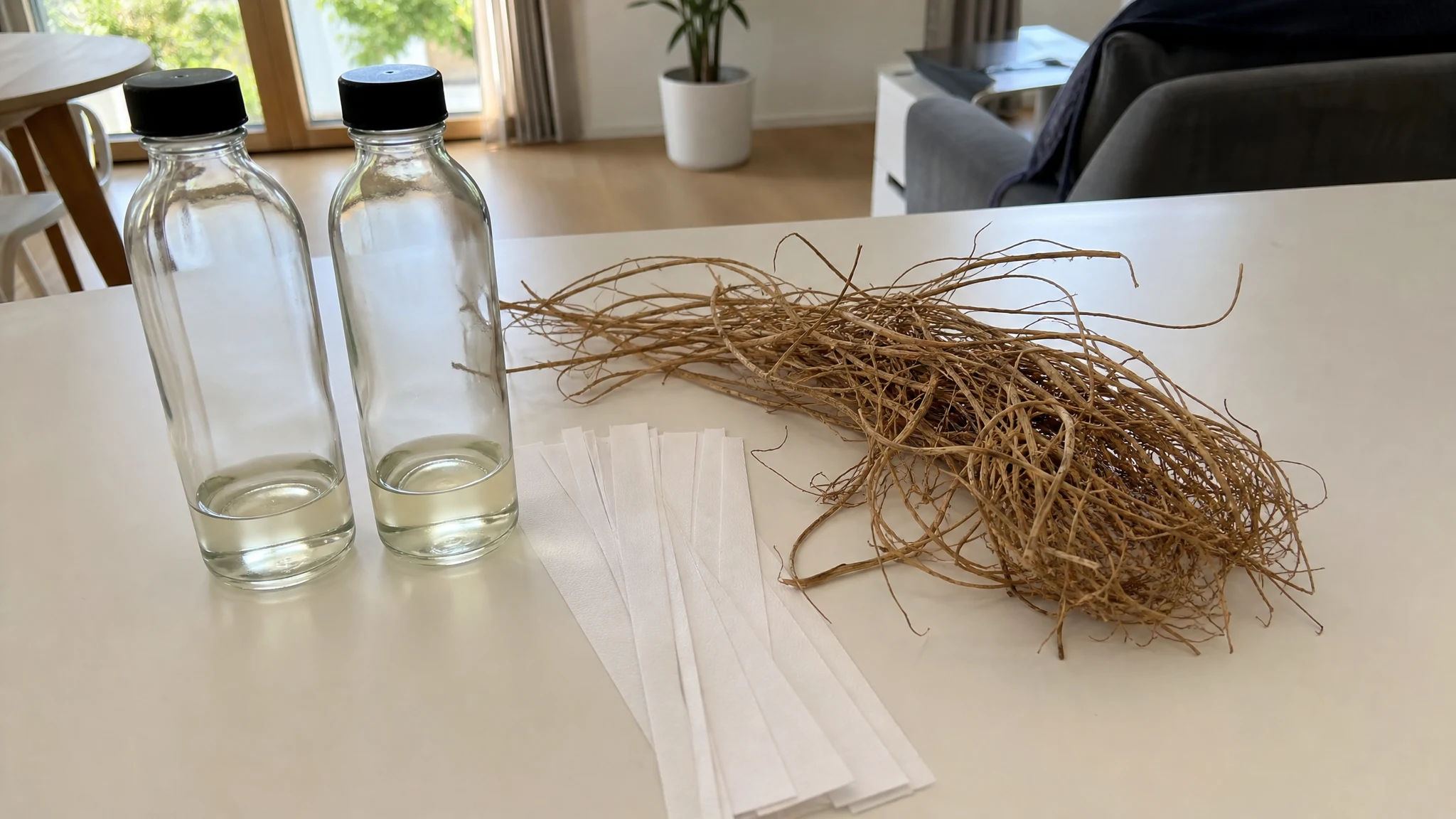
Vetiver in Perfumery: Why Perfumers Love It
Vetiver turns up in over a third of fragrances. See what makes its scent so layered, why oils differ from lot to lot, and how to judge a sample by nose.
Vetiver Oil and Focus: What Research Exists
No trial has tested vetiver oil for ADHD. We walk through the closest rat, mouse and human studies and explain why we call it a scent, not a focus aid.
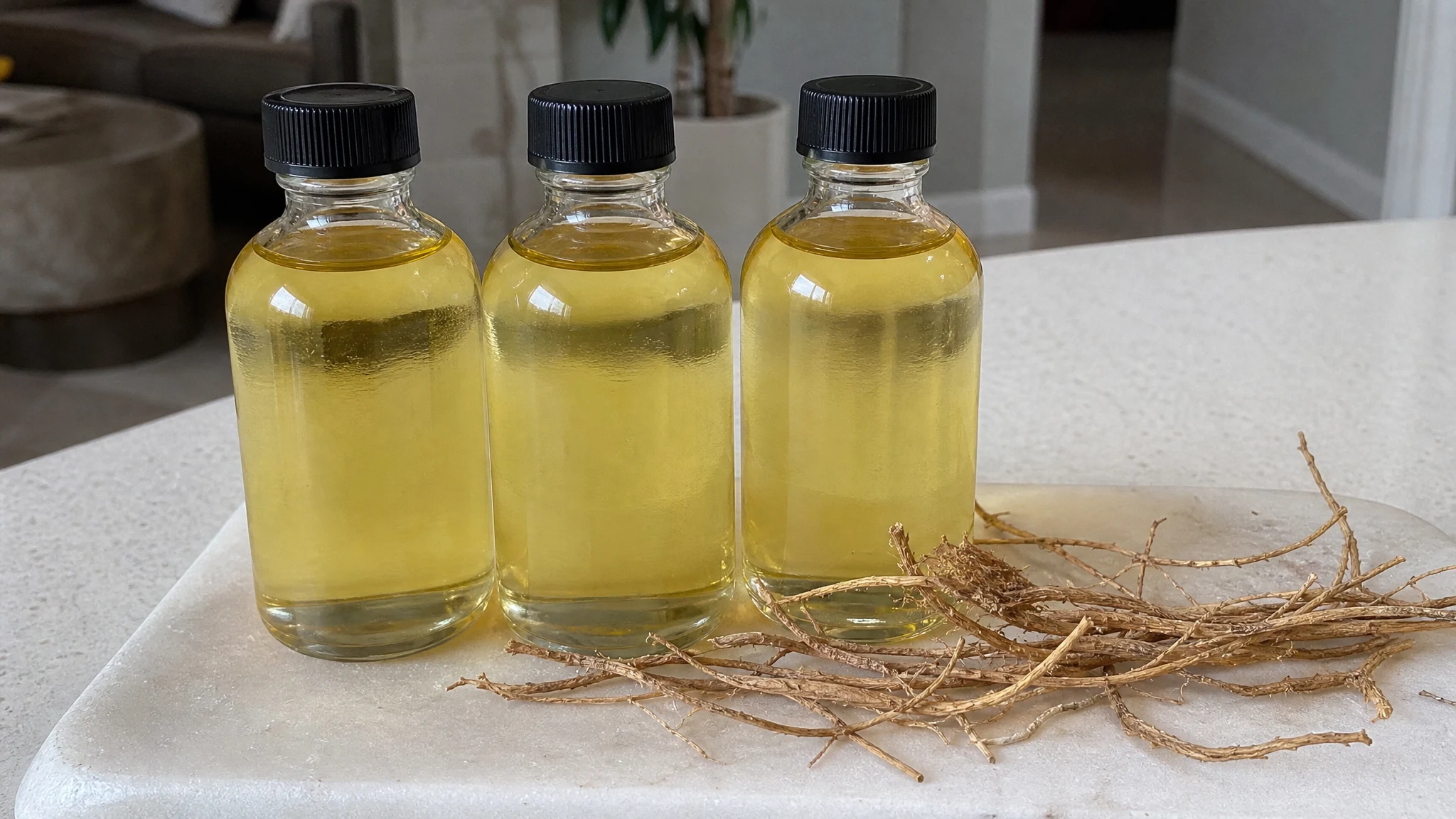
Blending With Vetiver: Ratios, Roles and Restraint
Vetiver is strong and lingers, so blending it is about restraint. A starting ratio, the arithmetic for 10 ml, and how to dilute a finished blend for skin.
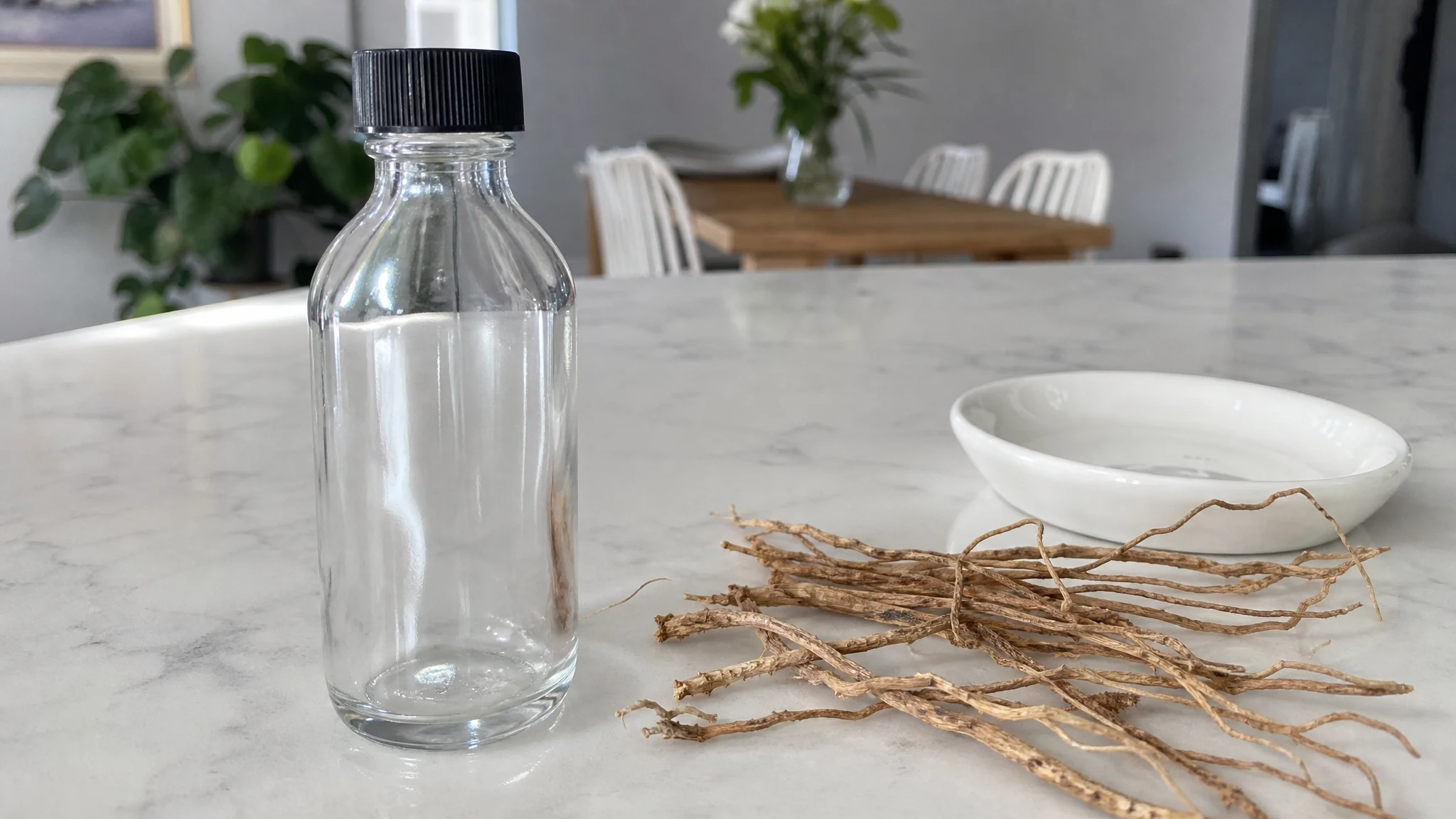
How to Read a Vetiver Oil Label: A Buyer's Checklist
There is no official ladder of vetiver oil grades. Here is how to read a label, what a standard actually covers, and what to ask any seller before buying.
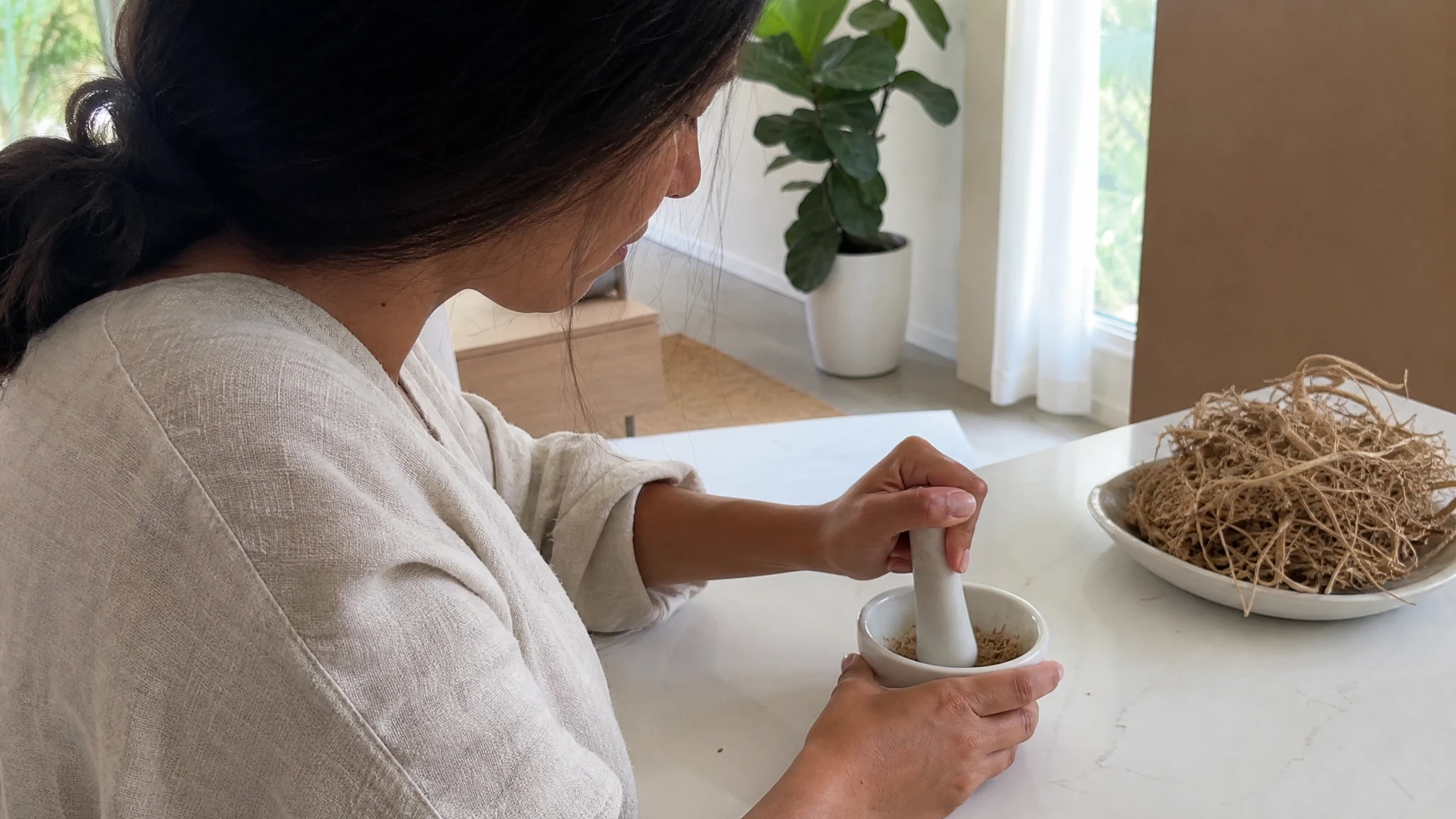
Vetiver Oil Chemistry: What Makes It Smell Like Vetiver
Vetiver oil holds hundreds of compounds, but its scent rides on a few trace molecules. Here is the chemistry in plain English, and why bottles differ.

Vetiver Grass and Soil Erosion: Hedge Versus Oil Crop
Vetiver hedges hold soil on steep slopes, but the oil comes from the roots. Here is what field studies and Haiti reports show, and what to ask a supplier.
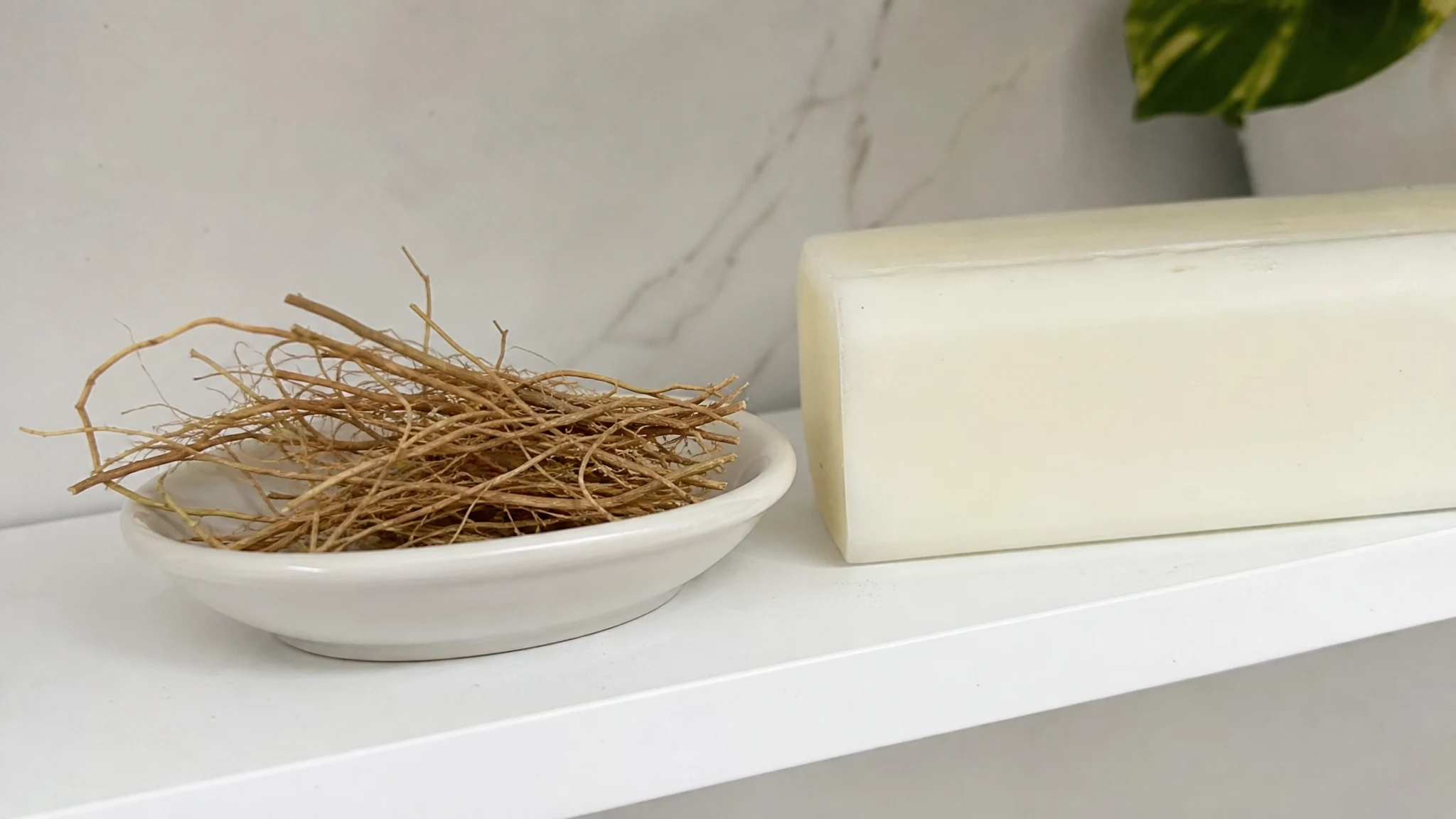
Does Vetiver Oil Help Acne? What the Studies Show
Vetiver oil slowed acne bacteria in a dish. Here is what that does and does not mean for your face, and where we think the oil really belongs.

Vetiver Oil Safety: Dilution, Patch Tests and Storage
Vetiver oil goes on skin diluted, never neat. See the dilution ranges, the weight arithmetic for a thick oil, and who should ask a professional first.
Vetiver Oil on Skin: How to Dilute It for Scent
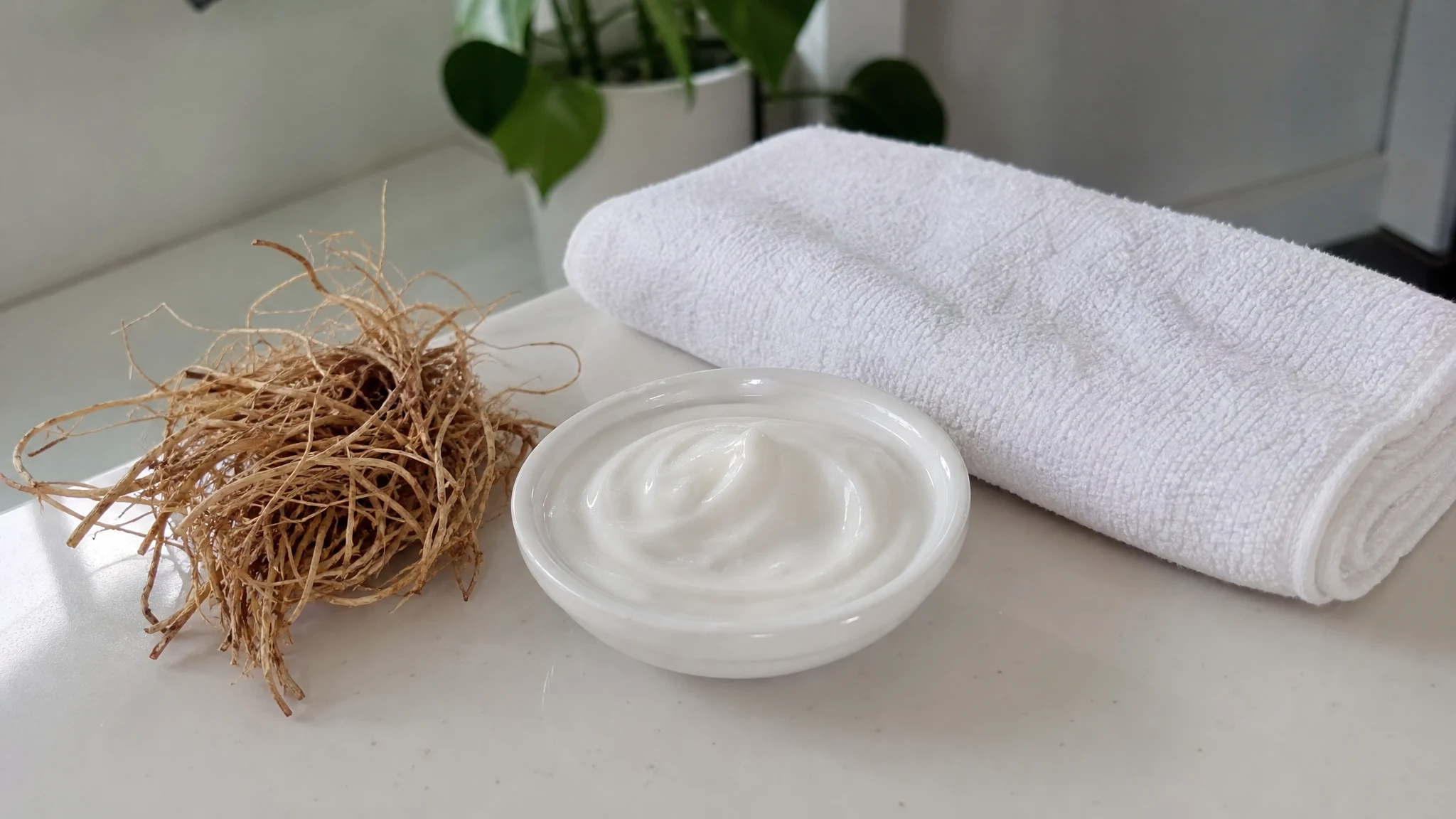
Vetiver is a lovely scent for a balm or massage oil, as long as you dilute it. Here is how much, how to patch test, and what the allergy research says.
Vetiver Oil vs Hydrosol: Strength, Shelf Life and Uses
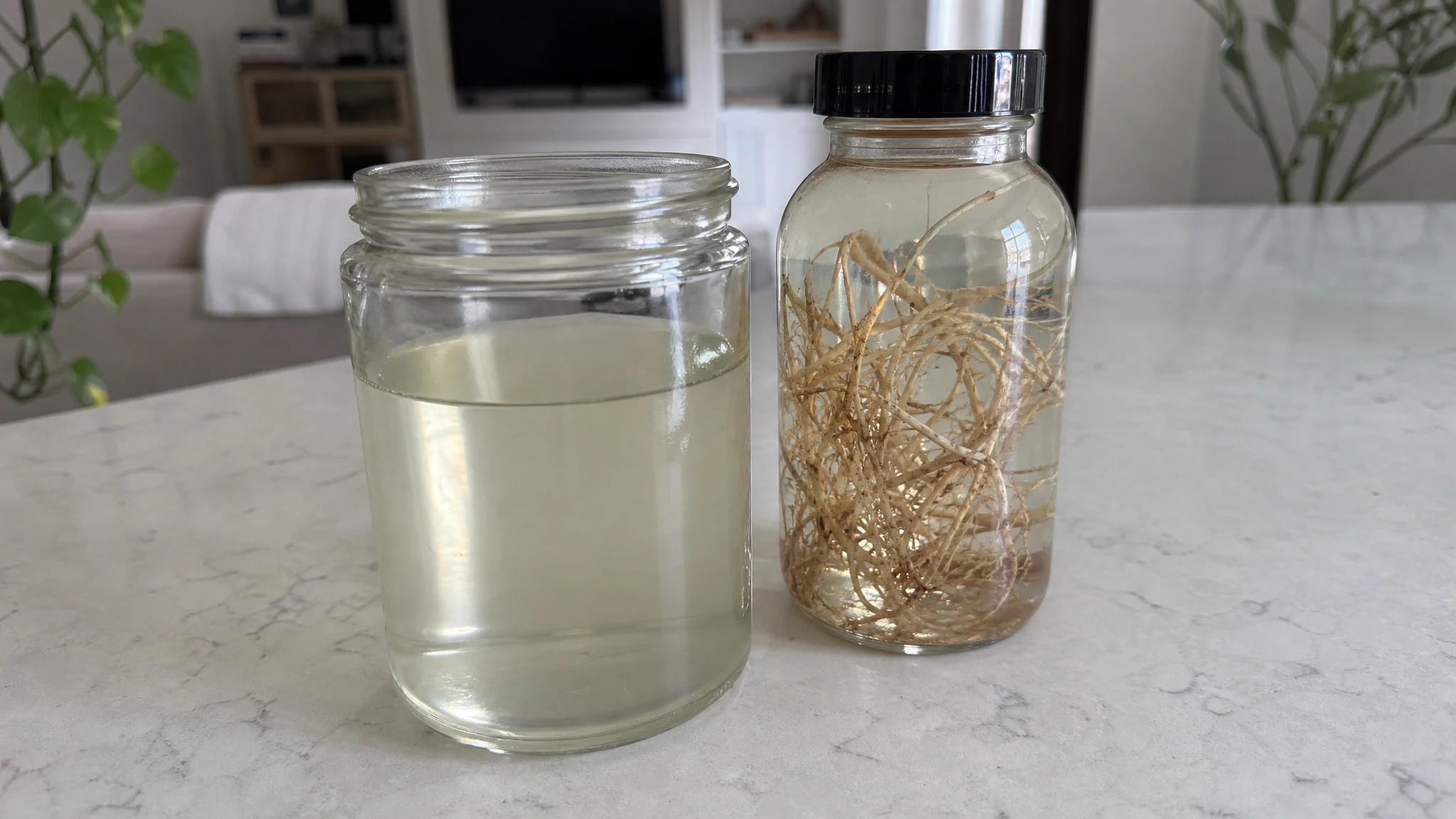
Vetiver oil and hydrosol come off the same still but behave very differently. Strength, storage and which one suits a mist, a perfume or a candle.
Steam-Distilled vs CO2 Vetiver: Which Is Which?
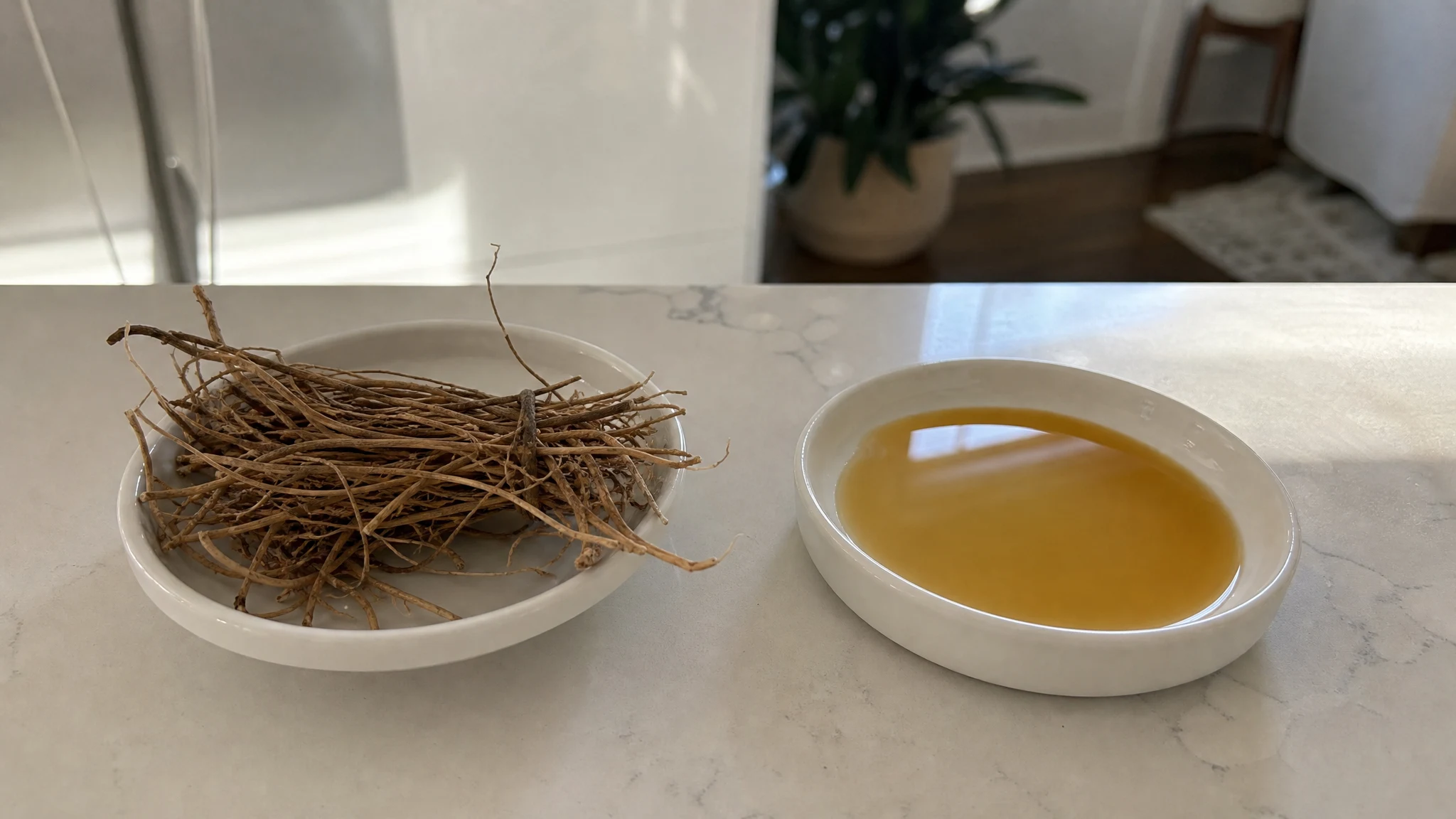
Steam-distilled vetiver oil and CO2 extract share a root but not a profile. See what the studies compared and three questions worth asking a seller.

Vetiver Oil Around Children: Storage and Guidance
With little ones at home, the cupboard matters more than the dilution. What poison control says, where guidance differs, and who to ask about a baby.

Vetiver History: From Indian Cooling Screens to Chanel
From cooling root screens in India to Chanel and Guerlain: vetiver's dated story, how Haiti took the lead and when its key smell was finally solved.
Vetiver Candles: Scent Load, Wax and a Worked Example
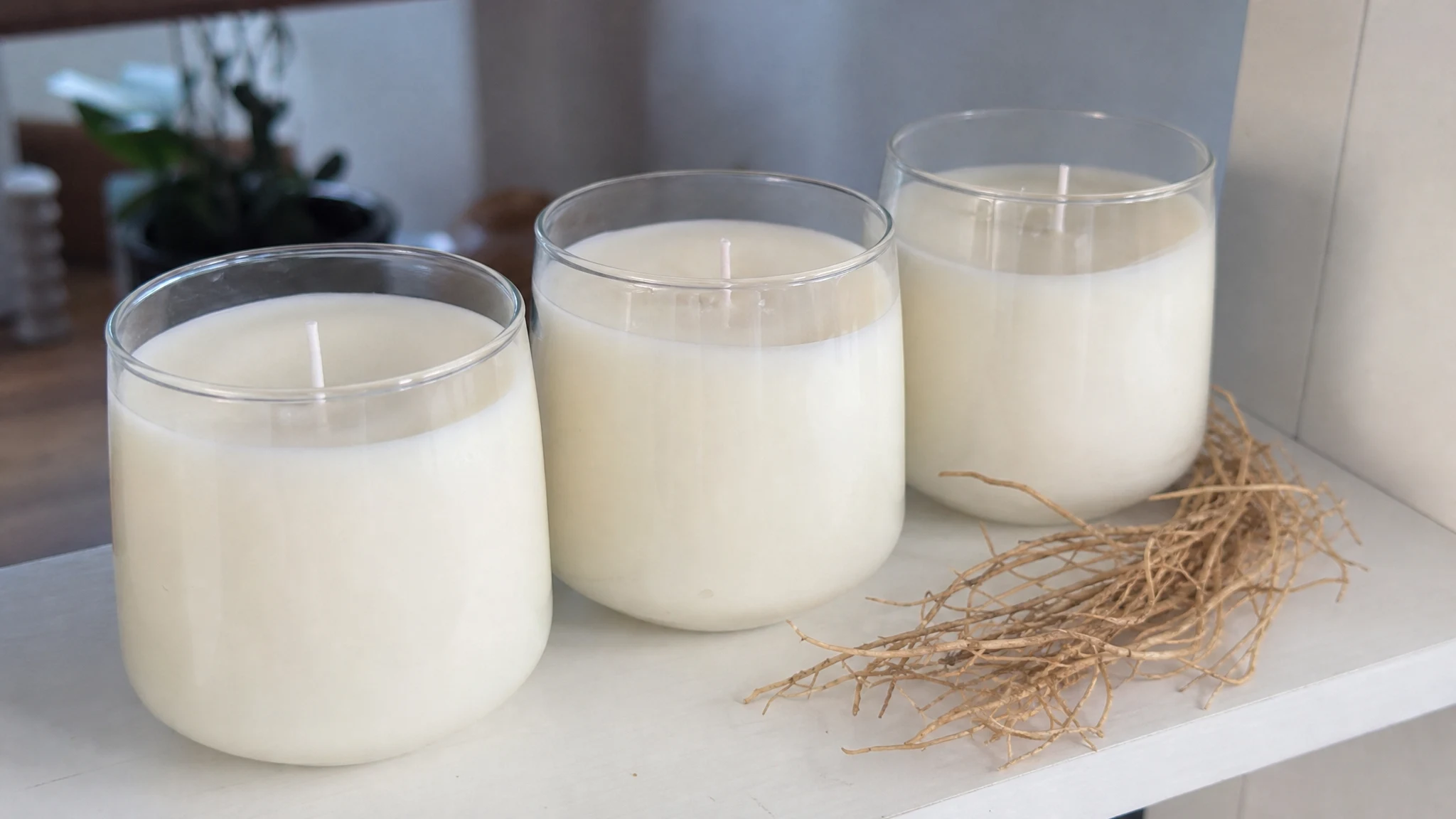
Vetiver gives a candle a deep, smoky-sweet foundation. See a worked 300 g formulation, why to weigh the oil, and how long to let the candle rest.
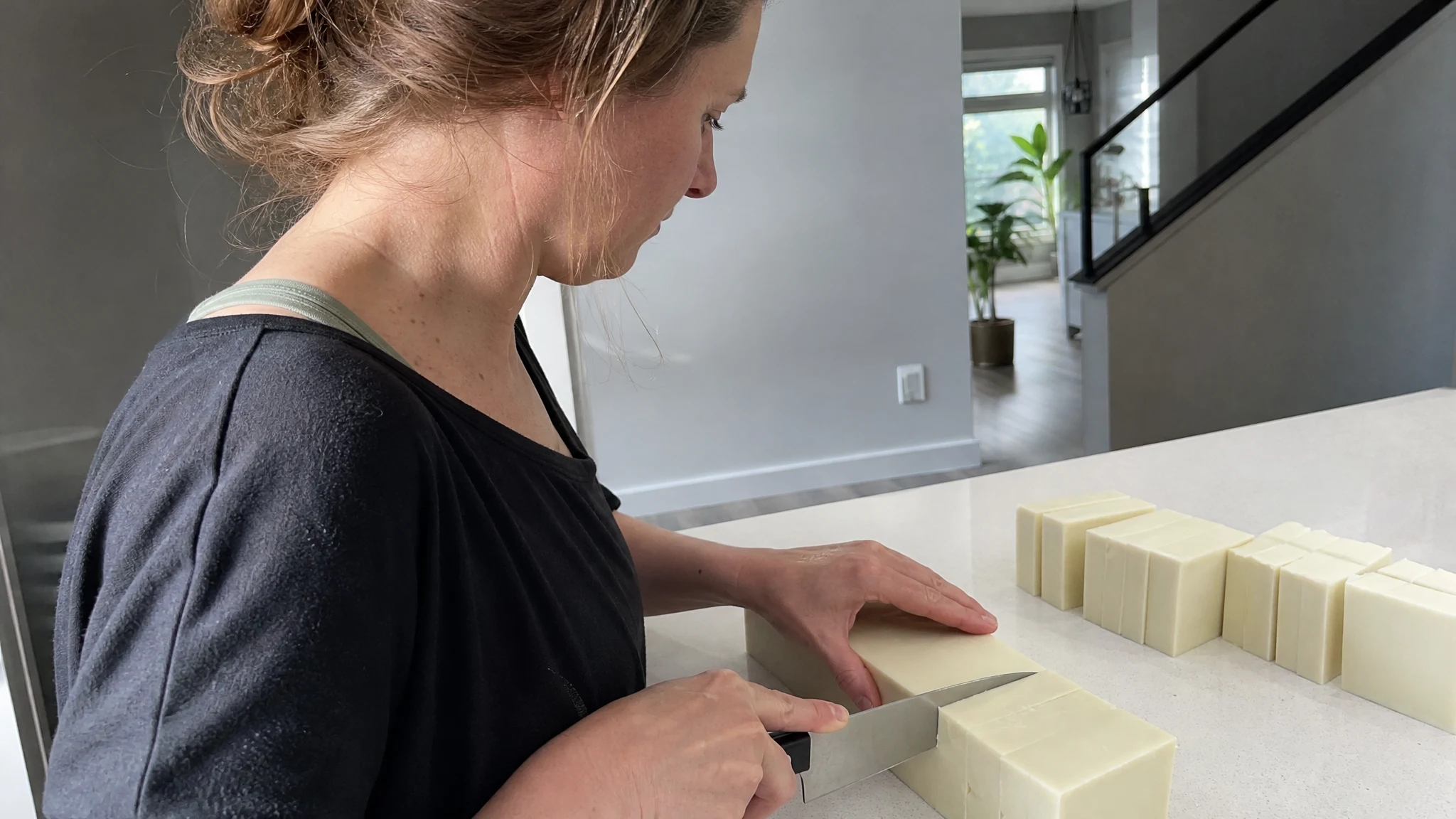
Vetiver Soap Making: How Much to Add and When
A deep, earthy vetiver bar starts with the right scent rate. Work out how much to add, when to stir it in, and what colour to expect in pale soap.
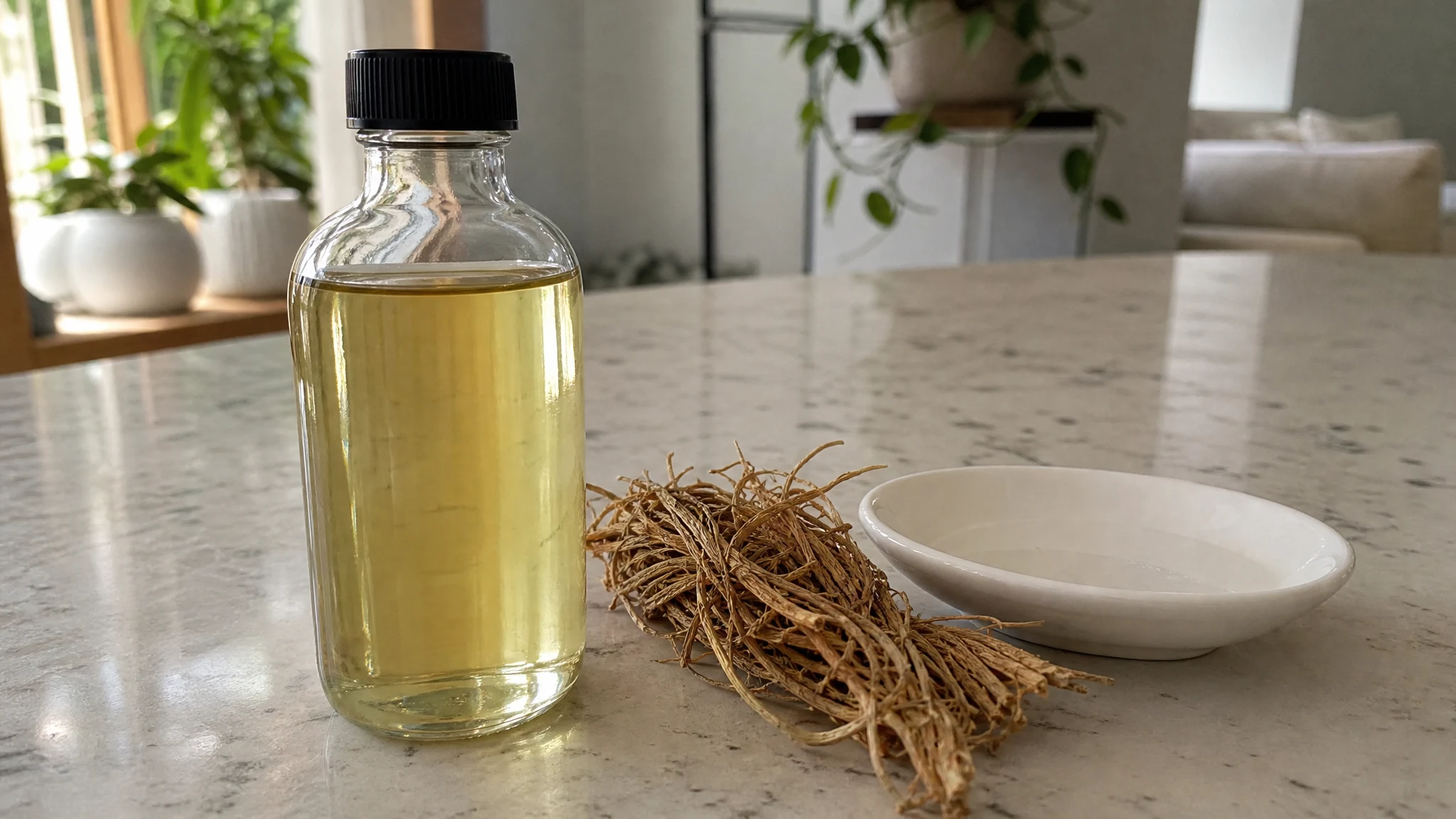
Is Vetiver Oil Right for You? What It's Really Like
Deep, earthy, smoky-sweet and very thick: what vetiver oil is like to own, how to use it, and what the research says, so you can decide if it suits you.

Khus Oil vs Vetiver Oil: What's the Difference?
Khus is vetiver with a story: wild North Indian roots, copper stills, no sandalwood base. See how it differs from the steam-distilled oil most of us buy.
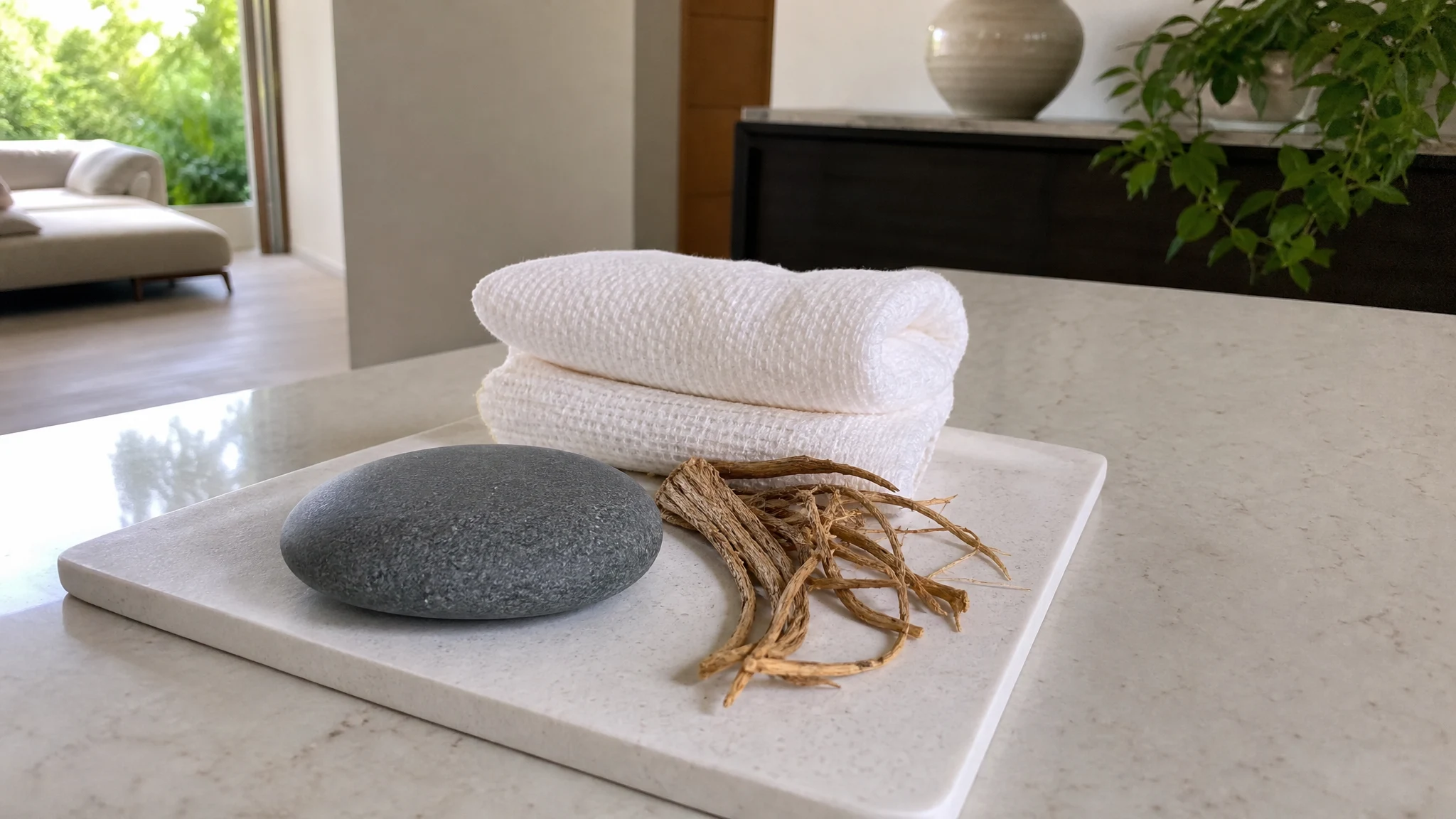
Vetiver Massage Oil for Hot Stone Sessions: Safe Dilution
Vetiver's deep, earthy scent suits a warm stone session. Start with stone safety, then learn how to blend a gentle massage oil by weight.
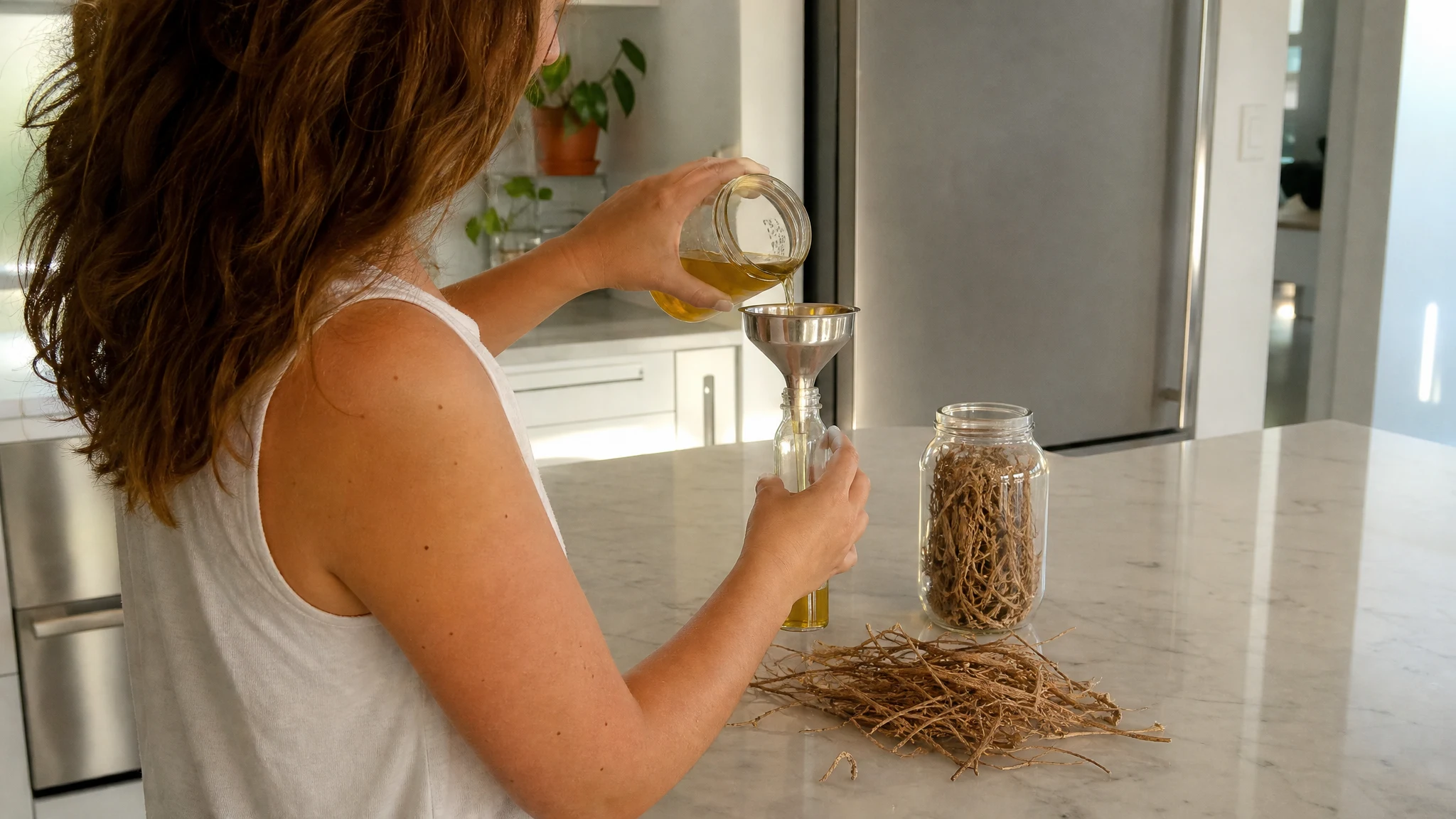
Making a Simple Vetiver Perfume at Home: Formula and Tips
A home vetiver perfume is a lovely weekend project when vetiver is the anchor. Ratios by weight, the alcohol, and the skin limits that shape the strength.

Water-Free Vetiver Linen Spray: How to Make It
Oil and water do not mix, and scented water can host microbes. A small ethanol-based vetiver linen spray avoids both, with the arithmetic and safety notes.

Can Vetiver Scent Trigger Memories? A Careful Look
Smell is wired to memory, for better and for worse. What research says about scent and trauma, and how to try a new aroma like vetiver with care.

How to Store Vetiver Oil and Why It Thickens With Age
Vetiver is one of the few oils with a storage study of its own. See how it thickens and mellows with time, and how to keep a bottle in good shape.
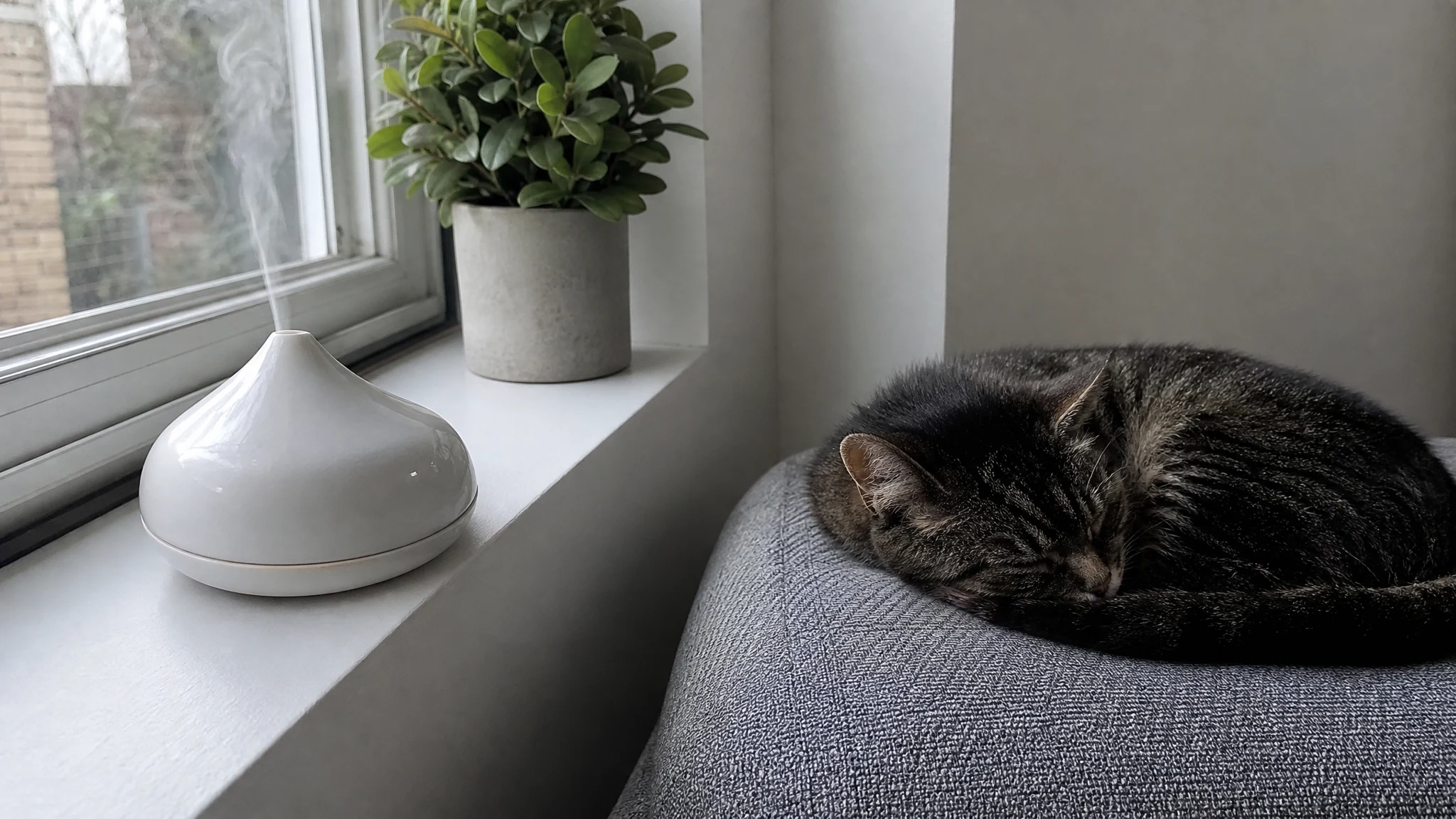
How to Diffuse Vetiver Oil: Timing, Pets and Cleanup
Vetiver pours like molasses, so the diffuser you choose matters. Machine types, sensible timing, and who else in the house should be considered.

Vetiver Beard Oil: A Gram-by-Gram Recipe
Vetiver brings a dark, smoky-sweet scent to beard oil while the carrier does the conditioning. Get the facial percentage right and weigh it.
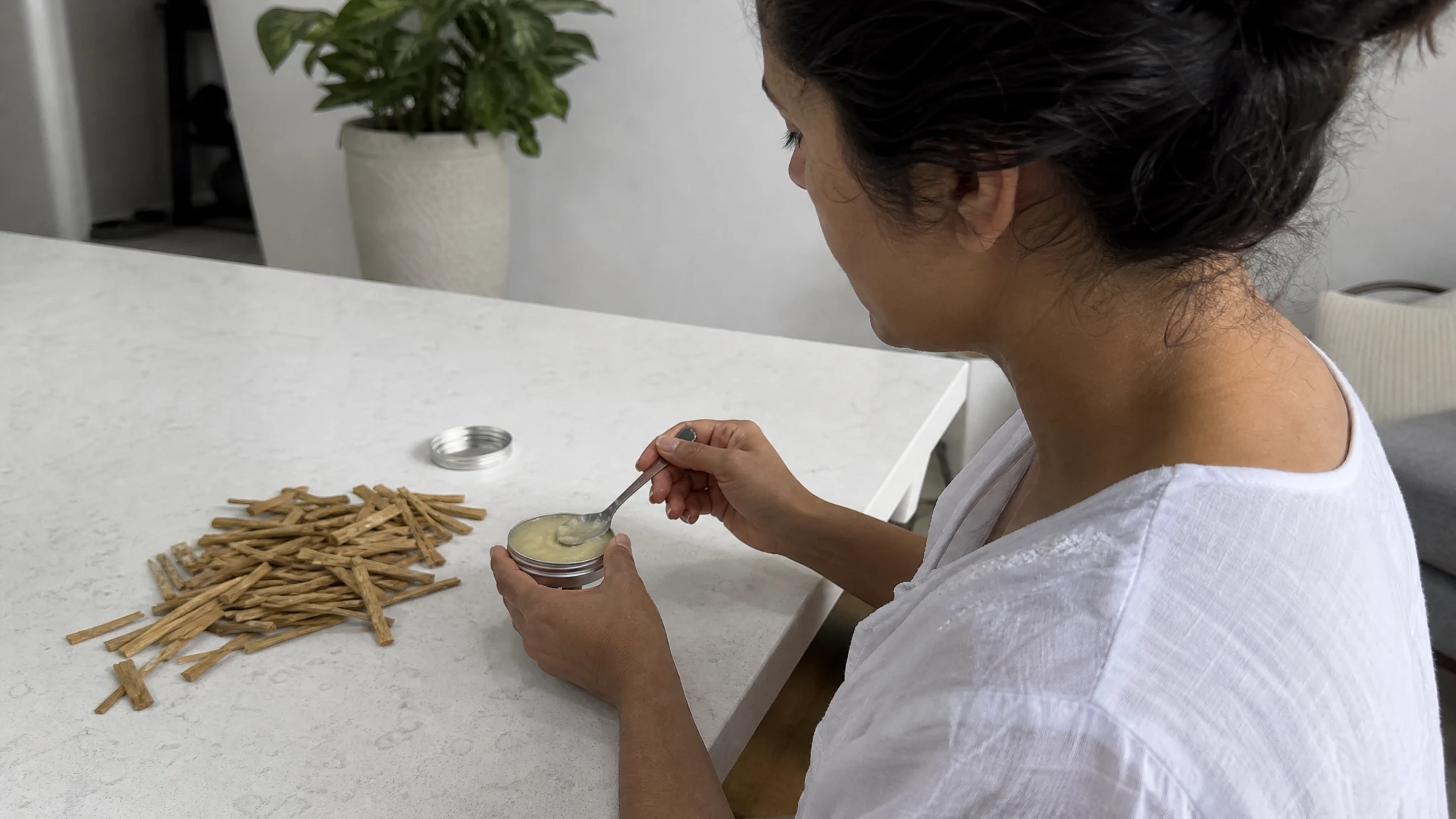
Vetiver Sandalwood Solid Perfume: A Balm Recipe by Weight
A quiet, close-to-the-skin solid perfume of beeswax, jojoba, vetiver and sandalwood, worked out by weight with skin limits and sourcing questions covered.
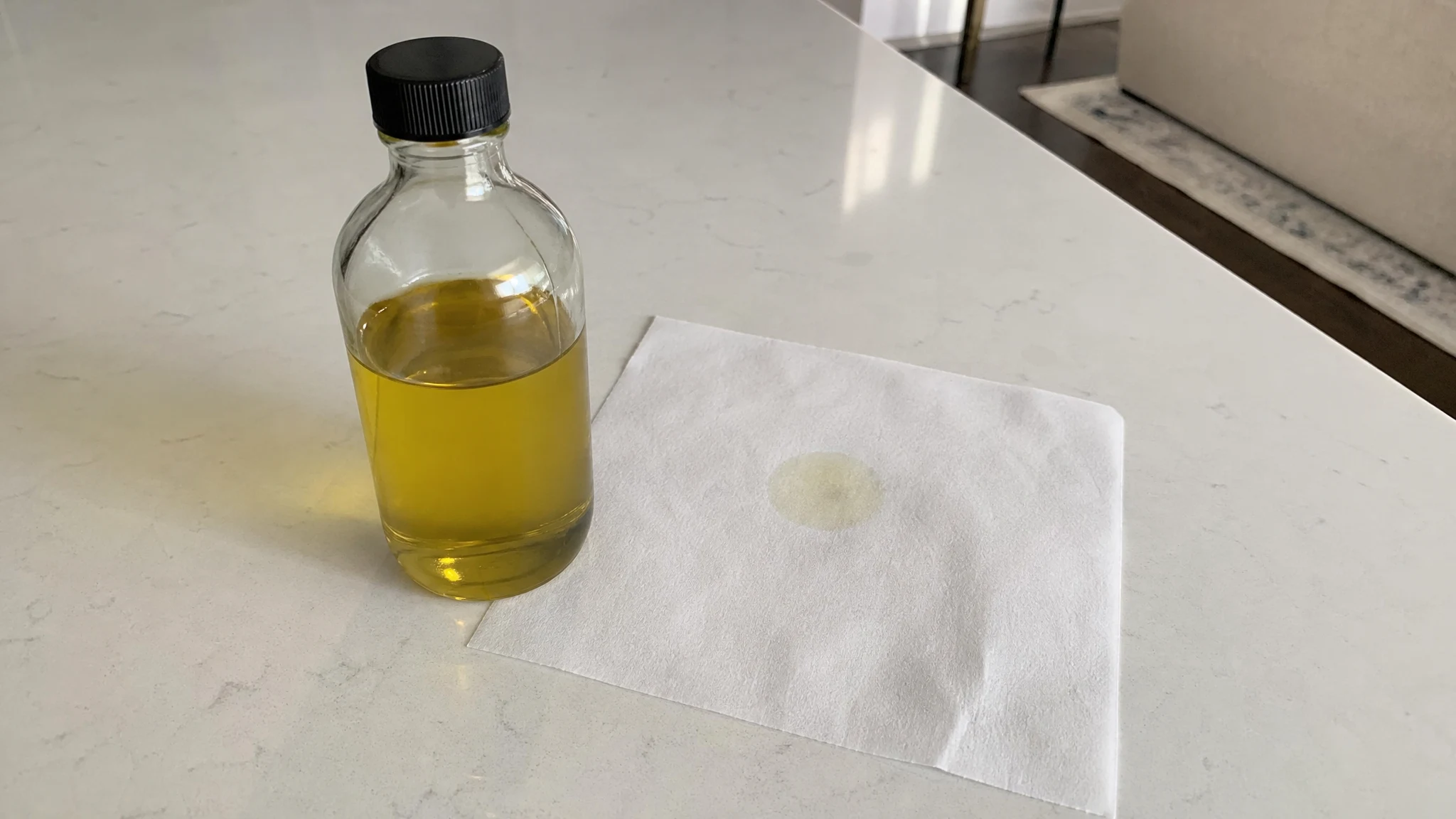
Vetiver Oil Paper Test: Why It Gives False Alarms
Vetiver leaves a stain on paper that looks like a fault but is just a thick oil. See what the test misses and what to ask a seller for instead.
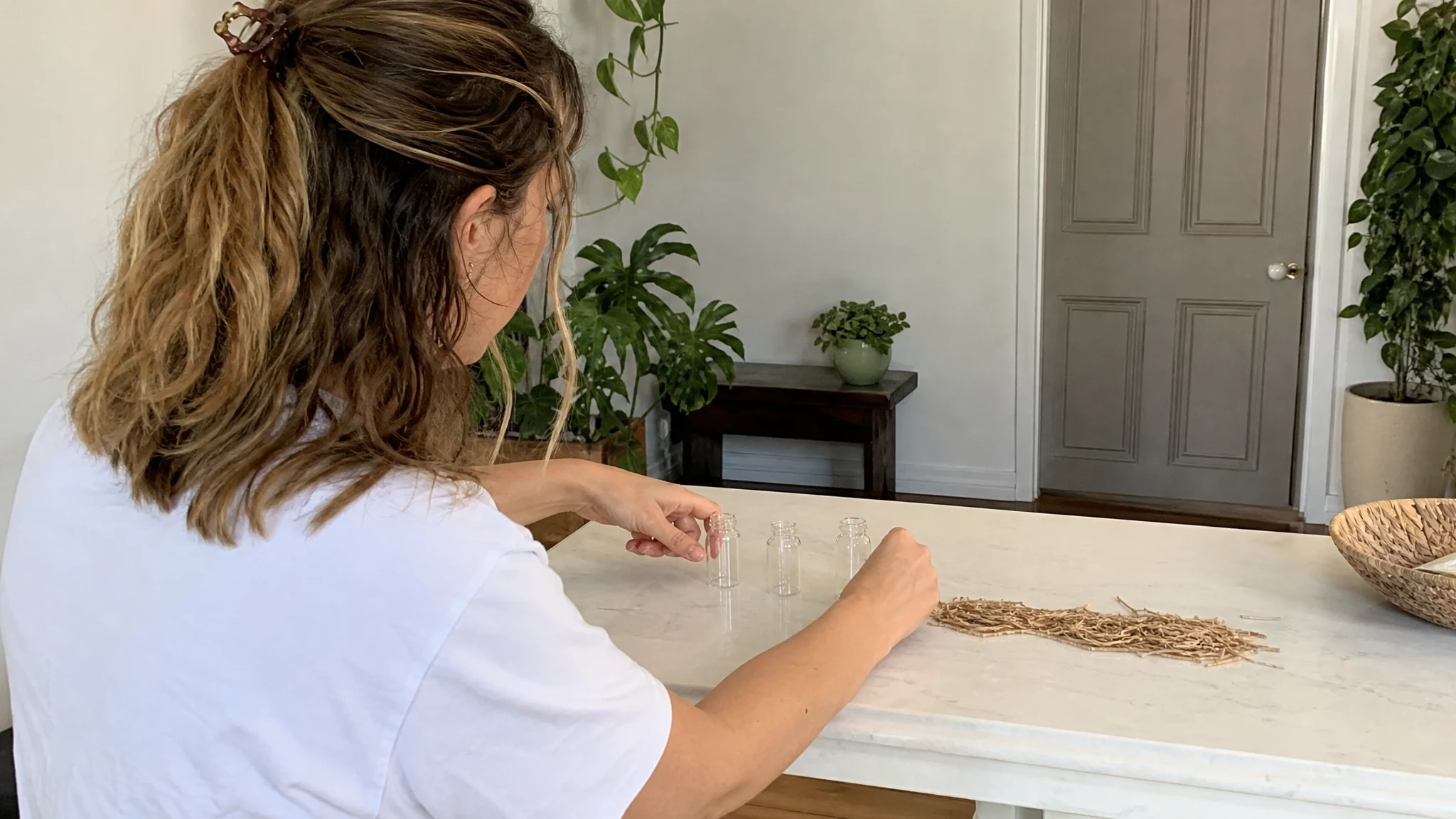
Vetiver in Natural Perfume: How to Build a Base Note
Vetiver works best as the floor of a blend, not the whole house. Decide its job, keep it small, and build the layers in order so the top notes survive.
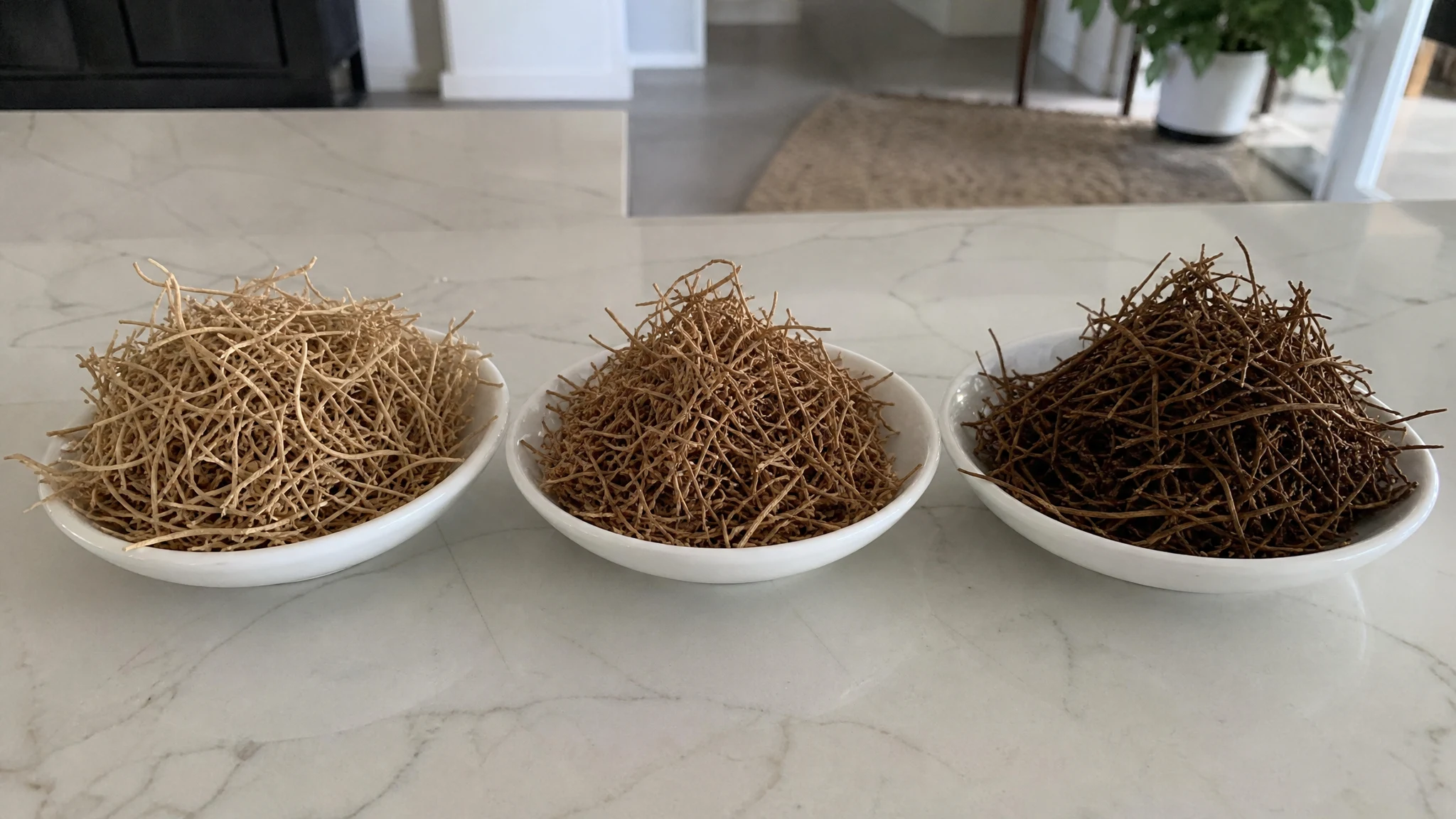
Haitian vs Javanese vs Indian Vetiver: Does Origin Matter?
Smoky Haitian, bitter Javanese, rooty Bourbon: perfumers hear real differences between vetiver origins. Here is what a country name can tell you.

How Vetiver Grass Is Harvested: Digging, Drying, Distilling
Vetiver oil begins as a grass whose roots are dug by hand after more than a year. Follow the crop from field to still, and see why timing shapes the oil.

Vetiver Oil Around the House: 3 Simple Ways to Use It
Vetiver is thick, dark and very persistent. Here is where a drop or two belongs in your home, from a scented cloth scrap to a short diffuser session.