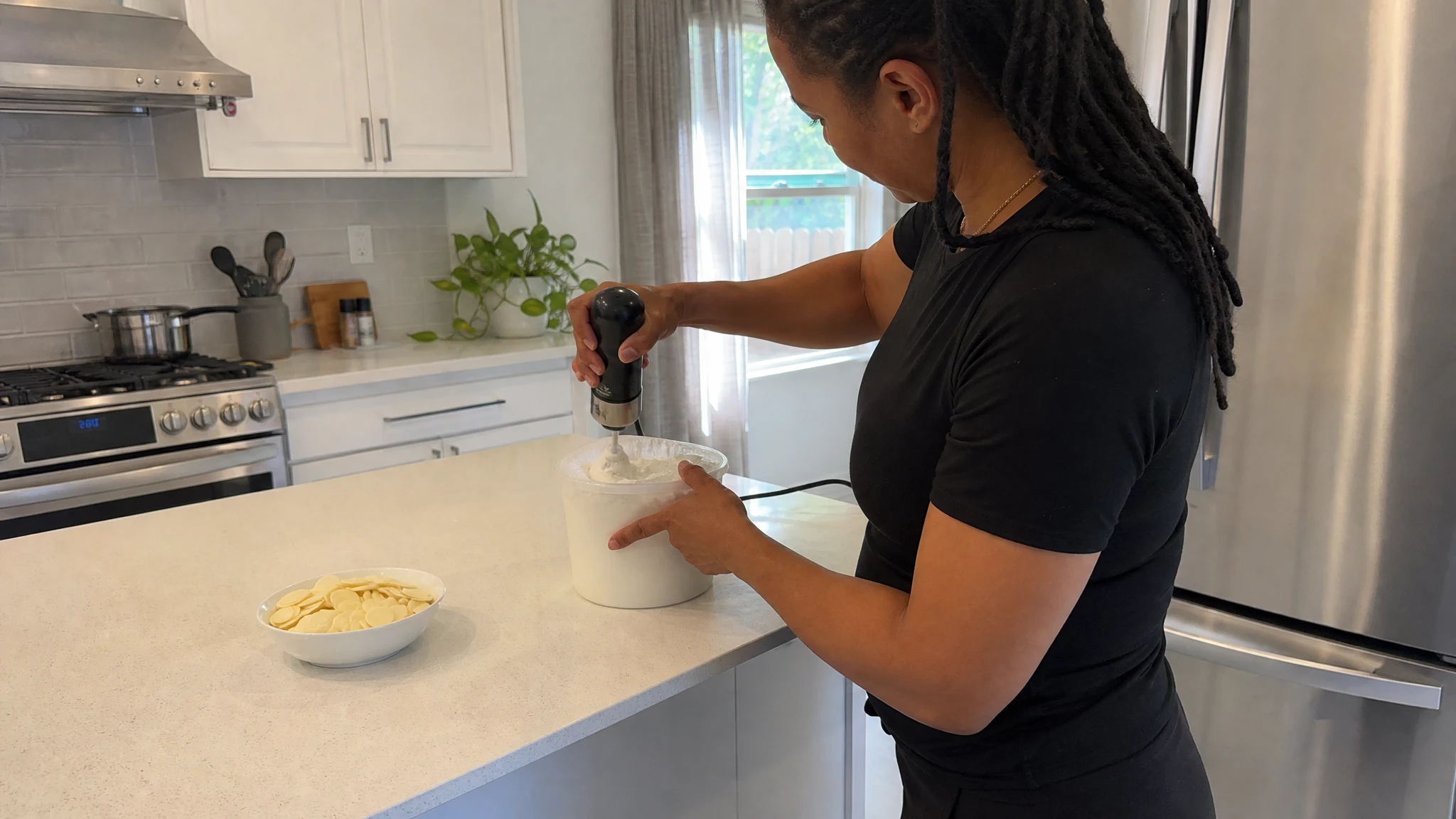
Vetiver Body Butter With Shea and Cocoa Butter
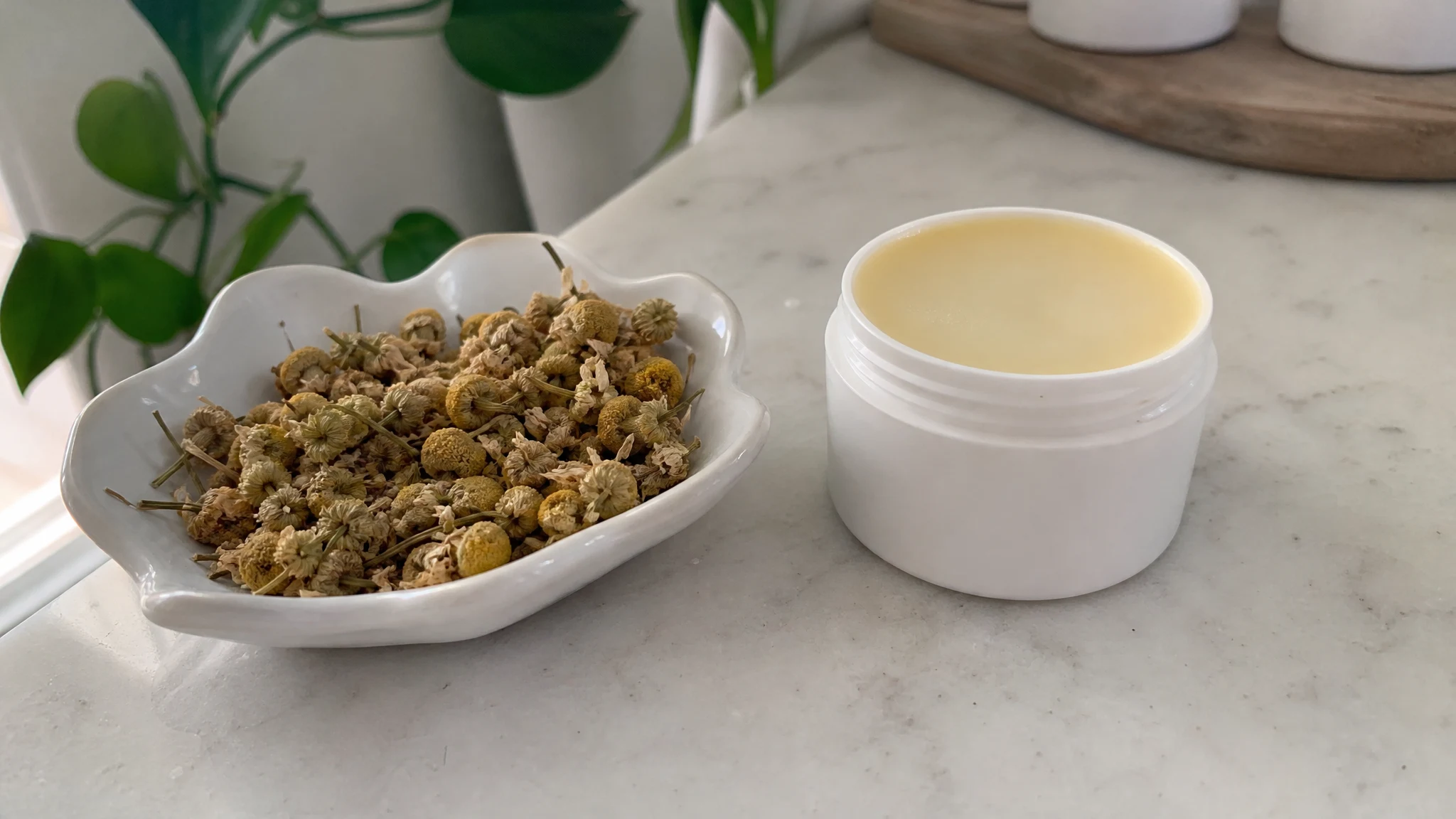
When winter skin gets dry, the hero of a body butter is the butter. Vetiver is the finishing touch: a deep, earthy, smoky-sweet scent that suits cold evenings. So we build this formula the way we would think about it, base first. Make a good unscented butter, then scent all of it or only part of the batch. The recipe below is a formulation worked out from the sources cited and simple arithmetic.
Vetiver Essential Oil
Our own Vetiver Essential Oil, in sizes from 0.5 oz to bulk.
From $20.99
Shop Now →What dermatologists suggest for winter dryness
The American Academy of Dermatology's cold-weather advice is pleasantly practical. Use an ointment or cream, because they are more effective and less irritating than lotions. Apply moisturizer immediately after washing, which traps existing moisture in the skin. Choose gentle, fragrance-free products. And if home care is not working, see a board-certified dermatologist; as one dermatologist quoted there puts it, you do not have to be in pain or itching before you come in.
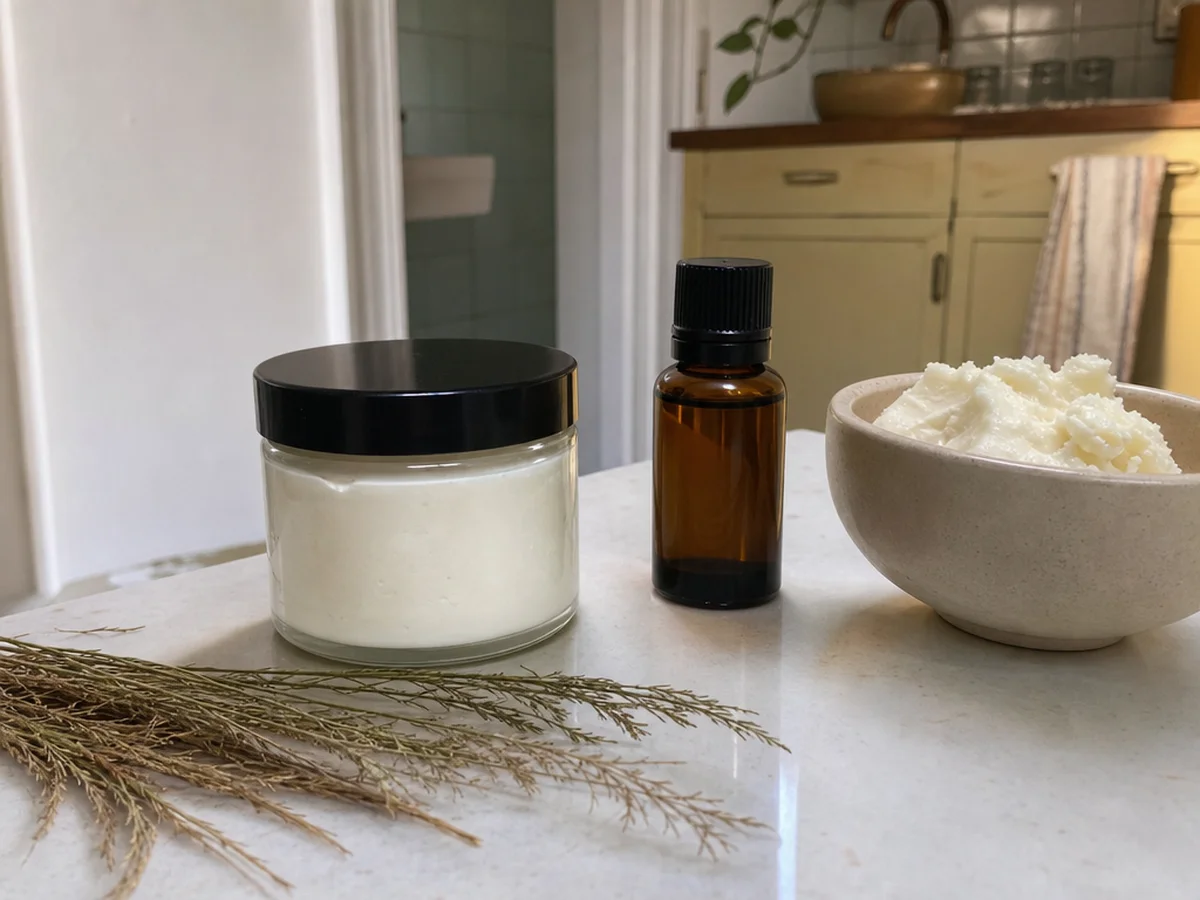
That gives the butter three design rules: make it thick, apply it soon after washing, and treat fragrance as optional. It is why the formula works perfectly well without vetiver, and why we suggest scenting only part of the batch if you also want an unscented jar for sensitive moments.
Why shea and cocoa together
A butter with no water in it is closer to an ointment than a lotion, which is our reasoning from the AAD's preference for thicker products (it does not name shea or cocoa butter). The two butters are also well matched in texture.
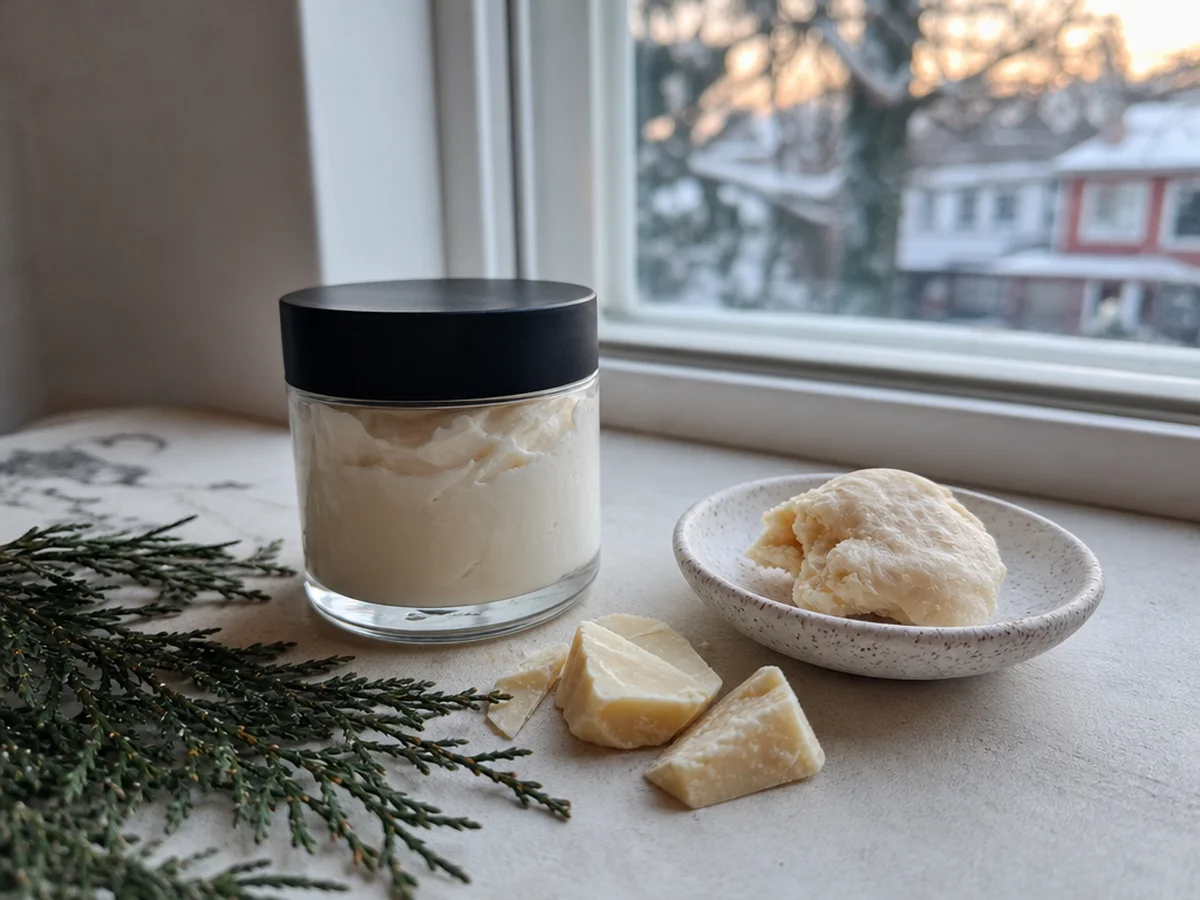
A 2023 study measured crude shea butter at about 43.5 percent stearic acid and 45.8 percent oleic acid, with a slip melting point of 32 C. A butter that starts to soften near 32 C is easy to spread on skin and still holds its shape in a jar. The same paper found that refined fractions varied, from an olein that melted at 25 C to a stearin at 36 C, so a jar labelled "shea butter" can behave differently depending on its grade.
Cocoa butter was measured in a 2020 study with melting peaks at about 30.9 C and 33.6 C, reflecting two crystal forms. That is one sample, but it shows cocoa butter also melts around skin temperature. Reasoning from both, shea gives a soft creamy body, cocoa butter adds firmness, and the liquid oil keeps the mix from setting like a candle.
The formula, by weight
| Ingredient | Grams (100 g batch) | Percent |
|---|---|---|
| Shea butter | 45 | 45% |
| Cocoa butter | 20 | 20% |
| Liquid carrier oil of your choice | 34 | 34% |
| Vetiver essential oil (optional) | 1 | 1% |
Without vetiver, make the carrier oil 35 g. To scent only half, make 100 g of base, split it, and add 0.5 g of vetiver to a 50 g portion. We sell vetiver only, so shea, cocoa butter and carrier oil come from a cosmetic-ingredient or soap-making supplier, where you can ask about refined versus unrefined and the batch date. Our carrier oil post helps with the choice.
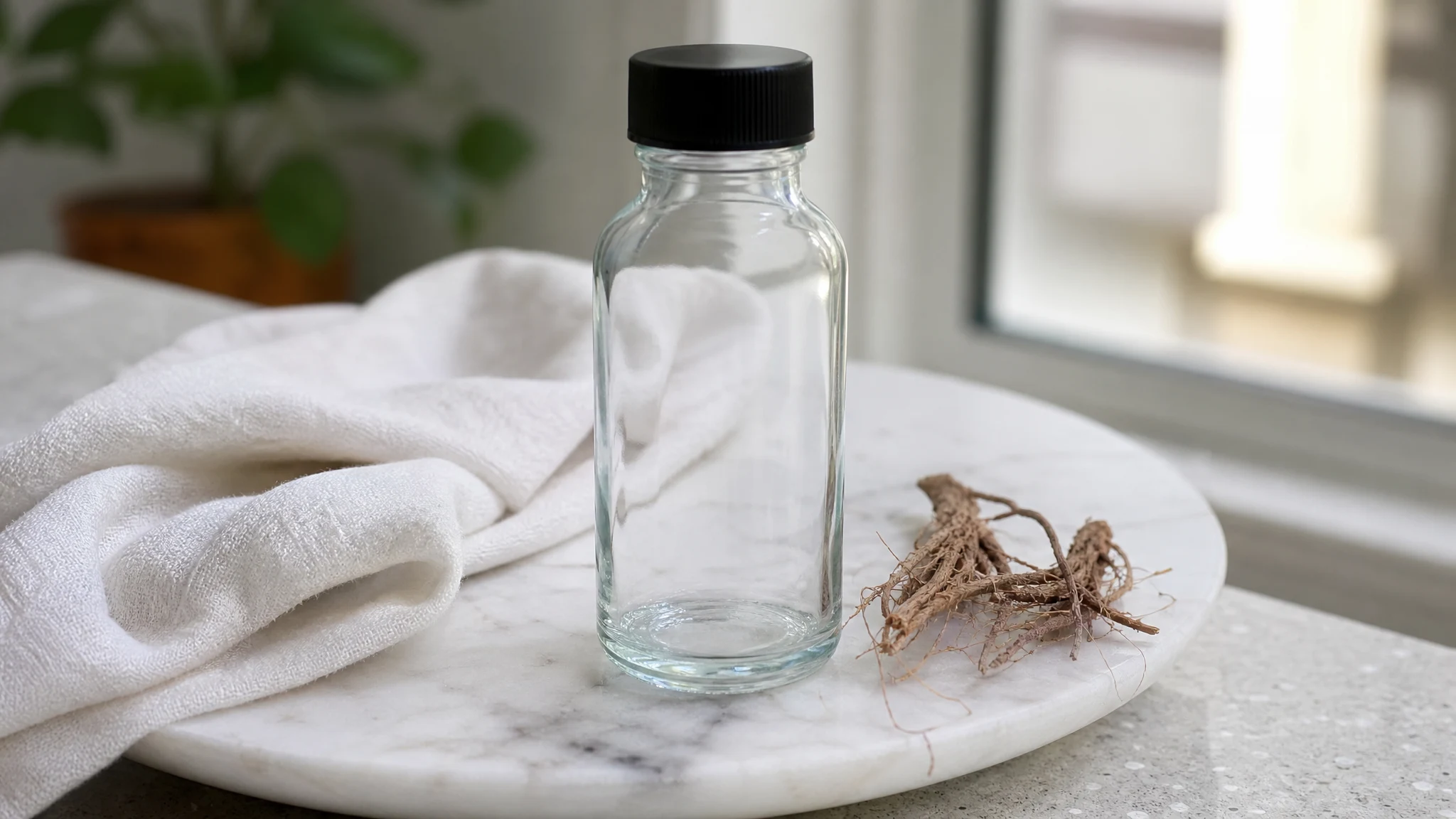
On dilution: our guidance is 0.5% to 2% in a carrier before vetiver touches skin, with a patch test first. Tisserand's published ranges are 1 to 3 percent for body oils and lotions and 0.5 to 1.2 percent for the face, with 0.2 to 1 percent for sensitive skin, so 1 percent suits a body butter. We would keep it off the face and off cracked or inflamed skin. Vetiver is thick, so weigh it: the batch on our Certificate of Analysis has a relative density of 0.993, so 1 g is about 1 ml. By the rough convention of about 20 drops to the ml that is around 20 drops, but drops of a thick oil vary, so a scale that reads to 0.1 g is the better guide.
Method
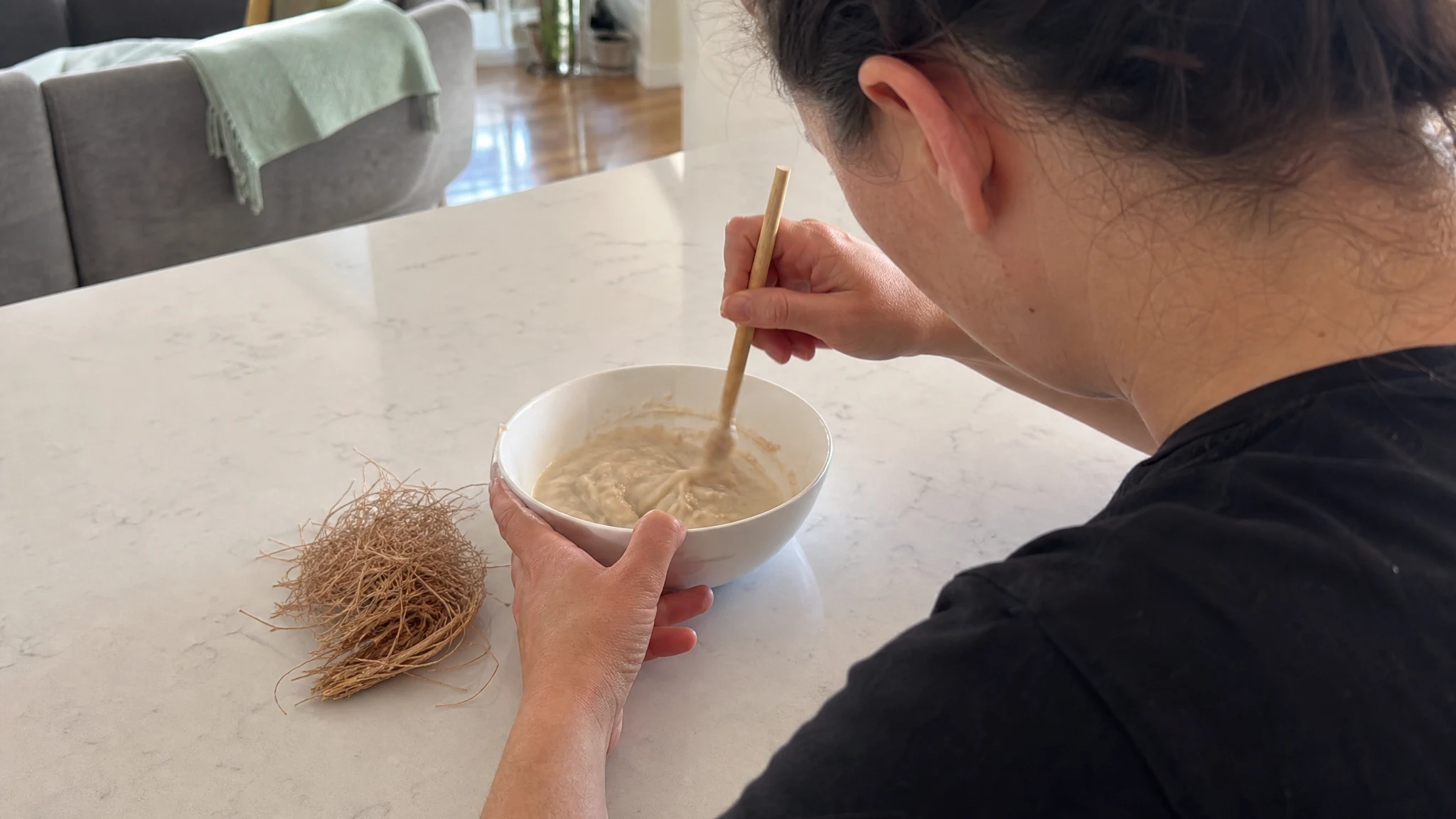
- Melt the shea, cocoa butter and liquid oil together in a heat-safe bowl over a pot of barely simmering water, stirring until clear.
- Take it off the heat and cool it in the refrigerator, stirring every few minutes, until the edges are the texture of soft frosting and the middle is still pourable.
- Stir in the vetiver if you are using it, whip briefly with a hand mixer for a lighter texture, and spoon into a clean, dry jar.
Why chill it quickly? Slowly cooled butters can set grainy. In the cocoa butter study, cooling at 2 K per minute gave smaller, denser crystals than holding the sample at 22 C, so by extrapolation, a quick chill with stirring should help a mixed butter stay smooth. If a jar melts in a hot car and re-sets grainy, melt it and chill it again.
Making it a small ritual
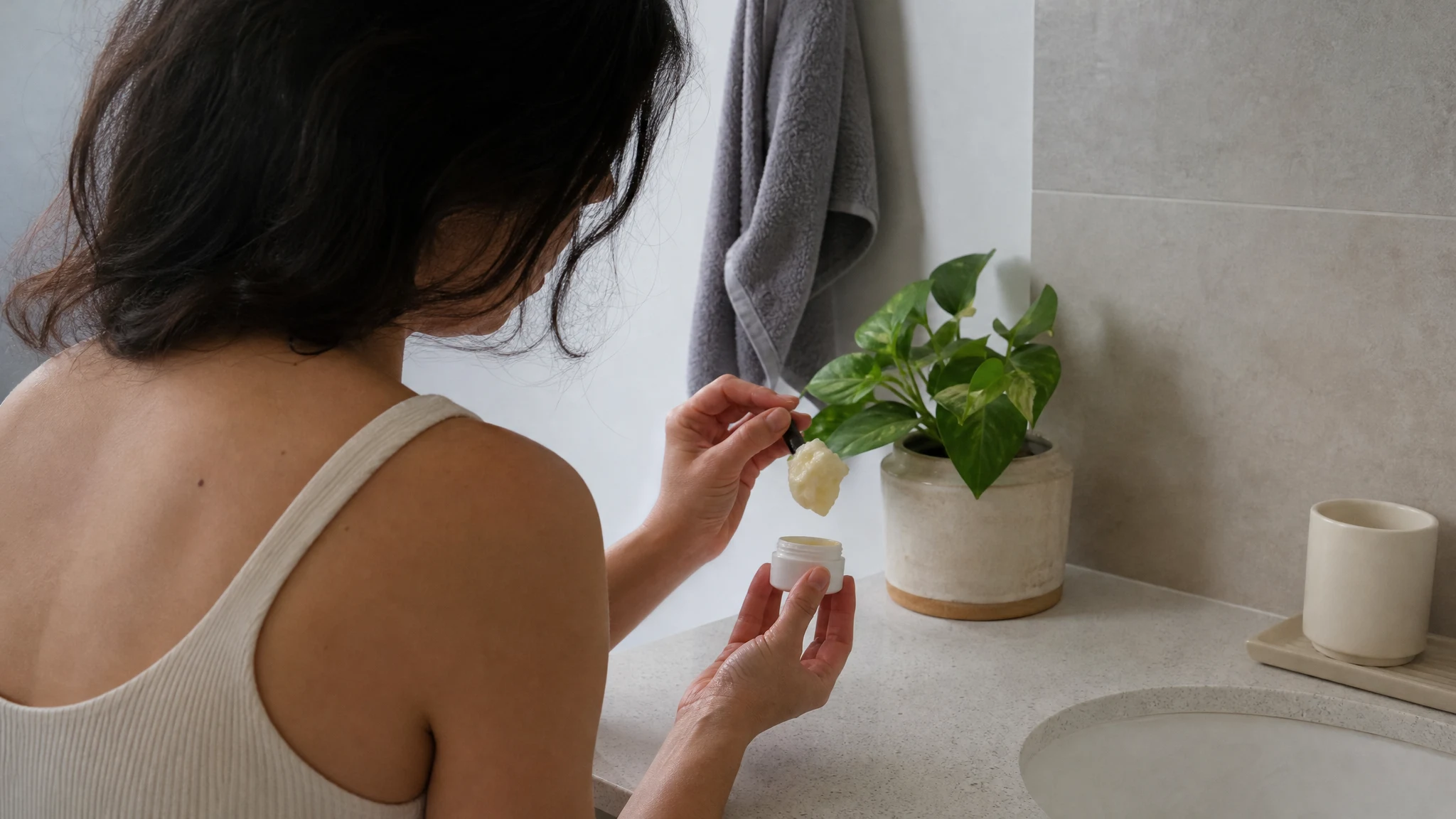
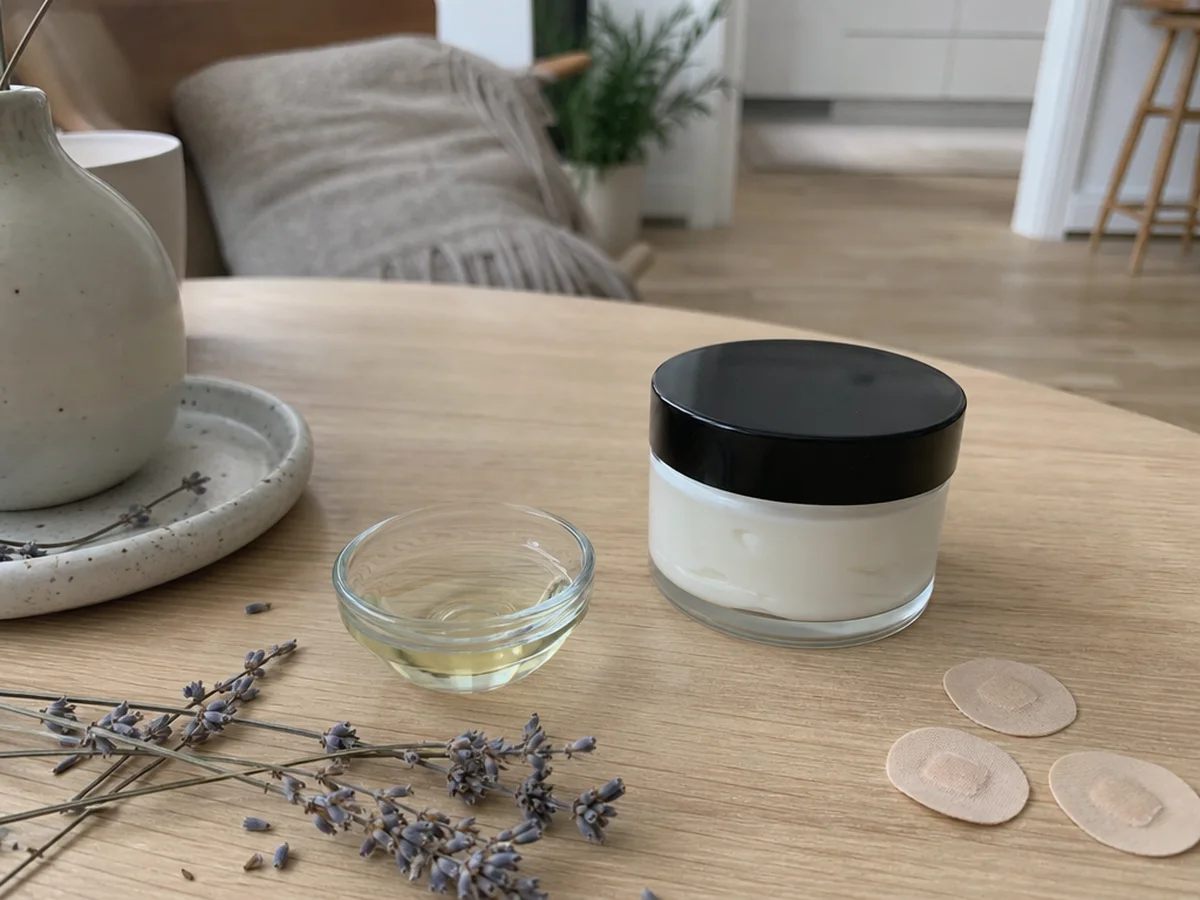
A butter this thick is a pleasure to use at the end of the day: scoop a little, warm it between your palms until it turns glossy, then press it onto skin that is still damp from washing. You will notice the vetiver arrives first as a deep earthy whisper and then softens as the butter melts in. A small jar by the bath is easier to keep fresh than a big tub, and it makes a thoughtful project to share with a friend.
Keeping it well
- Patch test first, because essential oils as a group cause contact allergy now and then, and most reactions come from undiluted oils or high concentrations.
- Allergies. If you have a tree-nut allergy, ask an allergist before using shea butter.
- Keep it water-free. Adding water turns a butter into something that needs a preservative system designed by a cosmetic chemist. Use a clean spatula and a dry jar.
- Make small batches and store them cool and dark. If a butter ever smells like old paint or stale nuts, replace it. Our storage post covers the oil itself.
For more on vetiver and skin, see our skin post and the after-shave balm. A jar of this on a bathroom shelf is one of the nicer small pleasures of the cold months.
Vetiver Essential Oil
Vetiver Essential Oil from our own shop, in sizes from 0.5 oz to bulk.
From $20.99
Shop Now →Sources & Further Reading
- American Academy of Dermatology. Cold weather and your skin. aad.org
- Abdel-Razek AG et al., 2023. Effect of Refining and Fractionation Processes on Minor Components, Fatty Acids, Antioxidant and Antimicrobial Activities of Shea Butter. Foods. PubMed Central
- Joshi BL, Zielbauer BI, Vilgis TA, 2020. Comparative Study on Mixing Behavior of Binary Mixtures of Cocoa Butter/Tristearin (CB/TS) and Cocoa Butter/Coconut Oil (CB/CO). Foods. PubMed Central
- Tisserand Institute. Dilution for essential oils. tisserandinstitute.org
- de Groot AC, Schmidt E, 2016. Essential Oils, Part IV: Contact Allergy. Dermatitis. PubMed