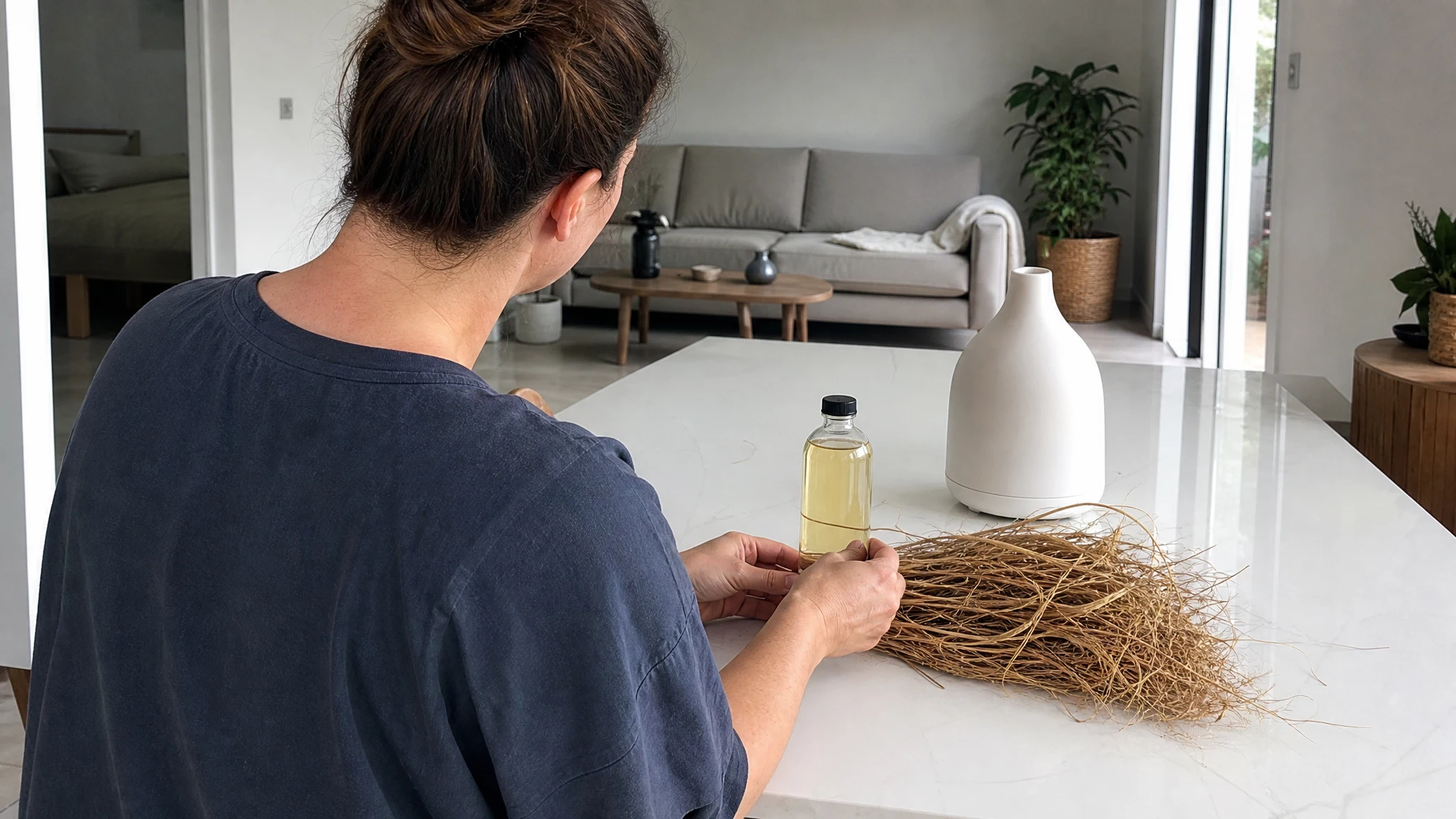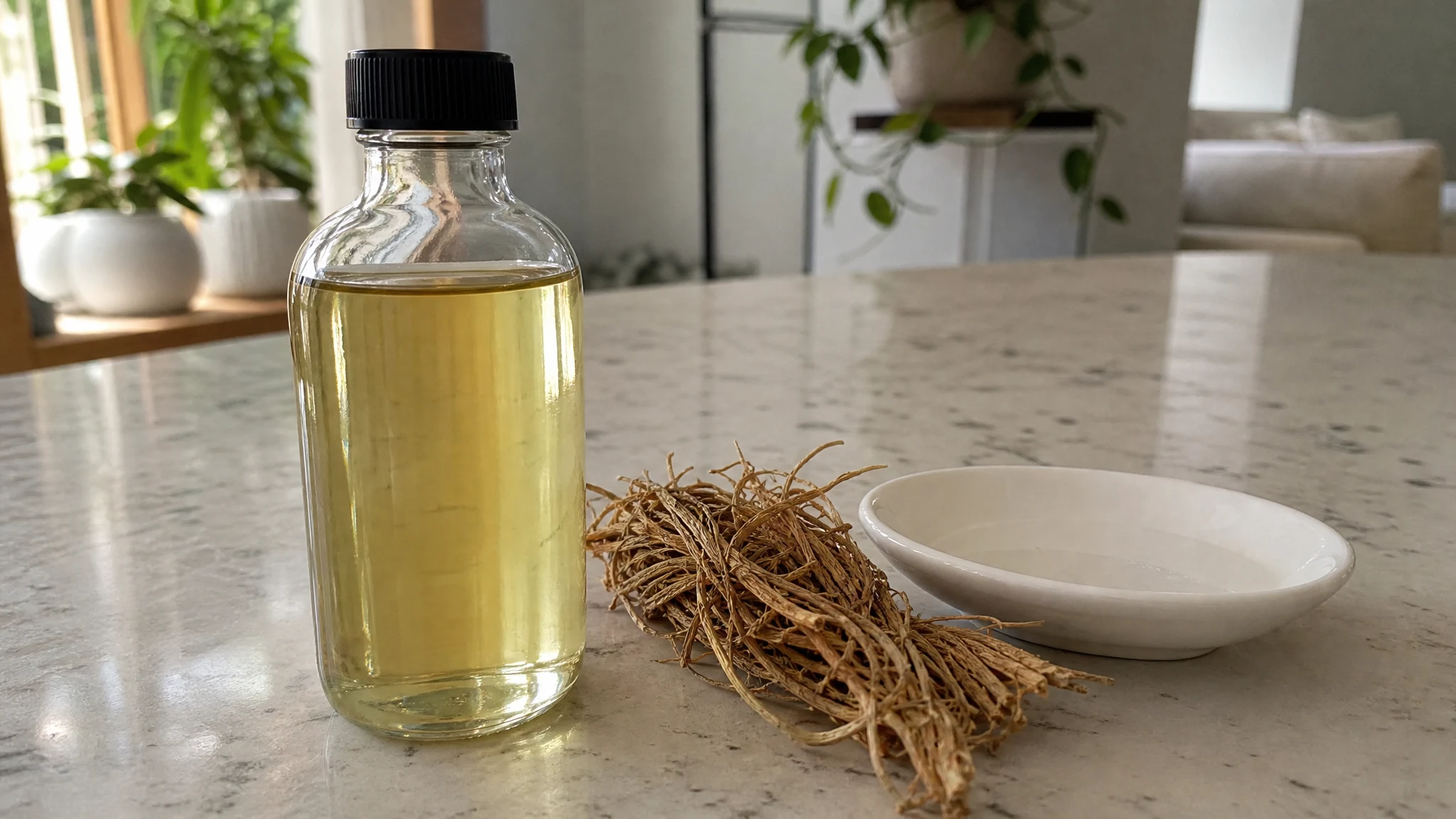
Blending With Vetiver: Ratios, Roles and Restraint
"Add vetiver last, it is a base note" is the advice everyone gives, and it is true but not very helpful. The more useful thing to know is that vetiver does not just last, it speaks loudly, so blending with it is mostly an exercise in restraint. The question at the bench is rarely "what goes with vetiver?" and nearly always "how little can I use?"
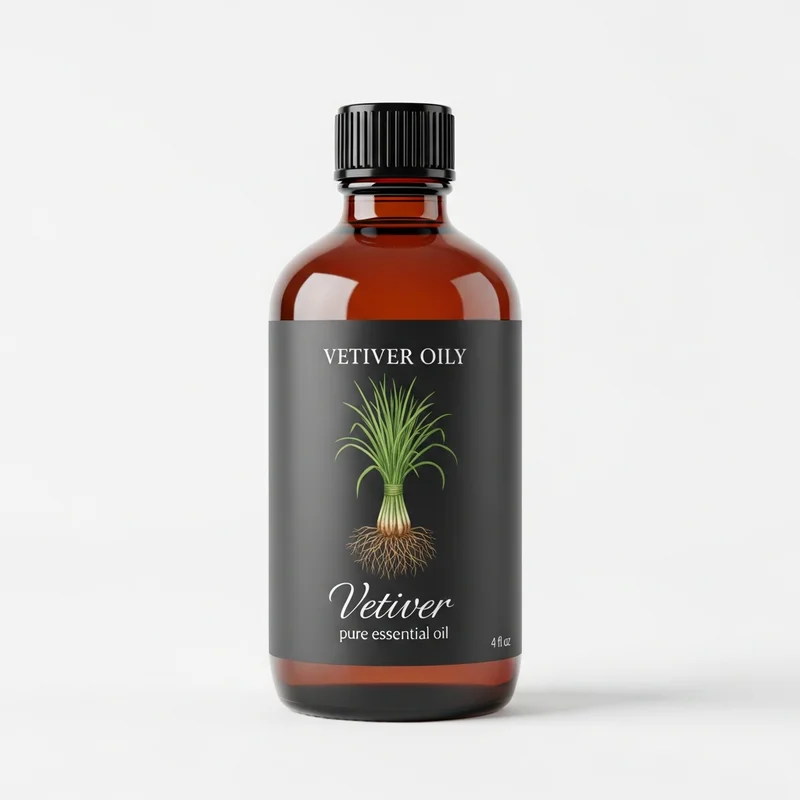
Vetiver Essential Oil
Our own Vetiver Essential Oil, in sizes from 0.5 oz to bulk.
From $20.99
Shop Now →Why a few drops go so far
There is real chemistry behind that loudness. In a 2021 study of a Haitian vetiver oil, researchers traced much of its woody-amber character to a single compound with an odor threshold of 29 picograms per litre of air, more than 150 times lower than khusimone, which had long been treated as the key odorant. The oil is a crowd: only 155 components had been identified out of what the authors call several hundred sesquiterpene derivatives. Vetivones and nootkatone bring a grapefruit-like lift, geosmin adds an earthy note, and (E)-isovalencenol adds a creamy, sandalwood-like background.
In practice that means a very small amount is plenty audible, and a little extra will flatten bright oils beside it. Once it is in the bottle you cannot take it back out, so we start low and go up.
Learn the oil on its own first
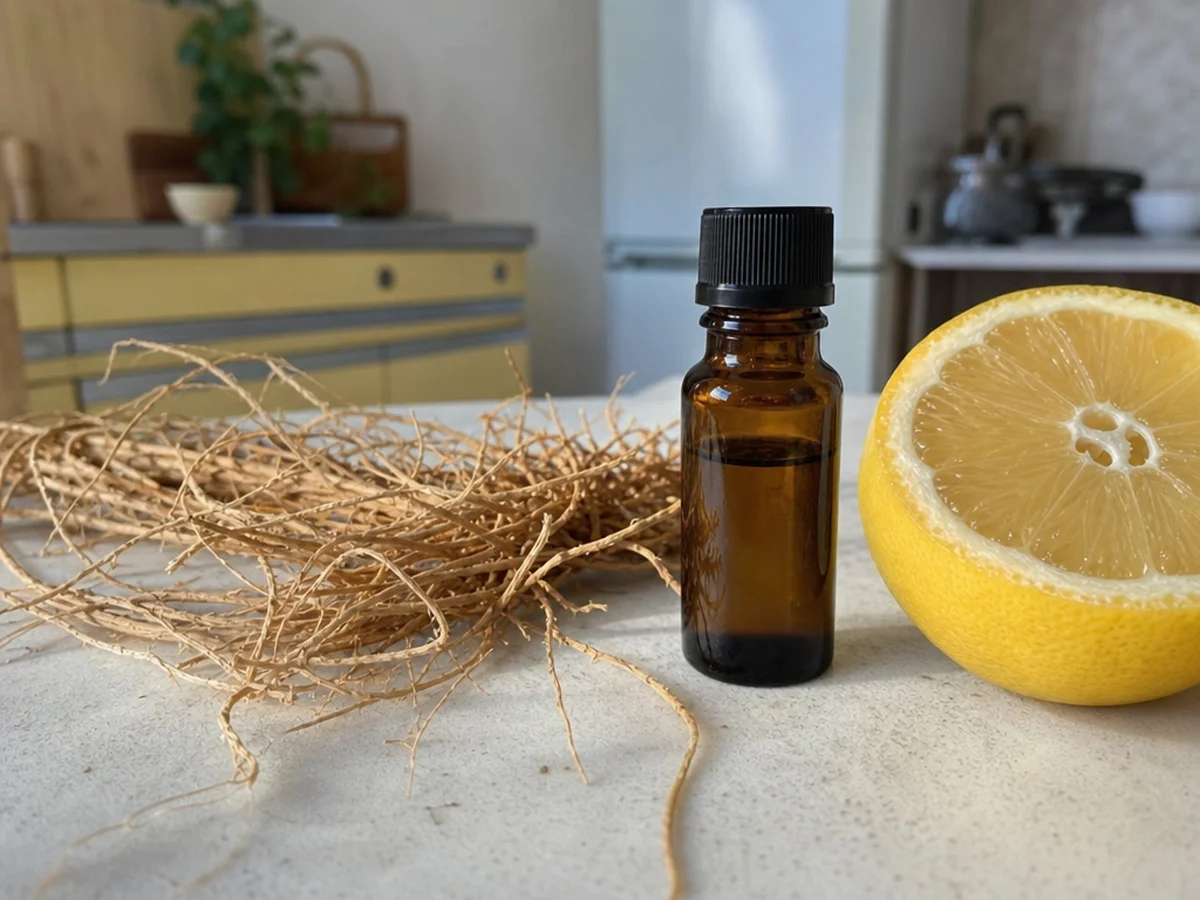
Before you blend anything, put a drop of vetiver on a paper strip and smell it at the start, after ten minutes and again an hour later. We describe it as deep, earthy and smoky-sweet, and you may notice the sweetness arrives late, after the earthy first impression has settled. Knowing how it moves on its own makes it much easier to hear what a partner oil is doing to it.
Blend by role, not by list
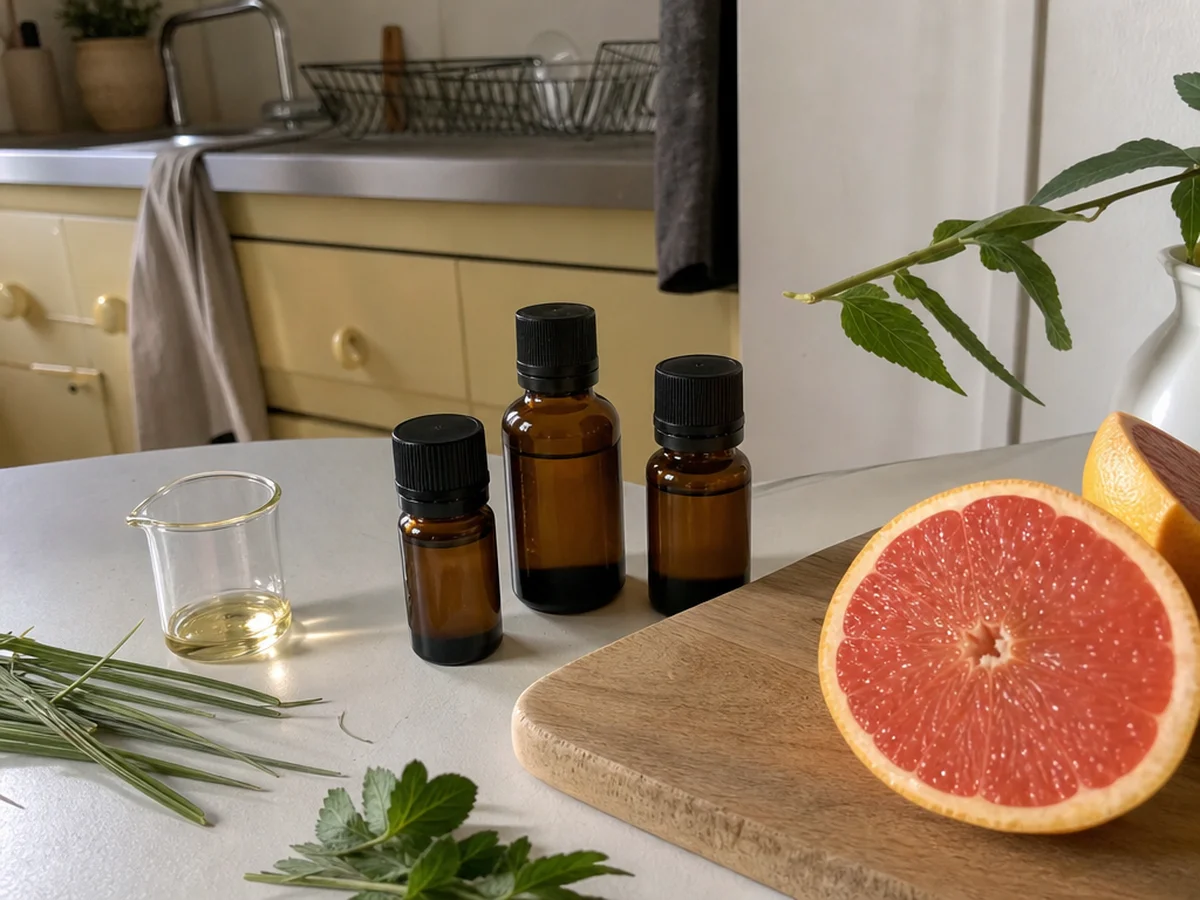
We recommend vetiver alongside sandalwood, patchouli, lavender, bergamot, rose and cedarwood, which is a familiar set for good reason. Rather than memorising pairings, it helps to give each oil a job. We sell vetiver only, so the others come from a perfumery or aromatherapy supplier.
- The opener lifts the first impression: bergamot or another bright citrus.
- The heart gives the body of the scent: lavender or rose.
- The companion base shares vetiver's floor: sandalwood, cedarwood or patchouli.
- Vetiver is the anchor, and the strongest voice in the room.
As a starting suggestion, which is our own working proportion and not a published standard, try vetiver at about 5 to 10 percent of the blend, with the opener and the heart making up most of the rest. A blend that is mostly base never really opens, and four oils with clear jobs usually read better than seven with none.
A worksheet for 10 ml
Weighing beats counting drops, especially with a thick oil. The batch on our Certificate of Analysis has a relative density of 0.993 at 20 C, so 1 ml of that batch weighs about 0.99 g. Other oils differ, so treat their gram figures as approximate.
- Fix vetiver's share. At 10 percent of 10 ml, that is 1 ml.
- Give each other oil a role. For example 3 ml opener, 4 ml heart and 2 ml companion base.
- Mix in a small glass bottle and label it with the ratios and the date, otherwise a good blend cannot be repeated.
- Wait. Smell it after a day and again after a week. Lighter components tend to fade first, so a blend that is balanced on day one usually reads darker later.
- Adjust one part at a time in a fresh, smaller batch.
Turning the blend into something for skin
A neat blend is a raw material. For skin, our guidance is to dilute to 0.5% to 2% in a carrier oil and to patch test first, and we lean to the lower end for a blend because every extra oil is one more ingredient your skin meets. Robert Tisserand's published ranges give some context: 0.2 to 1 percent for sensitive or impaired skin, 0.5 to 1.2 percent for facial cosmetics and deodorants, and 1 to 3 percent for body oils and lotions. Those percentages apply to all the essential oil in the product, not to vetiver alone.
The arithmetic is gentle on your supply. A 1 percent body oil in a 1 oz (29.57 ml) bottle of carrier needs about 0.3 ml of the neat blend, and if the blend is 10 percent vetiver, that is only about 0.03 ml of vetiver in the bottle. One 10 ml batch of blend would fill dozens of bottles, so there is little reason to mix more than you need. Our carrier oil post helps you choose what to dilute into, and a patch test of the finished blend at its intended dilution is the sensible last step.
Trust small changes
Vetiver is thick and slow, so it is tempting to treat it like a heavy ingredient you can pour freely. Resist that. Warm the closed bottle in your hand so it moves, and use a pipette so you are adding a measured amount rather than a surprise. A change of one or two drops in a small trial is the kind of adjustment you can actually smell, and it keeps a good batch from turning into a dark smudge.
Little things that make a blend better
- Rest your nose. After a few sniffs everything smells the same. Step away, then return.
- Keep it dark and full. Small amber bottles, filled close to the neck, leave less air to change the blend.
- Know your citrus. If a blend is going on skin, ask your supplier whether the citrus oil is cold-pressed or distilled, since that affects its handling.
- Write it down while you work. A notebook line for each trial, with the date and the amounts, is the difference between a lucky blend and one you can make again.
A blend is a fragrance, and the test of a fragrance is whether you enjoy wearing or smelling it. If you want to take the next step into composition, our posts on layering vetiver in natural perfumery and vetiver in perfumery pick up where this one stops. Start with one small bottle, a scale and a notebook, and let your own nose make the decisions.
Vetiver Essential Oil
Vetiver Essential Oil from our own shop, in sizes from 0.5 oz to bulk.
From $20.99
Shop Now →Sources & Further Reading
- Ouyang X et al., 2021. The Smelling Principle of Vetiver Oil, Unveiled by Chemical Synthesis. Angewandte Chemie International Edition. PubMed Central
- Tisserand Institute. Dilution for essential oils. tisserandinstitute.org