Diffusing Vetiver Oil: Which Diffuser Suits a Thick Oil?
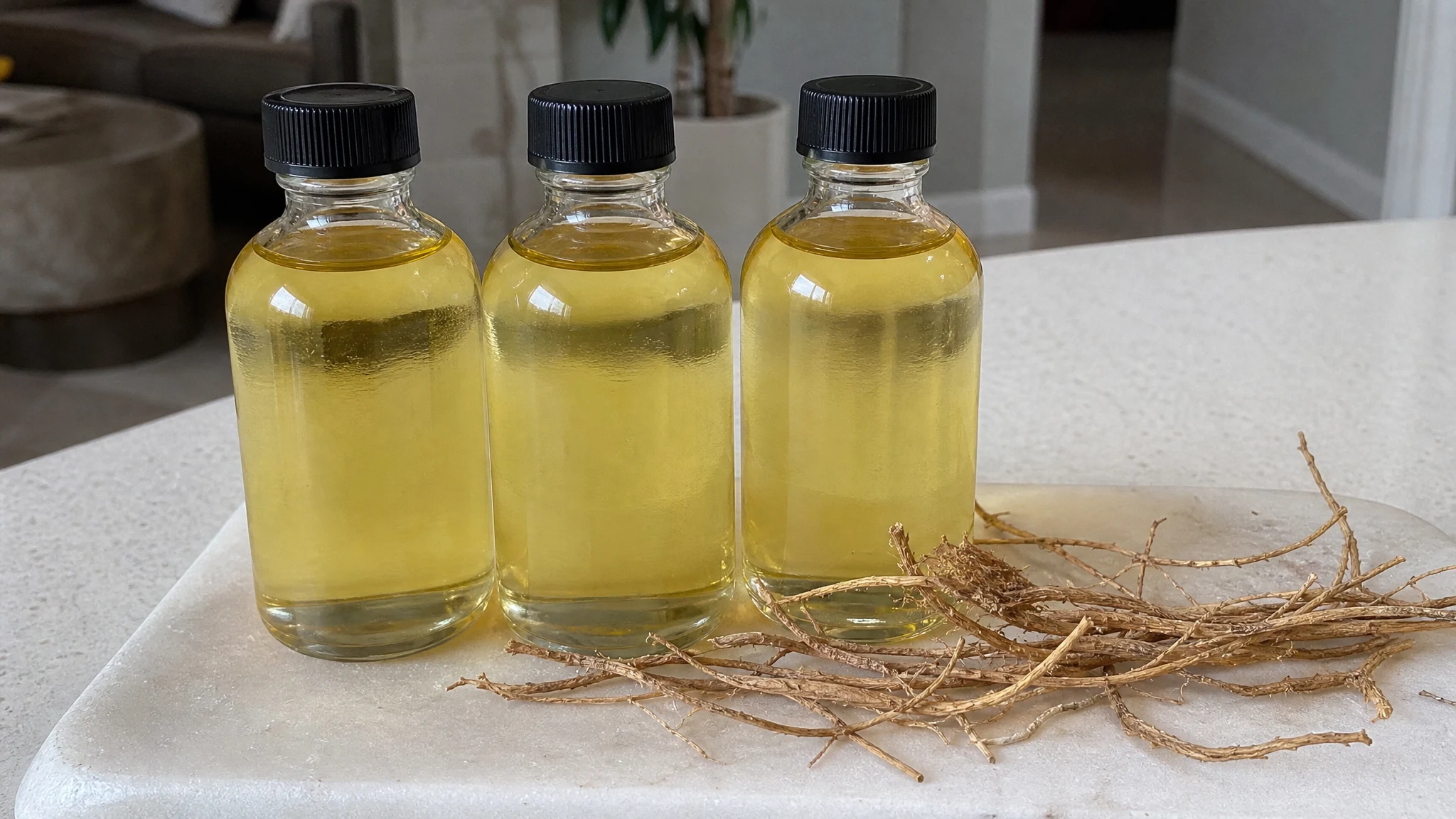
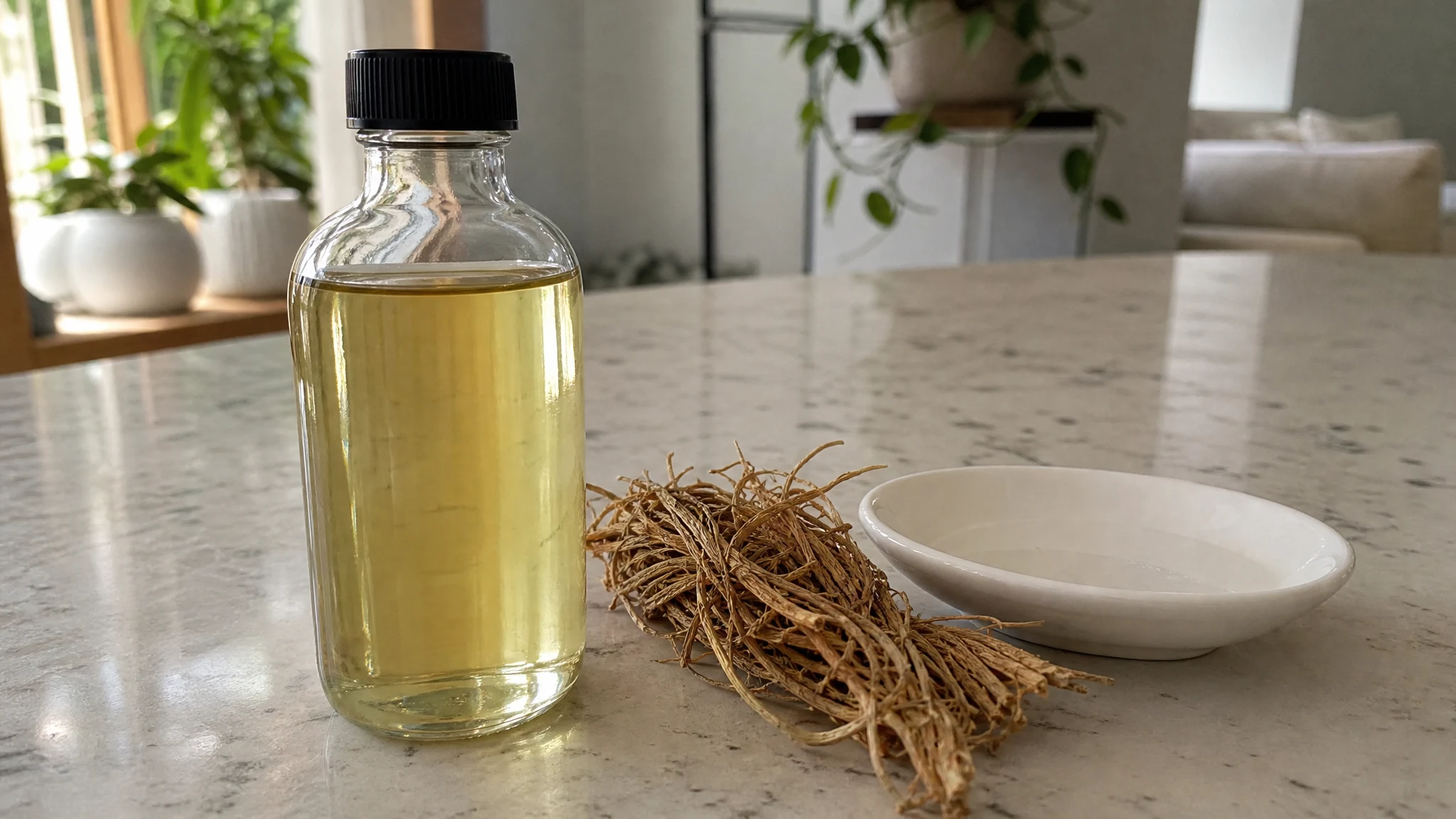
Vetiver does not drift out of a diffuser the way a citrus oil does. It is thick, dark and slow-pouring, and it gives off a deep, earthy, smoky-sweet scent that fills a room quietly. Getting the best from it is mostly a question of matching the device to the oil, and being thoughtful about who is breathing the air.
Vetiver Essential Oil
Our own Vetiver Essential Oil, in sizes from 0.5 oz to bulk.
From $20.99
Shop Now →Start with who shares the room
The Merck Veterinary Manual's page on essential oil toxicosis in animals (reviewed March 2025) makes a useful split. Passive diffusers such as reeds and candles do not release droplets of oil, so the main concern is respiratory irritation. Active diffusers, ultrasonic or nebulizing, release microdroplets that can settle on fur or feathers and be swallowed during grooming, which adds risk especially for cats and birds. Its advice is to run diffusers only for short periods, under 30 minutes, keep pets out of the room, and ventilate afterward. Our pets post goes through this in more detail.
If anyone at home is pregnant, has a breathing condition, or is a baby or small child, a physician, midwife or pediatrician is the person to ask first. Our pregnancy and children posts say what we could and could not source.
Which device suits a thick oil
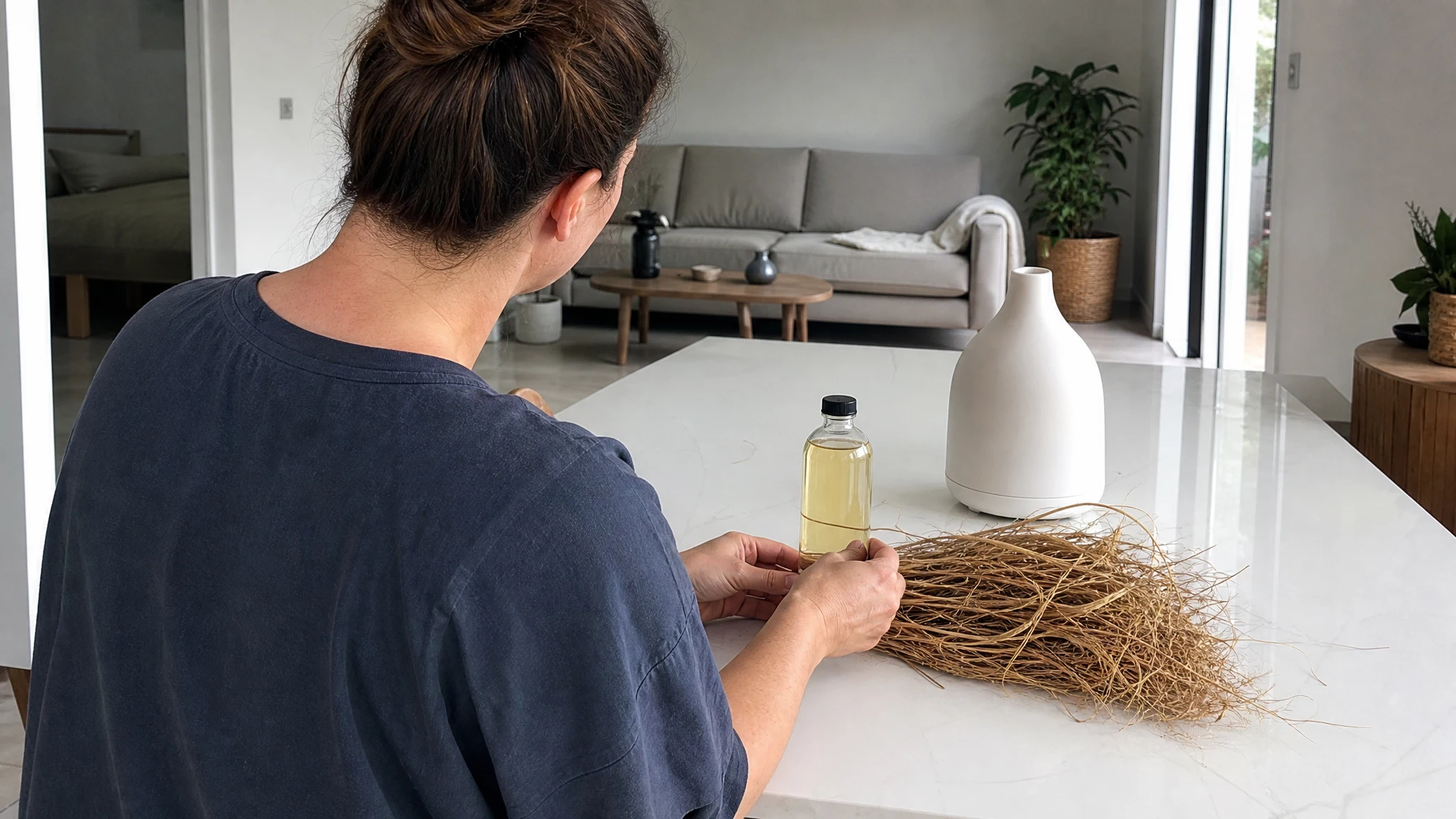
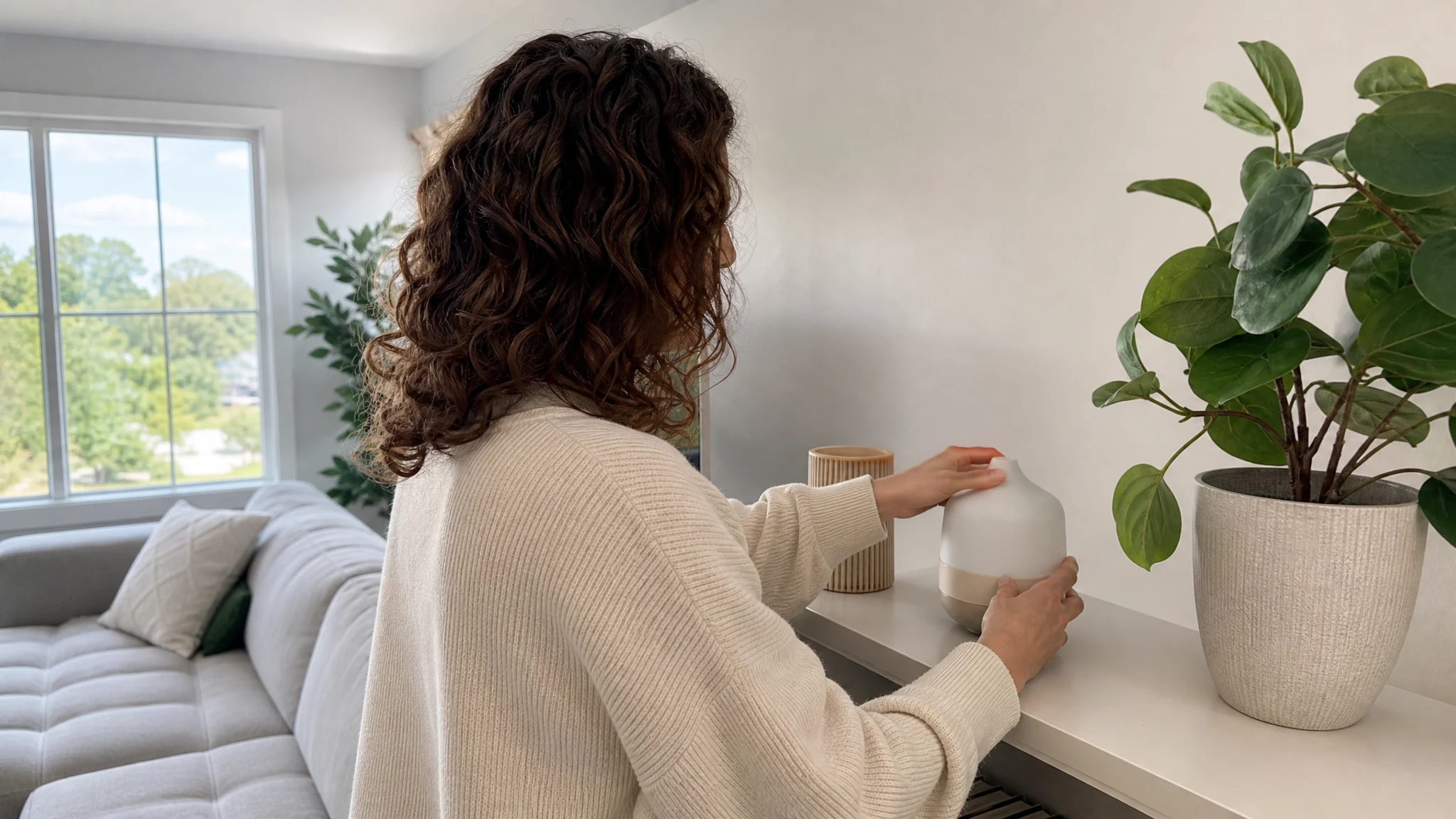
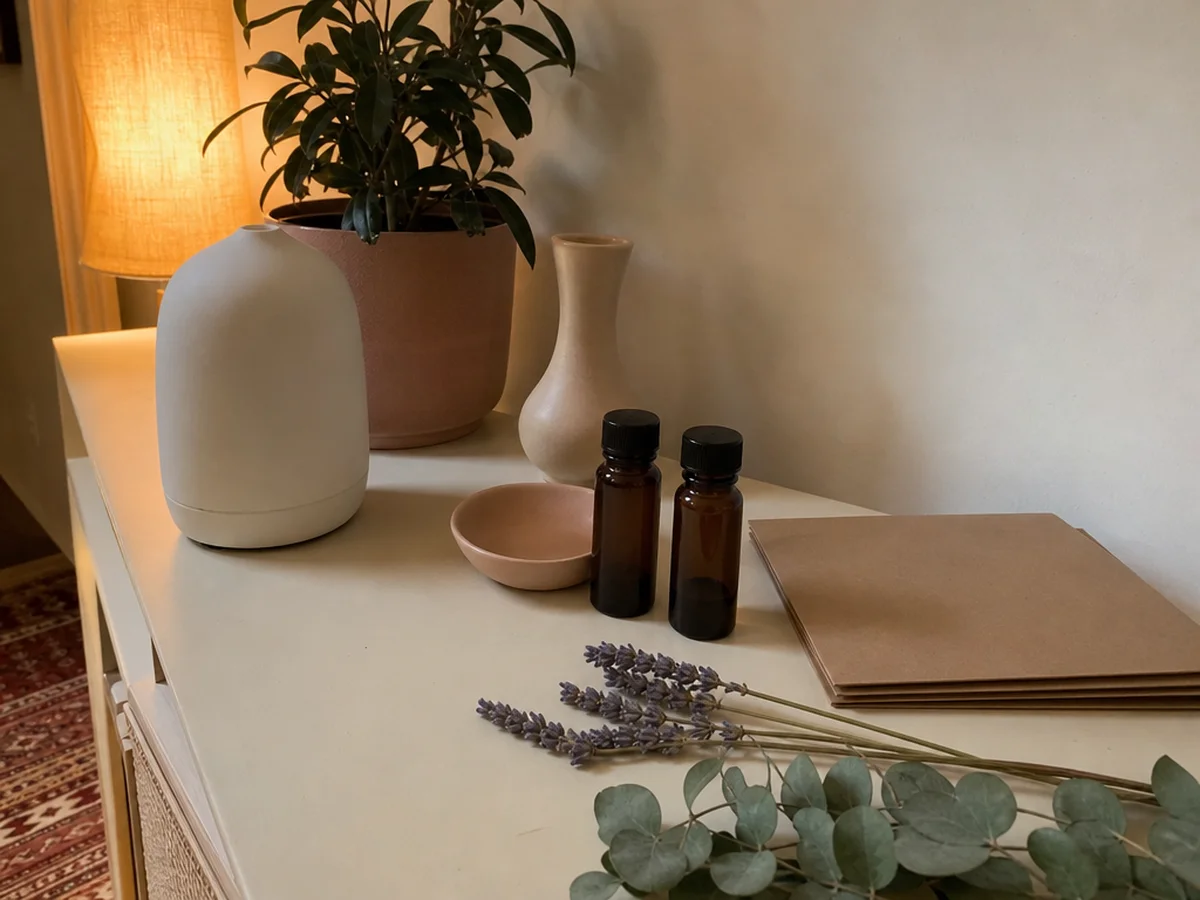
We recommend the gentlest option first. Reed and warm-air diffusers do well with thick oils because nothing has to pass through a fine nozzle or sit on a vibrating plate. Vetiver can sink to the bottom of an ultrasonic reservoir instead of dispersing, so many people use a reed or warm-air diffuser, or put a thinner oil in first and a few drops of vetiver on top. A nebulizer feeds neat oil through a narrow glass path, and reasoning from how thick vetiver is, that is the setup most likely to clog. That is an inference, not a test, and the manufacturer's manual is the final word on any device. Our buyer's guide to diffusers for thick oils goes through the choice, and we do not sell diffusers.
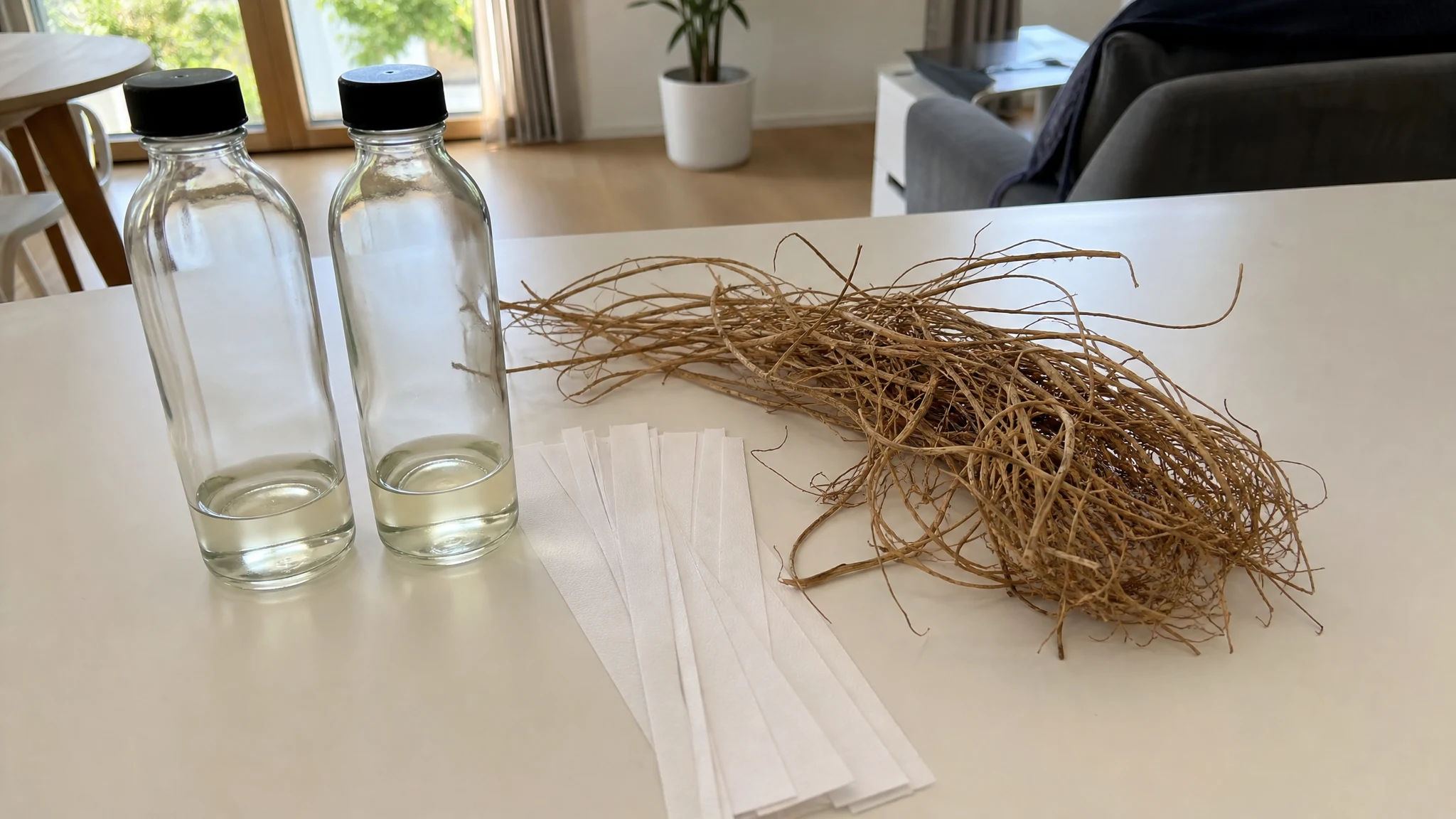
We suggest warming the bottle in your hands for a minute so it pours, and using a pipette for more control than shaking drops out of the neck. Because "a little goes a very long way" with vetiver, start with the fewest drops your device's instructions allow.
How long to run it
Sources use different clocks because they answer different questions. Robert Tisserand's page on diffusion safety says "intermittent means 30-60 minutes on, then 30-60 minutes off," calls it safer and more effective than continuous diffusion because the nervous system habituates, and says very low levels, where the oil is barely noticeable, are fine anywhere. Merck's under-30-minutes guidance is about pets. Where animals share the home, take the shorter figure. Where they do not, Tisserand's on-and-off rhythm is a sensible default, and with a strong, lingering oil like vetiver you may find you need less time than you expect.
What the air-quality studies say
Neither study used vetiver, but both are worth knowing. A chamber study of ultrasonic diffusers running lemon, lavender, eucalyptus and grapeseed oil for 15 minutes found each oil gave its own particle profile, and filling the unit with tap water instead of deionized water gave a fivefold higher fine-particle emission with eucalyptus oil. The authors concluded that realistic use can add substantially to indoor particles, depending on the oil and water (Schwartz-Narbonne et al., 2021). In a second experiment, 59 university students in a simulated office were exposed to a lemon-oil mist, plain water, or an unscented grapeseed mist. Exposure shortened reaction time but worsened response inhibition and memory sensitivity, and the lemon and unscented responses were similar (Du et al., 2022).
What we take from this, as reasoning: the mist itself matters, not only the fragrance, so clean water, a clean device and an open window are part of the routine. Opening a window is a good habit whatever you diffuse.
What research says about breathing vetiver
Only animal work exists. Rats that inhaled 2.5% vetiver oil for 7 minutes showed an anxiolytic-like profile in a maze (Saiyudthong et al., 2015), while rats inhaling 20 or 200 microlitres stayed awake longer with less slow-wave sleep (Cheaha et al., 2016). Neither tells a person what to do with a diffuser. The National Center for Complementary and Integrative Health notes that oils are most often used by inhaling them, and says little rigorous research exists for sleep problems. Our sleep post covers the human studies.

Get to know the scent before you diffuse it
Before the oil goes anywhere near a device, open the bottle and smell it. Vetiver is deep, earthy and smoky-sweet, and it is easy to underestimate how little a room needs. Set your diffuser low and give the scent ten minutes to settle before you decide it wants more. You may notice that the first impression, a little sharp at the edges, rounds out as you sit with it, and that the smell hangs in the air more than it announces itself.
We recommend keeping a small note beside the diffuser: how many drops you used and how the room smelled afterward. Next time you can repeat the version you liked instead of guessing. If you want to pair it with another scent, we list sandalwood, patchouli, lavender, bergamot, rose and cedarwood as oils that blend well with vetiver. We sell vetiver only, so those come from another supplier.
Keep the bottle neck tidy
A thick, dark oil leaves a sticky ring on the neck of the bottle and on the diffuser lid. Wipe both with a paper towel after each session so the cap seals cleanly and the oil does not mark a shelf or a table.
A simple way to do it
- Pick a room without pets and a time you will be around.
- Choose a reed or warm-air diffuser if you can; if you use an ultrasonic unit, follow the maker's range at the low end.
- Run it in short, intermittent bursts, then open a window.
- Stop if you notice a headache, cough or irritation.
- Keep the bottle tightly closed in a cool, dark place; our storage post explains why.
Our oil is for aromatic and cosmetic use. On skin, we recommend 0.5% to 2% in a carrier oil with a patch test, and it is never taken internally. We make no health claim for diffusing it.
Done lightly, a diffuser is a pleasant way to enjoy a serious base note, and the best result is usually the quietest one.
Vetiver Essential Oil
Vetiver Essential Oil from our own shop, in sizes from 0.5 oz to bulk.
From $20.99
Shop Now →Sources & Further Reading
- Merck Veterinary Manual, March 2025. Toxicoses From Essential Oils in Animals. merckvetmanual.com
- Tisserand Institute. Safety guidelines for diffusing essential oils at home. tisserandinstitute.org
- Schwartz-Narbonne H, Du B, Siegel JA, 2021. Volatile organic compound and particulate matter emissions from an ultrasonic essential oil diffuser. Indoor Air. PMID 33905580
- Du B et al., 2022. The impact of emissions from an essential oil diffuser on cognitive performance. Indoor Air. PMID 34709668
- Saiyudthong S et al., 2015. Anxiety-like behaviour and c-fos expression in rats that inhaled vetiver essential oil. Natural Product Research. PMID 25553641
- Cheaha D et al., 2016. Modification of sleep-waking and electroencephalogram induced by vetiver essential oil inhalation. Journal of Intercultural Ethnopharmacology. PMID 27069728
- NCCIH, updated January 2020. Aromatherapy. nccih.nih.gov