Vetiver and Sleep: What the Research Does and Doesn't Show
Vetiver has a reputation as a bedtime scent, and the research does not quite agree with it. In one study the rats that breathed vetiver oil stayed awake longer; in another, nurses given a nightly vetiver massage reported better sleep. Both are real, and reading them side by side teaches more than either does alone.
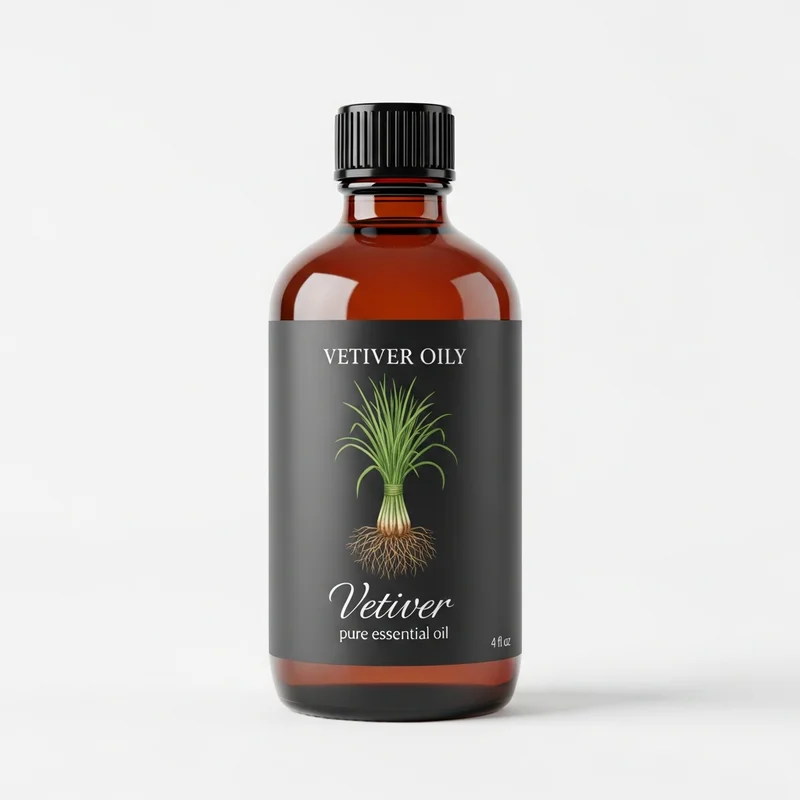
Vetiver Essential Oil
Our own Vetiver Essential Oil, in sizes from 0.5 oz to bulk.
From $20.99
Shop Now →The rat study: more waking, not less
Researchers in Thailand implanted electrodes in adult male Wistar rats and recorded their brain activity while the animals breathed water or 20 or 200 microlitres of a commercial vetiver oil. The oil increased total waking time and reduced slow-wave sleep, with changes in brain rhythms that started almost as soon as inhalation did. The authors read it as a refreshing effect on alertness (Cheaha et al., 2016).
It is one species, in a recording chamber, so we would not say vetiver "wakes you up" any more than we would say it sedates you. What it does show is that "relaxing" is an assumption about the scent, not something measured, and that a fragrance can raise arousal on a brain trace. A related rat experiment found anxiolytic-like behaviour in a maze at 2.5% w/w (Saiyudthong et al., 2015), but that is about maze behaviour, not sleep.
The nurse trial, and the lesson in the placebo group
The most useful human study is a 2026 randomised trial of intensive care nurses in Türkiye with fatigue and sleep disturbance. There were 36 per group: a chamomile-lavender blend, vetiver oil, or jojoba oil as a placebo. Each received an aromatherapy massage once a day before bed for four weeks, and 96 finished. On the Pittsburgh Sleep Quality Index, where lower is better, median scores fell from 10.91 to 4.63 with vetiver and from 10.41 to 4.69 with the blend. The jojoba placebo group also improved, from 10.78 to 6.84. The group difference was significant (p = 0.018), and the authors concluded that vetiver oil may be an effective intervention (Burkev et al., 2026).
The most interesting number is the placebo group. A drop of about four points on jojoba alone suggests a nightly massage, a wind-down ritual and the attention that comes with a study carry a lot of the benefit, and it is a single-blind trial where a strong scent is hard to hide from the person receiving it. Everything was self-reported, and the authors themselves call for multicentre, double-blind studies with objective measures such as actigraphy. Nurses on shift patterns are also a specific group, so the results do not transfer neatly to everyone else.
Two more studies, with their own limits
A Taiwanese study gave 67 adults lavender, vetiver or orange blossom oil for four to six weeks (21, 18 and 17 people). Vetiver users' sleep scores moved from 7.92 to 6.08 (p = .007), and the abstract reports no group using no oil at all (Chang et al., 2026). In an Istanbul care home, 60 residents aged 65 or older inhaled a peppermint-palmarosa blend in the morning and a night blend of vetiver, cedarwood, clary sage, petitgrain and grapefruit for 10 minutes a day over 30 days. Smartwatch sleep measures improved against controls, but with five oils in the night blend and a morning scent as well, nothing can be assigned to vetiver (Ede Sarikaya et al., 2026).
Why the two headline results can both be true
They answer different questions. One measures brain waves in rats over hours of inhalation, the other measures a questionnaire in people over weeks of massage. Species, route, dose, outcome and comparator all differ, so they do not contradict each other, and neither isolates the scent of vetiver as a variable in people sleeping at home. That is the honest state of play: promising enough to be interesting, not enough to be called proven.
What sleep guidelines put first
For chronic insomnia, the American College of Physicians recommends cognitive behavioural therapy for insomnia as the initial treatment for all adults (a strong recommendation, backed by moderate-quality evidence), with medication considered only where that has not worked (Qaseem et al., 2016). The National Center for Complementary and Integrative Health says that for insomnia, "we don't know whether it's helpful because little rigorous research has been done."
A lavender study shows how much surrounds a scent. In it, 79 college students wore a chest patch for five nights, scented with 55 microlitres of lavender oil or blank, while all of them practised sleep hygiene. Sleep quality improved in both groups, more with lavender, and sleep quantity did not differ (Lillehei et al., 2015). Habits did a lot of the work. If sleep is a regular struggle, a physician or sleep specialist is the right first call, not a bottle.
Evening habits that need no bottle
The studies above keep pointing back to habits, and habits cost nothing: a regular wind-down time, a dim lamp, a cooler room. We make no promises about any of them for you personally, and a physician is the right person if sleep is a real struggle. If you like the smell of vetiver, it can simply be one pleasant detail in an evening you already enjoy.
Where vetiver fits, then
We sell a single vetiver essential oil for aromatic and cosmetic use, and we make no claim that it helps anyone sleep. If you simply love the deep, earthy, smoky-sweet smell, it is a lovely oil to have around in the evening. Our diffuser post and our diffusion methods post cover the practical side, and the pets post is worth a look if animals share your bedroom. For skin we recommend 0.5% to 2% in a carrier oil with a patch test, and the oil is never taken internally. Our valerian comparison looks at an herbal sleep remedy with a longer research history.
Enjoy the scent for what it is, and keep the sleep routine doing the heavy lifting.
Vetiver Essential Oil
Vetiver Essential Oil from our own shop, in sizes from 0.5 oz to bulk.
From $20.99
Shop Now →Sources & Further Reading
- Cheaha D et al., 2016. Modification of sleep-waking and electroencephalogram induced by vetiver essential oil inhalation. Journal of Intercultural Ethnopharmacology. PMID 27069728
- Saiyudthong S et al., 2015. Anxiety-like behaviour and c-fos expression in rats that inhaled vetiver essential oil. Natural Product Research. PMID 25553641
- Burkev FG et al., 2026. The Effect of Aromatherapy on Fatigue and Sleep Quality in Intensive Care Nurses: A Randomised Placebo-Controlled Trial. Nursing in Critical Care. PMID 42630137
- Chang KM et al., 2026. Vetiver and Orange Blossom Aid in Lowering Blood Pressure and Heart Rate and Improving Sleep Quality. Holistic Nursing Practice. PMID 40261984
- Ede Sarikaya B et al., 2026. Effects of inhaled aromatherapy on sleep quality and cognitive function in older adults: a randomised controlled trial. Journals of Gerontology Series A. PMID 42011111
- Qaseem A et al., 2016. Management of Chronic Insomnia Disorder in Adults: A Clinical Practice Guideline From the American College of Physicians. Annals of Internal Medicine. PMID 27136449
- Lillehei AS et al., 2015. Effect of Inhaled Lavender and Sleep Hygiene on Self-Reported Sleep Issues: A Randomized Controlled Trial. Journal of Alternative and Complementary Medicine. PMID 26133206
- NCCIH, updated January 2020. Aromatherapy. nccih.nih.gov