Is Vetiver Oil Right for You? What It's Really Like
Some oils win you over in the first sniff. Vetiver usually does it more slowly. The first impression is dark and earthy, almost like turned soil, and then, a few minutes later, a sweet smoky warmth starts to come through. If that sounds like your kind of thing, this guide will tell you what it is like to live with vetiver oil. If it does not, we would rather tell you now.
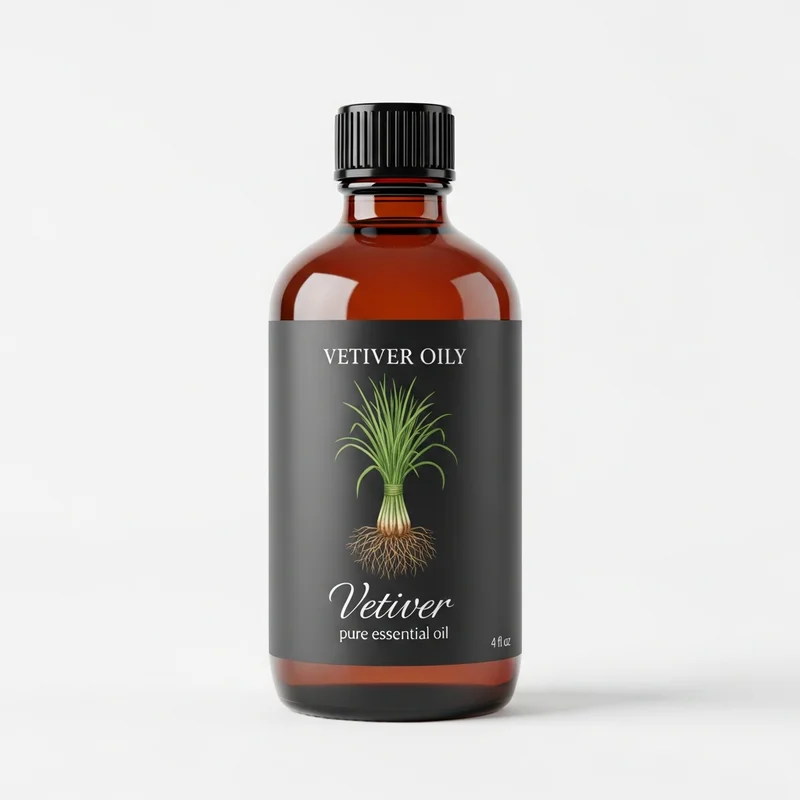
Vetiver Essential Oil
Our own Vetiver Essential Oil, in sizes from 0.5 oz to bulk.
From $20.99
Shop Now →What it is, and where the smell comes from
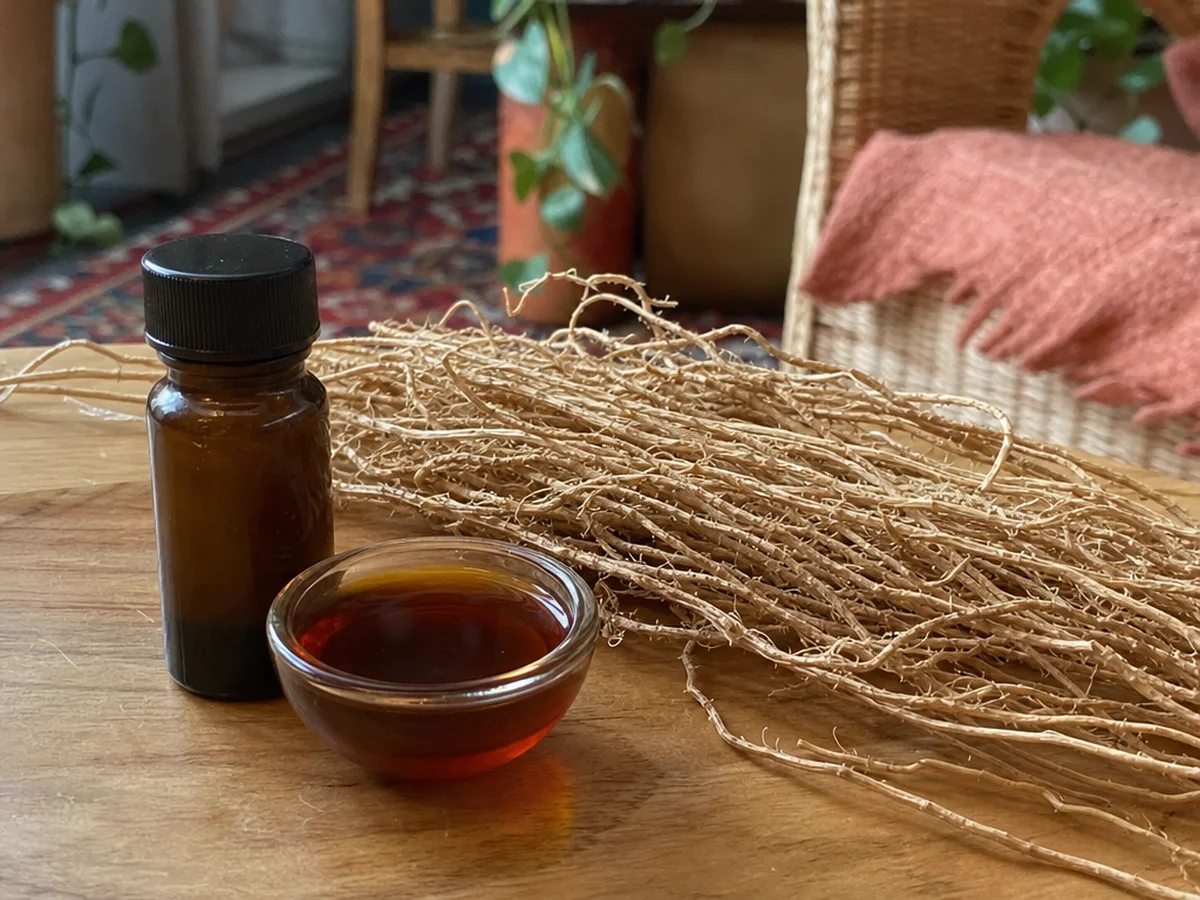
Vetiver oil is distilled from the roots of Chrysopogon zizanioides, a tropical grass. Ours is steam-distilled from roots from southern Haiti, which makes it a close cousin of most of the vetiver in the world: a 2021 paper reports that about 60% of worldwide consumption comes from one Haitian commune, Les Cayes (Ouyang et al., The Smelling Principle of Vetiver Oil, Unveiled by Chemical Synthesis).
The same paper offers a lovely detail: vetiver is one of the most complex oils there is, with hundreds of molecules, and the compound chiefly responsible for its signature smell turns out to be a trace ketone detectable at 29 picograms per litre of air. So the largest peak on a chemistry report is not necessarily what you smell. We find that a good reason to trust your nose first.
What it is like in the bottle and in your hands
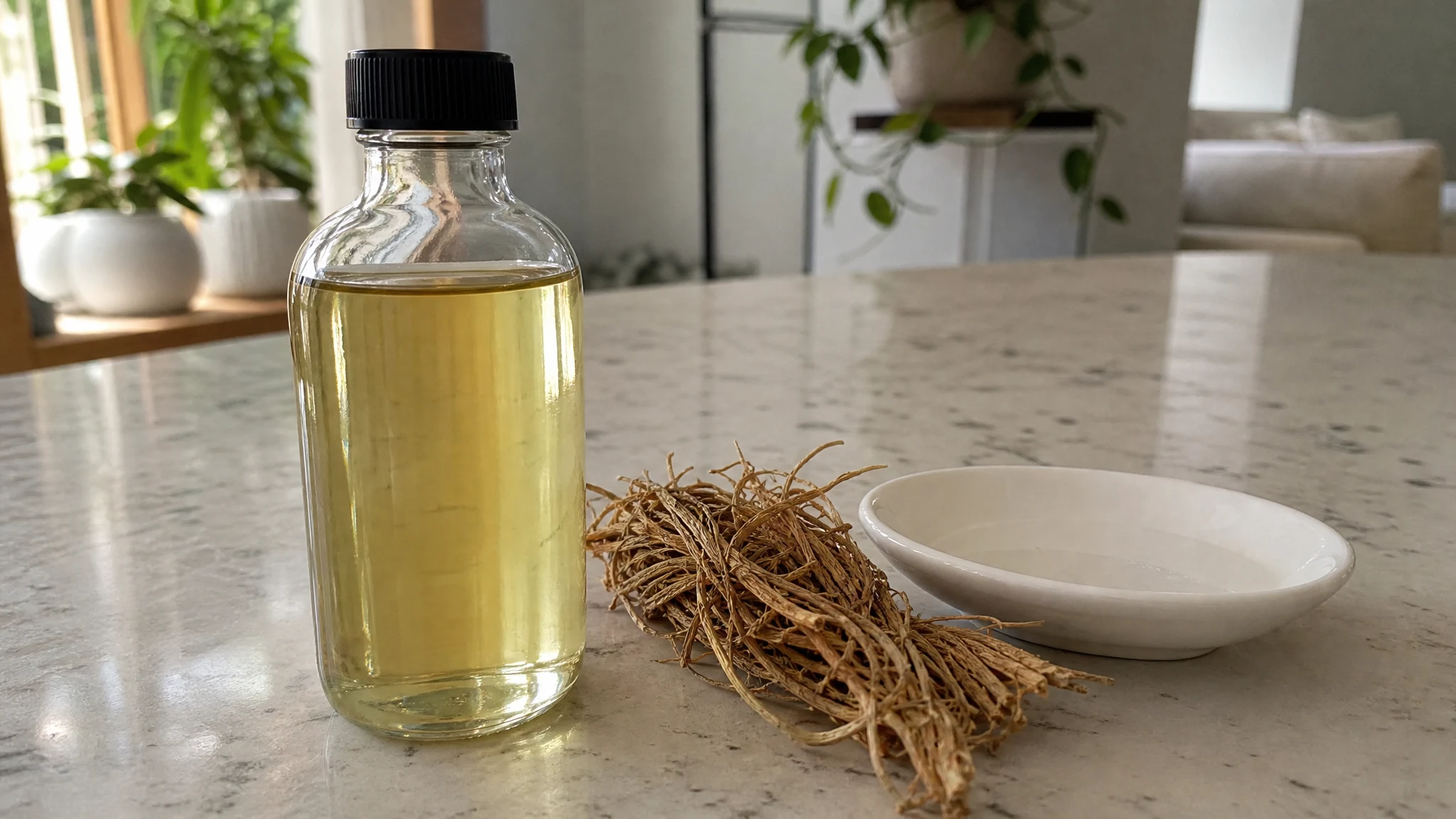
We describe our vetiver as deep, earthy and smoky-sweet, and the Osmothèque, writing about oils in general, calls Haitian vetiver smoky, woody and a little green (Vetiver : a palette of woody fragrances, Osmothèque). It is also thick and slow-pouring, with a deep amber to brown colour. That has a few practical consequences:

- Warm the bottle in your hands, or warm the carrier, before measuring. A pipette gives you more control than the bottle opening.
- A little goes a very long way. Start with less than you think and add.
- The colour can tint soap or candles, so allow for that in pale projects.
- In a diffuser, thick oil can settle at the bottom of an ultrasonic reservoir, so many people prefer a reed or warm-air diffuser, or start with a thinner oil and add vetiver as a base note.
Our guide to diffusers for thick oils covers the options.
What people use it for
Mostly, they use it for how it smells. Vetiver is a base note and a natural fixative in perfumery, meaning it helps lighter notes last longer, and it blends well with sandalwood, patchouli, lavender, bergamot, rose and cedarwood. We sell vetiver oil only, so those partners come from other suppliers. Evening diffuser blends, diluted massage oil, soap and candle projects, home fragrance and natural perfume are the uses our shop is built around. For ideas, take a look at our posts on layering vetiver in perfumery and blending ratios.
What the research does and does not say
A lot of "benefit" lists circulate for vetiver, and we would rather be straight with you about them. A 2017 review in Medicines tested three commercial oils in the laboratory and concluded that vetiver oil displays no particularly significant and innovative cosmetic potential value in formulations apart from its scent (Burger et al., Vetiver Essential Oil in Cosmetics: What Is New?). A 2025 review in Biomolecules surveys cell, animal and clinical work on vetiver extracts and oils, and its authors say the evidence increasingly supports traditional claims, though the abstract does not say how many human studies there are (Gunasekar et al., Pharmacological and Therapeutic Potential of Chrysopogon zizanioides (Vetiver): A Comprehensive Review of Its Medicinal Applications and Future Prospects). A result in a dish is not a result in a person, so we treat the research as interesting background and make no health claim for our oil. We sell it as an external aromatic and cosmetic product, and it shines at that job.
Using it with care
Our oil is sold neat, which means the dilution is yours. We recommend 0.5% to 2% in a carrier oil before it touches skin, with a patch test first, and we lean to the lower end for anything leave-on. Keep it away from eyes, children and pets, and do not take it internally. If you are pregnant, nursing, on medication or have a medical condition, check with your healthcare provider first. As arithmetic, 1% is about 1 g of oil in 99 g of carrier. Our safety and dilution guide goes through the numbers.
Is it your kind of smell?
The honest test is simple. Open the bottle in a quiet room, breathe in gently, and notice whether you lean toward it or pull back. People who like woods, soil after rain and smoky incense tend to take to vetiver quickly. If you prefer bright, sparkling, fruity scents, you may like it better as a small supporting note under something lighter than on its own. Either reaction is useful information, and neither is wrong.

Buying and keeping it
Three questions are worth asking about any vetiver oil, ours included. What is actually documented? The Certificate of Analysis we publish covers one batch and lists relative density 0.993 and refractive index 1.525 at 20 °C, both inside the standards printed on it. If you need GC-MS for your lot, ask us in writing through the contact page before you order. What is the material called? And does the seller lean on grade words? Robert Tisserand wrote that grade labels of that kind have no meaning for oil quality and that no independent industry standard backs them (Grade claims on essential oils, Tisserand), a point we explore in how to judge a bottle.
Kept somewhere cool and dark, vetiver typically holds its character for 6 to 8 years. So if the smell speaks to you, it is an oil you can enjoy for a long time.
Vetiver Essential Oil
Vetiver Essential Oil from our own shop, in sizes from 0.5 oz to bulk.
From $20.99
Shop Now →Sources & Further Reading
- The Smelling Principle of Vetiver Oil, Unveiled by Chemical Synthesis (Ouyang et al., Angewandte Chemie, 2021)
- Vetiver : a palette of woody fragrances (Osmothèque, 2015)
- Vetiver Essential Oil in Cosmetics: What Is New? (Burger et al., Medicines, 2017)
- Pharmacological and Therapeutic Potential of Chrysopogon zizanioides (Vetiver): A Comprehensive Review of Its Medicinal Applications and Future Prospects (Gunasekar et al., Biomolecules, 2025)
- Therapeutic grade oils - read all about it! (Robert Tisserand, 2010)