Steam-Distilled vs CO2 Vetiver: Which Is Which?
Two bottles can both say "vetiver" and still hold quite different things. One is an essential oil, steam-distilled from dried roots. The other is a CO2 extract, pulled from the same kind of root with carbon dioxide under pressure. They share a plant and a family resemblance, and that is about where interchangeable ends. We sell a steam-distilled oil, so we have a favourite, but the published work is more interesting than a simple verdict.
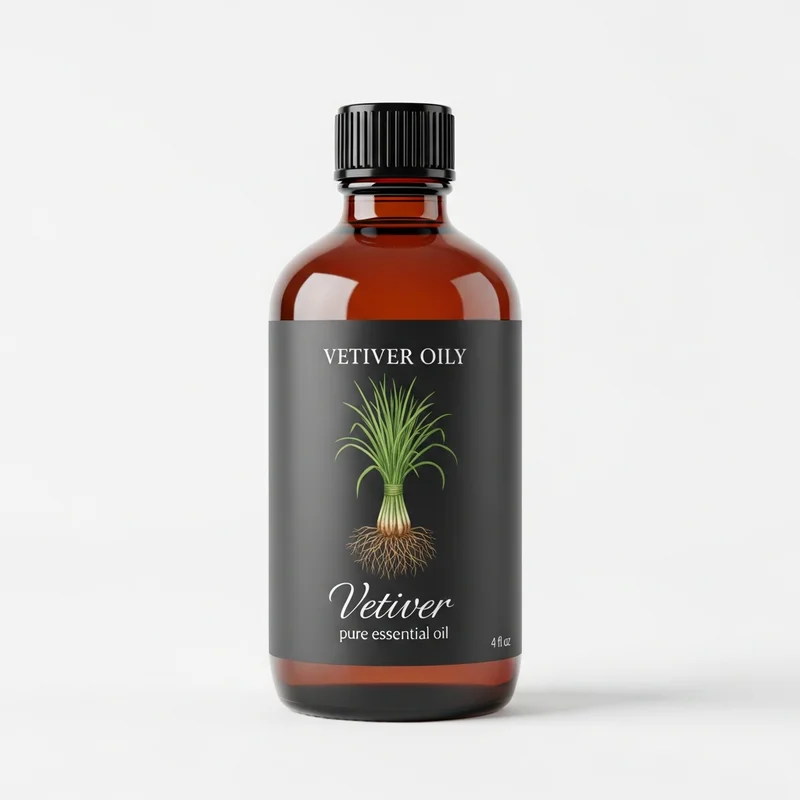
Vetiver Essential Oil
Our own Vetiver Essential Oil, in sizes from 0.5 oz to bulk.
From $20.99
Shop Now →What steam distillation gives you
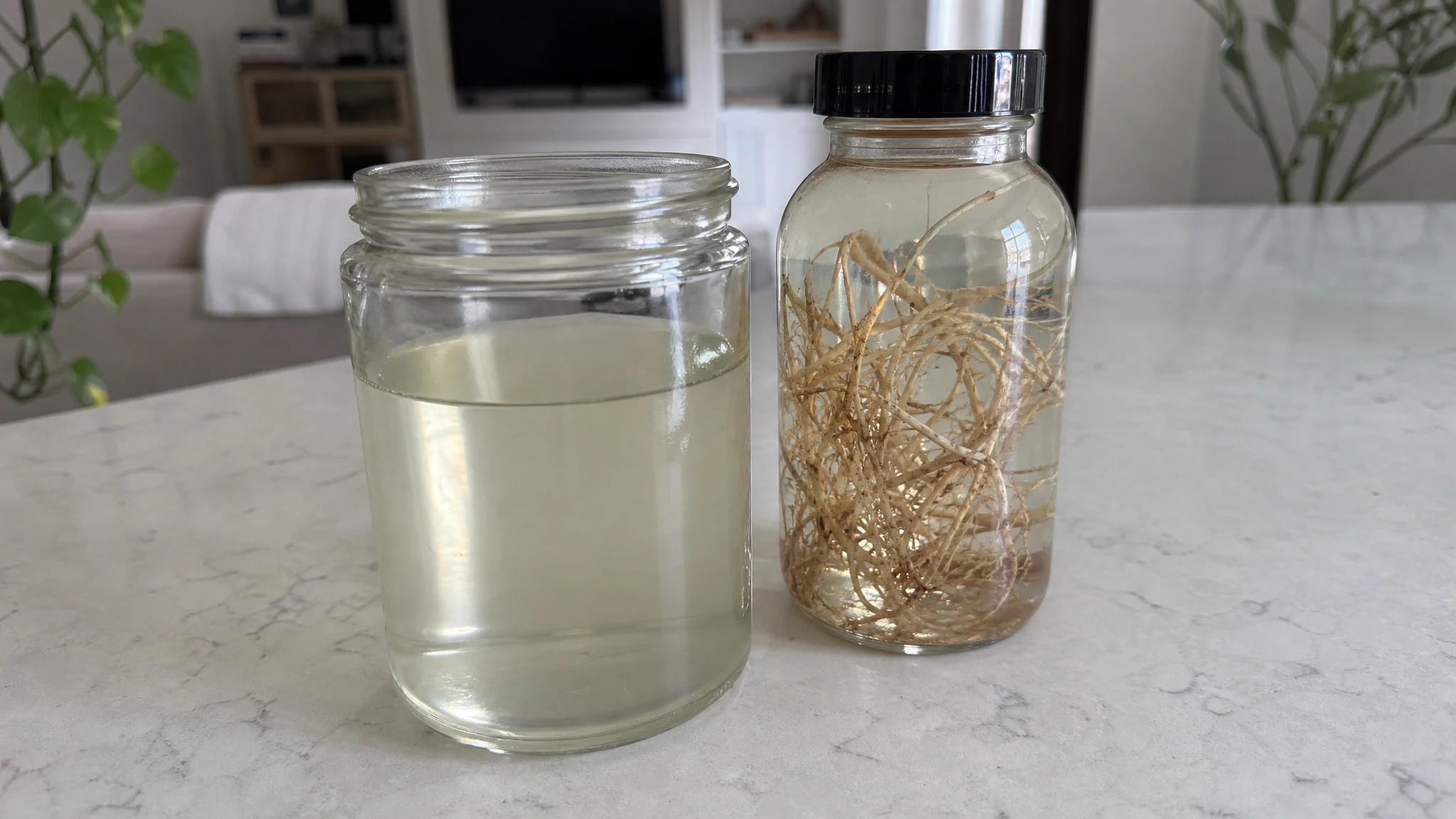
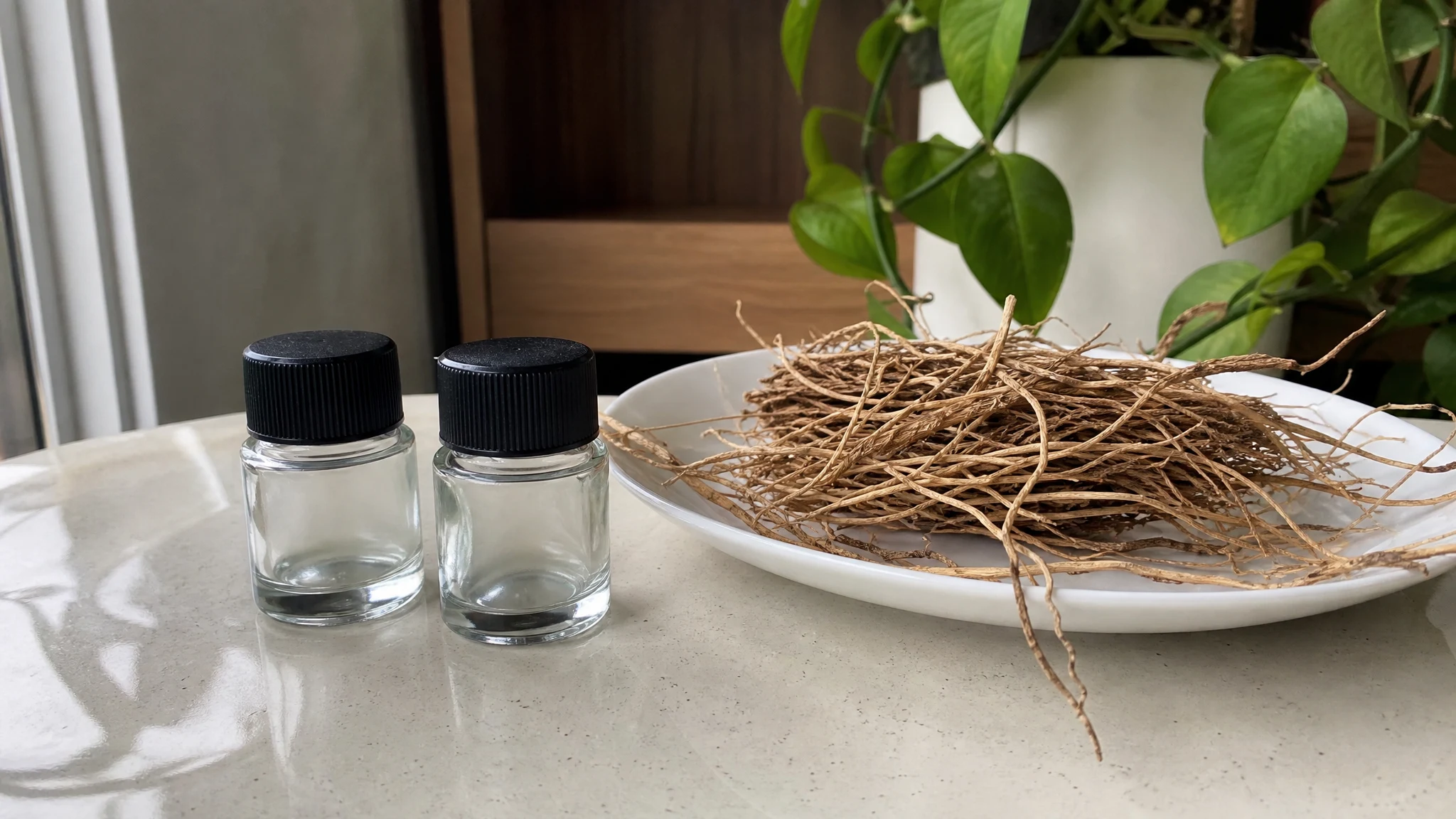
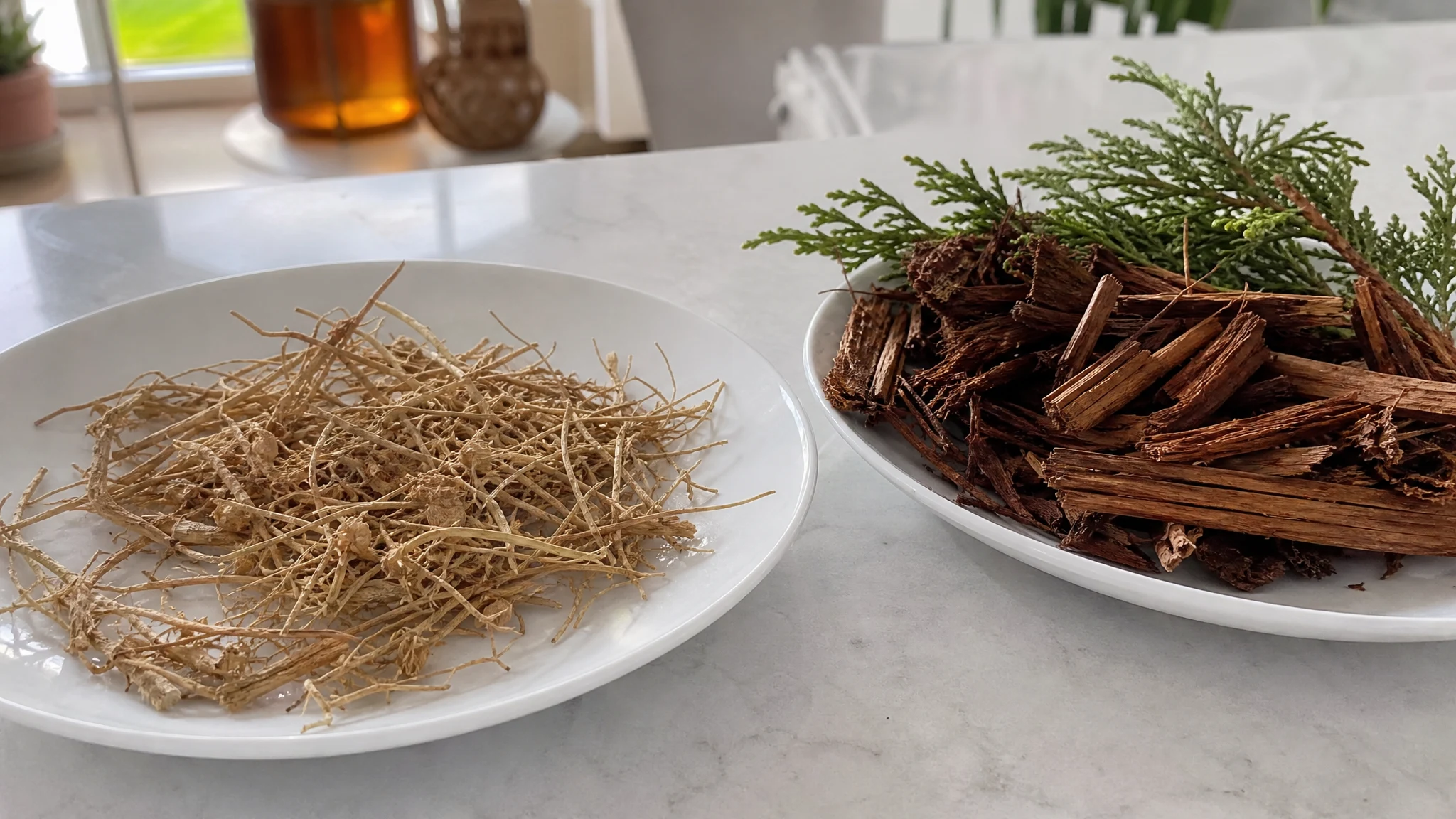
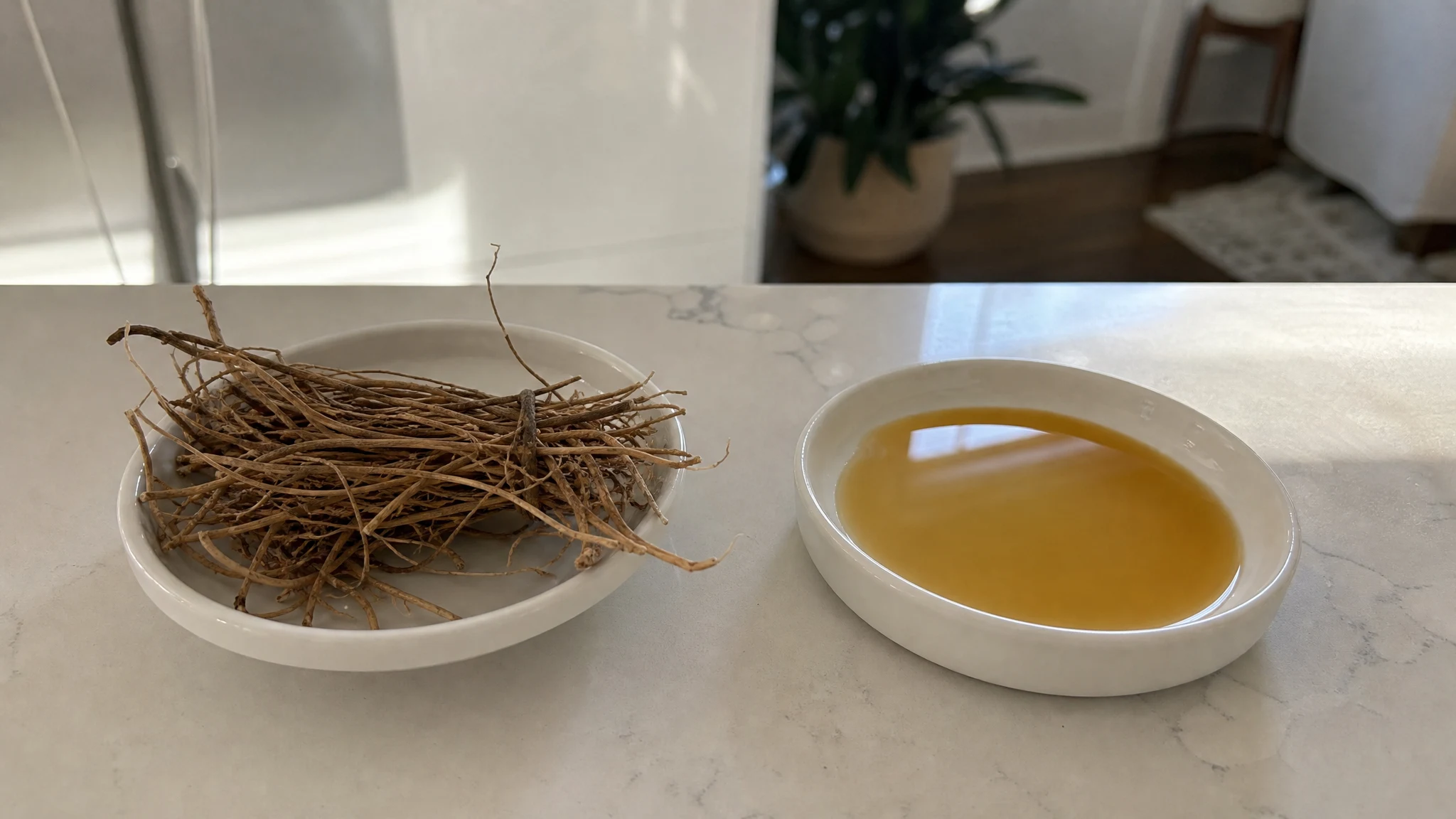
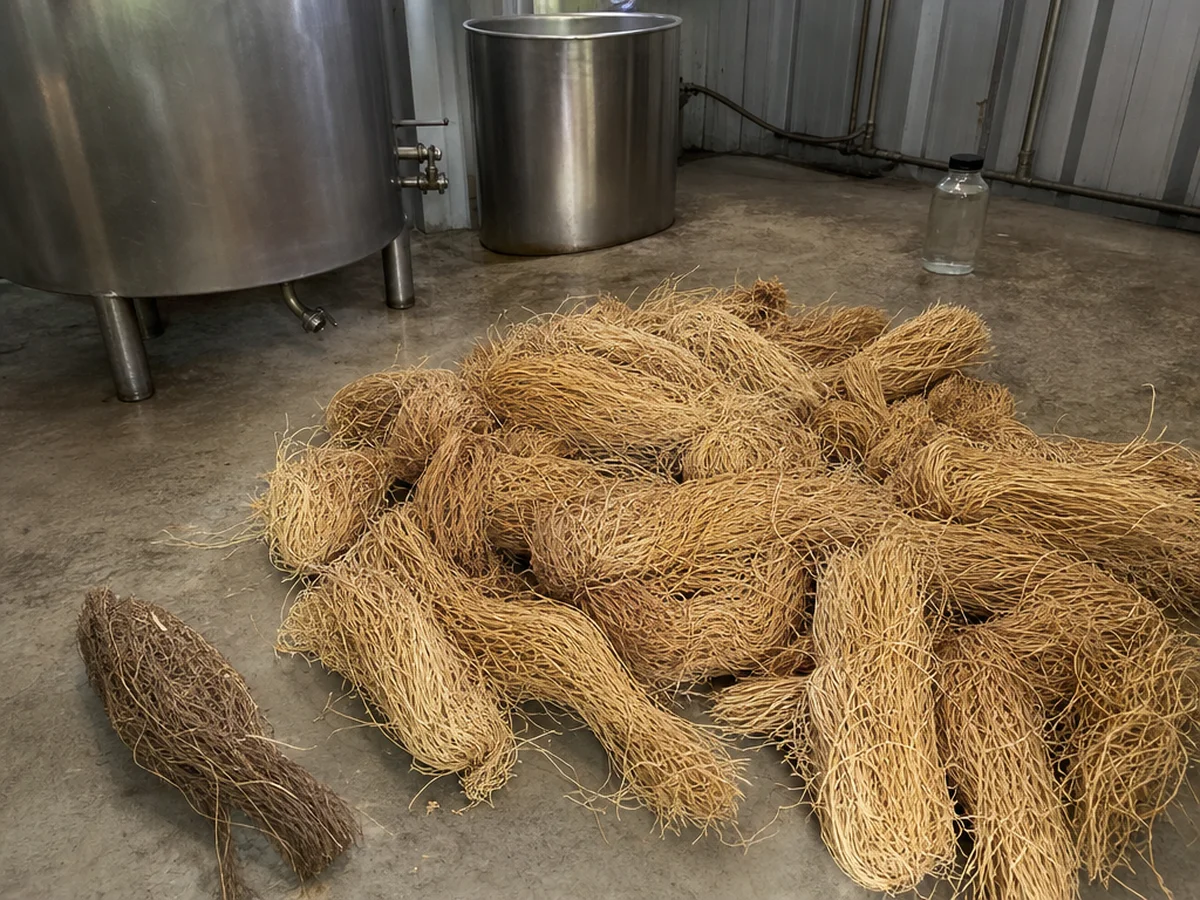
Vetiver oil, in the classic sense, is what comes over when steam passes through the cleaned, dried roots. The Osmothèque describes a process that runs for more than 24 hours, uses a great deal of water, and gives a very thick, resinous, yellowish essence. It also says it takes about 150 kg of dried roots to make 1 kg of oil (Vetiver : a palette of woody fragrances, Osmothèque). The international standard for the oil, ISO 4716:2013, exists to help assess the quality of the essential oil of vetiver from the main producing countries, Haiti among them (ISO 4716:2013 - Vetiver Essential Oil Quality and Testing Standard). Our Certificate of Analysis for one batch lists the extraction method as steam distilled, alongside density and refractive index.
What a CO2 extract is
CO2 extraction swaps steam for carbon dioxide under pressure. The method is attractive to researchers because it can be quick and can give a high yield, and a team working on Brazilian roots reported exactly that: supercritical CO2 gave a 3.2% yield in far less time than the other methods they tried. Their extracts also contained more acid than commercial vetiver oils from other sources. The main acid, zizanoic acid, could be converted into khusimol, an alcohol with more desirable sensory properties. In their sensory evaluation the acid-free oil looked suited to perfumery, while the CO2 extract looked more suited to food (Martinez et al., Valorization of Brazilian vetiver (Vetiveria zizanioides (L.) Nash ex Small) oil).
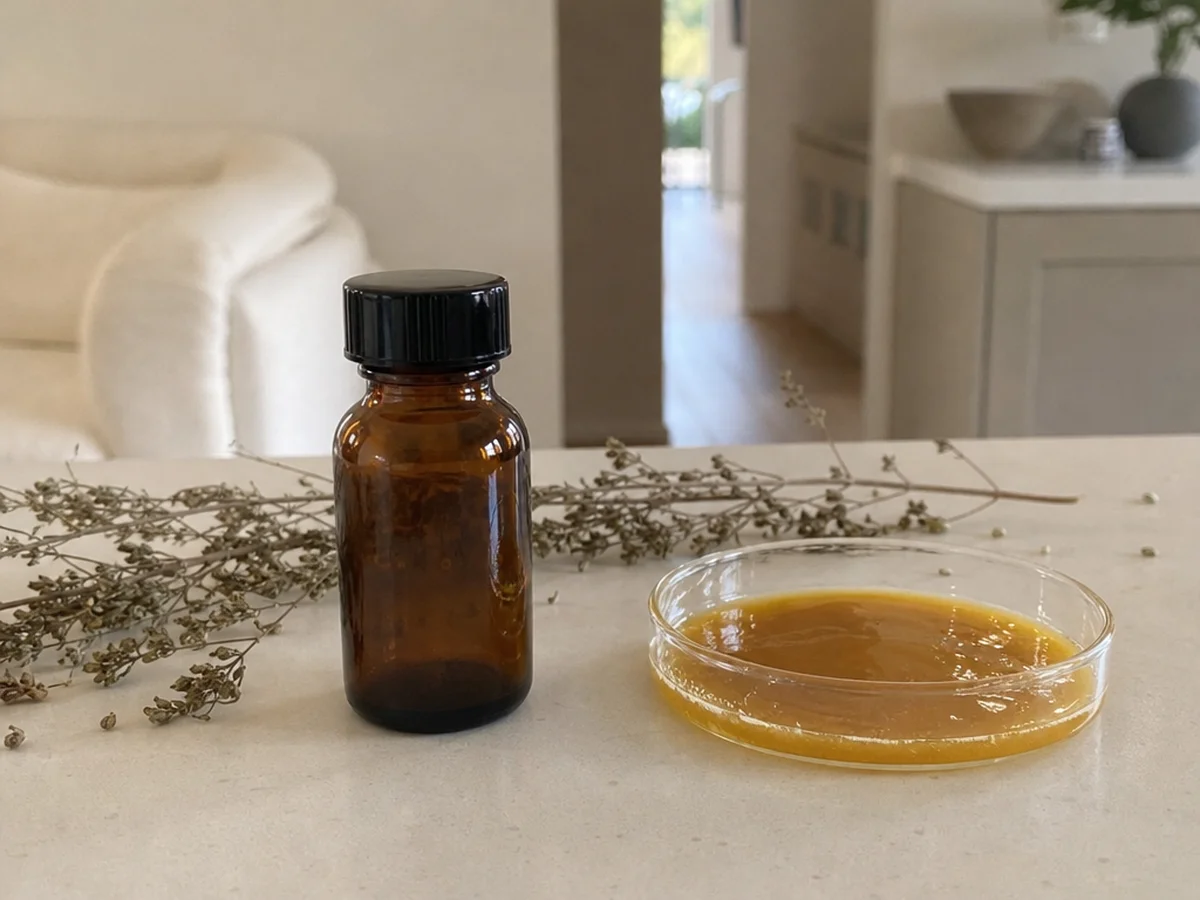
That last point is the useful one. A CO2 extract of vetiver is not simply "oil, but gentler"; it is a different material with its own character and its own best uses.
And then there is the in-between
Labels get slippery here. A 2019 study of Chinese roots used CO2-pressurised ethanol, which is carbon dioxide expanded ethanol and not CO2 alone. It gave 5.12% to 7.42% extract, more than hydrodistillation or indirect vapour distillation, but identified 23 components, 48 fewer than hydrodistillation. In a laboratory antioxidant assay the order ran from indirect vapour distillation down through hydrodistillation and the expanded-ethanol extract to supercritical extraction, and antibacterial activity against Gram-positive bacteria in a dilution assay was roughly comparable to the traditional samples (David et al., Chemical Composition, Antioxidant, and Antimicrobial Activities of Vetiveria zizanioides (L.) Nash Essential Oil Extracted by Carbon Dioxide Expanded Ethanol). Those are in-vitro results. They tell you how different the extracts are in a dish, and nothing about how any of them behaves on skin or in a perfume.
What this means when you shop
Reading across these studies, we come to a few practical conclusions. They are our reasoning, not findings from any one paper.
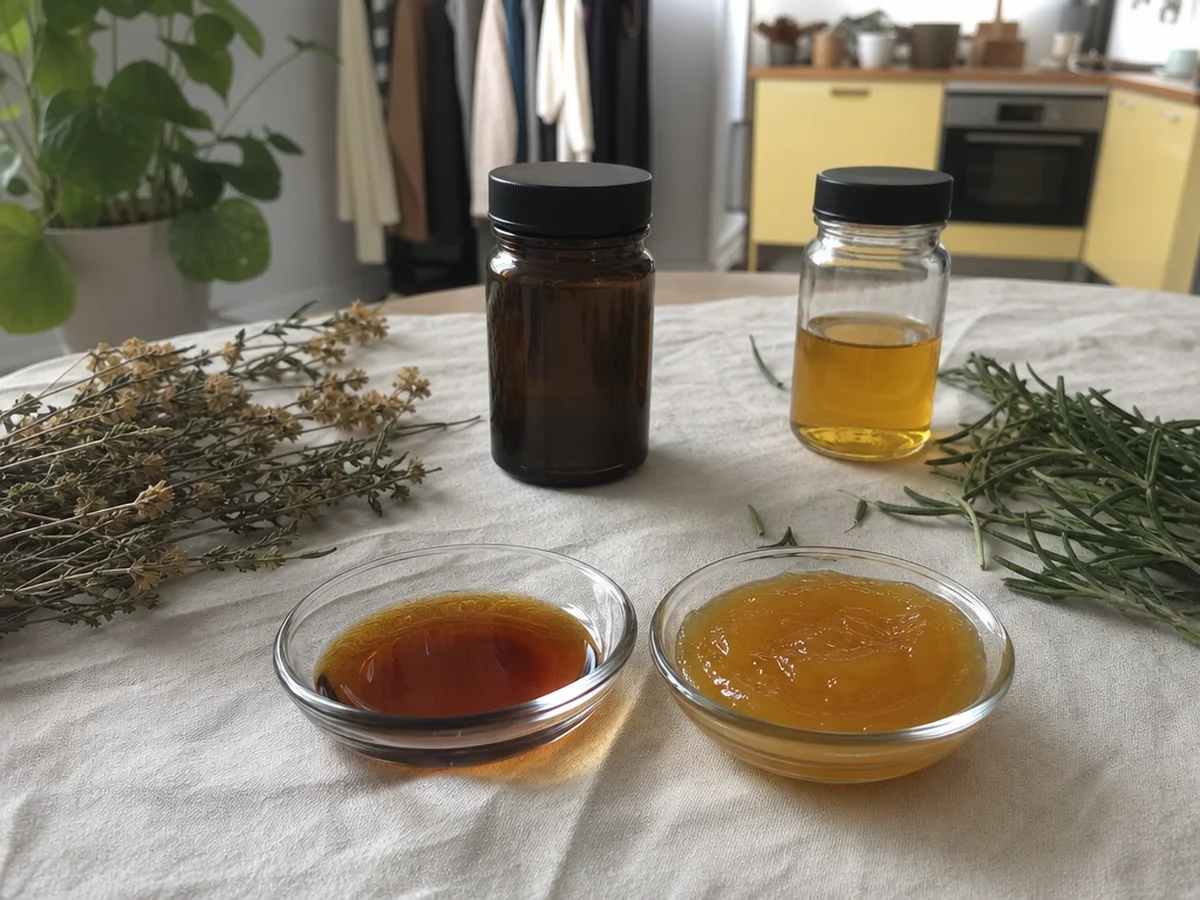
- Do not swap one for the other in a formula. The compounds captured differ, and the Brazilian work shows acid content alone can shift the sensory profile. If you built a scent on one, a change of material means smelling and adjusting again.
- "CO2" on a label is only half an answer. It could be liquid CO2, supercritical CO2 at some pressure, or an ethanol-based variant, and the studies show these are different products.
- Dilution advice belongs to the specific material. Our guidance for our steam-distilled oil is 0.5% to 2% in a carrier with a patch test first. We would not carry that figure over to an extract, so follow the seller's own guidance for whatever you buy.
- A lower extraction temperature is a reason to look, not a result. It is easy to argue that gentler conditions preserve delicate molecules. The studies above measured yield, composition and lab assays, and none of them shows that such a product smells better to a perfumer.
Reading a label closely
When two bottles both say vetiver, slow down at the label. Look for the words that describe how the material was made, not only the plant name, and notice what is missing as much as what is there. A bottle that tells you the extraction method, the plant part and a batch reference is easier to compare than one that gives only a name and a flowery description. It costs nothing to read before you decide.
How we would choose
If you want vetiver for a diffuser, a candle, soap or a perfume base, the steam-distilled oil is the place we would start. It is the material the standards and the classic perfumery literature describe, which also makes it the easiest to check against a report. If you are following a flavour formula or a specific extract-based recipe, the person who wrote that formula should name the material.
Whichever you pick, three questions go a long way: what exactly is the material (oil or extract, and which solvent), can you see the GC-MS report for the lot, and when was it made. If you want to see how our oil's profile fits the wider picture, we cover the compounds in the chemistry of vetiver oil, how it is made in vetiver root oil extraction, and its place in a formula in perfumery.
For our own oil, the Certificate of Analysis we publish gives density and refractive index for one batch. If you need a GC-MS report for your lot, ask us in writing through the contact page before you order.
Vetiver Essential Oil
Vetiver Essential Oil from our own shop, in sizes from 0.5 oz to bulk.
From $20.99
Shop Now →Sources & Further Reading
- Vetiver : a palette of woody fragrances (Osmothèque, 2015)
- ISO 4716:2013 - Vetiver Essential Oil Quality and Testing Standard (iTeh Standards catalogue entry)
- Valorization of Brazilian vetiver (Vetiveria zizanioides (L.) Nash ex Small) oil (Martinez et al., J Agric Food Chem, 2004)
- Chemical Composition, Antioxidant, and Antimicrobial Activities of Vetiveria zizanioides (L.) Nash Essential Oil Extracted by Carbon Dioxide Expanded Ethanol (David et al., Molecules, 2019)