Vetiver vs Lavender Oil: Which Scent Fits Your Evening?
Lavender is the oil everybody knows, and vetiver is the one people discover later, usually with a slightly startled "what is that smell?" If you are standing between the two, the first thing to know is that they come with very different amounts of paperwork. Lavender has been studied in people many times. Vetiver has been studied in a couple of rats and one small group of nurses.
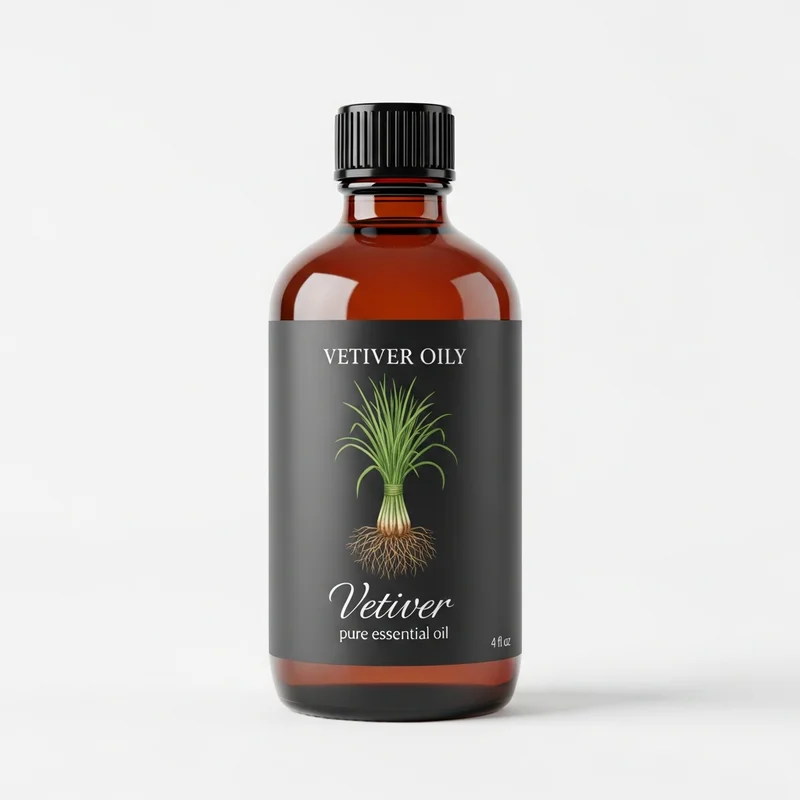
Vetiver Essential Oil
Our own Vetiver Essential Oil, in sizes from 0.5 oz to bulk.
From $20.99
Shop Now →A note before the science
An oil can be a pleasant part of a calm evening. It is not an answer to an anxiety disorder. The National Institute of Mental Health describes anxiety disorders as conditions that do not simply pass and can get worse over time, and if that sounds familiar, a physician or mental health professional is the right place to start. We sell an external, cosmetic oil, so what follows is about scent and evidence, not treatment.
Where lavender's reputation comes from
It helps to separate three things that often get blended together under "lavender calms anxiety."
The strongest results belong to Silexan, a standardised lavender oil preparation taken by mouth as an 80 mg daily capsule. A 2023 meta-analysis of five double-blind, placebo-controlled trials with 1,213 adults found it beat placebo on a standard anxiety rating scale after ten weeks. That is a capsule made to a pharmaceutical specification, not a bottle of aromatic oil, and we would never suggest swallowing any essential oil.
The second body of evidence is about inhaling lavender or having it in a massage. A large 2019 review pulled together dozens of trials and found that inhalation reduced anxiety scores on average, and that massage with lavender looked helpful too. The reviewers were candid about the catch: the average quality of the studies was low, and for massage they could not say whether the benefit came from lavender itself or from the touch and the ritual. Even so, it is easy to see why lavender earned its reputation. It has far more human data behind it than almost any other oil.
What vetiver has
Vetiver has less to show, and we would rather say so plainly. In one rat study, animals that inhaled vetiver oil at 2.5% for seven minutes behaved on a maze test much like animals given a low dose of diazepam. In another, rats that inhaled it stayed awake longer and spent less time in slow-wave sleep, which the authors described as a refreshing effect. A 2026 trial in 108 intensive care nurses compared a chamomile and lavender blend, vetiver oil and a jojoba placebo as a nightly massage for four weeks. Sleep scores improved in all three groups, including the placebo group, and the study measured fatigue and sleep rather than anxiety.
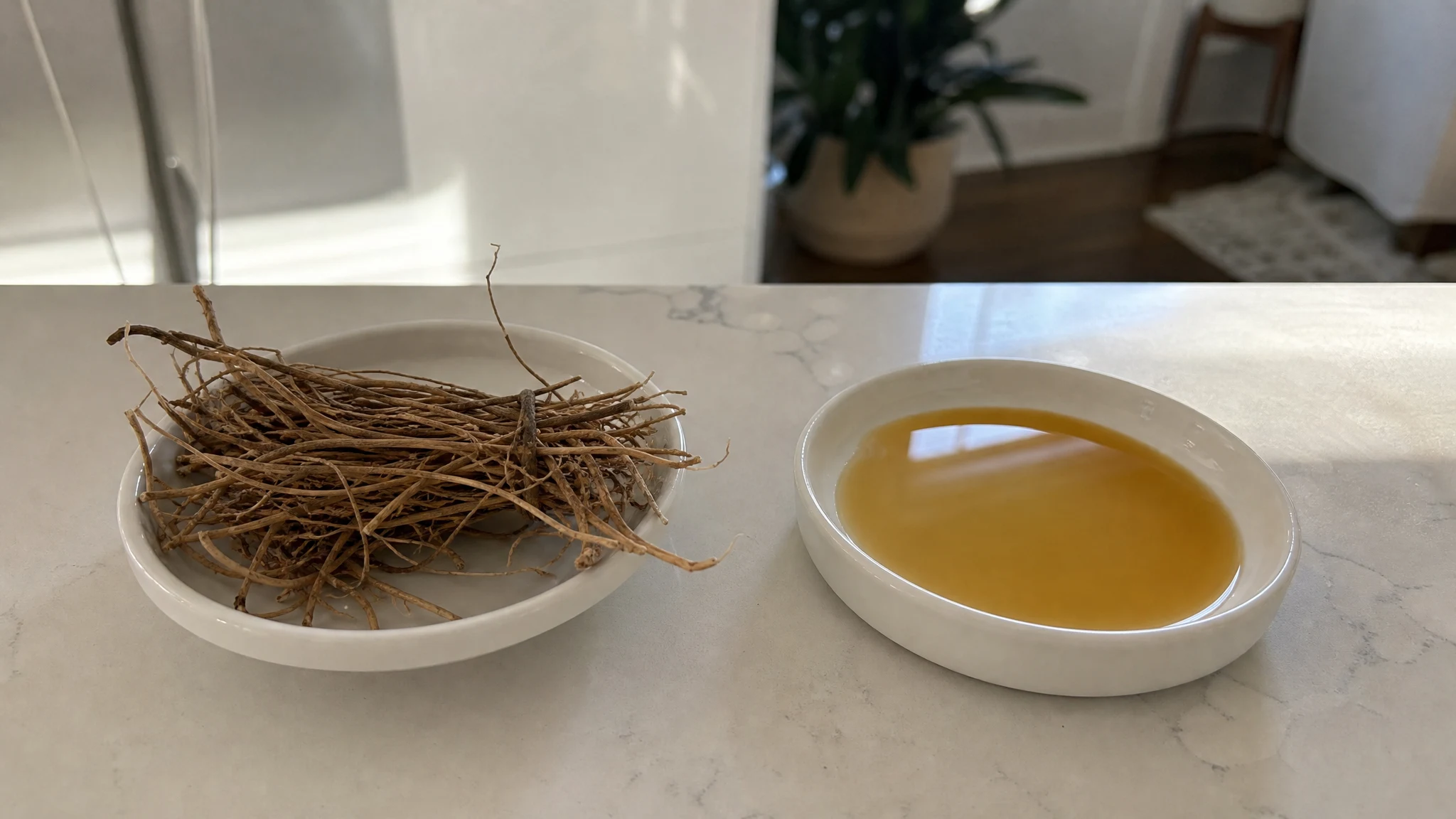
We know of no trial that sets vetiver against lavender for anxiety, so any claim that one beats the other is a guess. What we can offer instead is honesty about what each oil is. Lavender is floral, herbal and familiar. Vetiver is deep, earthy and smoky-sweet, a base note that lingers. If you enjoy a darker, grounded sort of fragrance, that is a good reason to pick vetiver. If you want the oil with the larger evidence base, that is lavender, though we do not sell it.
Two very different bottles
If you have never smelled vetiver, give it more than one sniff. The first meeting with the neat oil is often the loudest, deep and smoky, and a second or third pass can show the sweeter, woody side. Lavender is the familiar one. Vetiver is the one people sometimes need a minute with, and that is not a fault. A paper strip, a few minutes of patience and a glass of water for your nose between sniffs is a good way to do it.
If you try them together
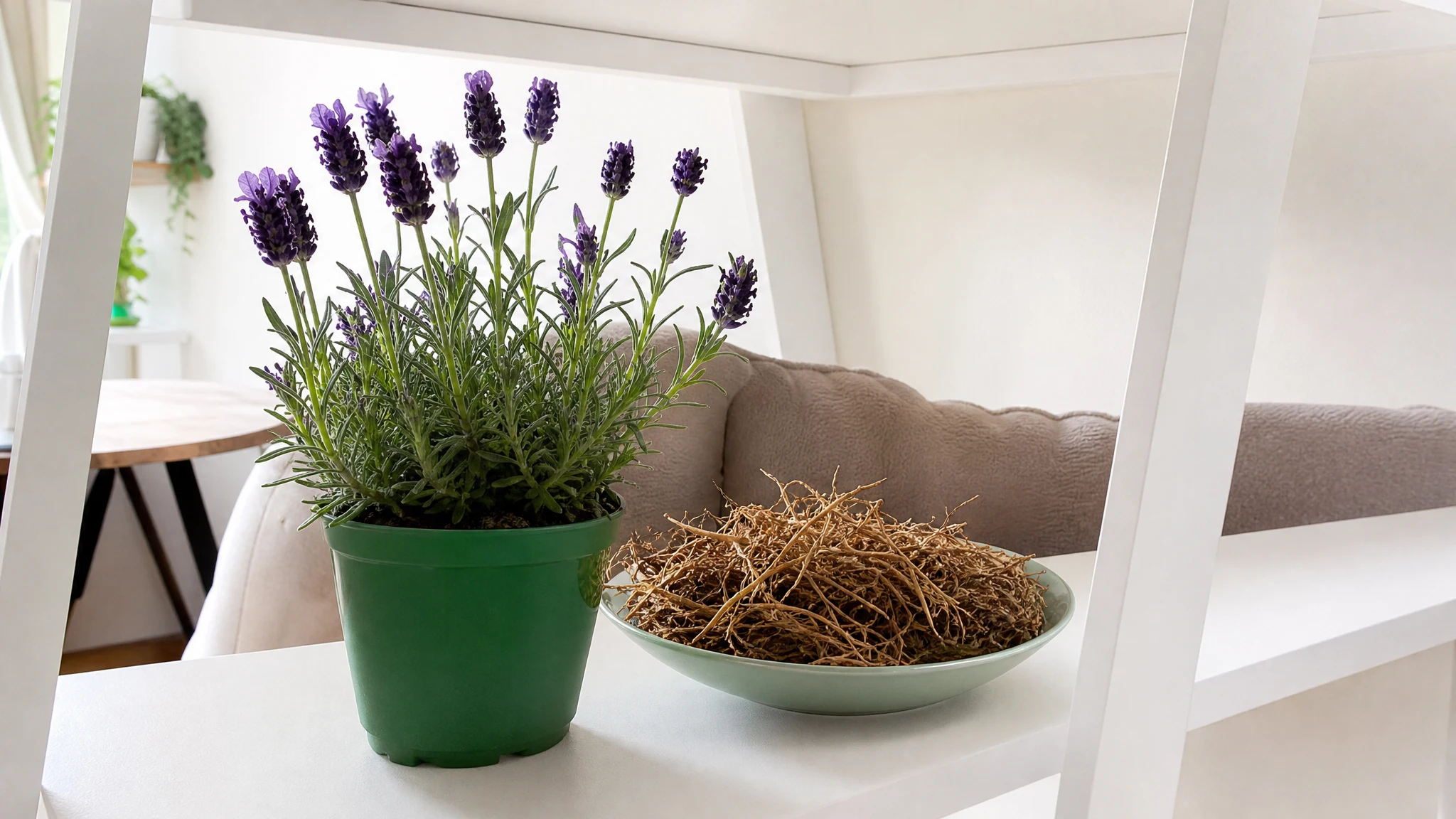
Lavender is one of the oils we list as a classic partner for vetiver. Vetiver is strong, so start with mostly lavender and a very small amount of vetiver, then adjust. It is easy to add more and hard to take any out. We sell vetiver only, so lavender comes from another supplier, and the same advice applies there: smell before you commit.
Using vetiver sensibly
Our oil is sold neat, so the dilution is yours to make: we recommend 0.5% to 2% in a carrier oil, we would begin at 0.5% on a small patch of skin, and we keep it away from eyes, children and pets. If you are pregnant, nursing, on medication or have a skin condition, check with your healthcare provider first. Our safety and dilution guide has the practical steps, and our deeper reads on vetiver and anxiety and vetiver and sleep cover the studies in full.
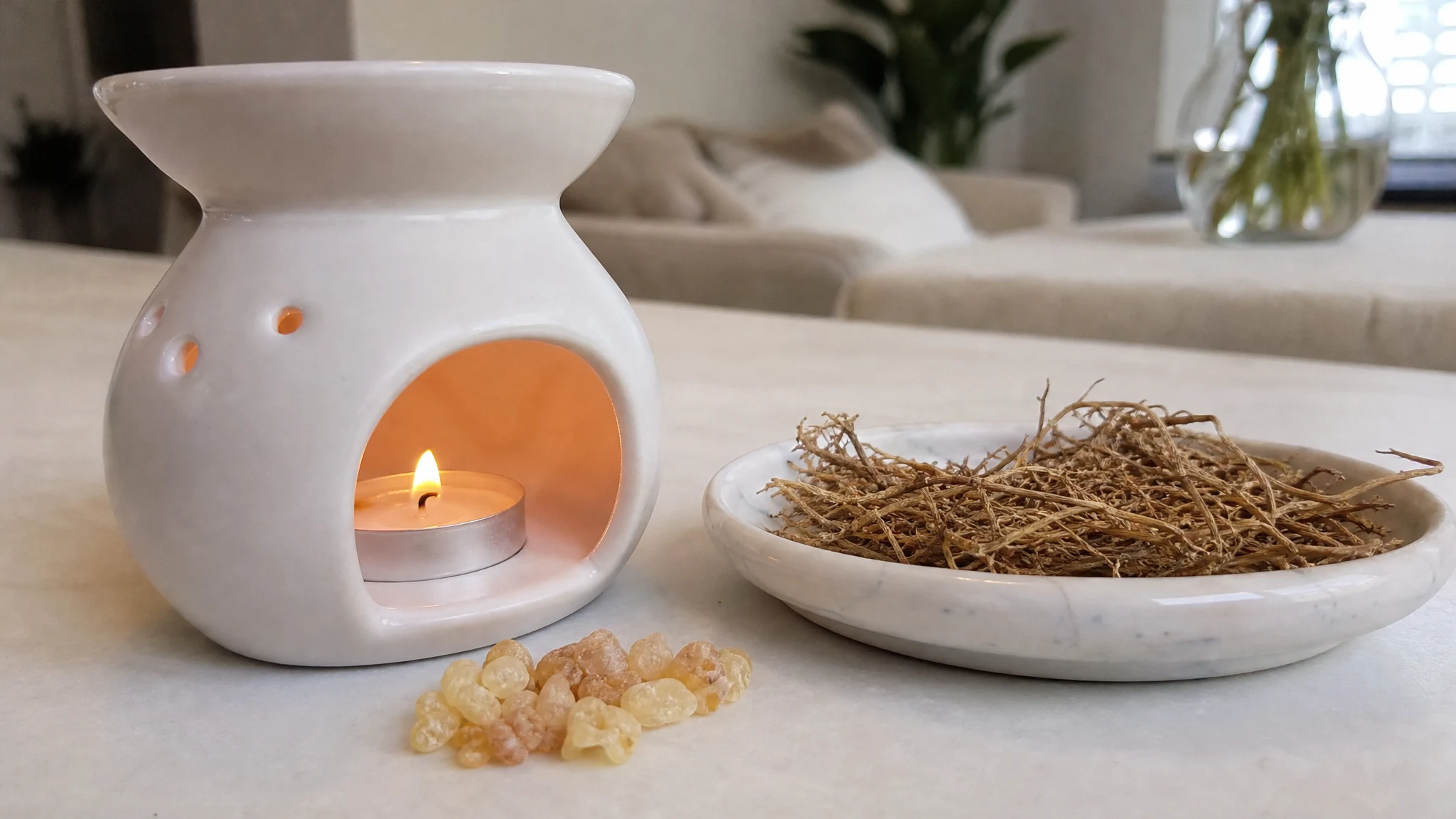
Our vetiver is thick and slow to pour, especially when cool, so it is easier to measure if you warm the bottle in your hand first. A diffuser works best with a reed or warm-air model; our diffuser guide explains why.
How we would choose
Pick by scent first. Sniff both, notice which one you reach for twice, and let that decide. If you want a blend, the two work happily together; lavender is one of the oils we list as a classic vetiver partner. And remember that a calm evening is mostly made of habits: the lights, the quiet, the cup of something warm. The oil is the seasoning.
Vetiver Essential Oil
Vetiver Essential Oil from our own shop, in sizes from 0.5 oz to bulk.
From $20.99
Shop Now →Sources & Further Reading
- NIMH, Anxiety Disorders
- Dold M et al., Efficacy of Silexan in patients with anxiety disorders: a meta-analysis of randomized, placebo-controlled trials. Eur Arch Psychiatry Clin Neurosci, 2023
- Donelli D et al., Effects of lavender on anxiety: A systematic review and meta-analysis. Phytomedicine, 2019
- Saiyudthong S et al., Anxiety-like behaviour and c-fos expression in rats that inhaled vetiver essential oil. Nat Prod Res, 2015
- Cheaha D et al., Modification of sleep-waking and electroencephalogram induced by vetiver essential oil inhalation. J Intercult Ethnopharmacol, 2016
- Burkev FG et al., The Effect of Aromatherapy on Fatigue and Sleep Quality in Intensive Care Nurses: A Randomised Placebo-Controlled Trial. Nurs Crit Care, 2026