Vetiver or Frankincense for Meditation: Choosing by Scent
Burn a little frankincense and the room smells like a church, a temple, a very old idea of quiet. Open a bottle of vetiver and you get something else entirely: damp earth, smoke and a faint sweetness, like a root cellar after rain. Both oils have a reputation as companions for meditation, and it is worth being clear about what that reputation rests on.
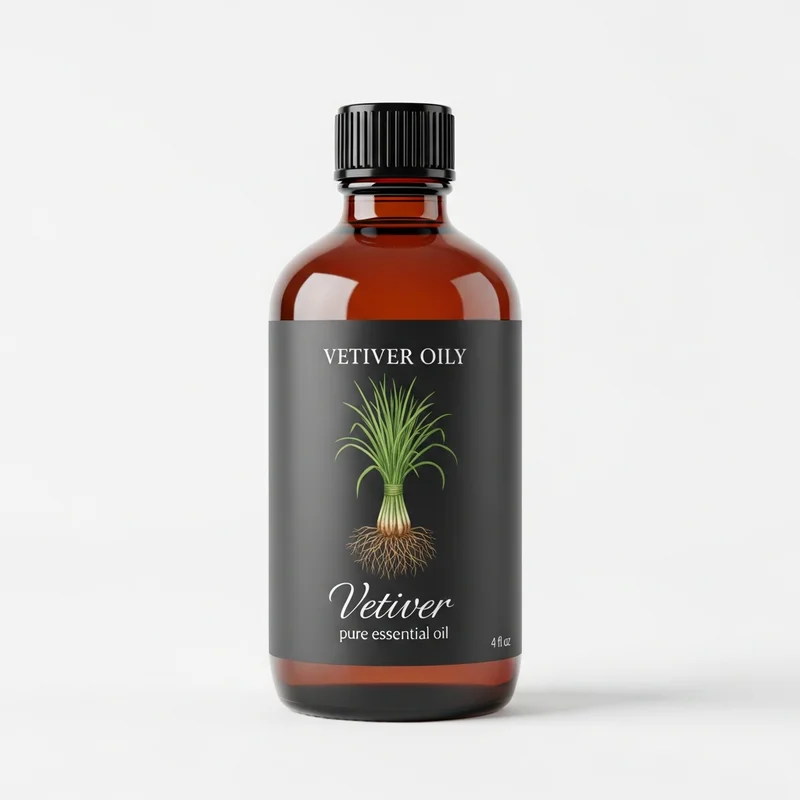
Vetiver Essential Oil
Our own Vetiver Essential Oil, in sizes from 0.5 oz to bulk.
From $20.99
Shop Now →Two stories people tell
The frankincense story is the more dramatic one. In 2008 a research group reported that incensole acetate, a compound found in Boswellia resin, activated a channel in the brain called TRPV3 and produced anxiolytic-like and antidepressive-like behaviour in mice, but not in mice lacking that channel. The headlines wrote themselves: ancient incense, modern neuroscience. The details are narrower. The researchers worked with an isolated compound, in mice, and the paper is about the resin constituent, not about a bottle of steam-distilled oil diffused in a living room. It is a lovely reason to be curious about frankincense. It is not a result about sitting on a cushion with a diffuser running.
The vetiver story is similar in shape. Rats that inhaled vetiver oil at a 2.5% concentration for seven minutes showed an anxiolytic-like profile on a maze test. A separate rat study found that inhaling the oil increased time awake and reduced slow-wave sleep, which the authors read as a refreshing effect on alertness. Two studies, two directions, no people, and neither involved meditation.
What meditation research actually studies
The National Center for Complementary and Integrative Health describes the science of meditation as being about the practice itself, mindfulness-based programmes and the like, and describes much of the evidence as preliminary. Scent is not what is being tested. That is good news in one sense: it means you can sit down tonight with no oil at all and be doing the thing the research is about. If you are meditating to work through something heavy, a physician or psychologist is the right person to talk to, and a good teacher can tell you whether the practice suits you.
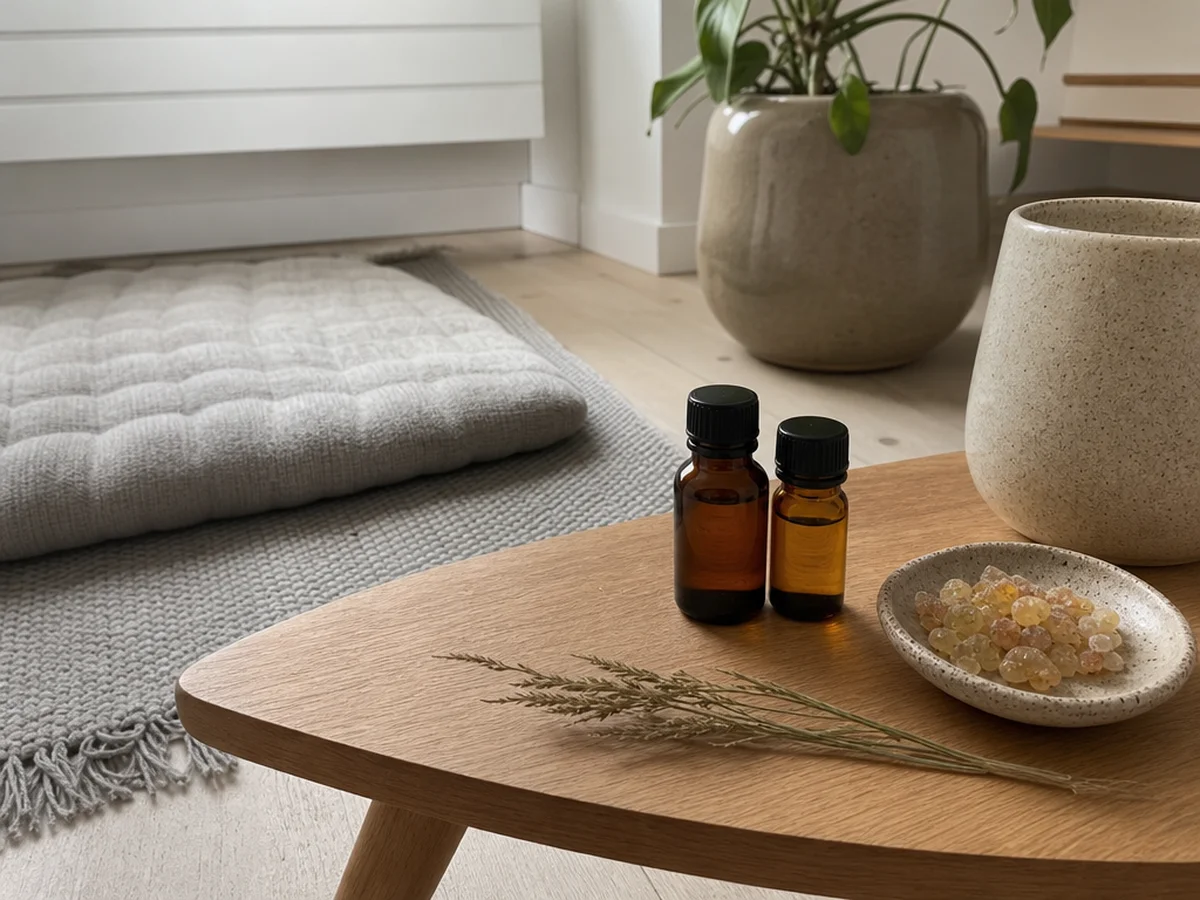
So why reach for an oil at all?
Because a scent can be a cue. Many people like to light the same incense or open the same bottle each time they sit, so the smell becomes a signal that this is the quiet part of the day. Any scent you enjoy can play that role, and that is a very human reason to choose between two oils.
If that is your reason, choose by nose. Vetiver is heavy, earthy and slow. The 2021 chemistry paper on its key odorant explains why it feels so deep: a single molecule is detectable at about 29 picograms per litre of air, and the oil also carries a grapefruit-like lift, an earthy edge and a creamy, sandalwood-like background. We describe ours as earthy and smoky-sweet. Frankincense is a different kind of material, a resin oil, and since we do not sell it we will not describe its aroma for you. Smell it before you buy, and ask the seller which species it is, because Boswellia species differ.
Practical notes for vetiver
Vetiver is thick, so it rarely behaves like a thin citrus oil in a diffuser. Many people prefer a reed or warm-air diffuser, and our guides to diffusing vetiver and diffusers for thick oils walk through the options. Because the oil is concentrated, a little goes a very long way, so start with the smallest amount your diffuser allows.
For skin, we sell our oil neat and recommend diluting to 0.5% to 2% in a carrier oil. We would start at 0.5% and patch test first, and keep it away from eyes, children and pets. It is an external, cosmetic and aromatic oil, never to be taken by mouth. Pets, small children and pregnancy are questions for a veterinarian, pediatrician or your own physician. For more on blending with it, see our blending guide, and for the wider picture of vetiver and quiet moments, our piece on vetiver in meditation practice.
Making the ritual your own
If you do want a scent in your practice, keep the setup simple and repeatable. Pick one spot, one time of day and one small amount. A paper strip dipped in vetiver and left on a shelf a few feet away is gentler than a strongly scented room, and it is easy to take away if you decide it is too much. Because the oil is thick and slow-pouring, a single drop goes a long way.
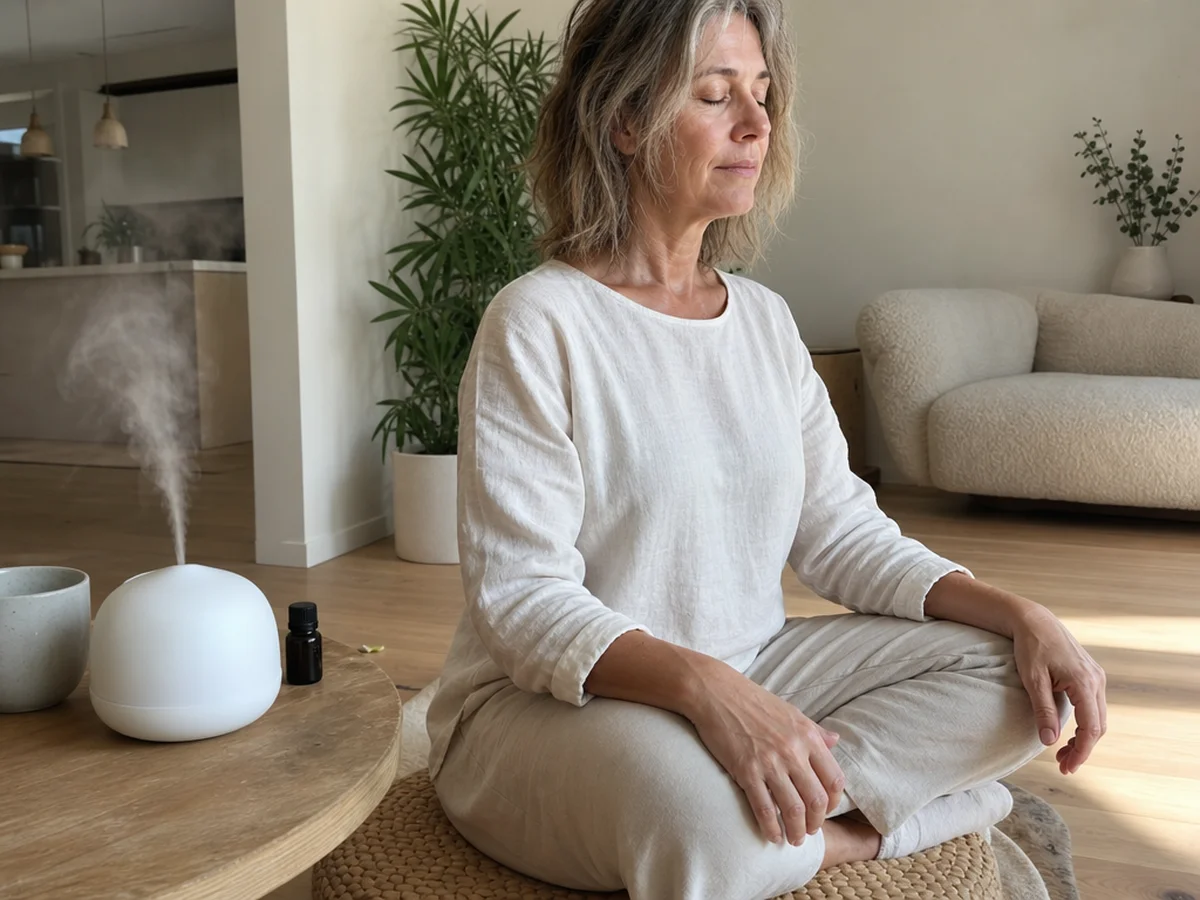
The point of a scent in a ritual is that it becomes a cue, a small signal that this is the quiet part of the day. That works with whichever smell you love and keep consistent. Skip the search for the perfect oil, and spend the time sitting down.
Our verdict
Choose the smell you will want to come back to. If a smoky, rooty base note sounds like your evening, vetiver is a good companion to a ritual; if a resinous, incense-like aroma is what you picture, frankincense will suit you better. Neither will do the sitting for you, and that is the best part of meditation: it works with nothing but you.
If you want a batch report for your vetiver lot, ask us in writing through the contact page. The Certificate of Analysis we publish for one batch lists density and refractive index.
Vetiver Essential Oil
Vetiver Essential Oil from our own shop, in sizes from 0.5 oz to bulk.
From $20.99
Shop Now →Sources & Further Reading
- NCCIH, Meditation and Mindfulness: Effectiveness and Safety
- Moussaieff A et al., Incensole acetate, an incense component, elicits psychoactivity by activating TRPV3 channels in the brain. FASEB J, 2008
- Saiyudthong S et al., Anxiety-like behaviour and c-fos expression in rats that inhaled vetiver essential oil. Nat Prod Res, 2015
- Cheaha D et al., Modification of sleep-waking and electroencephalogram induced by vetiver essential oil inhalation. J Intercult Ethnopharmacol, 2016
- Ouyang J et al., The Smelling Principle of Vetiver Oil, Unveiled by Chemical Synthesis. Angew Chem Int Ed Engl, 2021