How to Diffuse Vetiver Oil: Timing, Pets and Cleanup
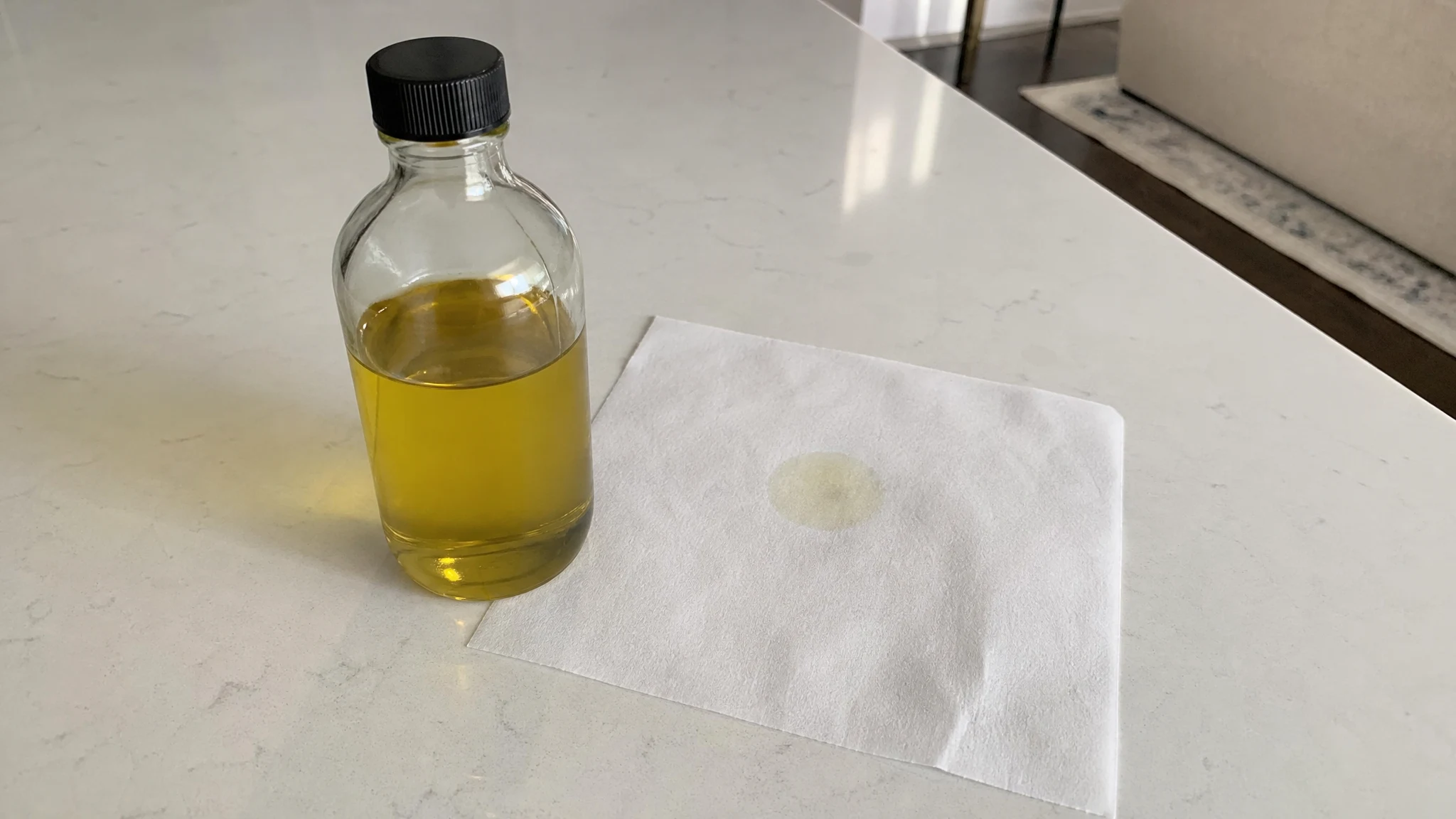
Tip the bottle of vetiver over a diffuser and you will notice it right away: the oil does not drip, it creeps. That slowness is part of its charm, because the same thickness is why vetiver lingers so long as a scent. It also means the machine you choose and the way you look after it make a real difference.
Vetiver Essential Oil
Our own Vetiver Essential Oil, in sizes from 0.5 oz to bulk.
From $20.99
Shop Now →Matching the oil to the machine
We describe vetiver as thick and slow-pouring, and it can settle at the bottom of an ultrasonic diffuser's reservoir instead of mixing evenly into the water. For that reason many people reach for a reed or warm-air diffuser, or start with a thinner oil and add a little vetiver as the supporting note. A cotton ball with a drop on it, tucked in a drawer or by a vent, needs no machine at all.
A few practical habits follow from the oil's texture. They are our reasoning rather than a rule from any manufacturer, so your diffuser's manual comes first:
- Use fewer drops than you expect. Vetiver drops are large, and its scent is persistent. We say a little goes a very long way, and a diffuser is where that shows most.
- Warm the bottle gently. Warming it slightly helps the oil move more freely, and a pipette gives you better control than shaking drops out.
- Clean after each use. Rinse the tank and wipe it so a dark film does not build up. If the manual says anything about thick oils, follow it. If it is silent, ask the maker.
We sell the oil only, so diffusers come from a home or aroma supplier. Our diffuser buying guide goes further on choosing one.
Before you switch it on
Take the cap off and smell the oil first. Vetiver reads as deep, earthy and smoky-sweet in the bottle, and it is worth deciding whether that is the room you want before you commit a whole tank to it. If you are unsure, start with the cotton ball by the vent for an evening. It is the gentlest way to find out how much scent a room really wants.
How long to run it
Robert Tisserand recommends intermittent diffusion, meaning 30 to 60 minutes on and then 30 to 60 minutes off. His reasoning is that the body, and the nervous system in particular, habituates after about that long, and he says there is evidence continuous diffusion can stress the body in various ways. Very low levels, where the oil is barely noticeable, he considers fine for any length of time.
That suggests a sensible test: if you can smell vetiver strongly from the doorway, it is too much. Dial it back, open a window when you finish, and let the room breathe.
Who shares the room
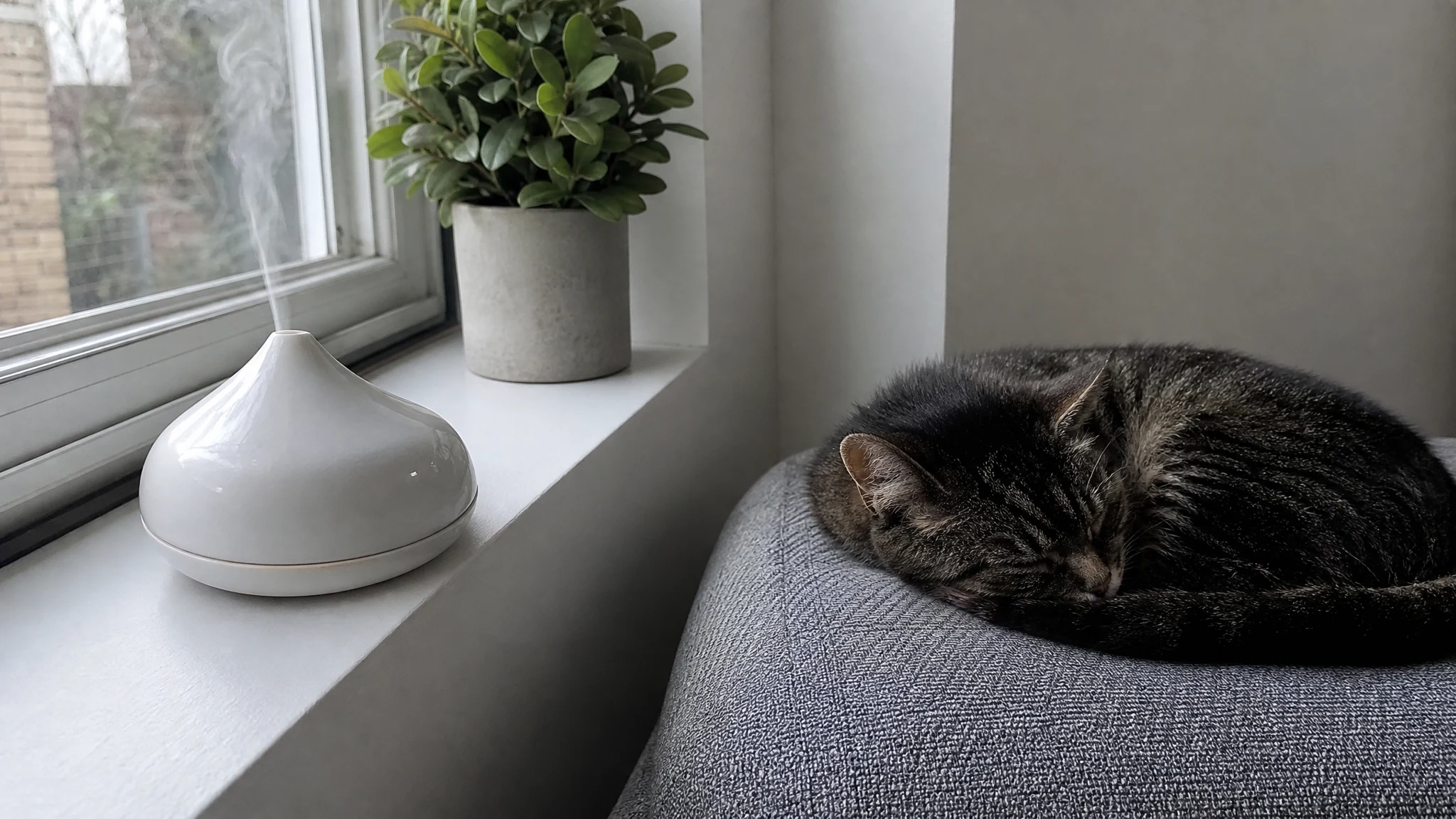
This is the part we would never skip. The Merck Veterinary Manual says active diffusers, the nebulizing and ultrasonic types, put microdroplets of oil into the air. Cats are especially sensitive because they lack an enzyme called glucuronyl transferase, and oil that lands on fur can be swallowed during grooming. Birds are at high risk because their respiratory tracts are so sensitive to fragrance and fine particles. The manual advises running a diffuser for only short periods (under 30 minutes), keeping pets out of the room during use and ventilating afterward. Passive options such as reeds do not release droplets, and their chief hazard to animals is airway irritation.
None of that is specific to vetiver, so we treat it as general guidance for essential oils. In practice that means no diffuser in a home with a bird, and a conversation with your veterinarian if a cat or a dog with breathing trouble lives with you. When animals share the room, the stricter 30-minute figure is the one to follow. Our pets post has more.
People matter too. Our guidance is to keep vetiver away from children, and anyone with asthma, or a baby in the house, should check with a physician or pediatrician first. The children post goes through the reasons.
What a diffuser is for
Diffusing vetiver is about atmosphere. The deep, earthy, smoky-sweet aroma is lovely on a quiet evening, and it blends well with sandalwood, cedarwood or lavender for a rounder room scent. It is a fragrance choice, and we do not offer it for sleep or anxiety. The National Center for Complementary and Integrative Health says of aromatherapy and insomnia that we do not know whether it is helpful because little rigorous research has been done. The best-known vetiver study had rats inhale vetiver for seven minutes and then watched how they behaved on a maze; its authors say the mechanism still needs investigating. A rat in a lab is not a person in a living room.
If sleep or worry is troubling you, a physician or psychologist is the right person to ask. If you simply like the scent, our sleep post and anxiety post explain what is and is not known.
What you will notice in the room
Vetiver tends to arrive slowly. In the first minutes you may notice very little, and then the room slowly takes on a darker, rounder smell that lingers near fabric and in corners. Because it is a base note, it is still there when lighter oils have faded, which is why a small amount can seem to keep growing in the air. That is your cue to turn the machine off sooner than you think you need to.
Wipe the lip of the bottle after pouring, too. A thick oil that dries on the threads is the quickest way to end up with a sticky cap and a dark mark on the shelf.
A simple routine
Check that the room has no bird and that anyone sharing it is comfortable. Add the smallest number of drops your diffuser's maker suggests. Run it for 30 minutes, switch it off for 30, and ventilate. Rinse the tank, stop at the first cough, headache or watery eyes, and speak to a physician if symptoms continue. For other ways to enjoy the oil around the house, see 20 ways to use vetiver.
Short sessions and a light touch are all vetiver needs to fill a room.
Vetiver Essential Oil
Vetiver Essential Oil from our own shop, in sizes from 0.5 oz to bulk.
From $20.99
Shop Now →Sources & Further Reading
- Tisserand Institute. Safety guidelines for diffusing essential oils at home. tisserandinstitute.org
- Merck Veterinary Manual. Toxicoses From Essential Oils in Animals. merckvetmanual.com
- National Center for Complementary and Integrative Health. Aromatherapy. nccih.nih.gov
- Saiyudthong S et al., 2015. Anxiety-like behaviour and c-fos expression in rats that inhaled vetiver essential oil. Nat Prod Res 29(22):2141-2144. PubMed 25553641