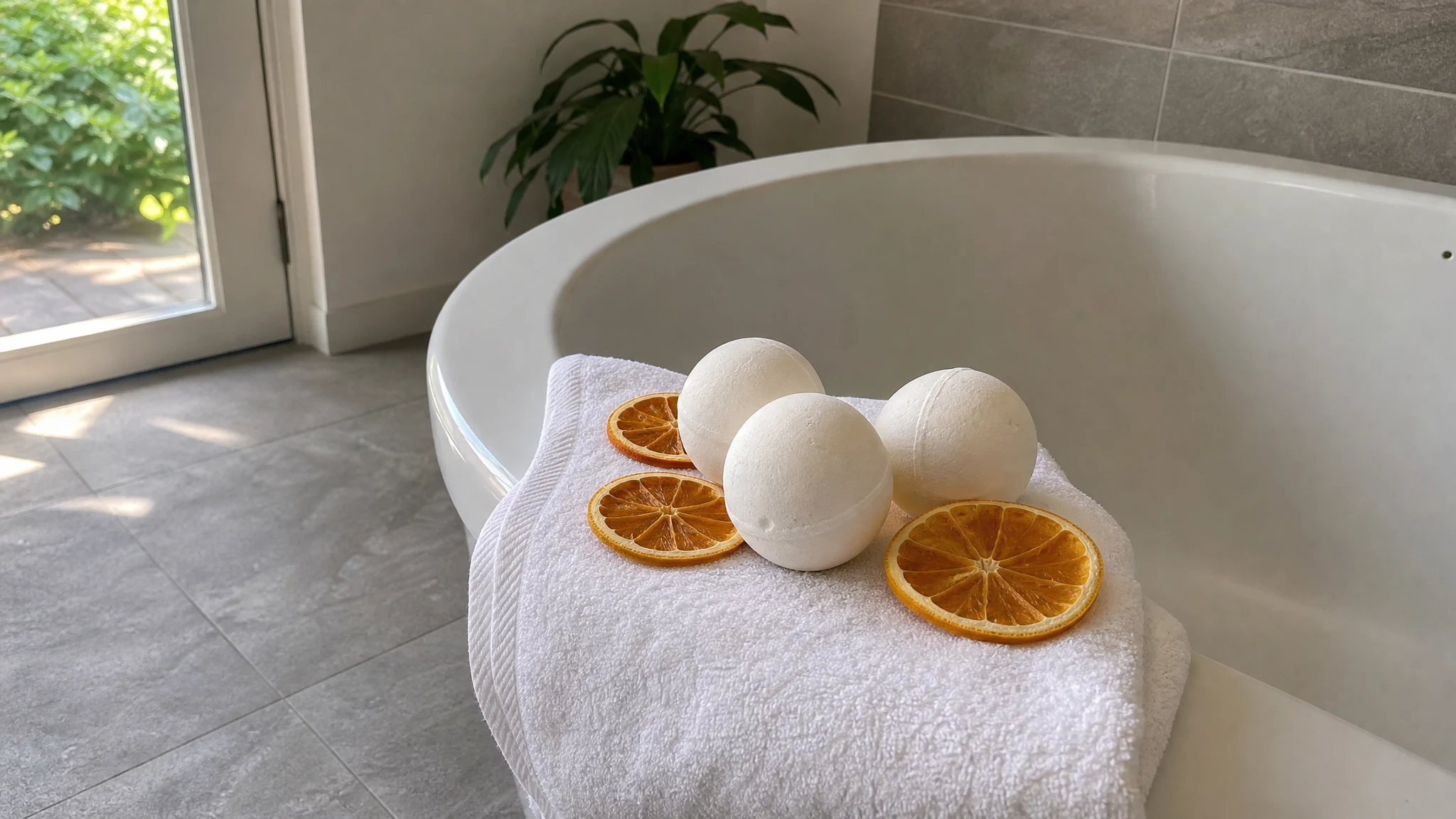
Vetiver and Orange Bath Bombs: A Recipe by Weight
Bright orange on top, dark earthy vetiver underneath: it is a good pairing for a bath bomb, like citrus peel over damp woodland. Before you reach for the bottle, though, there is one thing about bath bombs that most recipes skip. Oil does not dissolve in water, so what you add does not turn into a gently scented bath. This post gives a recipe by weight and the habits that make it a nicer experience.
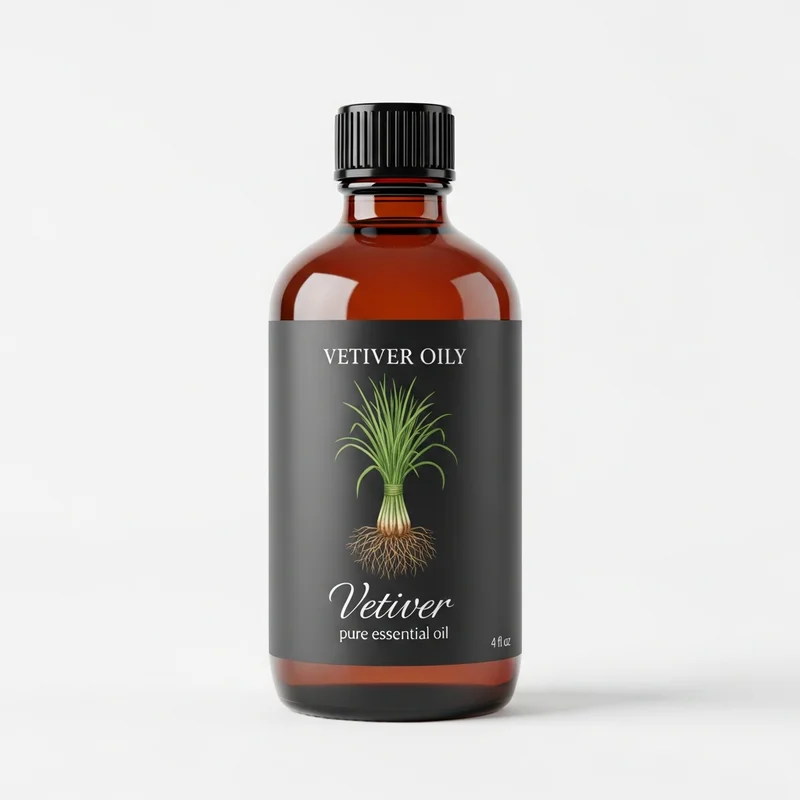
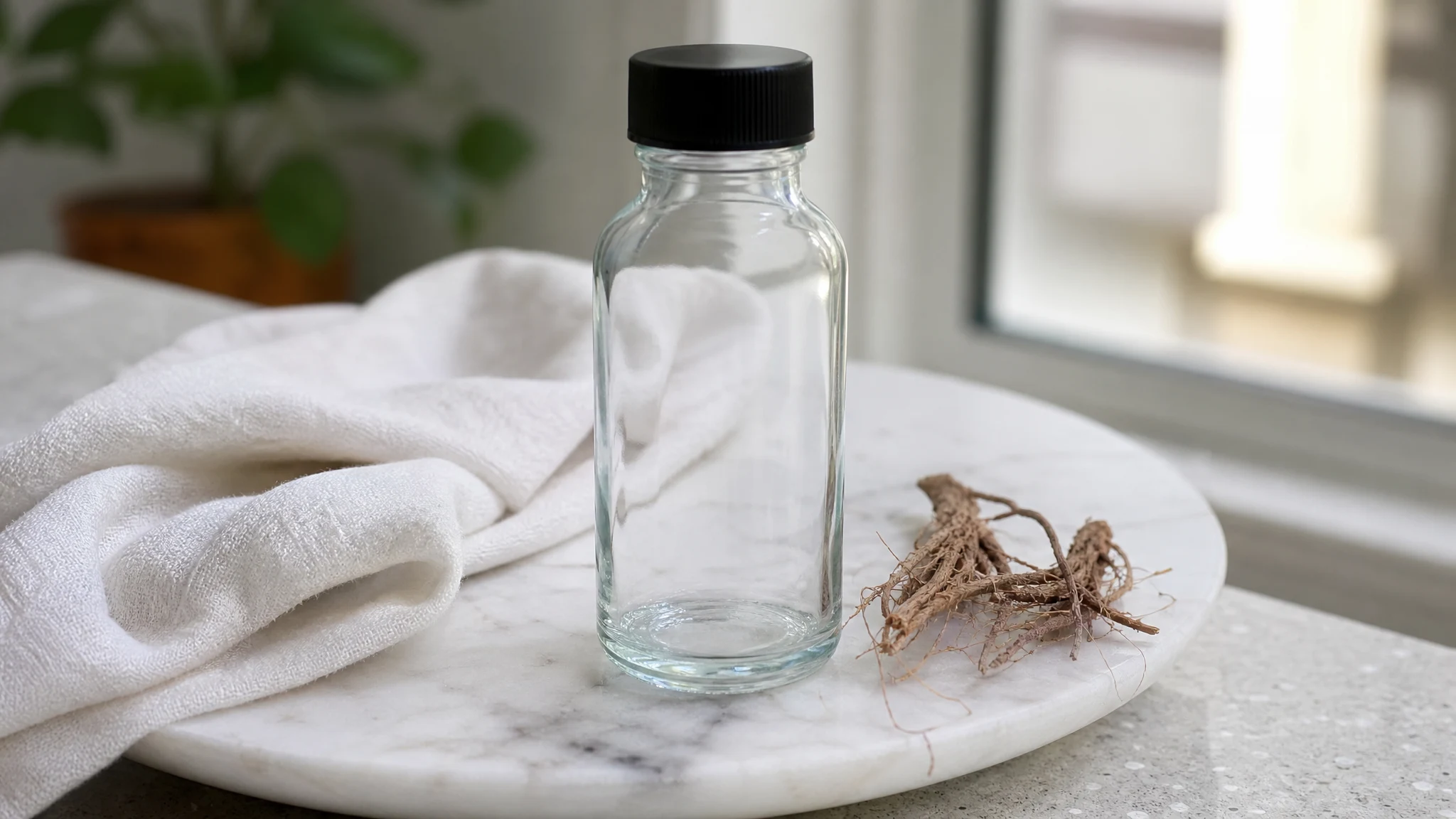
Vetiver Essential Oil
Our own Vetiver Essential Oil, in sizes from 0.5 oz to bulk.
From $20.99
Shop Now →What happens in the tub
A bath bomb is citric acid and sodium bicarbonate held together with a little oil. They sit quietly while dry, then react in water and release carbon dioxide, which is the fizz. The fragrance rides along, but reasoning from the fact that essential oil is not water-soluble, it arrives as droplets and a film, so your skin can meet it at a stronger local concentration than a recipe card suggests. That is why we think about the fragrance share inside the bomb and the number of bombs per bath, and not about the water.
What a dermatologist says
Alok Vij, MD, speaking for Cleveland Clinic, put it plainly: "There aren't any bath bombs that are totally safe, particularly for people with sensitive skin." He also said that for people without a history of atopic dermatitis or known sensitivities, "the occasional bath bomb is fine," and advised staying in only about 10 to 15 minutes and rinsing afterward (Cleveland Clinic, Is Marinating in the Tub With a Bath Bomb Safe for Your Skin?).
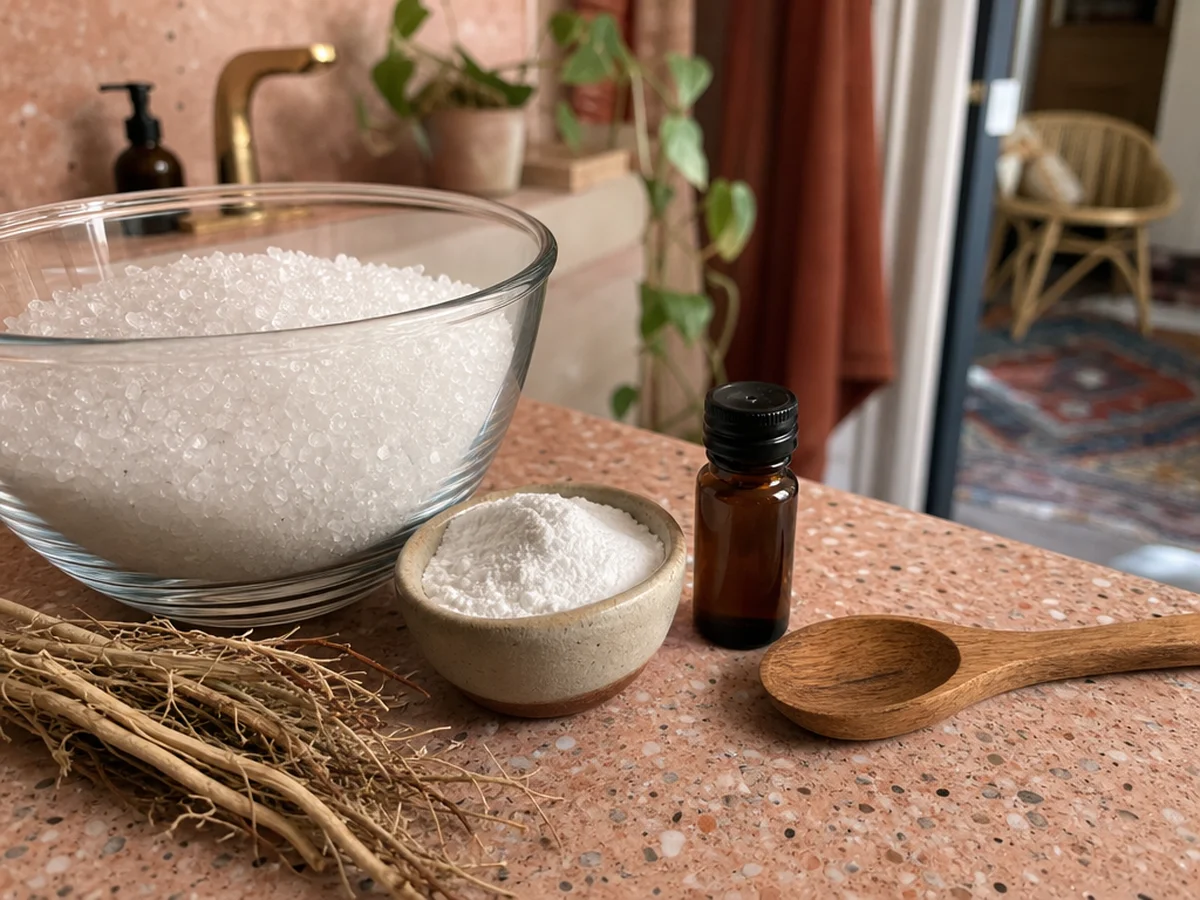
We agree with that spirit. Making your own removes dyes and glitter, which are the parts people most often react to, but it leaves the essential oils in and makes you the person choosing the fragrance load. So choose it thoughtfully.
Choosing the fragrance load
Our dilution guidance for vetiver is 0.5% to 2% in a carrier oil. Tisserand's general range for bath products is 2% to 4%, with 0.2% to 1% for sensitive or impaired skin (Tisserand Institute, Dilution for essential oils). Because the oil lands on skin as droplets rather than as a mixed product, we would sit well below the top of that range. The recipe below comes to about 0.9% essential oil in the finished mix, with one third of it vetiver. That is our judgment inside the general range, not a published vetiver limit.
Sweet orange deserves its own glance. A review of contact allergy lists orange among nine oils that gave positive patch-test reactions in more than 2% of patients tested, and observes that most reactions come from undiluted oils or high-concentration products (de Groot AC, Schmidt E, Essential Oils, Part IV: Contact Allergy. Dermatitis 2016). Buy from a supplier who states whether the oil is distilled or pressed and follows any label guidance.
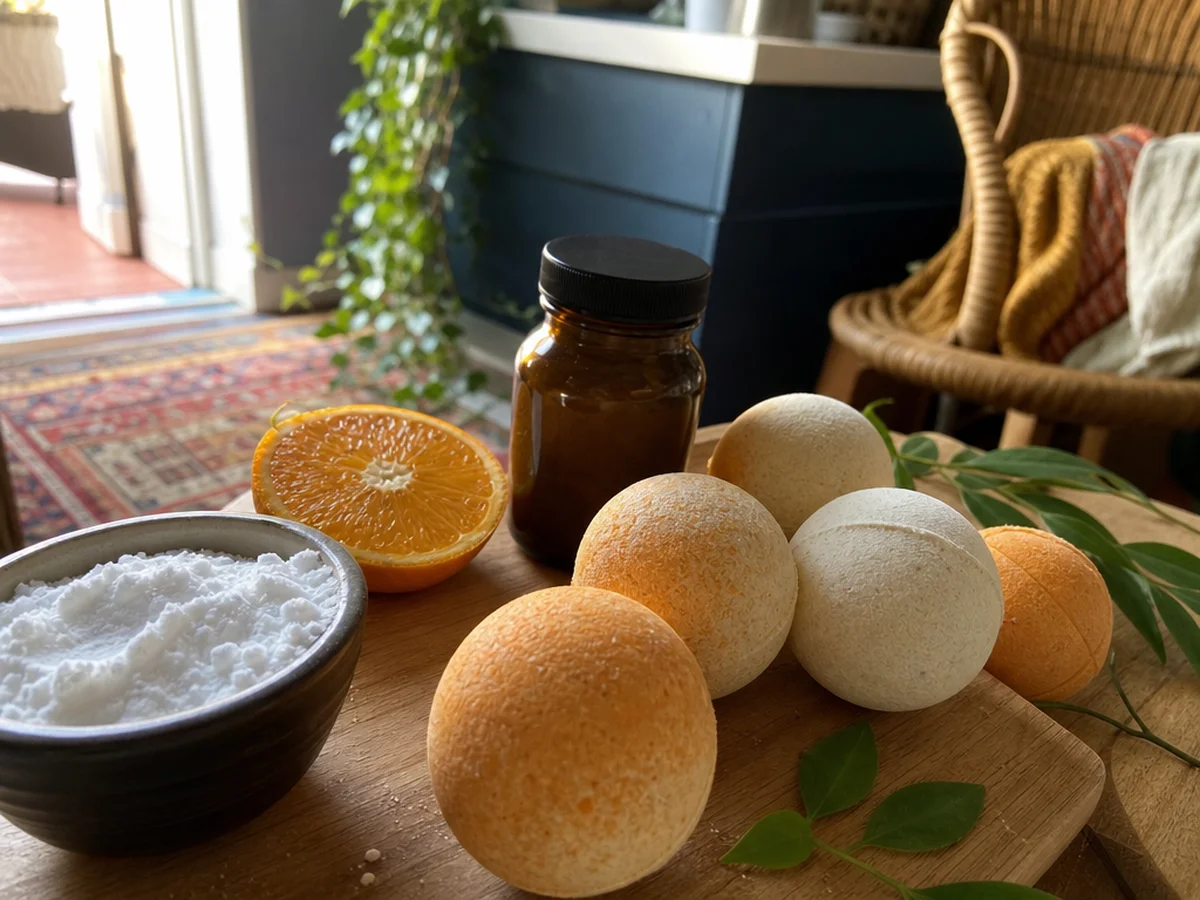
The recipe, for five bombs of about 100 g
This formulation is worked out from the sources above and arithmetic.
| Ingredient | Grams |
|---|---|
| Baking soda (sodium bicarbonate) | 200 |
| Citric acid, fine powder | 100 |
| Cornstarch | 100 |
| Fine Epsom salt | 100 |
| Carrier oil, melted if solid | 15 |
| Sweet orange essential oil | 3.0 |
| Vetiver essential oil | 1.5 |
| Water in a fine mist bottle | a few sprays |
That is about 520 g in all, so the 4.5 g of essential oil is roughly 0.87% of the mix and each 100 g bomb carries a little under a gram. The batch on our Certificate of Analysis has a relative density of 0.993 at 20 C, so 1.5 g of vetiver is close to 1.5 ml. Weigh it, because thick oils make drop counting unreliable.
- Whisk the dry ingredients, breaking up lumps. Wear gloves and avoid breathing the powder.
- Stir the essential oils into the carrier in a small jar first, so the fragrance spreads evenly.
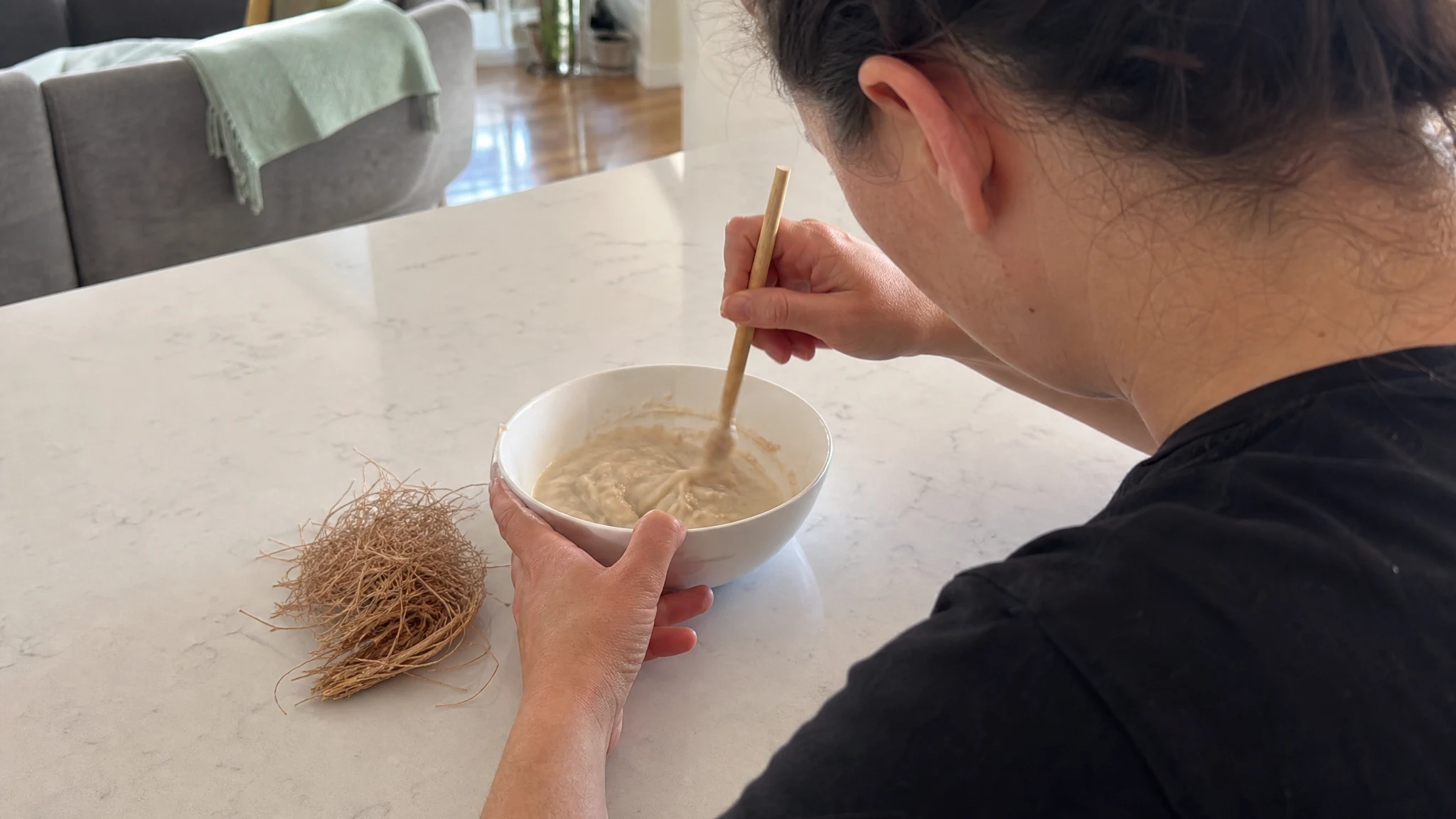
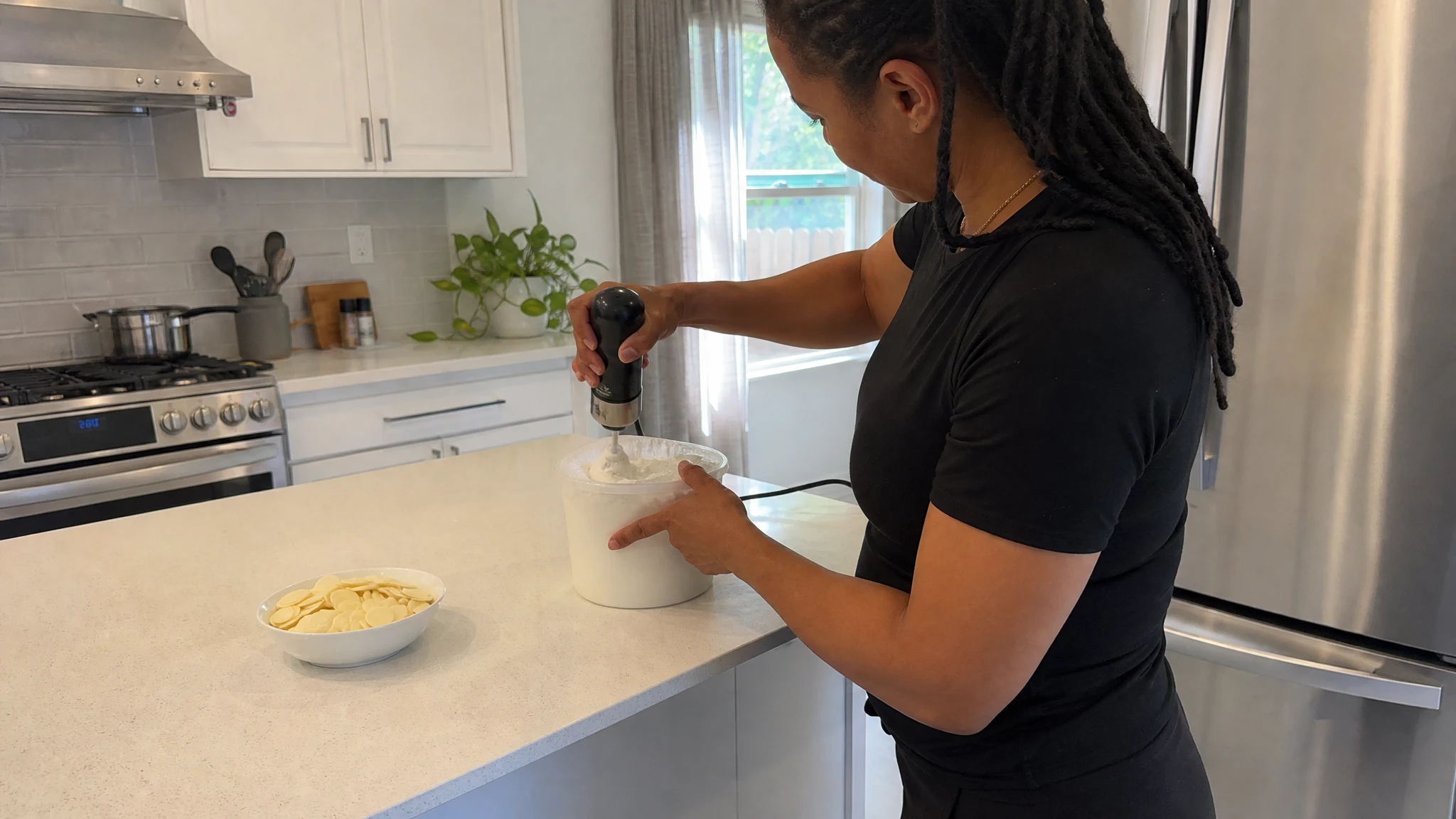
- Add the oil mix to the dry mix a little at a time, working it through until the mixture holds when squeezed.
- Mist with water one spritz at a time, mixing between sprays. Stop when it clumps; too much water starts the fizz early.
- Press firmly into molds, leave 24 hours in a dry room, then unmold and store airtight.
Use one bomb per full tub, soak for 10 to 15 minutes, rinse, and moisturize if your skin feels tight. Oil makes a tub slippery, so take care getting out. Skip dye and glitter on a first batch so any reaction has one fewer suspects.
Who should pick a gentler route
Anyone with eczema, broken or very dry skin, or a history of fragrance reaction should ask a dermatologist before using a scented bath product. Children, and anyone pregnant, should check with a pediatrician or an OB/GYN or midwife; our post on children has more. Households with cats or dogs can start with our pets post and then ask a veterinarian.
The same fragrance-load thinking applies to a rinse-off sugar scrub or a bar of soap. We sell the vetiver oil only, so molds, citric acid, carrier and sweet orange oil come from a craft supplier, ideally one that shares batch information.
Setting the scene
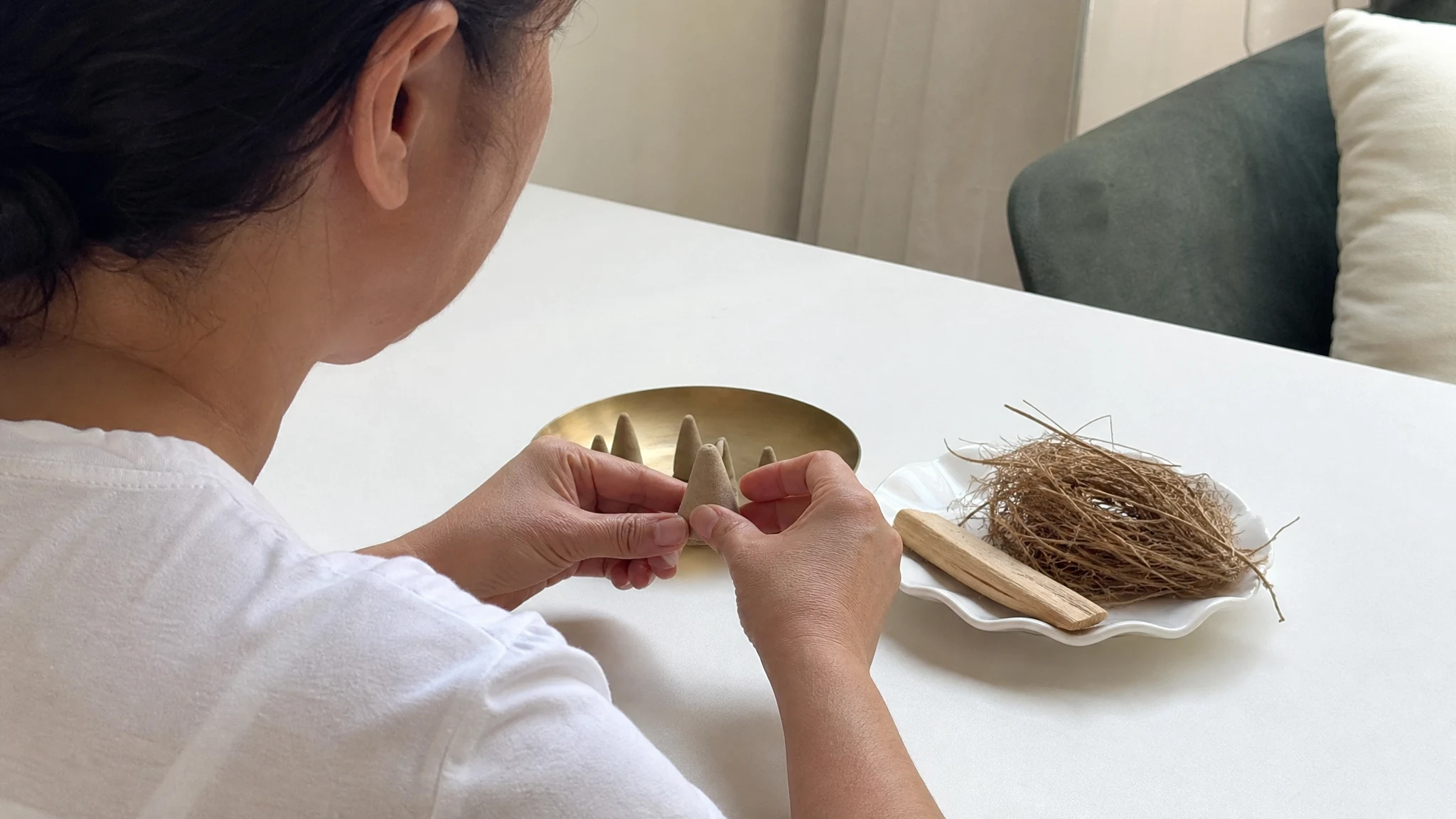
Part of the fun of a homemade bath bomb is the making. Put on a little music, lay out your bowls and molds, and let the sweet orange fill the kitchen before the vetiver joins it. Once they are pressed, let the bombs rest in a dry room and resist the urge to test one early. Store them airtight, label the jar with the date, and keep it away from steamy bathrooms until bath night.
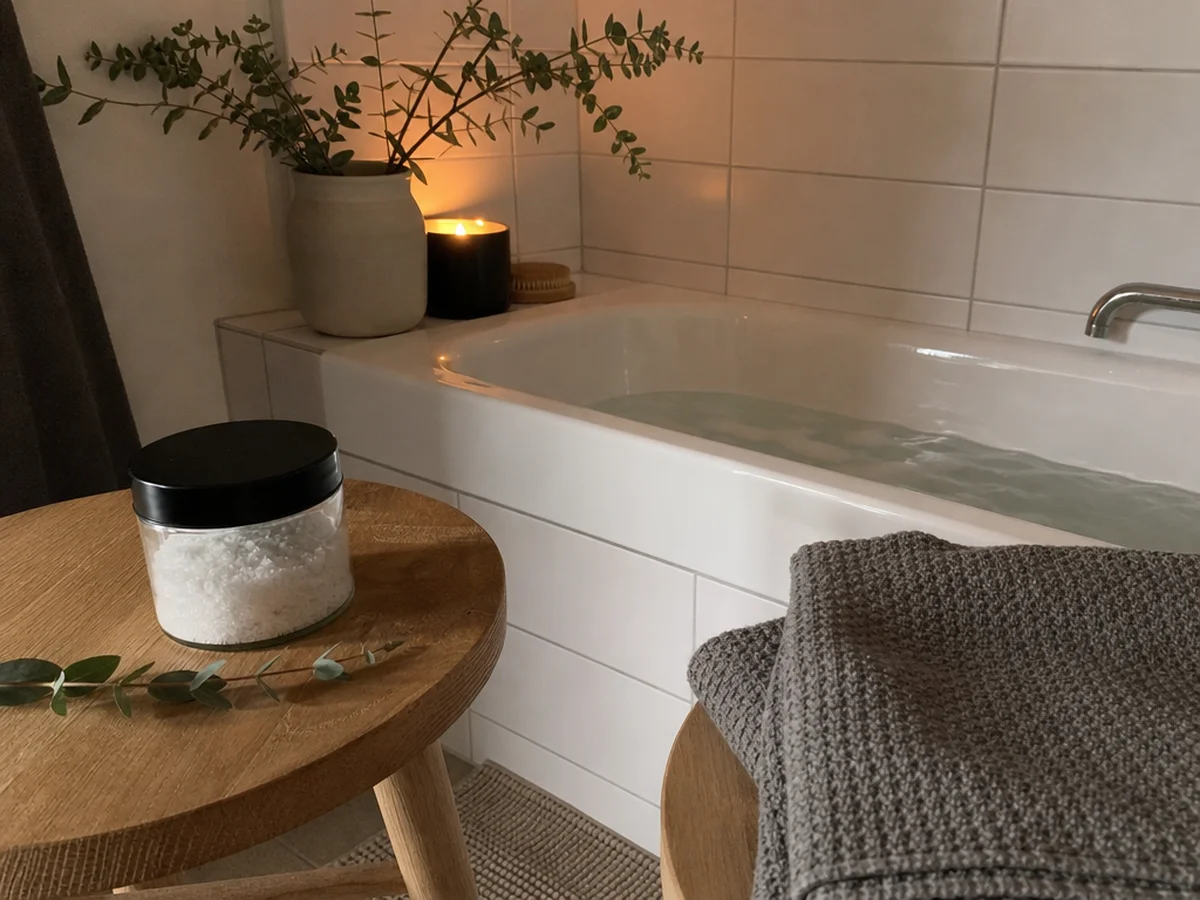
A vetiver and orange bomb is a small ritual: a few quiet minutes, a rinse, and a bath that smells like peel and earth. Keep it occasional and it stays that way.
Vetiver Essential Oil
Vetiver Essential Oil from our own shop, in sizes from 0.5 oz to bulk.
From $20.99
Shop Now →