Vetiver Oil and Pets: Dogs, Cats and Birds at Home
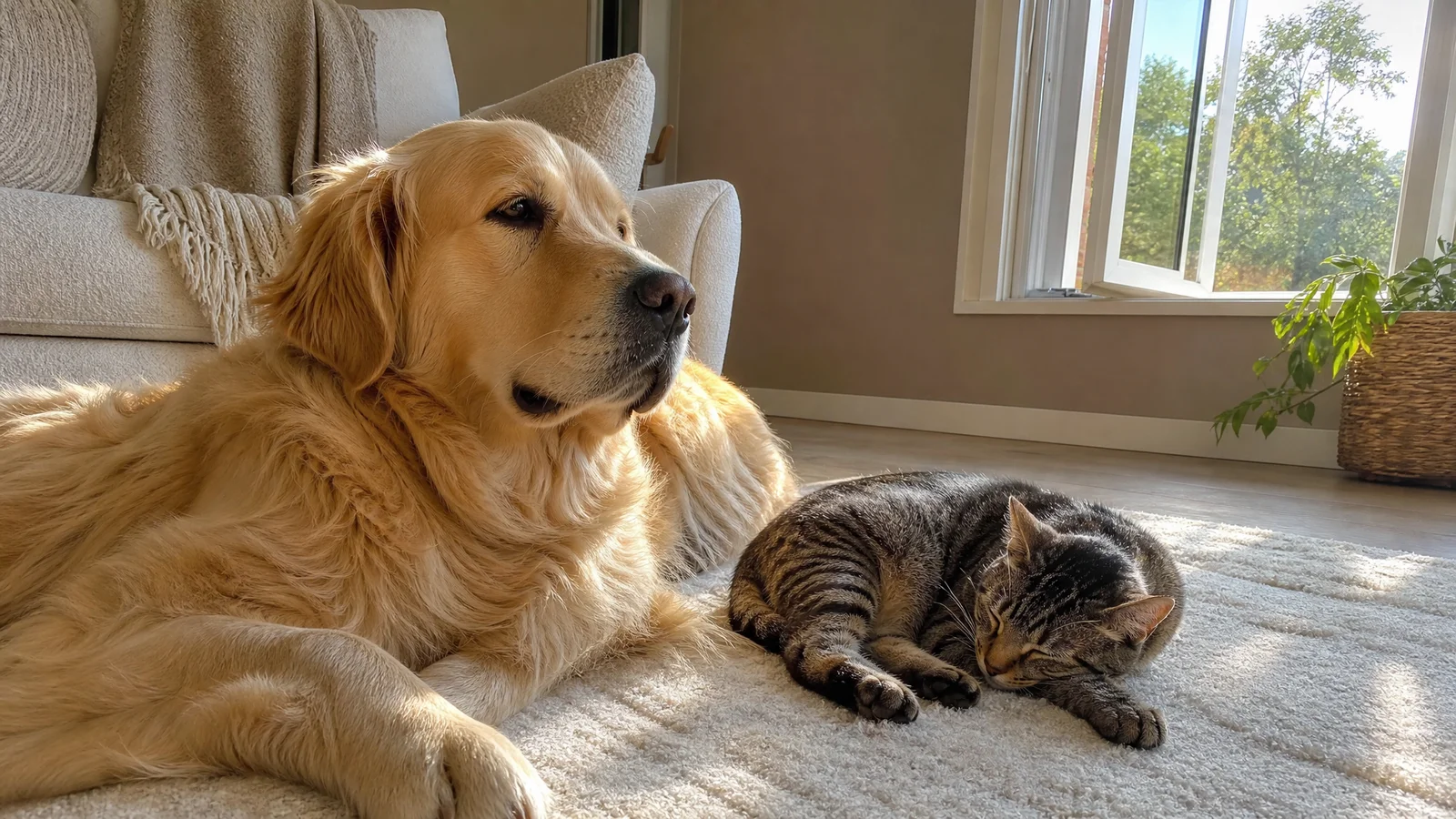
A cat on the sofa, a dog by the door, a parrot in the corner: the question of whether a bottle of vetiver is fine around animals comes up whenever someone pictures a diffuser in a house full of fur and feathers. Here is the straightforward answer. We make vetiver oil for people, and we do not sell or suggest it for animals. Nothing in the veterinary literature we looked at tests vetiver in pets, so the careful guidance for essential oils in general is what applies.
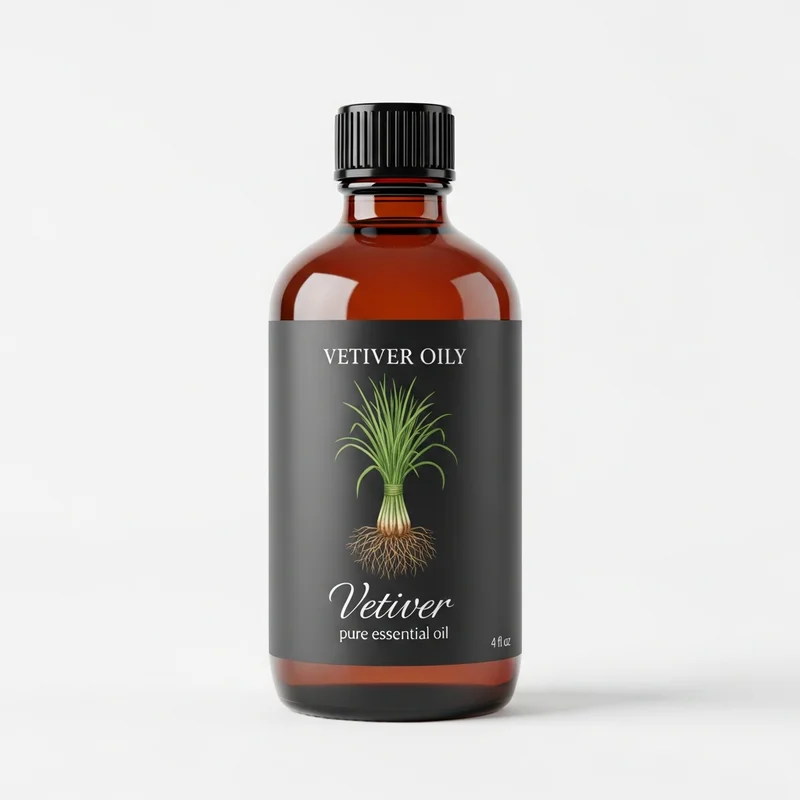
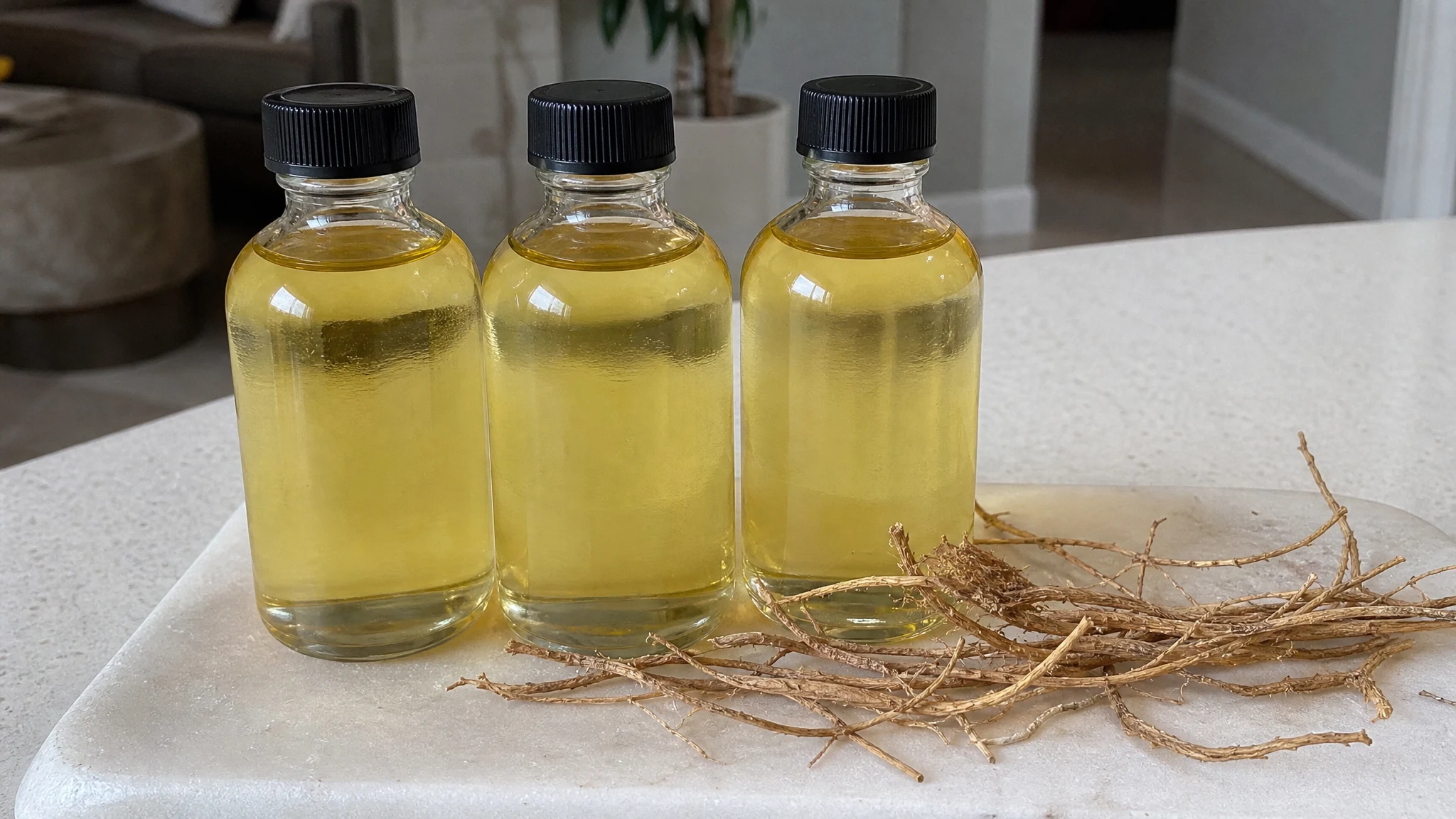
Vetiver Essential Oil
Our own Vetiver Essential Oil, in sizes from 0.5 oz to bulk.
From $20.99
Shop Now →Why cats and birds get special mention
The Merck Veterinary Manual explains that cats are more sensitive to essential oils because they lack an enzyme, glucuronyl transferase, that helps clear some compounds from the body, and their constant grooming adds to their exposure. Dogs do not share that enzyme gap but are still at risk. Birds are described as especially vulnerable because of their delicate respiratory systems. Pet Poison Helpline names a list of oils of most concern to cats and dogs; vetiver is not on it, but we would not treat that as a clearance. A list reflects what has been reported, not what has been tested.
Studies of vetiver and animals exist only in laboratory rodents, where researchers exposed rats to the oil in behavioral experiments. That tells a pet owner nothing about a safe amount for a household dog or cat. A Europe PMC search on 5 November 2026 for vetiver alongside dogs, cats or veterinary terms returned mostly engineering, mosquito and parasite papers, and no study of vetiver oil as a treatment for a pet.
Skin and paws: keep oils away
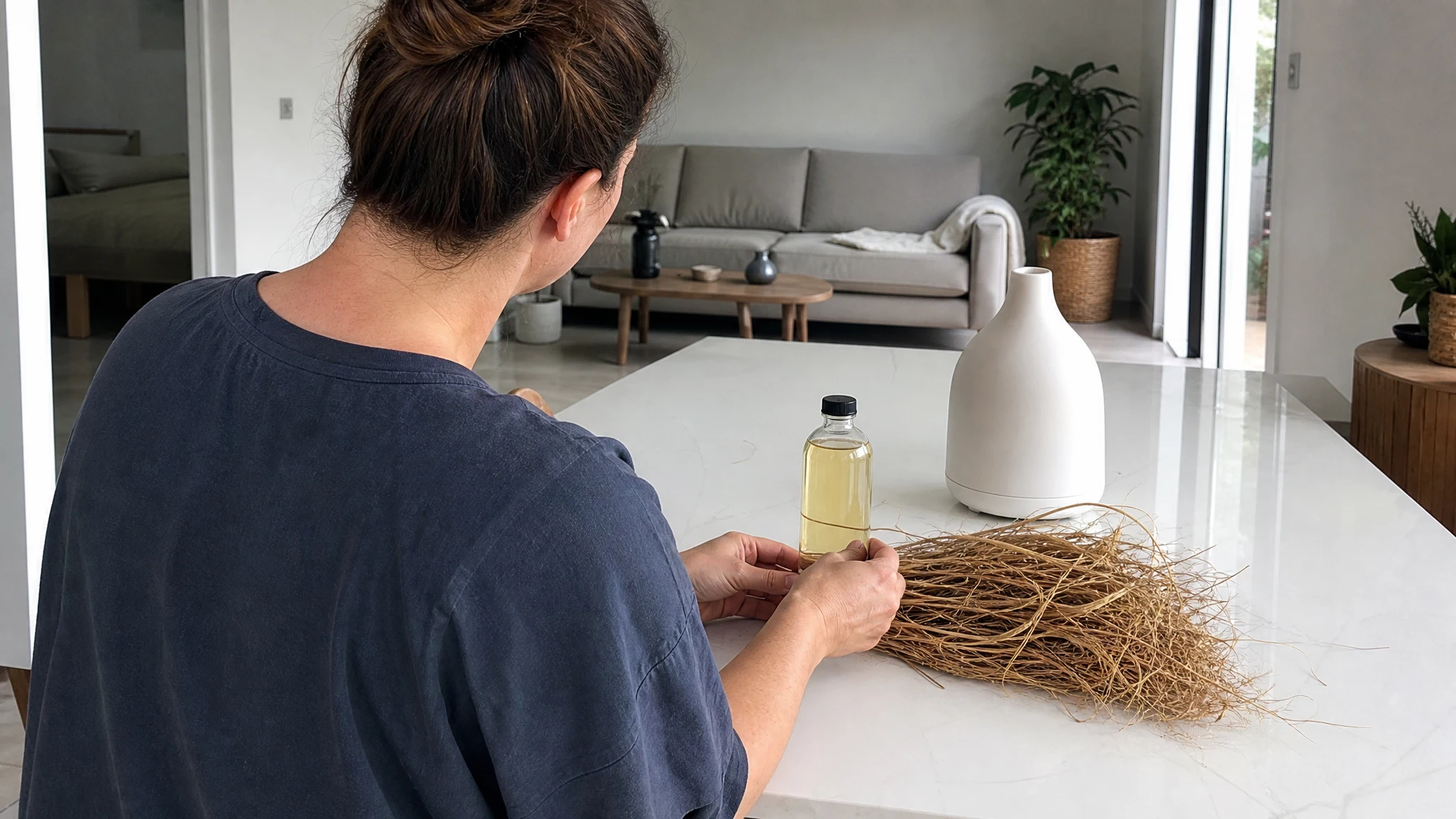
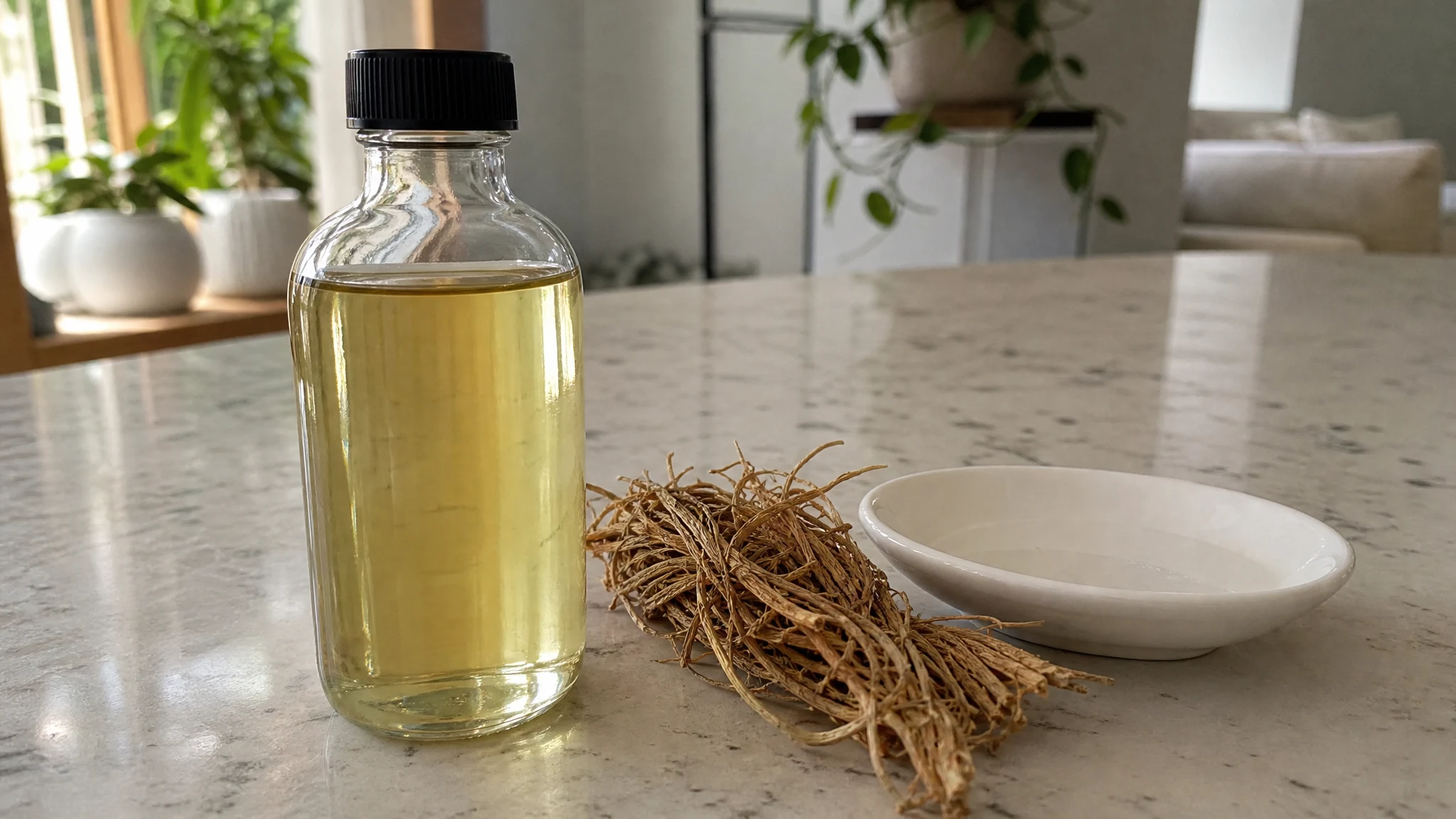
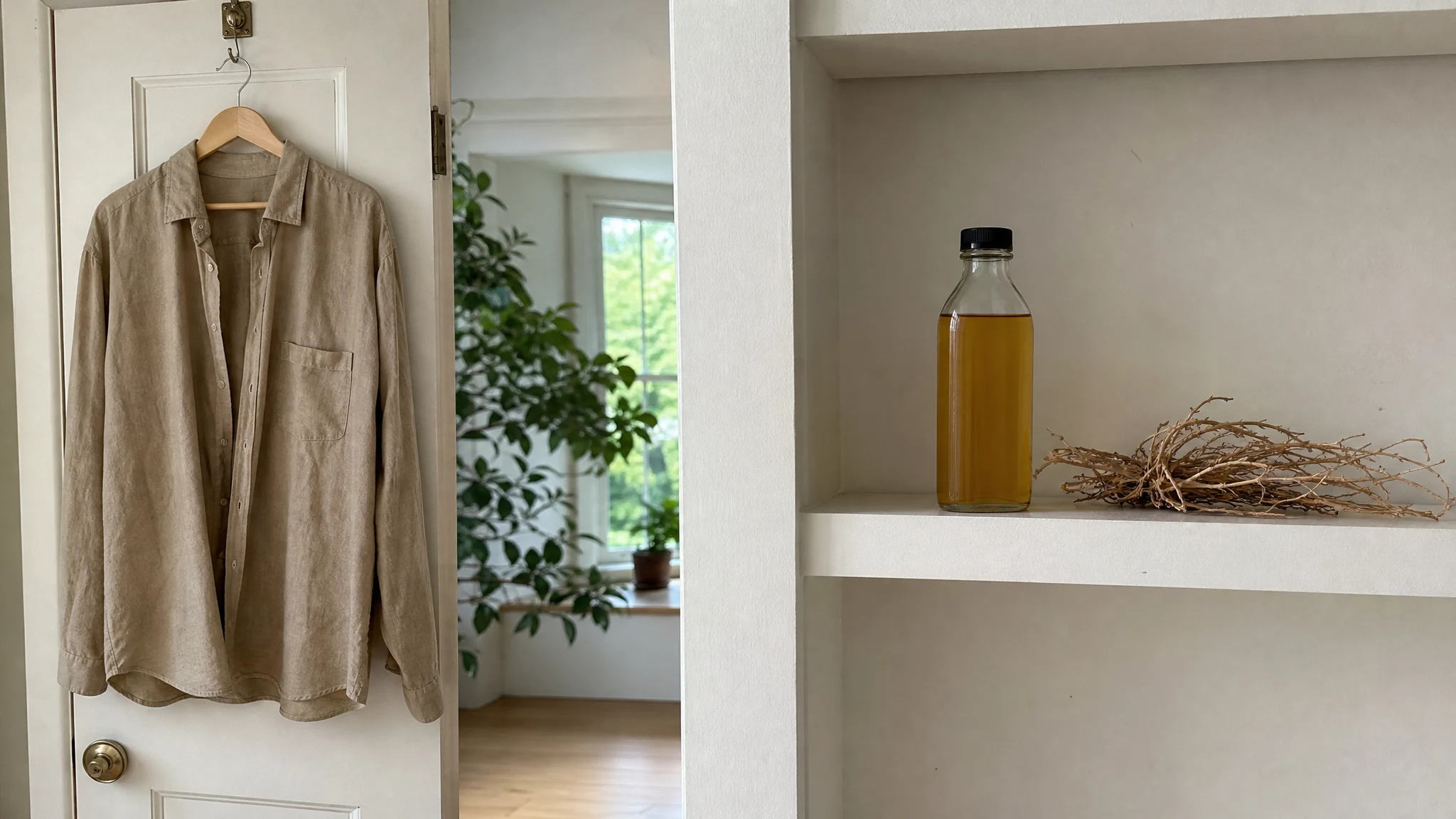
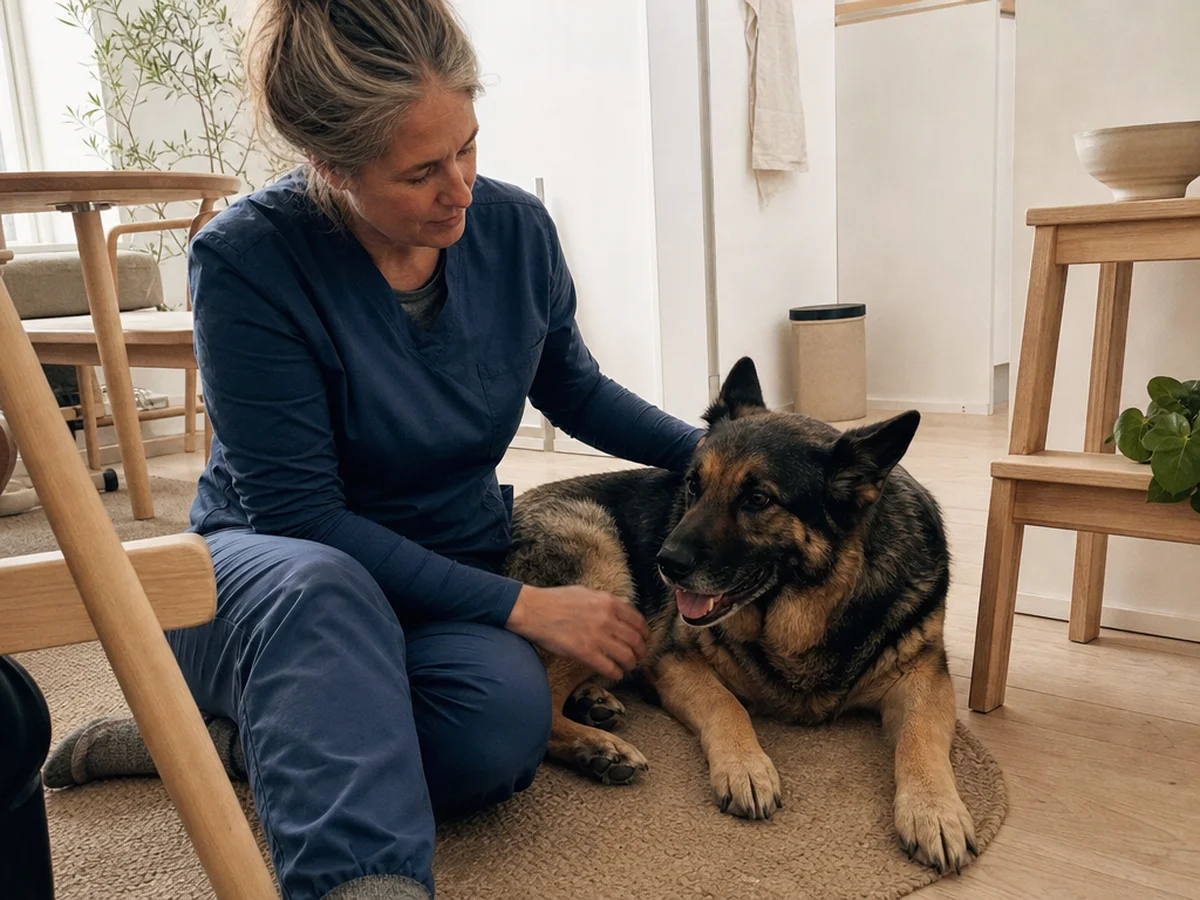
Both the Merck manual and Pet Poison Helpline say concentrated essential oils should not be applied directly to pets, and the ASPCA Animal Poison Control Center says it is best to avoid applying them at all. Our own guidance fits: keep the oil away from children and pets. Vetiver is thick and slow-pouring, which is lovely for measuring and less lovely if a drop lands on a floor or blanket, since it lingers instead of evaporating. If you work with the oil, wash your hands before you handle an animal, wipe up spills promptly, and do not apply it where a pet will lie against it.
Diffusers: the type matters
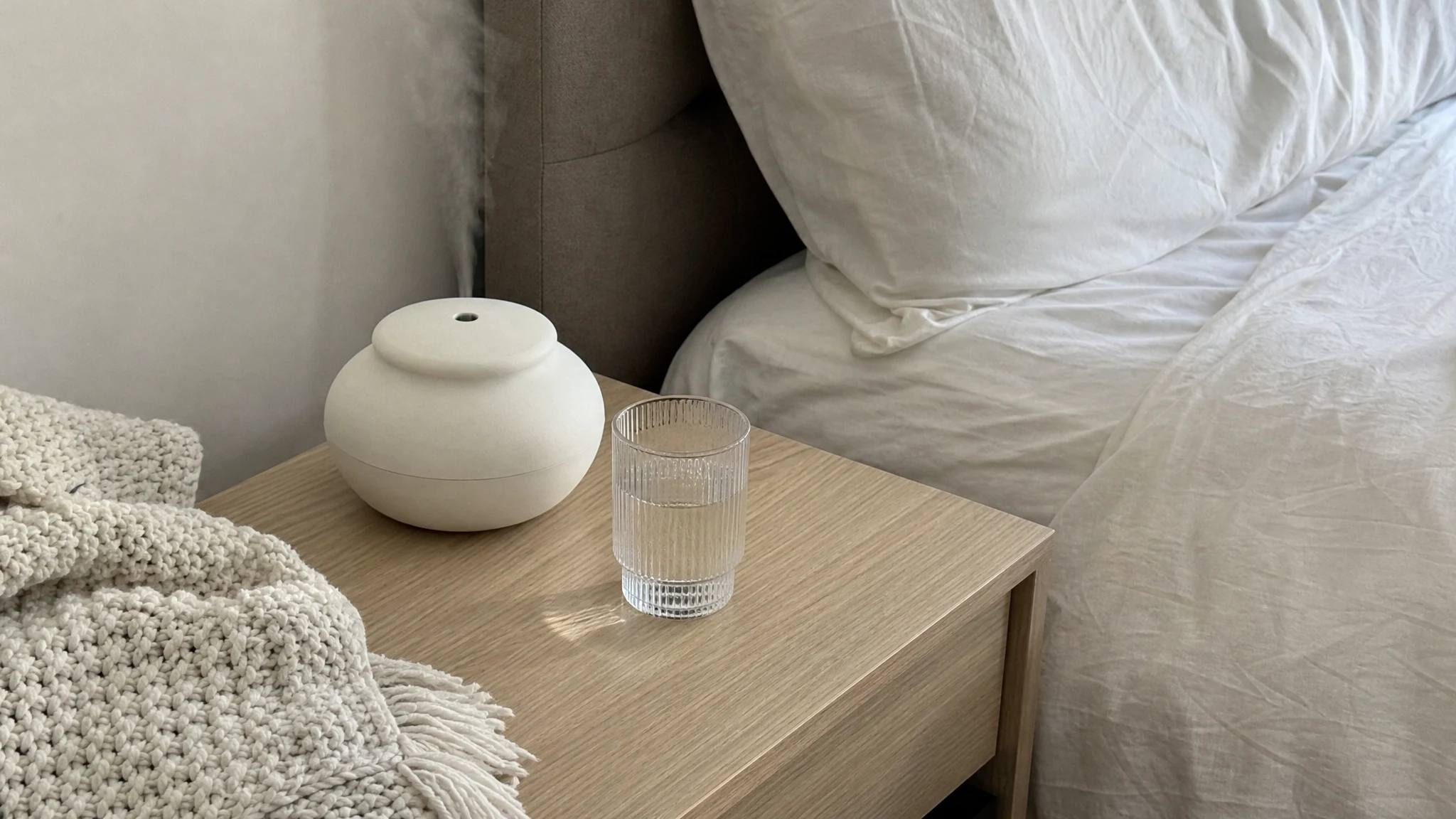
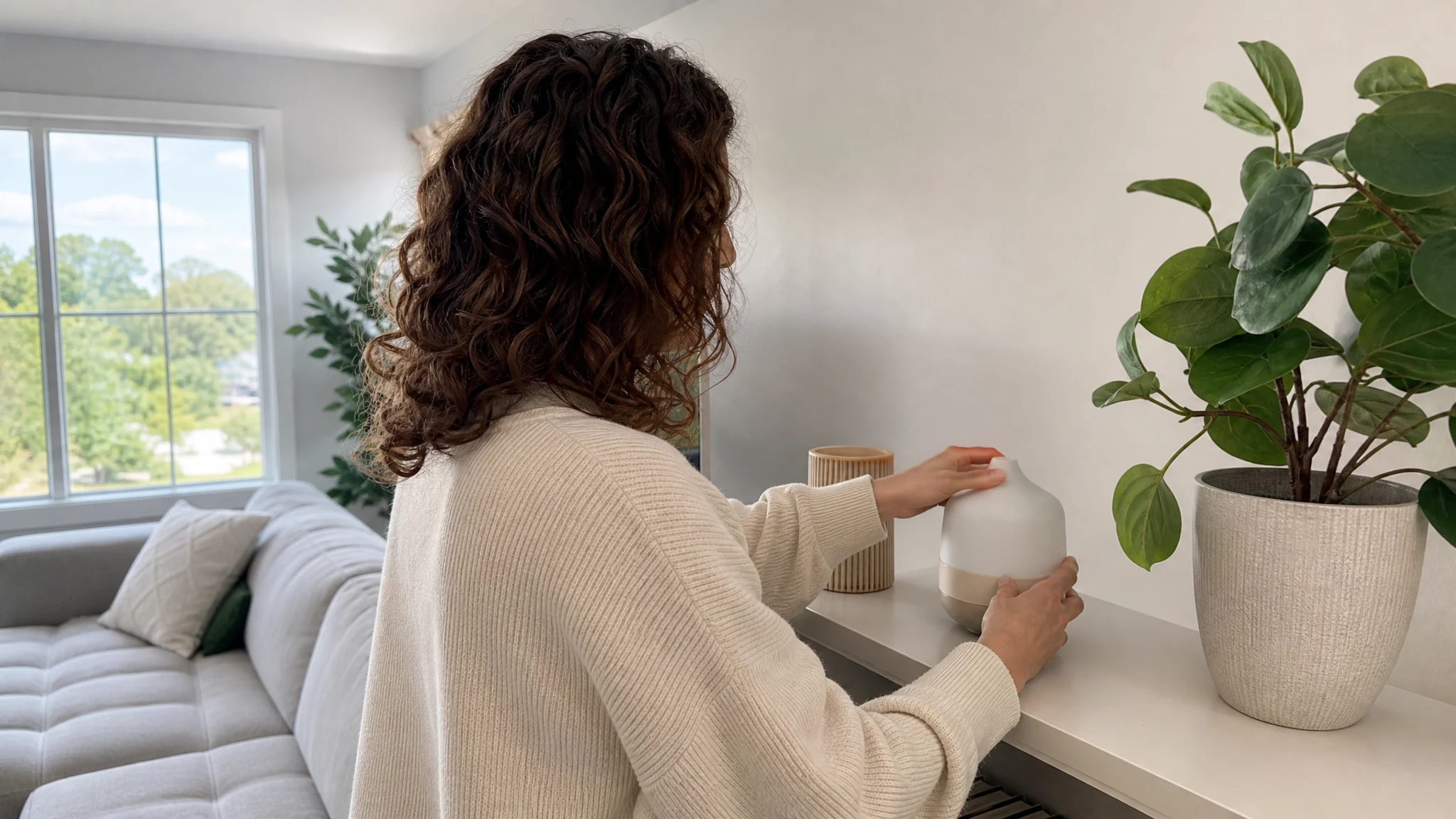
Veterinary sources separate passive diffusion, such as reeds, from active units that release microdroplets. Those droplets can settle on fur or feathers and be absorbed or swallowed during grooming, which is why Merck advises keeping pets out of the room, ventilating afterward and running a diffuser for a short time only. The ASPCA says a diffuser used briefly in a closed room an animal cannot enter is not likely to be a problem, that pets with breathing problems may do better without one, and that with birds it is best not to use a diffuser at all.
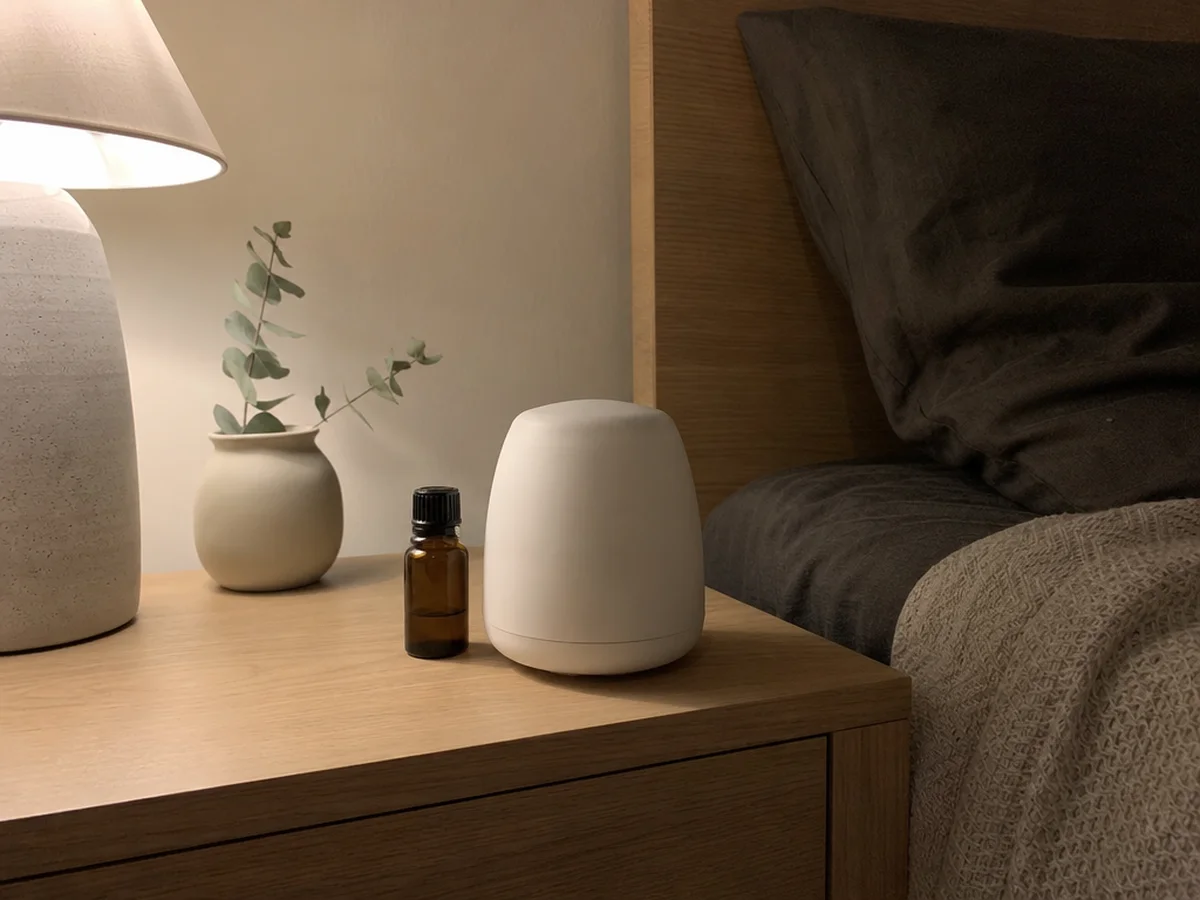
That gives a simple plan. Diffuse in a room with the door shut and no animal inside, for a short time, and air it out afterward. If you share your home with a bird, or a cat or dog with a breathing condition, skip diffusing and choose another way to enjoy a fragrance. Our guide to diffusers for thick oils covers equipment, and our diffuser post covers timing.
Everyday habits that keep things simple
Most of the practical work is plain housekeeping. Keep the bottle capped and stored somewhere an animal cannot reach, in a closed cupboard or a high shelf, and not on a low table where a tail or a paw can knock it over. A thick oil that spills is slow to clean up, so keep a paper towel handy and wipe the spot, the bottle neck and the cap before you put it away. Wash your hands after handling, and wash the cloth you used for the spill instead of leaving it on the floor.
If you make a diluted blend for yourself, store the finished bottle with the same care. A scented balm or body oil on your skin can transfer to a sofa or a bed, so think about where a pet likes to sleep before you settle in with a freshly applied blend. A few minutes of attention at the start saves a lot of worry later.
Bring the right information to your vet
If you ever have a concern, it helps to have the details ready: the name of the product, roughly how much was involved, and how long ago. Keeping the bottle and its label in one place makes that easy. Ours is sold as a neat essential oil for aromatic and cosmetic use, so a clinic will want to know that it was undiluted if that is what the animal met. Ask your veterinarian for guidance specific to your pet, since size, species and health all matter.
If an animal is exposed
Call your veterinarian or an animal poison control line. Merck lists vomiting, lethargy, drooling, loss of coordination and loss of appetite among the most common signs after swallowing or skin contact, and respiratory signs after inhaling. Bring the bottle so the clinic knows exactly what was involved, and ask before trying anything at home.
Calm animals, calm homes
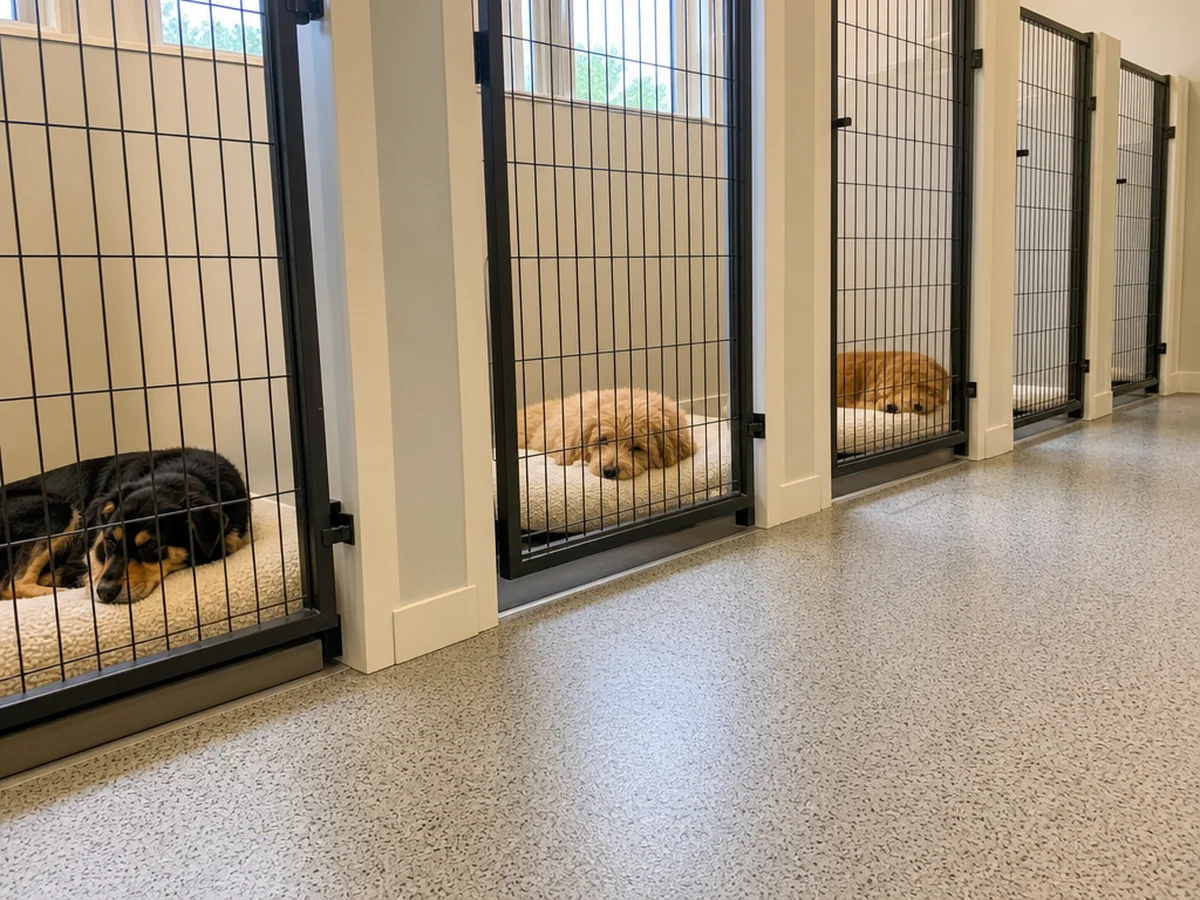
If your goal is a calmer dog or cat, a veterinarian is the right partner. If your goal is a home that smells good with animals in it, ventilation and cleaning are kinder than any oil. For ways to enjoy vetiver in the parts of the house your pets do not visit, see our household uses post.
Fragrance and furry family can share a home with a little planning, and we are happy to talk through the oil itself on our contact page.
Vetiver Essential Oil
Vetiver Essential Oil from our own shop, in sizes from 0.5 oz to bulk.
From $20.99
Shop Now →