Vetiver Oil Around Children: Storage and Guidance
If you have young children at home, the most useful thing you can do with a bottle of vetiver oil has nothing to do with the oil itself. It is deciding where the bottle lives. Toddlers climb, unscrew and taste, and the people who study essential oil accidents keep coming back to storage as the first step.
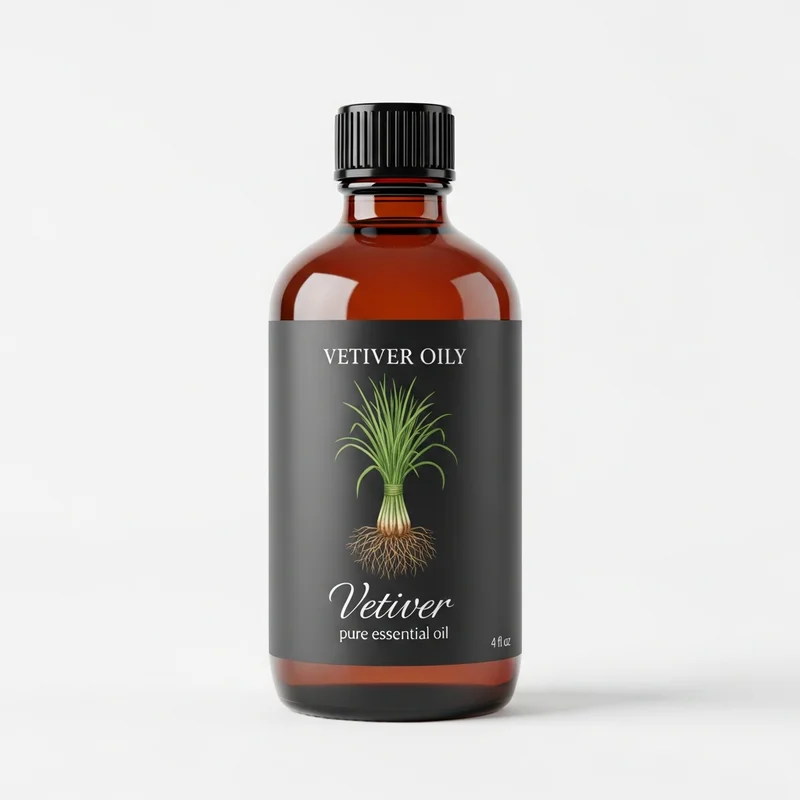
Vetiver Essential Oil
Our own Vetiver Essential Oil, in sizes from 0.5 oz to bulk.
From $20.99
Shop Now →The cupboard comes first
The National Capital Poison Center explains that some essential oils can be poisonous if swallowed or absorbed through the skin, that aspirating one can cause pneumonia, and that children have thin skin and immature livers that may make them more susceptible than adults. For homes with young children, it says oils must be locked up, out of sight and reach. The Tisserand Institute makes the same point with a vivid detail: even two-year-olds have been known to unscrew caps on essential oil bottles and drink the contents.
Neither source singles out vetiver, and we are not claiming it is more hazardous than other oils. The conclusion is practical. A locked cabinet works for every oil, so it matters more than any dilution figure. Amber glass protects the oil from light, but it is not a child-resistant feature, and we do not claim one. If a child swallows any essential oil, call your poison center at 1-800-222-1222 in the US. Our post on swallowing vetiver oil has more.
On skin, the published guidance varies
This is the point where a parent might hope for a simple chart, and we are not going to hand one over, because the sources do not agree. Tisserand's general dilution page lists 0.2% to 1% for sensitive or impaired skin, with no age-specific figures. A WebMD article from April 2025 says dilutions considered safe for children generally range from 0.5% to 2.5%, depending on age and size, and lists oils that should never be used with infants. Those two statements are not far apart on paper, but they are not the same, and neither is a pediatric guideline.
Our own dilution guidance, 0.5% to 2% in a carrier oil with a patch test first, is written for adult skin alongside a plain instruction to keep the oil away from children. We would not stretch it to a baby. The honest answer for a specific child, particularly one with eczema, asthma or a history of reactions, is to ask a pediatrician. WebMD also notes that even a diluted oil should be tried on a small patch first.
For what a reaction can look like and how dilution works for adults, the safety guide sets it out.
Diffusers and little lungs
WebMD is unequivocal here: it says you should never use an essential oil diffuser when your baby is present, because an infant's respiratory system is still developing. The Tisserand Institute's general diffusion advice is 30 to 60 minutes on and 30 to 60 minutes off, and it does not give child-specific rules. Those positions do not line up, and no source we read measured vetiver in a nursery.
So we lean on the more cautious one, and we are labelling that as our judgment. We would not run a diffuser in an infant's room. For older children, we would keep sessions short, ventilate afterward and stop at the first cough, wheeze or complaint. A child with asthma or recurrent wheeze should have that conversation with a pediatrician first. Our diffuser post covers the practical side for households without young children.
What research says about vetiver and children
We know of no study of vetiver oil in infants or children. On 5 November 2026 we searched Europe PMC for vetiver terms alongside child, infant and pediatric words, and the first records we saw were about plant science, soil clean-up and adult studies. A 2025 review of the plant's medicinal literature describes the research as mostly preclinical, meaning laboratory and animal work.
That matters because you will see websites call vetiver a gentle bedtime oil for kids. That is a sleep and calming claim, and we do not make it for any age group. Our posts on sleep and anxiety explain what is known for adults, and none of it concerns children.
Making storage a habit
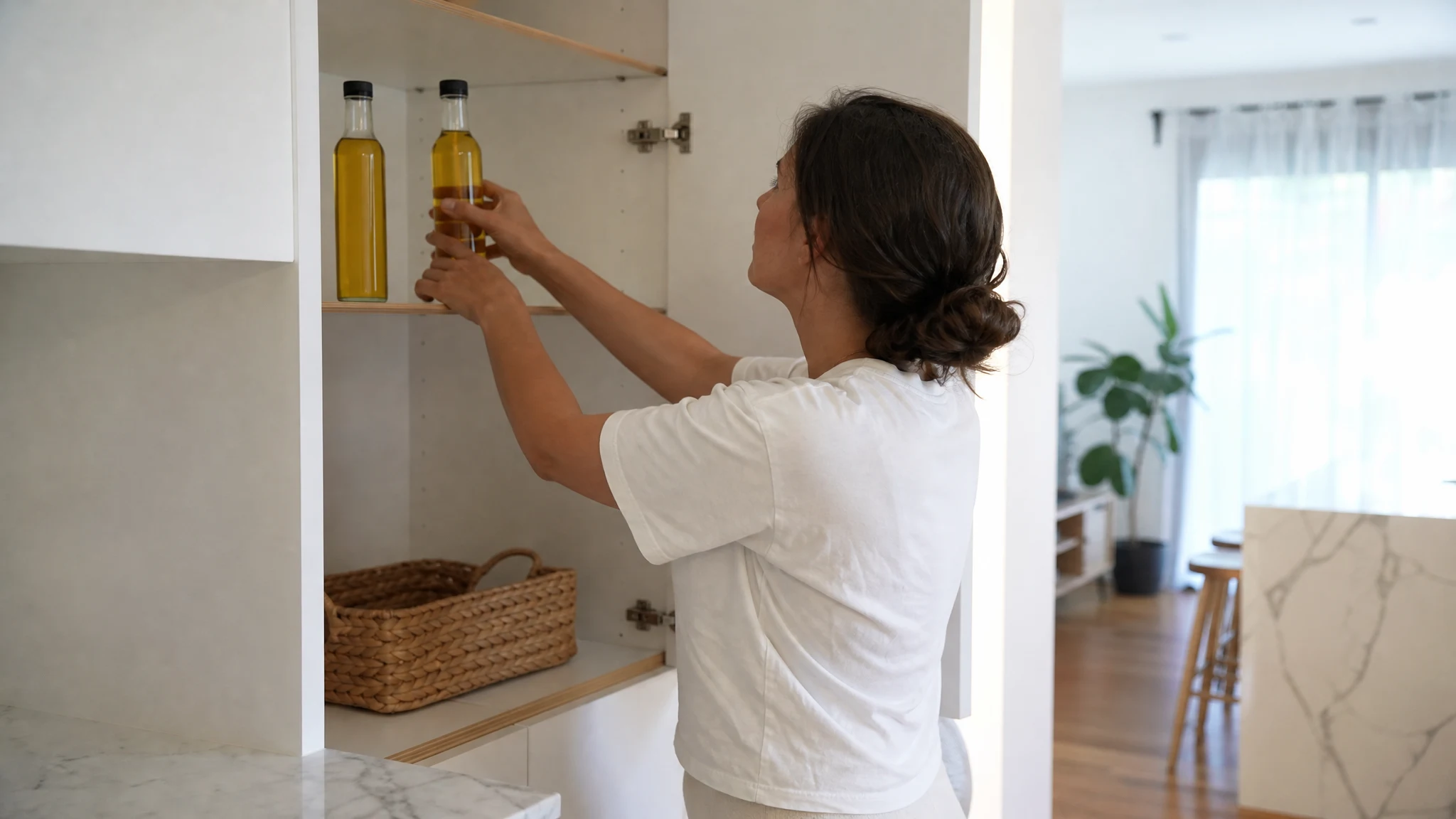
A locked cupboard only works if it becomes routine. Put the bottle back immediately after each use, not "in a minute." Keep it on a high shelf behind a latch, and make it the same place every time so that everyone in the household, including visitors, knows where it is. Check that the cap is tight, and wipe the bottle neck so it does not leave a sticky residue that a small hand might find.
Think about the places oils tend to wander: a bag, a bedside table, a bathroom counter. If you travel with a bottle, keep it in a closed pouch in a bag children cannot easily open.
Talking to older children
For children old enough to understand, a plain explanation helps: it smells nice, but it is strong, and it is not for drinking or touching. Children are curious about smells, so a calm rule is easier to keep than a mysterious one. If a child ever gets some on their hands, wash them with soap and water, keep the oil away from their eyes, and ask your pediatrician or poison center what to do next.
A short list of questions
- Is the bottle locked away? Fix that before anything else.
- Is the child very young? Ask the pediatrician before any topical use or diffusing.
- Does the child have eczema, asthma or allergies? Ask a pediatrician or dermatologist first.
- Is the oil for adult use in the same house? Dilute it, patch test it, and put it back in the cabinet afterward.
Pregnant or nursing? We ask you to consult your healthcare provider before use, and the same applies if you take medication. We sell vetiver as an external, aromatic and cosmetic oil, and this page is not a regimen. It is the order of questions we would want asked, with the answers coming from a pediatrician.
A bottle that is out of reach and a doctor who knows your child will do more than any chart.
Vetiver Essential Oil
Vetiver Essential Oil from our own shop, in sizes from 0.5 oz to bulk.
From $20.99
Shop Now →Sources & Further Reading
- National Capital Poison Center. Essential oils: Poisonous when misused. poison.org
- Tisserand Institute. Safety Guidelines (How to Use Essential Oils Safely). tisserandinstitute.org
- Tisserand Institute. Dilution for essential oils. tisserandinstitute.org
- Tisserand Institute. Safety guidelines for diffusing essential oils at home. tisserandinstitute.org
- WebMD Editorial Team, 2025. Is it Safe to Use Essential Oils in Babies? webmd.com
- Gunasekar CJ et al., 2025. Pharmacological and Therapeutic Potential of Chrysopogon zizanioides (Vetiver): A Comprehensive Review of Its Medicinal Applications and Future Prospects. Biomolecules. PubMed 41008619