Vetiver Oil on Skin: How to Dilute It for Scent
Vetiver has a long history in fragrance, and a drop of it in a carrier oil or balm gives skin care a deep, earthy, smoky-sweet aroma that few other oils can match. That is the job we recommend it for on skin: scent. Everything else in this article is about doing that well, and keeping the experience comfortable.
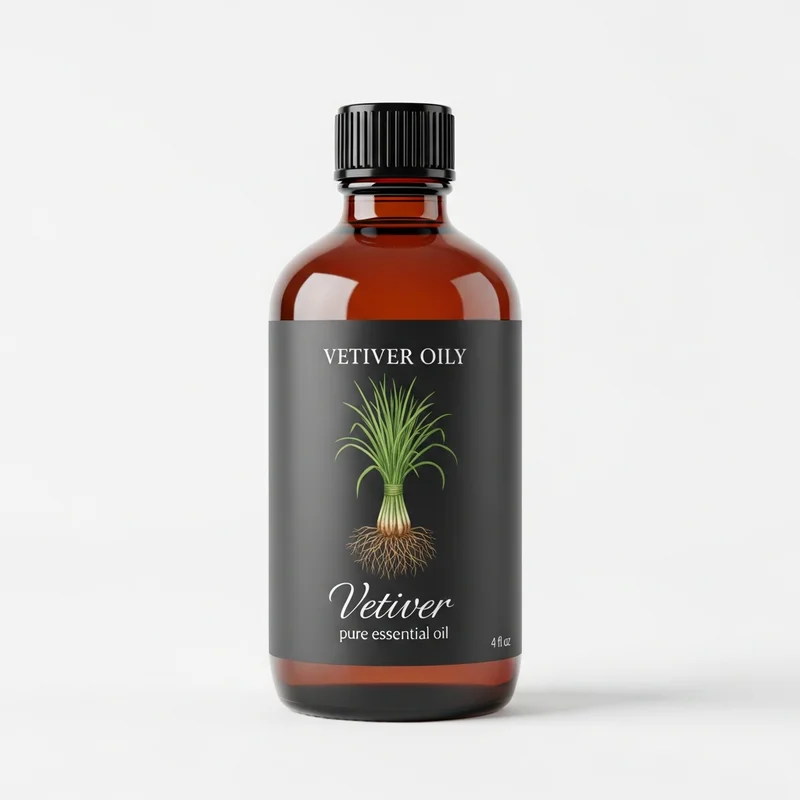
Vetiver Essential Oil
Our own Vetiver Essential Oil, in sizes from 0.5 oz to bulk.
From $20.99
Shop Now →Start with the aroma, and keep expectations simple
You will see plenty of online claims about vetiver and skin, most of them leaning on lab-dish experiments or lists of traditional uses. We do not sell vetiver oil on that basis, and we do not make skin-care promises for it. What we can say is that it is a fixative and base note, it lingers beautifully on a warm body or in a balm, and a little goes a long way. If a page promises a visible change to your skin from an essential oil, ask to see the study in people.
How much to use
Vetiver oil is sold neat, which means the dilution maths is yours. Our guidance is 0.5% to 2% in a carrier oil such as jojoba or sweet almond, with a patch test first. The Tisserand Institute, a respected independent source on essential oil safety, publishes general ranges (not vetiver-specific ones): 0.5% to 1.2% for the face and sensitive areas, 1% to 3% for body massage, and 0.2% to 1% for reaction-prone skin.
Since the lower figures come from a recognized safety source, we start at the lower end of our own range and suggest you do too. Here is the arithmetic. One ounce of carrier is about 29.6 ml. At 0.5%, that needs about 0.15 ml of vetiver; at 1%, about 0.3 ml. As a rough convention there are about 20 drops in a milliliter, but vetiver is so thick that its drops run larger and the count is only a guide. Tisserand makes the same point: drop conversions are always approximate. If you are making a larger batch, weighing the oil on a small scale is more accurate than counting drops. The batch on our Certificate of Analysis had a relative density of 0.993, so 1 ml weighs about 0.993 g.
Warming the bottle slightly in your hands, or in a cup of warm water, helps the oil flow. A pipette gives you more control than the bottle opening. We do not sell carrier oils, so you will find jojoba, sweet almond and similar oils at a craft supply shop, pharmacy or grocery; our carrier oil guide can help you choose one.
Why we patch test, and what the research says
Essential oils are mixtures, and some of their components can cause allergic reactions in some people. A 2016 review of the contact-allergy literature found that nearly 80 essential oils have been reported to cause contact allergy. Of 55 tested in consecutive patients, nine gave more than 2% positive patch tests: laurel, turpentine, orange, tea tree, citronella, ylang-ylang, sandalwood, clove and costus root. Vetiver is not on that list. The review also notes that most reactions come from undiluted oils or high-concentration products, which is exactly why dilution is the heart of our advice.
In fairness, vetiver is simply less studied. A large German, Austrian and Swiss dermatology network analysis tested twelve essential oils in 10,930 patients, and about 8.3% reacted to at least one of them. Only six oils gave more than 1% positive reactions, and vetiver was not among the twelve tested. So there is no vetiver rate to quote, and absence from a list is not the same as a clearance. The practical conclusion is the usual one: dilute, patch test, and stop if anything feels off.
A simple home patch test is a small dab of your finished blend on the inner forearm, left for a day. If you see redness, itching or burning, wash it off and do not use the blend. Keep vetiver away from eyes, and from children and pets. If you have reacted to fragrance or other essential oils before, or if you are pregnant, nursing, on medication or have a skin condition, check with a physician or dermatologist first, as our disclaimer also advises.
Where it shines
A balm, a body oil or a solid perfume made with a modest dose of vetiver smells wonderful and carries a long way. If you would like a worked example, our after-shave balm formula and our guide to using vetiver oil show how the numbers come together.
Making your first small batch
If you have never blended an oil before, start small. Use a clean, dry glass bottle, measure your carrier oil first, then add the vetiver, cap it and roll it gently between your palms to mix. Label the bottle with the date and the percentage straight away, because a few weeks later you will not remember. A thick oil like vetiver clings to the neck of the bottle and to the pipette, so give it a moment to drain.
Smell the blend as soon as you have mixed it, then again the next day. A carrier oil softens the edges and the scent often feels rounder once it has had time to blend. Try it on a small area, a wrist or the inside of an elbow, while you get to know it, and wait before you decide it is the blend you want. A deep, earthy fragrance can feel strong on first wear, and you can always add a little more later but you cannot take it out.
Enjoy it for what it is, a rich, earthy fragrance oil, used in small amounts, and your skin care routine will smell like a walk through a damp, sunlit forest.
Vetiver Essential Oil
Vetiver Essential Oil from our own shop, in sizes from 0.5 oz to bulk.
From $20.99
Shop Now →