Vetiver Massage Oil for Hot Stone Sessions: Safe Dilution
There is something about warm, smooth stones and a deep, earthy scent that just belongs together. Vetiver, with its smoky-sweet depth, is an easy fit for a massage oil. But in a hot stone session the stones are the serious part and the oil is a small, pleasant accessory, so we will start there and finish with the blend.
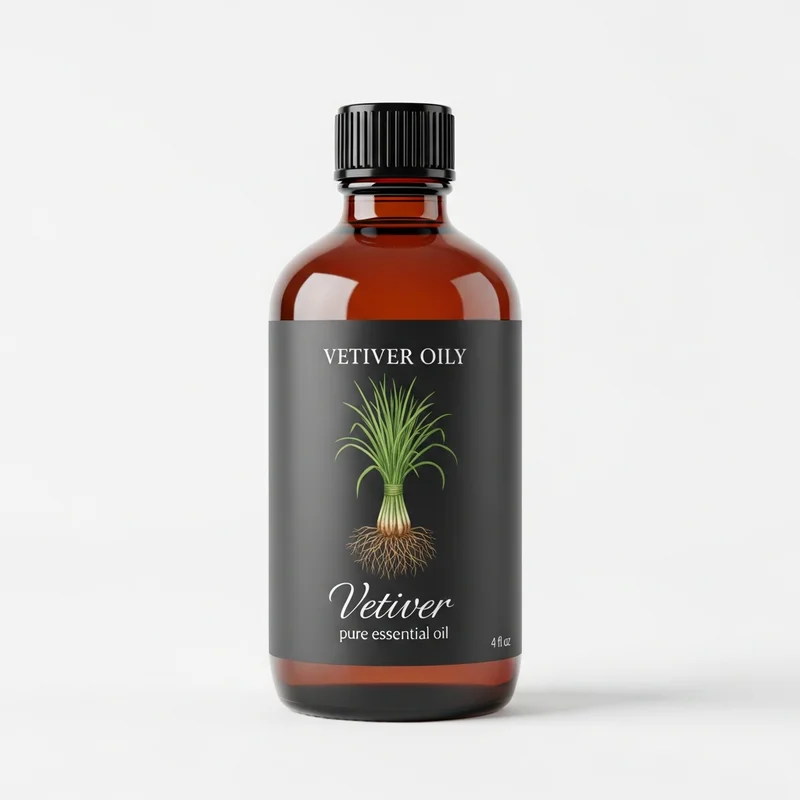
Vetiver Essential Oil
Our own Vetiver Essential Oil, in sizes from 0.5 oz to bulk.
From $20.99
Shop Now →Heat the stones carefully
An article for MASSAGE Magazine says professional standards call for consistent, monitorable stone temperatures, typically between 110°F and 130°F. It also cites another source putting typical heating at 130°F to 145°F, and a 145°F ceiling for basalt. The ranges overlap but do not match, and we know of no regulatory standard that settles it. So the sensible reading is to follow your training or licensing body if you practise professionally, and otherwise to stay at the cooler end of the published range.
Some points in that article are plain enough to repeat:
- The safest way to heat stones is in water, monitored with a calibrated thermometer.
- Slow cookers, turkey roasters, electric fry pans and woks are not recommended, because they heat unevenly or lack a way to monitor temperature.
- "There must always be a barrier between the stone and client's skin to prevent burns." A thick towel or sheet does the job.
- Stones can burn skin at around 104°F (40°C) if they sit on bare skin for a few minutes, so keep them moving.
Who should check with a professional first
Reasoning from how burns happen: anyone who cannot reliably feel heat cannot warn the person holding the stone. That includes people with reduced sensation and some older adults. Pregnancy, open or inflamed skin, and any condition for which a clinician has said to avoid heat are reasons to ask a physician or licensed massage therapist before booking a session. A product page is no substitute for that screening.
How much vetiver goes in the carrier
We recommend 0.5% to 2% in a carrier oil, with a patch test first, and we sell vetiver neat, so the blending is yours. The Tisserand Institute gives ranges for different uses: 0.2% to 1% for sensitive or impaired skin, 0.5% to 1.2% for facial products, and 1% to 3% for body oils and lotions. For a body massage we would aim near the middle of the overlap, and stay at the low end for a first session or for anyone with sensitive skin.
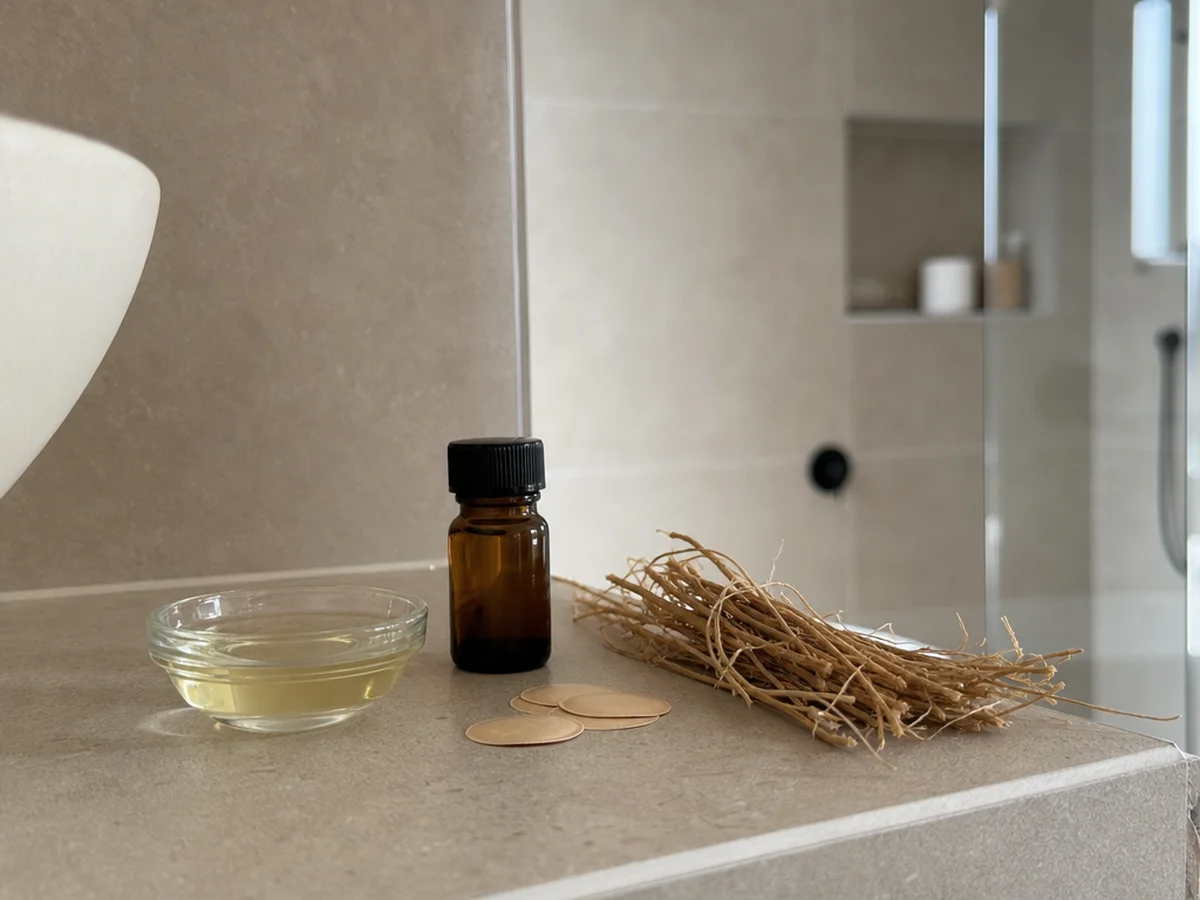
Here is the arithmetic for a 30 ml (about one fluid ounce) bottle of carrier, using the rough convention of 20 drops to the millilitre:
- 0.5%: 0.15 ml of vetiver, roughly 3 drops
- 1%: 0.3 ml, roughly 6 drops
- 2%: 0.6 ml, roughly 12 drops
Vetiver drops are larger than average, so the real count will be lower. Tisserand itself points out that drop conversions are always approximate. If the percentage matters to you, weigh it. In 100 g of carrier, 1% is 1 g of vetiver and 2% is 2 g. A kitchen scale reading to 0.1 g is all you need, and the percentages hold at any batch size. On the batch described in our Certificate of Analysis, relative density was 0.993, so 0.3 ml weighs about 0.3 g.
Advice like "5 to 10 drops per treatment" with no carrier volume is not a dilution at all, since without the carrier amount the percentage cannot be known. We do not sell carrier oils, so choose yours from a carrier-oil supplier, and our carrier oil guide can help you pick. Patch test the finished blend before the session, and keep it off any skin where a stone will rest without a towel in between. The safety guide covers dilution and sensitivity in more depth.
What vetiver adds
The scent. It is a deep, earthy, smoky-sweet aroma, and our scent guide describes it in detail. Because it is so distinctive, ask your client whether they like it before you start. A strongly earthy smell is a matter of taste, and it is better to ask than to assume.
What we would not do is promise a result. The research on vetiver is mostly laboratory and animal work: a 2025 review of its medicinal literature summarises in vitro, cell line and animal studies alongside a few clinical ones. Nothing in it tells us what vetiver does for a person on a massage table. The comfort of a session comes from the warmth, the pressure, the time and the quiet room. Vetiver contributes atmosphere.
Setting the room
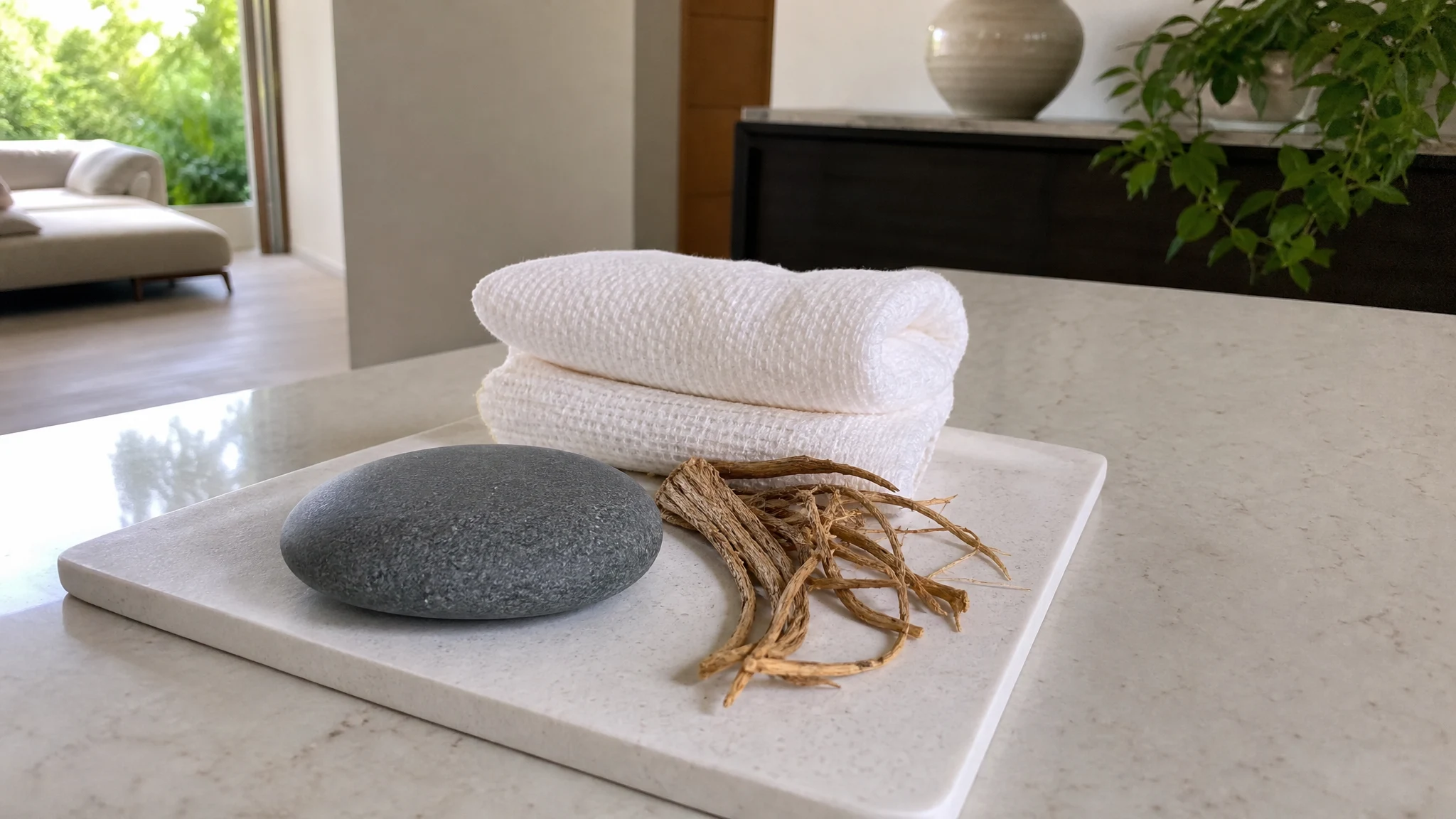
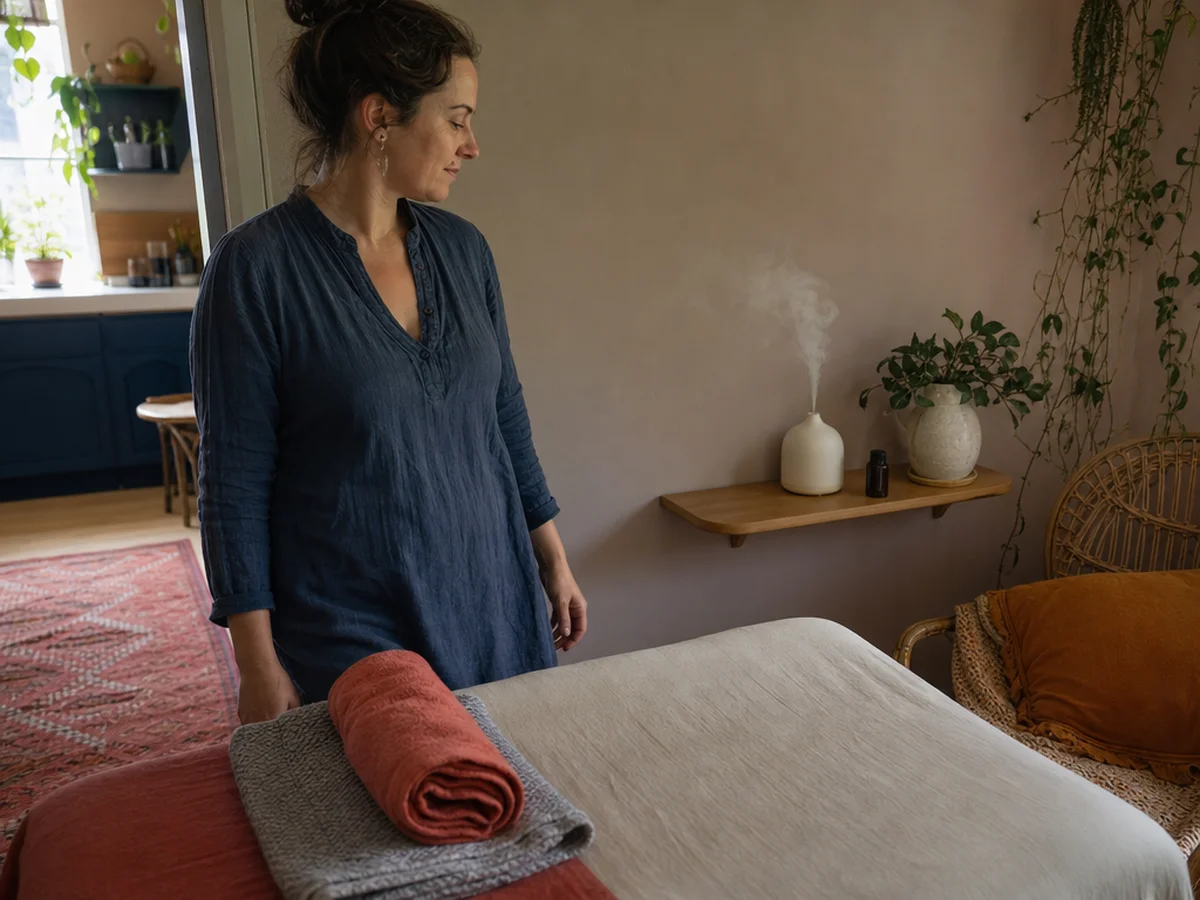
Part of a good session is everything around the oil. Lay out the towels before you heat the stones, keep a thermometer where you can see it, and have the blend in a small bowl within reach so you are not fumbling with bottles mid-session. Soft light and a quiet room matter more than any scent, which is why we suggest adding the oil last and keeping it light.
Handling a thick oil
Vetiver is thick and slow-pouring, so warm the bottle in your hands for a minute before you weigh it, and wipe the neck afterward. Stir the blend well, because a heavy oil can sit at the bottom of a carrier if you pour it in and walk away. A small pipette gives you more control than the bottle neck.
Vetiver is also deep amber to brown, so a very dark blend can mark pale towels. Keep older towels for oil work, and wash them separately.
A quick checklist
- Stones heated in water, with a calibrated thermometer.
- A towel or sheet under every stone, and no stone left in one place.
- A short conversation about sensation, pregnancy, skin condition and scent preference.
- Oil blended by weight at the percentage you chose, and patch tested beforehand.
- Bottles kept away from eyes, children and pets, and never taken internally.
If you would like a ready-made leave-on formulation to compare against, the chamomile massage oil post works through the same arithmetic. The stones, heater, towels and carrier come from other suppliers.
Done well, vetiver adds depth to a hot stone session, as long as the stones, the towels and the dilution all get the attention first.
Vetiver Essential Oil
Vetiver Essential Oil from our own shop, in sizes from 0.5 oz to bulk.
From $20.99
Shop Now →Sources & Further Reading
- Mayrhofer P, 2025. Mastering the Heat: How to Properly Heat Massage Stones. MASSAGE Magazine. massagemag.com
- Tisserand Institute. Dilution for essential oils. tisserandinstitute.org
- Gunasekar CJ et al., 2025. Pharmacological and Therapeutic Potential of Chrysopogon zizanioides (Vetiver): A Comprehensive Review of Its Medicinal Applications and Future Prospects. Biomolecules. PubMed 41008619