Does Vetiver Oil Repel Mosquitoes? What Studies Found
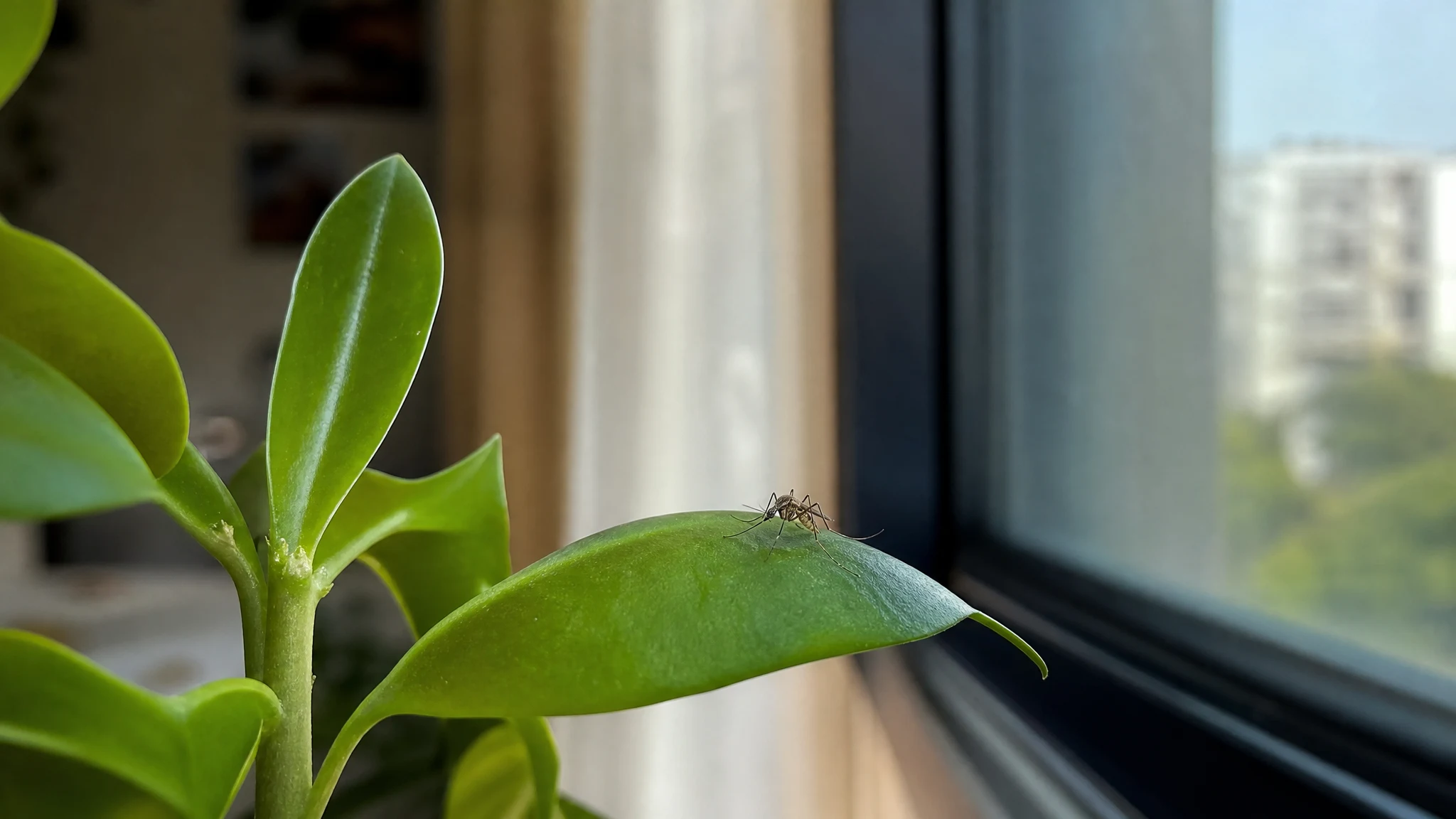
Plenty of pages promise a homemade vetiver bug spray. We are not going to give you a recipe, and the reason is the evidence rather than caution for its own sake. Vetiver oil has been tested on mosquitoes, and the results are interesting, but the tests do not translate into something you would spray on yourself. What follows is what the studies did, what they found and what we would do instead.
Vetiver Essential Oil
Our own Vetiver Essential Oil, in sizes from 0.5 oz to bulk.
From $20.99
Shop Now →The human-skin study
The most direct data comes from a 2022 arm-in-cage study in the journal Insects. It compared ten undiluted essential oils on volunteers, measuring how long the skin stayed free of bites. Vetiver oil's median complete-protection time was 30 minutes against Aedes aegypti, 30 minutes against Anopheles dirus and 150 minutes against Culex quinquefasciatus. Other oils in the same paper did better against particular species: petitgrain gave 270 minutes against Aedes aegypti and peppermint 180 minutes against Anopheles dirus.
Two things to keep in mind. The panel was small, and the oils were applied undiluted, which is far more concentrated than the 0.5% to 2% in a carrier oil that we recommend for skin. The authors themselves say dermal toxicity still needs to be studied before such oils can be developed into repellents. Nothing we found shows what a diluted vetiver blend does against mosquitoes.
The laboratory chamber study
A 2023 paper in Insects tested 2.5% vetiver oil, alone and combined with 1% beta-caryophyllene oxide, in an excito-repellency assay. Mosquitoes are placed in a chamber and researchers count how many leave treated surfaces. The mixtures generally produced a stronger response than either ingredient alone. The strongest result was a 1:2 mixture of the caryophyllene oxide and vetiver oil, which drove 74% to 78% of Anopheles minimus and 55% to 84% of Culex quinquefasciatus out of the chamber.
That is a meaningful result for researchers: in a laboratory, vetiver oil clearly interacts with mosquito behaviour. It is also a chamber, with no person involved and no outdoor conditions, so it tells you about potential and not about protection.
The benchmark everyone compares against
The study most often used as a yardstick is a 2002 paper in the New England Journal of Medicine. In a controlled laboratory with 15 volunteers and Aedes aegypti, a 23.8% DEET product protected for a mean of about 301 minutes, a soybean-oil-based repellent for about 95 minutes, and the other botanical products for under 20 minutes. Vetiver was not among them, and the study is old and limited to one species. It still shows why a plant-oil product has to be tested like a repellent before anyone should rely on it as one.
The rules around repellents
In the United States, a product sold to repel mosquitoes or ticks is regulated as a pesticide. The EPA has an exemption for certain minimum-risk pesticides, and its page on personal insect repellents explains where that exemption does and does not apply. Whether a particular homemade product can lawfully be sold is a question for a regulatory attorney or your state pesticide agency, and we would rather leave that to them.
For anyone who simply wants to avoid bites, the CDC recommends EPA-registered repellents containing DEET, picaridin, IR3535, oil of lemon eucalyptus, para-menthane-diol or 2-undecanone, and says: "We do not know the effectiveness of non-EPA registered insect repellents, including some natural repellents." If mosquitoes or ticks carry disease where you live, that sentence settles it. A pharmacist or physician can tell you which registered product suits you, including for children and during pregnancy.
Where vetiver oil fits
Our position is a happy one: enjoy vetiver oil for its aroma, and use a registered repellent for insects. We sell an external cosmetic oil, neat, so if you like its earthy scent on skin the dilution maths is yours; our guidance is 0.5% to 2% in a carrier with a patch test, and our carrier oil guide covers the options. We do not sell carriers, sprays or repellents. Pets are a separate matter: do not apply essential oils to a dog or cat as a bug spray, and ask a veterinarian. Our pets post explains more.
If you are curious about the other pest question people ask, see vetiver and termites, and for the chemistry behind the oil, the science of vetiver.
If you simply like the smell on a summer evening
Vetiver has a lovely way of making a porch or a bedroom smell like warm earth after rain. If that is what you are after, enjoy it as a fragrance and nothing more: a drop on a tissue tucked on a shelf indoors, or a diluted blend for your skin as per our guidance. Just do not count on it to keep insects away. Think of it as the pleasant part of the evening, and let a registered repellent be the practical part.
One habit worth picking up is checking the label. A product sold as an insect repellent in the United States should carry an EPA registration number, which tells you it has been through the agency's process. A bottle of essential oil, ours included, is a fragrance oil for aroma and cosmetic use, so it will not have one. Keep it out of the diffuser if there is a pet or bird in the room, and wash your hands before touching your eyes.
What would change the picture
A repellent claim would need human-skin tests at a dose that is safe to apply, more than a handful of volunteers, and work done under a pesticide registration. Until someone does that, the lab results are fascinating chemistry, and that is all.
So the spray bottle stays out of this one, and the oil stays on the shelf for what it does best.
Vetiver Essential Oil
Vetiver Essential Oil from our own shop, in sizes from 0.5 oz to bulk.
From $20.99
Shop Now →Sources & Further Reading
- Effectiveness of Herbal Essential Oils as Single and Combined Repellents against Aedes aegypti, Anopheles dirus and Culex quinquefasciatus (Diptera: Culicidae). Sutthanont et al., Insects, 2022
- Synergistic Repellent and Irritant Effects of a Mixture of β-Caryophyllene Oxide and Vetiver Oil against Mosquito Vectors. Nararak et al., Insects, 2023
- Comparative efficacy of insect repellents against mosquito bites. Fradin and Day, New England Journal of Medicine, 2002
- Personal Insect Repellents and Minimum Risk Pesticides | US EPA
- Preventing Mosquito Bites | Mosquitoes | CDC