Vetiver Oil in Pregnancy: What Guidance Exists
If you are pregnant and love the smell of vetiver, the honest answer to "is it okay?" is that nobody can give you a blanket yes or no, because we know of no study of vetiver essential oil in pregnant women. What exists is careful, general guidance from clinical bodies, and it all points the same direction: talk to your midwife or doctor first. We sell an aromatic and cosmetic oil, not medical advice, so here is what the authorities say and how to use it.
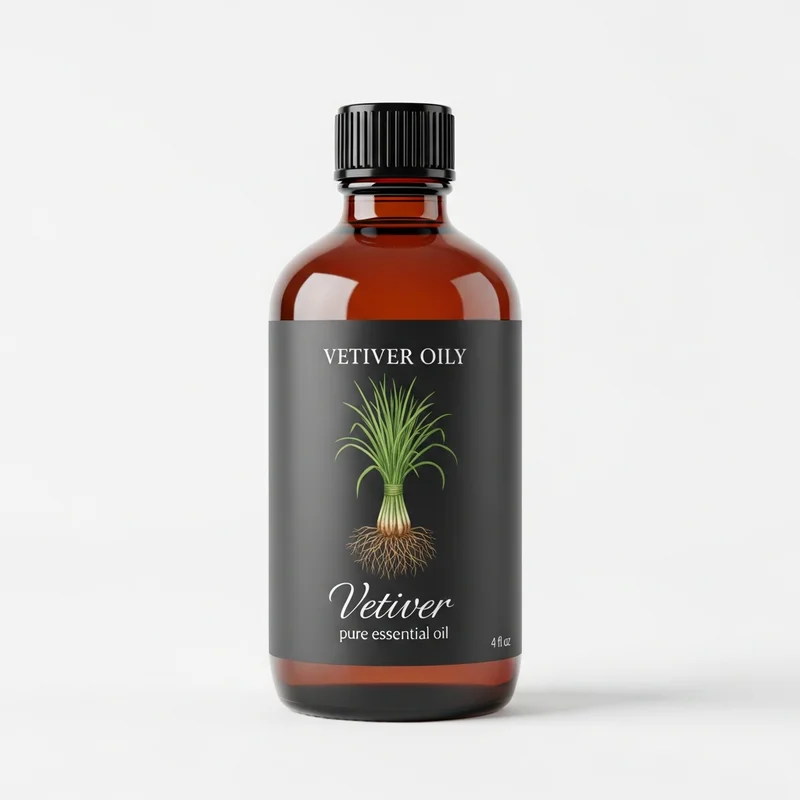
Vetiver Essential Oil
Our own Vetiver Essential Oil, in sizes from 0.5 oz to bulk.
From $20.99
Shop Now →What the NHS says about aromatherapy in pregnancy
The NHS page on medicines in pregnancy is clear and calm about it. Not all "natural" remedies or complementary therapies are safe in pregnancy. Some products may not be of high quality and may contain other substances, such as lead, that could be harmful. You should tell your midwife, doctor or pharmacist if you are using herbal, homeopathic or aromatherapy remedies or therapies, and if you decide to use them you should always consult a qualified practitioner. And complementary therapies cannot replace conventional antenatal care.
It is worth noticing what that advice does not say. It does not tell anyone to panic, and it does not name vetiver. It simply puts a trained professional in the loop, which is a sensible place for anyone to start.
What a midwifery guideline works from
NHS Borders has a published aromatherapy guideline for midwifery practice. It advises avoiding aromatherapy in the first trimester because some essential oils are emmenagogic, and it lists the 15 oils its midwives use: bergamot, chamomile, clary sage, eucalyptus, frankincense, geranium, grapefruit, jasmine, lavender, lemon, mandarin, peppermint, petitgrain, rose and ylang ylang. Its massage dilution is 1 percent. Vetiver does not appear in the document at all.
We read that as a reflection of what one trained team works with, not as a verdict on vetiver, because an oil that is absent from a list has not been cleared or condemned by being there. It is one hospital's guideline rather than a national rule, but it shows how cautious and specific professional practice is.
Other voices
The Tisserand Institute's safety guidelines list pregnancy among the situations where you should seek the advice of a doctor or suitable practitioner before using essential oils. A 2021 review of aromatherapy in obstetrics (Bertone and Dekker) concluded that the evidence suggests aromatherapy can be administered safely and effectively in obstetrics, covering uses across pregnancy, labor and the weeks after. It reviews aromatherapy broadly and our reading of the abstract does not show vetiver data, so we do not stretch it to cover our oil.
Put together: the cautious sources say ask a professional, the midwifery guideline we read does not include vetiver, and the encouraging review does not name it either. For vetiver in particular, that leaves a gap that your own midwife or doctor is best placed to fill.
Preparing for the conversation
An appointment goes further when you arrive with details. Bring the bottle or a photo of the label, note how you plan to use it (diffused, on skin, in a product), and write down how often. Mention any other oils you use. That gives your midwife or doctor something concrete to respond to, instead of a general question about aromatherapy.
It also helps to be honest about the scent itself. Pregnancy can change how you react to smells, and a deep, earthy oil that you loved before may feel too heavy now. That is worth noticing, whatever any guideline says, and there is nothing wrong with putting the bottle away for a while.
Keeping the bottle tidy and out of reach
Whatever stage of life you are in, keep the oil capped, wiped clean at the neck and stored somewhere cool and dark, away from children and pets. A thick oil leaves residue on the bottle and on your fingers, so wash your hands after handling it.
Quick answers
Who should I ask?
Your midwife or OB/GYN first, and a pharmacist if you would like to check against anything you take. A qualified aromatherapist can help with dilution, working alongside your maternity team and not in place of it.
What about the first trimester?
The NHS Borders guideline advises avoiding aromatherapy then, as a general precaution. We know of no source showing that vetiver itself has the property that concern refers to, so treat it as a general precaution and ask your midwife.
Can I diffuse it?
Diffusing is a lower-exposure way to enjoy a scent than putting oil on skin, but low is not the same as studied. Your midwife can tell you whether it suits you.
What about breastfeeding?
We found no data on vetiver oil and breastfeeding, so a lactation consultant, pediatrician or your OB/GYN is the right person to ask.
Can I swallow it?
No. We say never to take our oil internally, at any time, and the Tisserand Institute likewise advises against ingesting essential oils unless a qualified practitioner has advised it. See our swallowing post.
If your clinician says yes
Then the practical points are simple. Our guidance is to dilute to 0.5% to 2% in a carrier oil and patch test first, and since the Borders guideline uses 1 percent for massage, the lower end is the better match. Keep the oil away from your eyes, store it somewhere children cannot reach, and read our safety guide for the dilution arithmetic and allergy background. For the household once the baby arrives, see our post on children and babies.
The NHS also raises quality, which is a fair point for any buyer. The Certificate of Analysis we publish covers one batch and lists relative density and refractive index, so if you would like the report for your lot, ask us in writing through our contact page. Beyond that, what to use during pregnancy is a conversation for your maternity team, and we would rather you had it before the bottle than after.
Vetiver Essential Oil
Vetiver Essential Oil from our own shop, in sizes from 0.5 oz to bulk.
From $20.99
Shop Now →Sources & Further Reading
- NHS. Medicines in pregnancy - NHS. nhs.uk
- NHS Borders. Aromatherapy Guideline for Midwifery Practice. rightdecisions.scot.nhs.uk
- Tisserand Institute. Safety Guidelines - Tisserand Institute. tisserandinstitute.org
- Bertone AC, Dekker RL, 2021. Aromatherapy in Obstetrics: A Critical Review of the Literature. Clinical Obstetrics and Gynecology. PubMed