Vetiver Oil for Anxiety: What the Research Shows
Ask around about vetiver and you will hear that it is the calming oil, the one for restless minds. That reputation is older than any laboratory evidence for it. The science that does exist is intriguing, small and mostly in rats, and we think the most useful thing we can do is walk you through it so you can enjoy the scent without expecting more from it than it has earned.
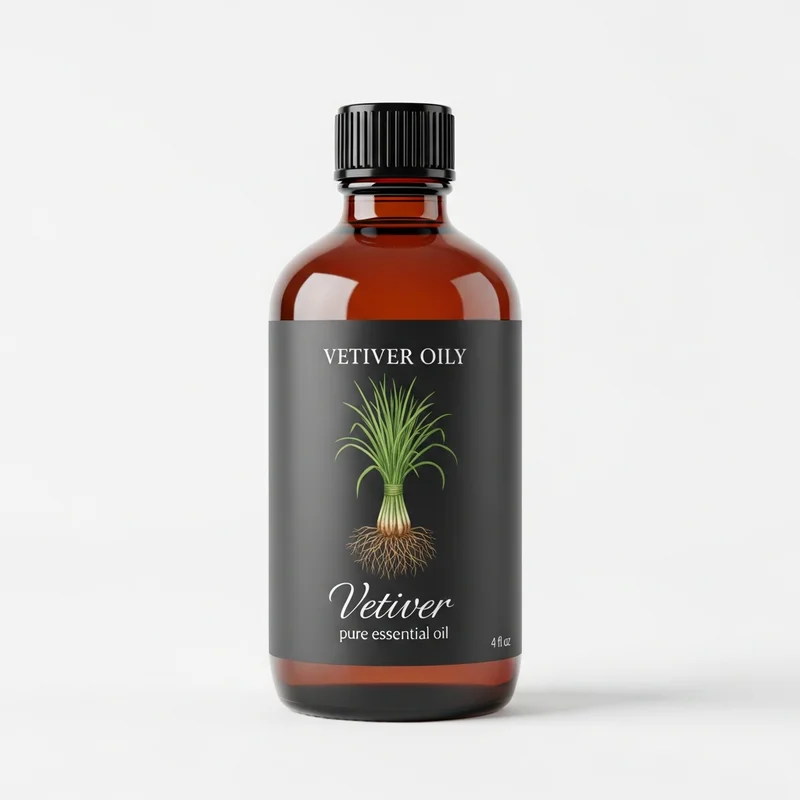
Vetiver Essential Oil
Our own Vetiver Essential Oil, in sizes from 0.5 oz to bulk.
From $20.99
Shop Now →The rat results, read carefully
The most-cited study put male rats in an elevated plus-maze after they inhaled vetiver oil for seven minutes at three strengths. Only the middle strength behaved like the anxiety drug diazepam they were compared with, and it also lit up a marker of nerve-cell activity in part of the amygdala. The authors say outright that more work is needed to understand how. Another group recorded brain waves in rats breathing vetiver and found the animals stayed awake longer, an alerting pattern that does not sit neatly beside a calming story. We cannot reconcile the two, and honestly nobody can yet. What we can say is that vetiver does something measurable to a rat's brain activity and that nobody knows what that means for human worry.
Humans: a few trials, none quite on target
People have been studied, but mostly in mixtures. A large dental-clinic trial vaporized several scents, including a forest blend with vetiver among eight oils, and anxiety scores in the scent groups averaged a couple of points lower than in the controls, though the effect was clear only in subgroups picked after the fact. A trial in intensive care nurses used vetiver oil in a bedtime massage, but it measured fatigue and sleep, not anxiety. A Europe PMC search on 5 November 2026 for vetiver oil with anxiety and trial terms found a few such studies and none in people diagnosed with an anxiety disorder.
The broader aromatherapy research leans toward lavender, not vetiver. A systematic review of lavender inhalation found that most of its trials reported lower anxiety, with the authors calling their conclusions provisional and noting many participants were facing something stressful like surgery. If a scent chosen on trial evidence is your goal, lavender has more of it, which we say happily even though we sell vetiver. Our vetiver versus lavender post compares the two.
When it is more than a mood
The National Institute of Mental Health describes an anxiety disorder as worry that does not go away, shows up in many situations and can get worse over time. If that sounds familiar, a physician or mental health professional can work out what is going on, and a scent should never delay that appointment. People in the US can call or text 988 at any time, and 911 covers emergencies.
For a practice with real trial data, the options are not scents at all. The National Center for Complementary and Integrative Health reports that mindfulness approaches have beaten no treatment in analyses, with the caution that much of the research is preliminary. Our meditation post looks at whether a scent adds anything to a sit.
Reading studies without getting carried away
When you see a headline about a scent and a mood, a few questions help. Who was studied: rats, or people? How many? Was there a comparison group that smelled nothing? Was the measure a worry score or something else? With vetiver, most of the answers point to small and early work, and that is no failing. It is simply where the research stands, and it is better to know that before you build expectations around a bottle.
Why people still reach for a scent
None of that stops a smell from being pleasant, and it does not need a study to justify it. Many people like a particular scent in a particular room because it is familiar, a habit, or just good to smell. Vetiver's deep, earthy, smoky-sweet character is distinctive enough that it can be a small pleasure of the day. We are glad to leave it at that.
A little goes a long way
Whatever you use it for, start small. Vetiver is strong and lingers, so if you diffuse or dilute it, begin with less than you think you need. Open a window now and then and see how the room feels with less scent. Quiet usually works better with this oil than loud.
Using the aroma well
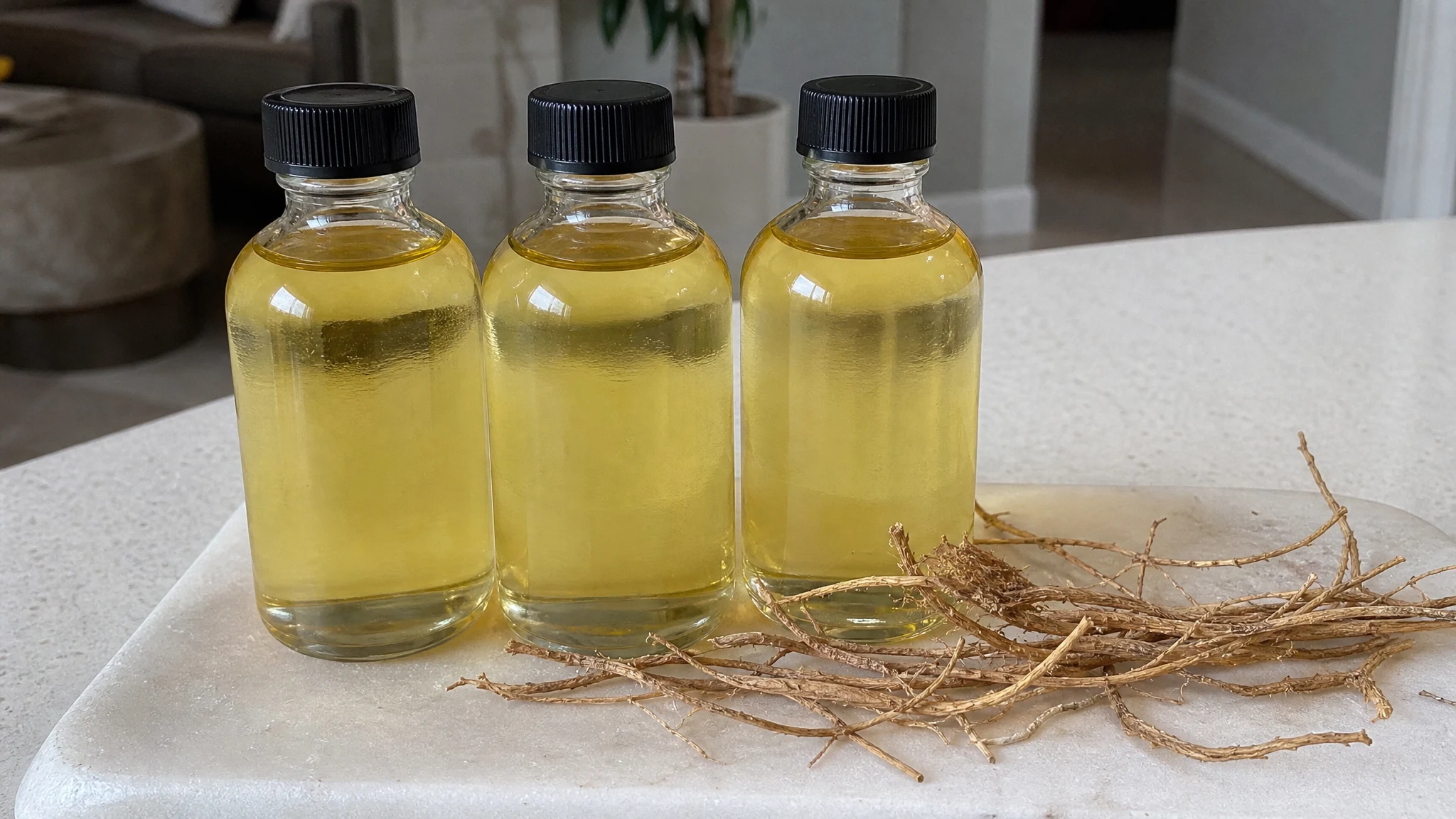
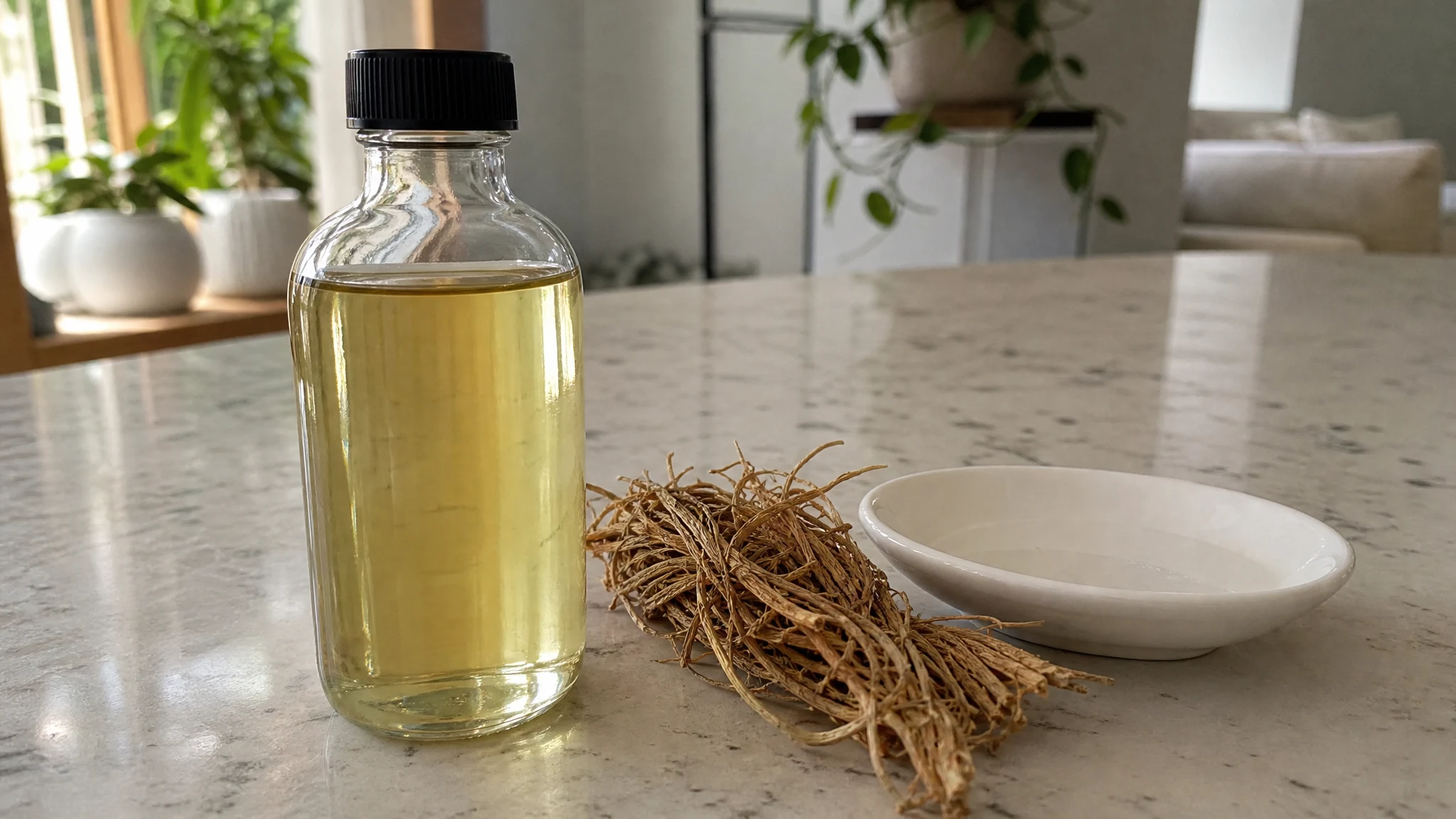
We offer one steam-distilled vetiver essential oil with a deep, earthy, smoky-sweet scent, and we describe it as an aroma, not an anxiety aid. A little goes a very long way, so start with the faintest scent that you enjoy. For skin, our guidance is 0.5% to 2% in a carrier oil with a patch test first, and we suggest starting low. Keep it away from eyes, children and pets, and do not take it internally. Our diffuser post covers equipment for a thick oil.
Making room for a ritual
Some people like to pair a scent with a small pause in the day: a hot drink, an open window, five minutes away from the screen. The pause is yours, and the smell is just one of the things in the room. If vetiver is the scent you choose, open the bottle, take one slow breath, and notice how deep and earthy it is before you put the cap back on. That is a simple pleasure and needs no promise.
Love the smell, ask a professional about the worry, and let each do its own job.
If worry is getting in the way of your days, please do not wait on a scent to fix it. A physician or mental health professional is the right person to start with.
Vetiver Essential Oil
Vetiver Essential Oil from our own shop, in sizes from 0.5 oz to bulk.
From $20.99
Shop Now →Sources & Further Reading
- Saiyudthong et al. Anxiety-like behaviour and c-fos expression in rats that inhaled vetiver essential oil. Natural Product Research, 2015
- Cheaha et al. Modification of sleep-waking and electroencephalogram induced by vetiver essential oil inhalation. Journal of Intercultural Ethnopharmacology, 2016
- Czakert et al. Scenting serenity: influence of essential-oil vaporization on dental anxiety - a cluster-randomized, controlled, single-blinded study (AROMA_dent). Scientific Reports, 2024
- Burkev et al. The Effect of Aromatherapy on Fatigue and Sleep Quality in Intensive Care Nurses: A Randomised Placebo-Controlled Trial. Nursing in Critical Care, 2026
- Yoo and Park. Anxiety-Reducing Effects of Lavender Essential Oil Inhalation: A Systematic Review. Healthcare, 2023
- Anxiety Disorders - National Institute of Mental Health (NIMH)
- Meditation and Mindfulness: Effectiveness and Safety | NCCIH