Vetiver Oil and Inflammation: Lab Studies vs Massage
Somewhere between "contains compounds that quiet inflammation in a dish" and "eases your sore back" lies a very long road, and vetiver oil has only walked the first stretch of it. That first stretch is interesting, though, and it is worth knowing what it was before you decide how much weight to give it.
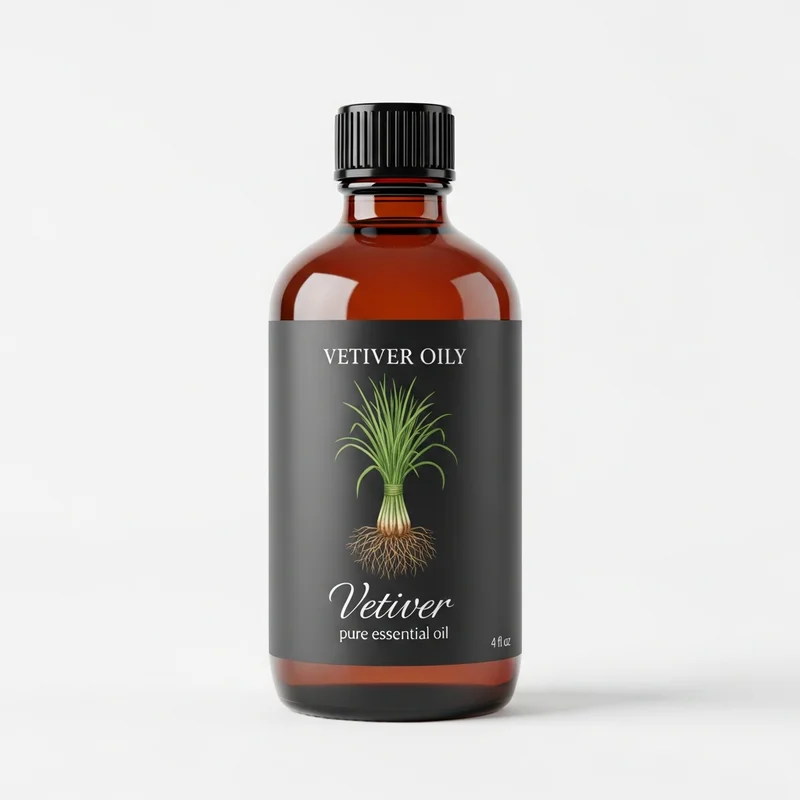
Vetiver Essential Oil
Our own Vetiver Essential Oil, in sizes from 0.5 oz to bulk.
From $20.99
Shop Now →The cell study everyone cites
A Taiwanese team in 2012 analyzed a vetiver oil sample, identifying 25 compounds with cedr-8-en-13-ol the largest at about 12%. They then exposed mouse immune cells to a bacterial toxin, the standard way to provoke an inflammatory reaction in a dish, and reported the oil may dampen the cells' inflammatory signals and that this tracked with its antioxidant activity. It is solid lab work. It is also a mouse cell line, a bacterial trigger and an oil mixed into the culture liquid, with no human data. The compound profile belongs to that sample and is not a specification for any other bottle, ours included. A 2025 review that collects the vetiver literature describes its efficacy findings as preclinical.
Looking for people
A Europe PMC search on 5 November 2026 for vetiver oil with pain terms and participants returned 51 records. The first page held a nurse trial, a cell-line cancer paper, biotechnology reviews and a blend trial in older adults. None was a pain study, though we have not read all 51.
The nurse trial deserves a closer look because it shows how hard it is to credit one oil. Intensive care nurses received a nightly aromatherapy massage for four weeks with either a chamomile-lavender blend, vetiver oil or a jojoba oil placebo. The outcome was fatigue and sleep, not pain. Fatigue scores fell from a median of 7.0 to 2.0 in the vetiver group, and from 8.0 to 4.0 in the jojoba group. Most of the improvement arrived with plain oil and a nightly massage. The authors recommend a double-blind design for future work.
What pooled aromatherapy trials say about pain
The broadest review of aromatherapy and pain pooled 12 studies and about 1,000 patients and found a moderate effect on inflammatory pain, and a small one for chronic pain that could not be told apart from no effect. The reviewers repeatedly note that many studies used massage, so the oil cannot be credited alone; for menstrual pain they say massage might account for the whole effect. They conclude that aromatherapy may reduce pain alongside conventional care. Vetiver was not among the trials we saw in their summary.
The National Center for Complementary and Integrative Health is similarly measured. Its aromatherapy page mentions oils used in massage for knee osteoarthritis pain and a lemon and lavender study in which neither scent affected pain control.
What we would suggest
New, worsening or persistent pain belongs with a physician first. Joint, back and nerve pain have different causes, and an aroma will not tell you which one you have. If you enjoy massage, the massage may be doing much of the work, as that jojoba arm suggests, and a licensed massage therapist who offers vetiver is offering it for its scent. Our hot stone massage post covers the practical side of heat and skin.
How to read a headline like this one
Once you start looking, you will see "vetiver" and "inflammation" side by side in plenty of articles. A few questions help you sort them quickly. Who or what was studied: cells in a dish, animals or people? Was the oil used alone, or was it part of a massage, a blend or a routine? Was there a comparison group that got plain carrier oil? And does the page that quotes the study sell something? None of these questions needs a science degree, and together they will tell you how far a claim can travel. We would rather you leave a page with good questions than with a promise.
Enjoying vetiver the way we do
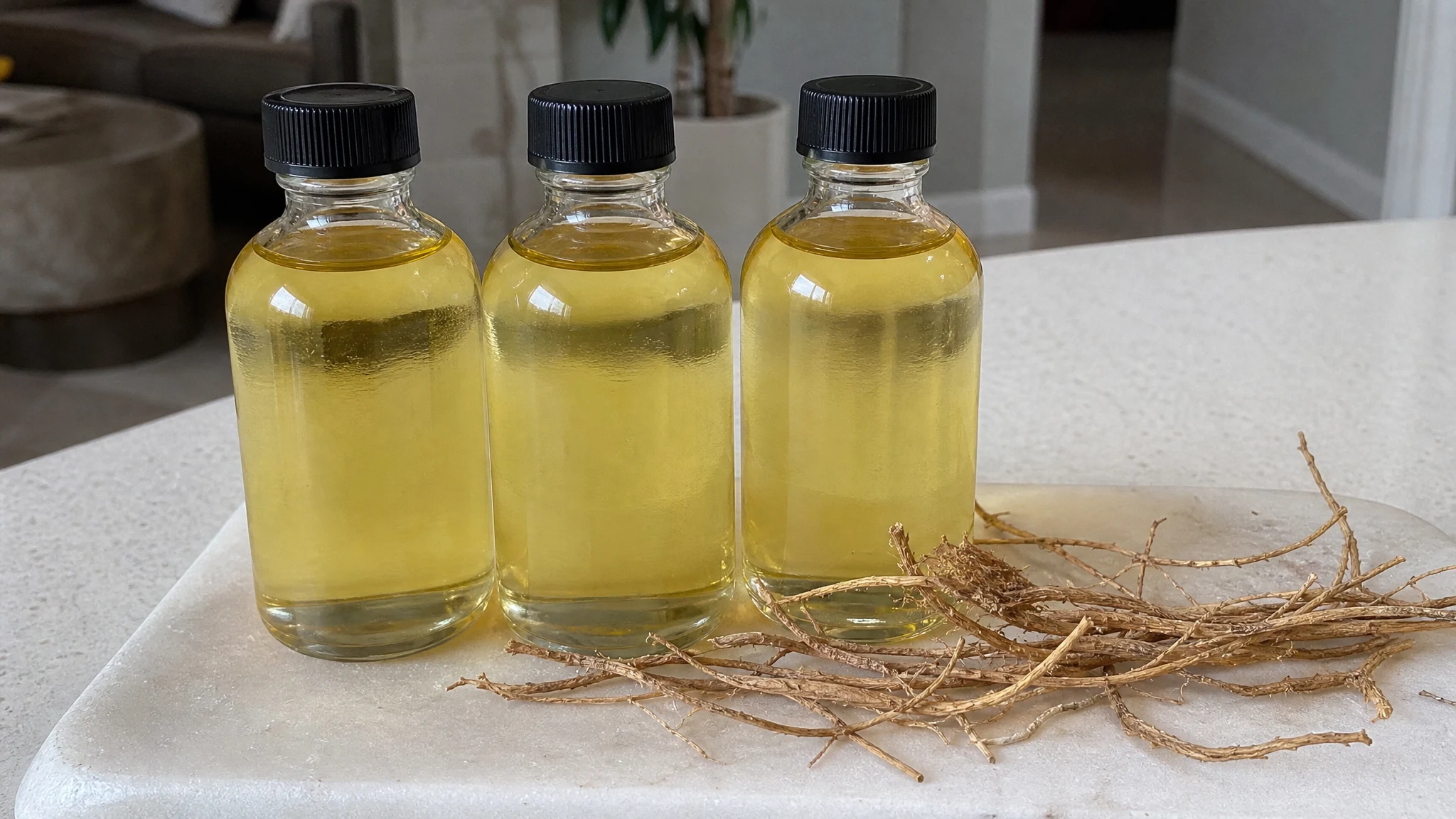
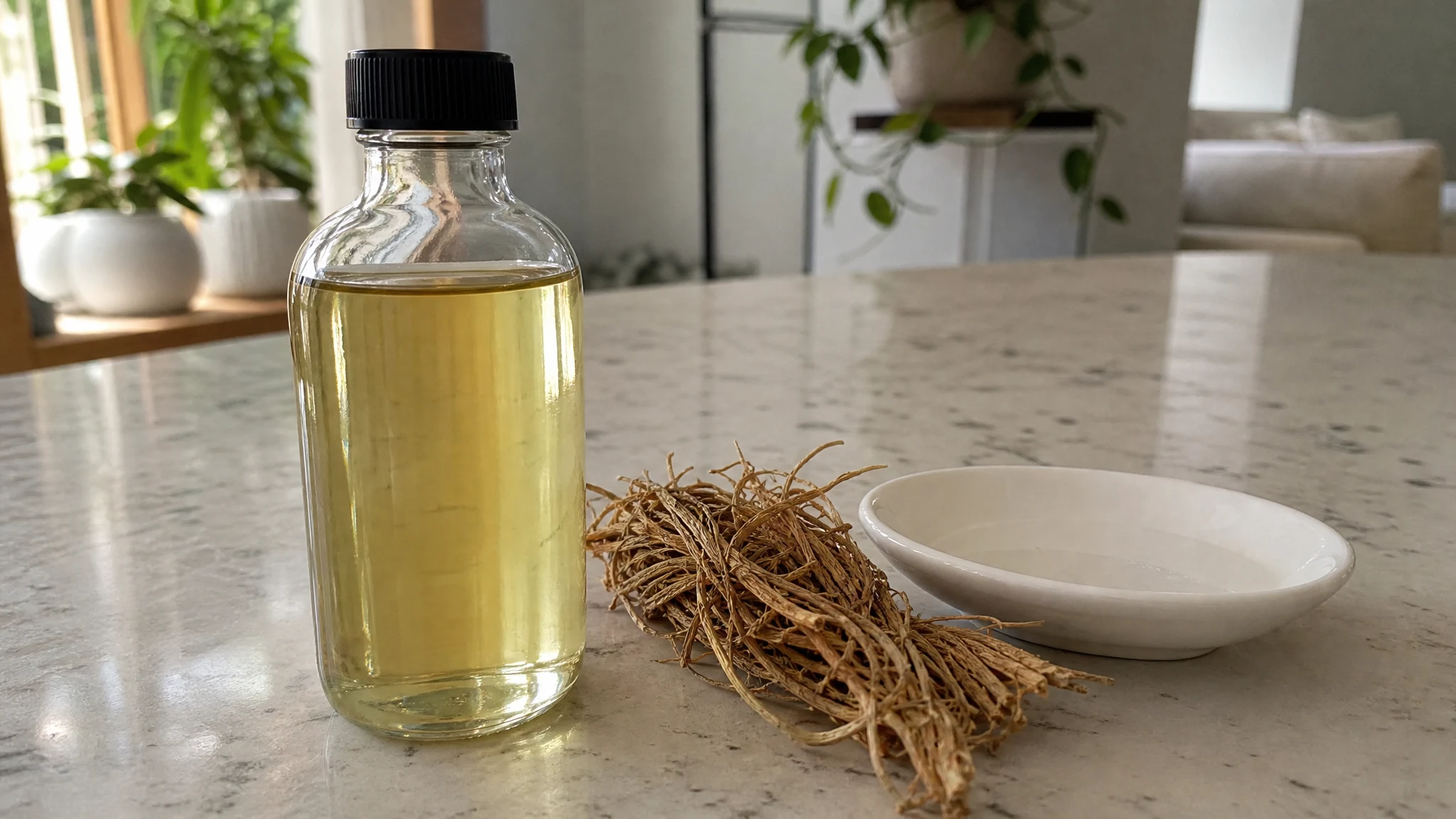
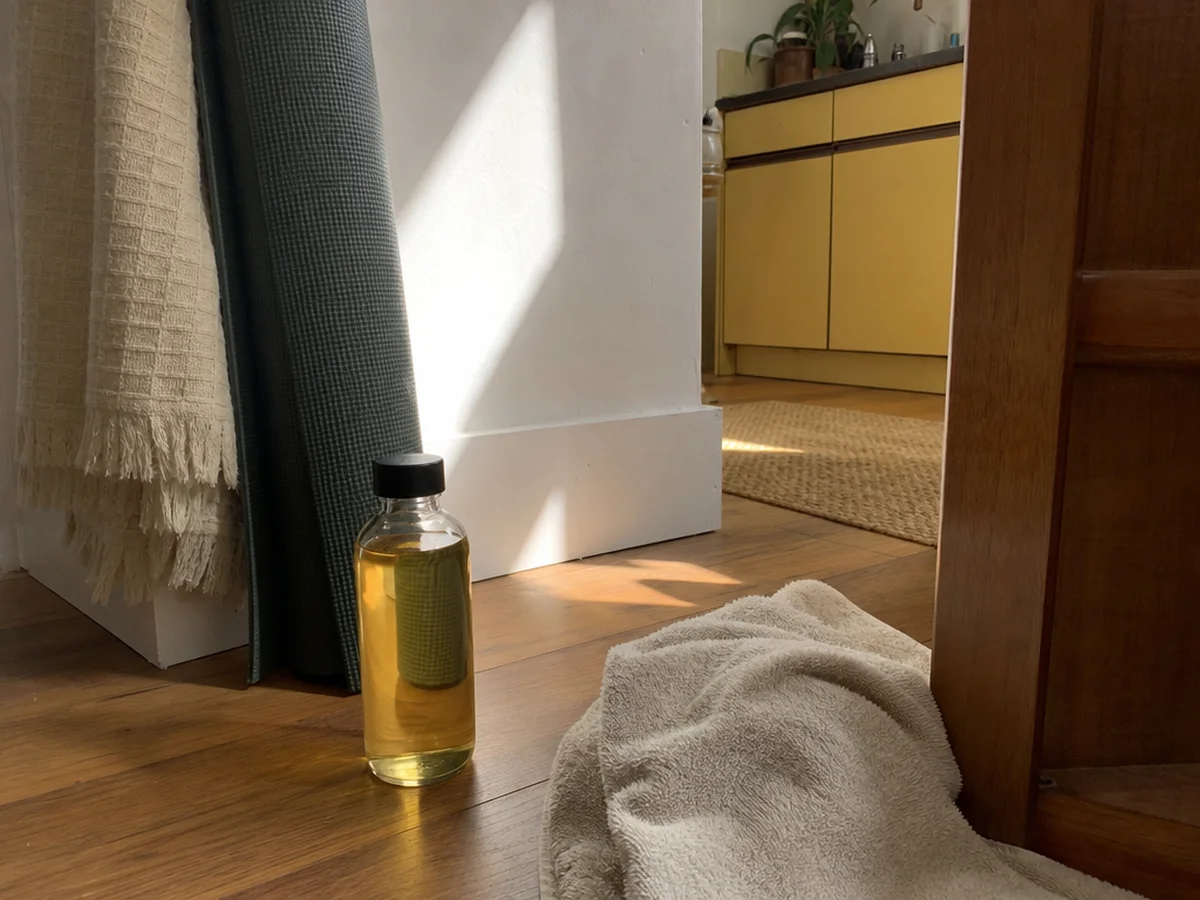
For us the pleasure of this oil is sensory. It is thick and slow-pouring, a deep amber to brown, with an earthy, smoky-sweet aroma that fills a small room from a single drop. If you like a massage-style routine, the pleasure is in the slow pace of it: warm the carrier oil in your palms, add your diluted blend, and give yourself the time. A rich scent, a quiet room and a few unhurried minutes are a perfectly good reason to reach for the bottle, and they do not need a study to justify them.
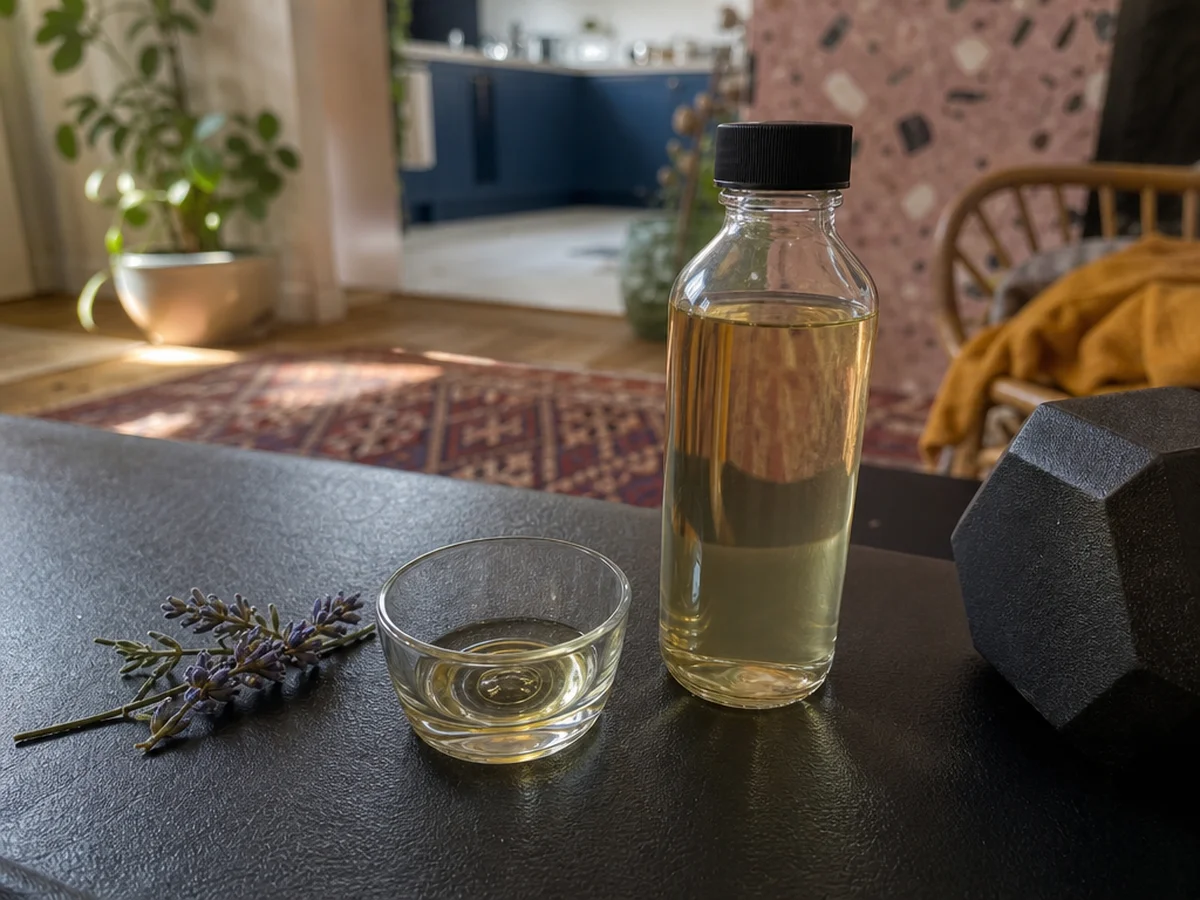
Because it is so concentrated, a little goes a very long way. Measure with a pipette for control, wipe the neck of the bottle after each use so it does not get sticky, and store it in a cool, dark place with the cap on firmly.
If vetiver comes up in conversation at all, we hope it is for what it smells like and how it behaves in a blend. That is the part we can speak about with confidence, and it is the part you can check for yourself with a strip of paper and a quiet minute.
For anything on your skin, our guidance is 0.5% to 2% in a carrier oil with a patch test, and we would start at the low end. We do not suggest a dose for pain. Our safety guide sets out the careful numbers, and our carrier oil guide helps with the base. Keep the oil away from eyes, children and pets, and never take it internally.
Vetiver gives you a rich, earthy, smoky-sweet scent for a warm evening routine. For the aches, a professional is a better first call, and we are glad to answer questions about the oil on our contact page.
Vetiver Essential Oil
Vetiver Essential Oil from our own shop, in sizes from 0.5 oz to bulk.
From $20.99
Shop Now →Sources & Further Reading
- Chou et al. Study of the chemical composition, antioxidant activity and anti-inflammatory activity of essential oil from Vetiveria zizanioides. Food Chemistry, 2012
- Gunasekar et al. Pharmacological and Therapeutic Potential of Chrysopogon zizanioides (Vetiver): A Comprehensive Review of Its Medicinal Applications and Future Prospects. Biomolecules, 2025
- Burkev et al. The Effect of Aromatherapy on Fatigue and Sleep Quality in Intensive Care Nurses: A Randomised Placebo-Controlled Trial. Nursing in Critical Care, 2026
- Lakhan, Sheafer and Tepper. The Effectiveness of Aromatherapy in Reducing Pain: A Systematic Review and Meta-Analysis. Pain Research and Treatment, 2016
- Aromatherapy | NCCIH