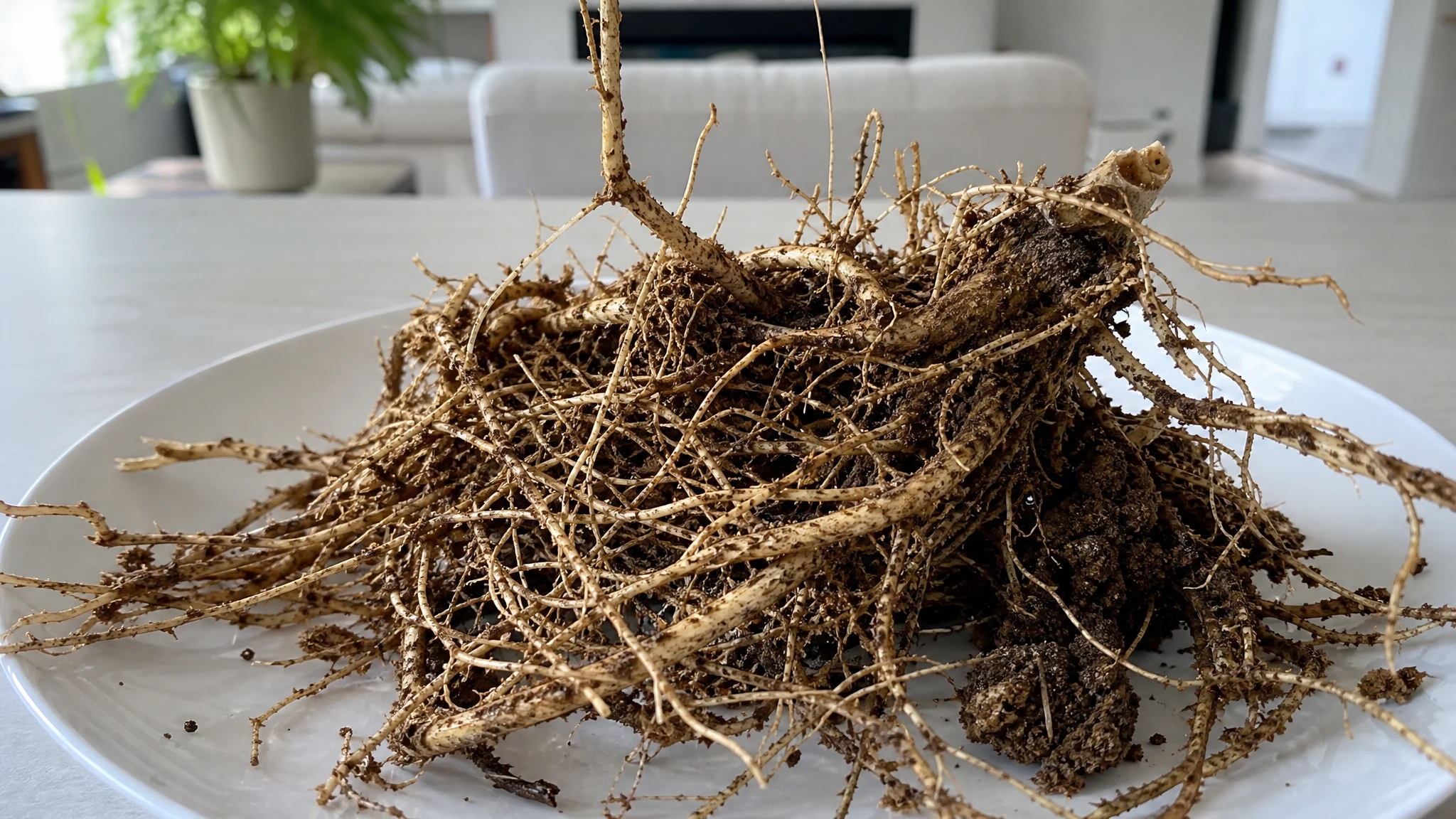
Vetiver Terroir: Does Soil Change the Oil?
Browse enough vetiver pages and you will meet the soil story: heavy clay gives a deeper oil, sandy ground a lighter one, a dry season a more concentrated scent. It is a lovely idea, the same one wine lovers enjoy. We think the real story is more useful to anyone buying or blending vetiver, because the things that shape the oil are ones you can actually ask about.
Vetiver Essential Oil
Our own Vetiver Essential Oil, in sizes from 0.5 oz to bulk.
From $20.99
Shop Now →Why the soil story is hard to prove
To show that soil changes the oil, you would grow the same plants, harvest them at the same age, distil them the same way, and change only the ground. Almost nobody has done that with vetiver. Meanwhile, three other things travel with every location, and each one moves the oil on its own.
The plant itself. The plant-resources handbook PROSEA notes that northern Indian khus oil is laevorotatory while oil from every other source is dextrorotatory, and that Haitian oil "differs somewhat from Javanese and South Indian oil, but is also dextro-rotatory." A researcher at India's Central Institute of Medicinal and Aromatic Plants adds that country, cultivation practice, climate and genetic origin together produce a wide spread of notes, from earthy, woody and balsamic to sweet and rose-like. Those causes are listed side by side, and nobody has pulled them apart for you.
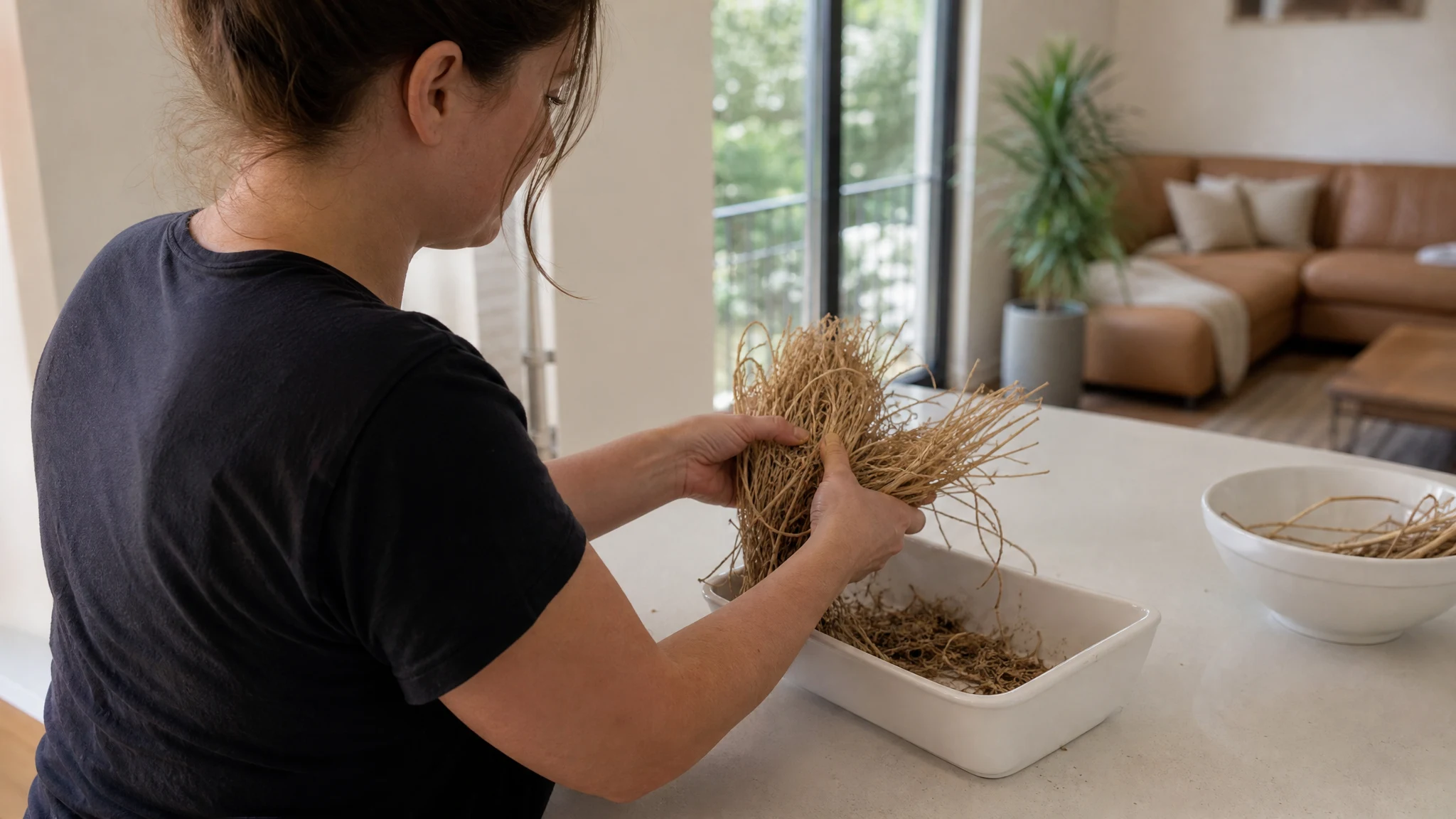
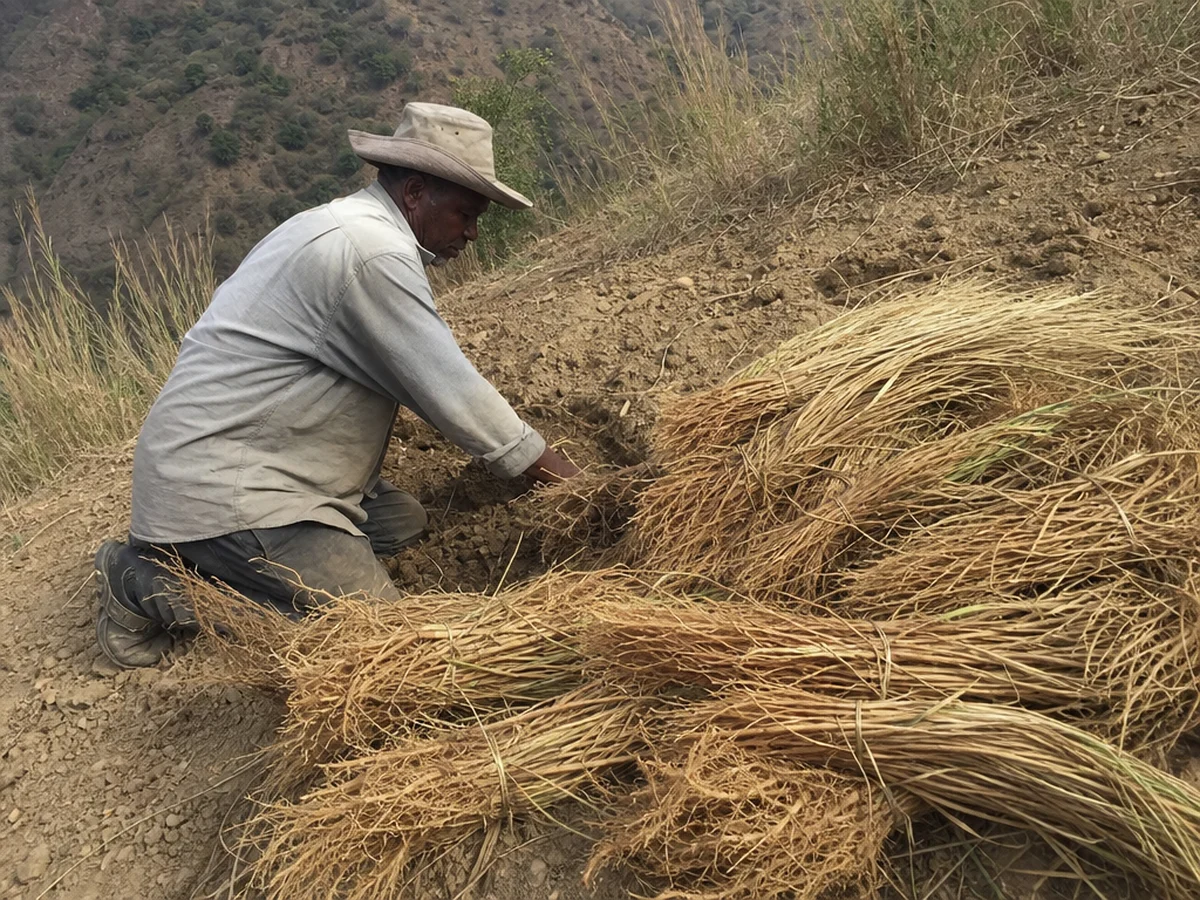
The age of the roots. PROSEA gives 15 to 18 months as the point when oil content is highest, and says a crop left to about 24 months gives less oil that is heavier and darker. Two fields with identical soil but different harvest dates can make visibly different oil.
What happens after digging. The same Indian review describes the oil as amber to dark brown from steam or water distillation, and dark green when it comes from traditional copper vessels on a slow fire. Same root, different still, different colour.
Put those next to a claim like "this valley gives a smokier oil" and you can see the trouble. The valley, the variety, the cutting date and the still all arrive together.
What soil and climate clearly do
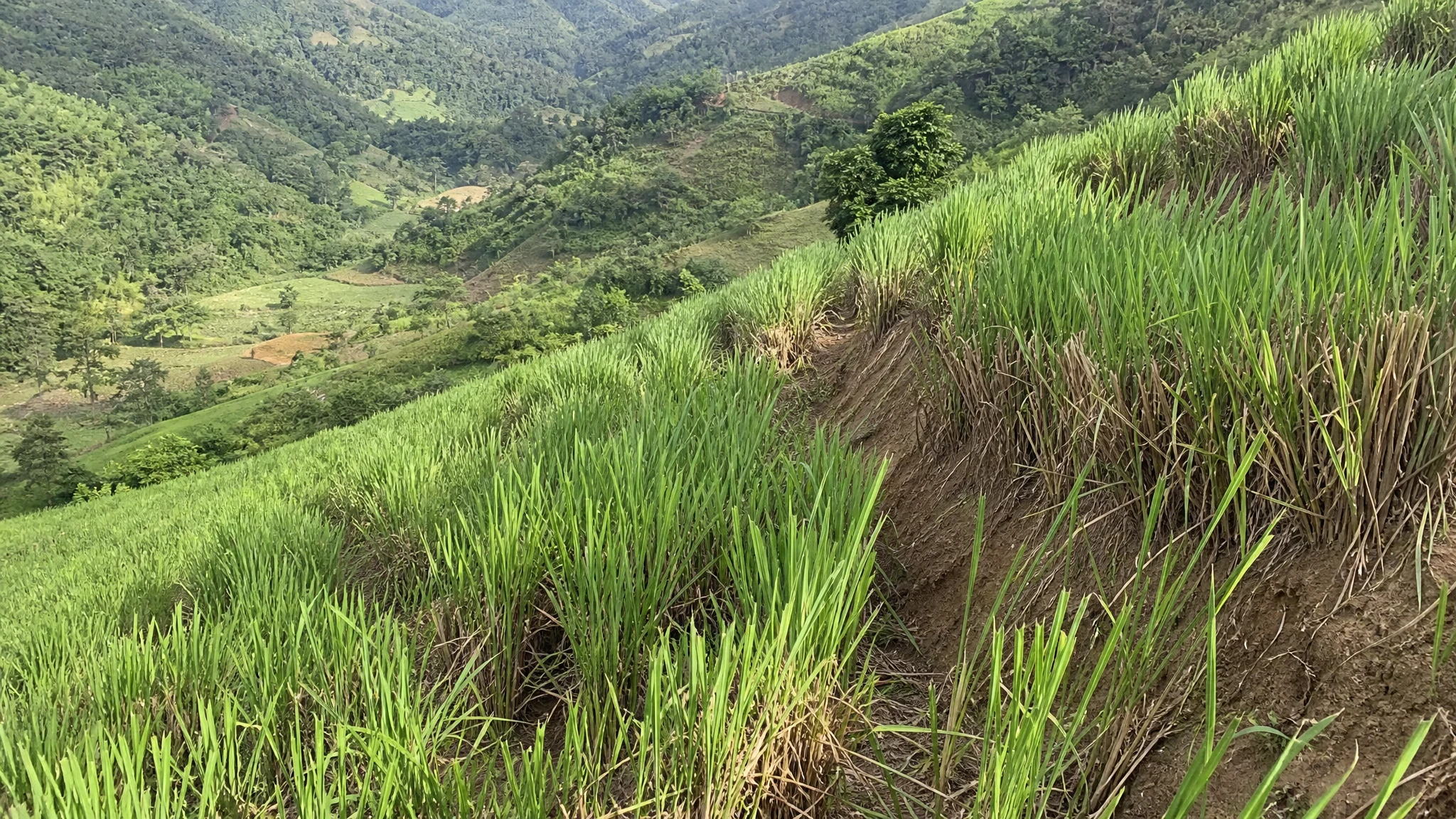
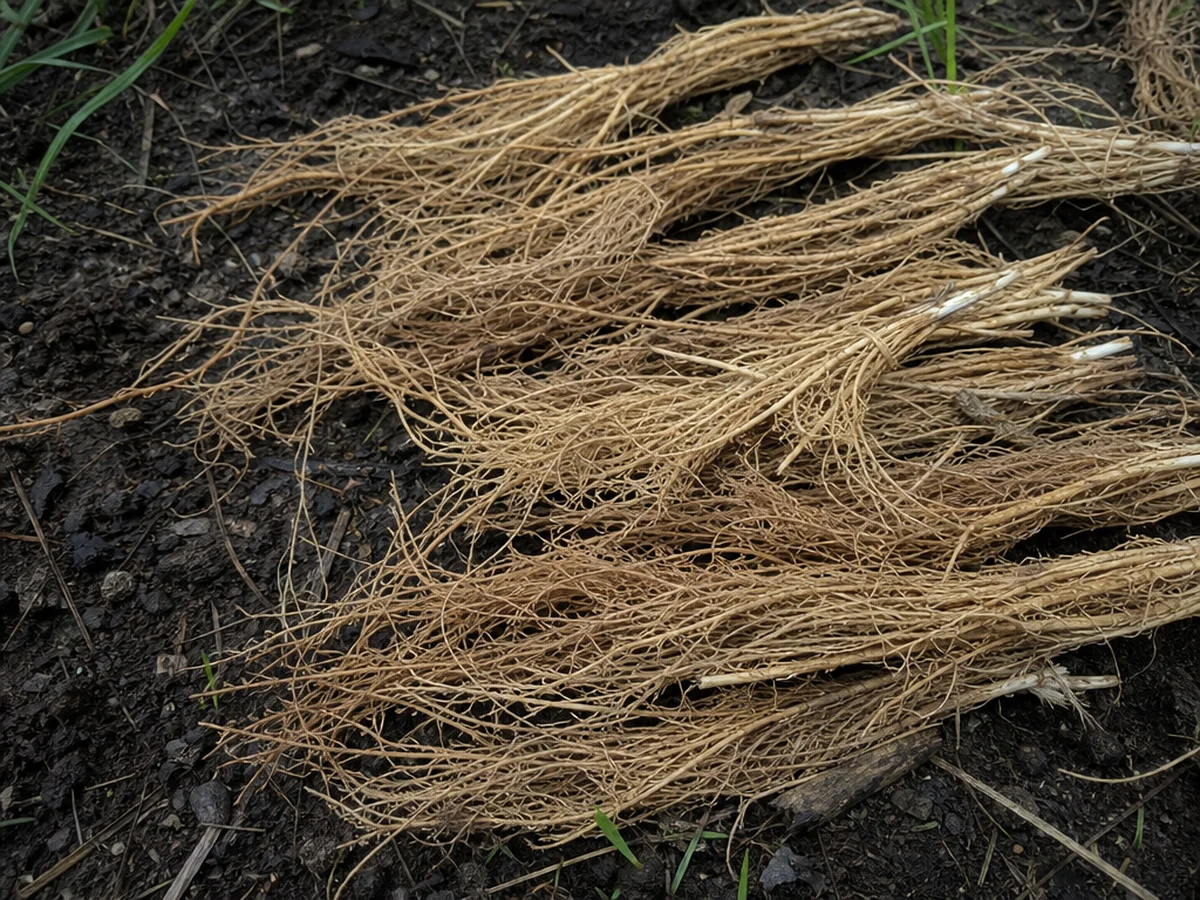
Here the evidence is solid, and it is about the plant. Vetiver is famously tough: PROSEA describes it tolerating poor, leached soils and heavy clays. For oil production it prefers light sandy ground, but the stated reason is practical. Sandy soil makes it easier to lift the smaller roots, which hold most of the oil. That is a harvesting argument rather than a chemistry one, and it is a good example of how a tidy terroir story can hide a plain farming fact.
What the oil itself looks like
The chemistry is where vetiver gets fascinating. A 2021 study of vetiver's smelling principle calls the oil a complex mixture of hundreds of molecules, one of the most popular perfumery materials and present in over a third of all fragrances. That complexity is exactly why two oils can smell different without anyone being able to point to one cause.
The trade handles origin differences with a standard. The catalogue entry for ISO 4716:2013 describes it as the quality and testing standard for vetiver essential oil, and it sets expected characteristics for oils from several named origins rather than one universal range. That tells you origin matters enough to need its own limits. It does not tell you the soil is why.
What we do with this
We sell a single vetiver essential oil, steam-distilled from roots, and we would rather describe it by what we can show. The Certificate of Analysis we publish for one batch lists a relative density of 0.993 at 20 C against a standard of 0.985 to 1.020, and a refractive index of 1.525 against 1.520 to 1.528. Those are useful numbers for checking an oil is in range, though two numbers cannot reveal a terroir. If you formulate and want a full chromatographic profile for the lot you are buying, ask us in writing through the contact page and get the answer in writing before you rely on it.
Smelling for yourself
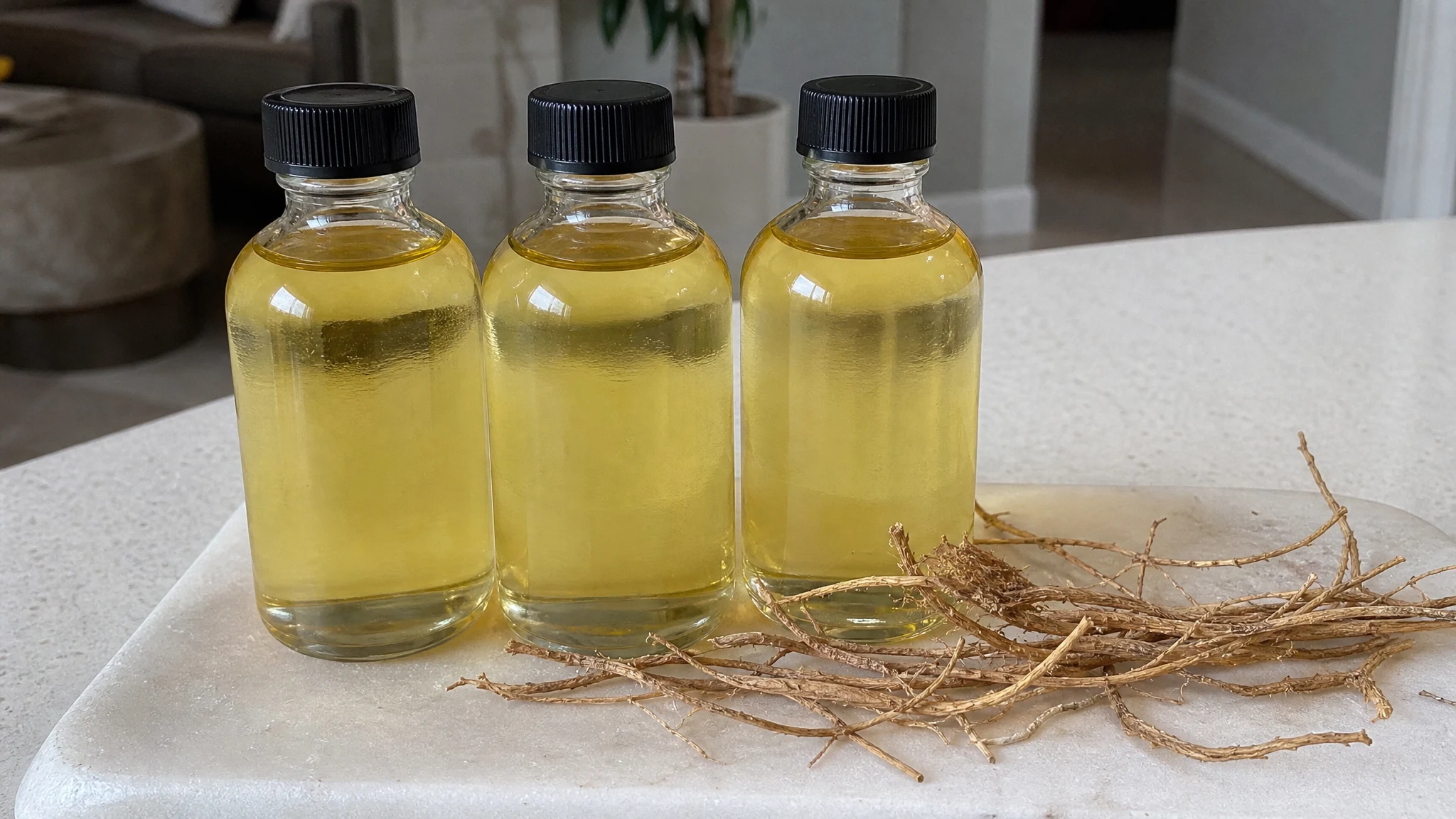
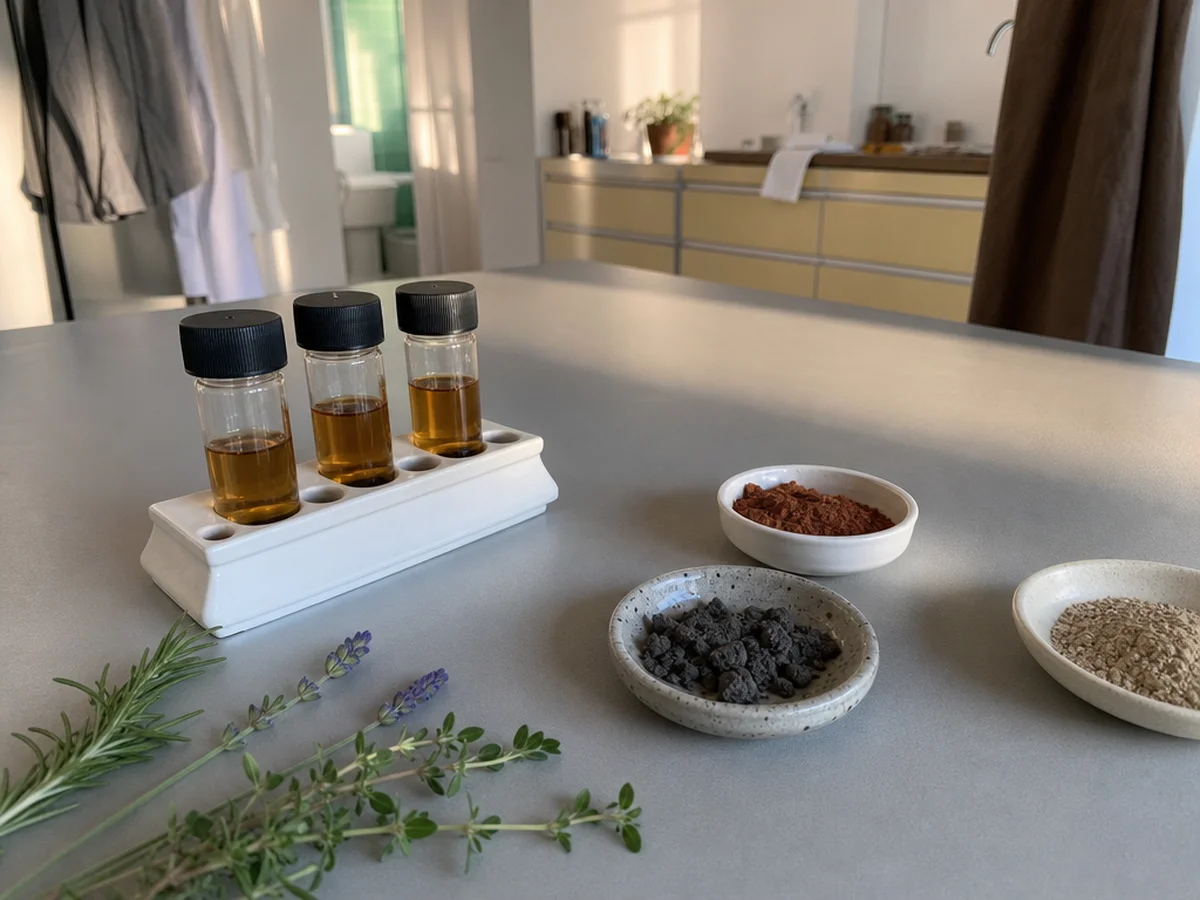
All this is much easier to grasp with a bottle open in front of you. Pour a single drop onto a blotter strip and give it a minute. Notice the first impression, usually deep and earthy, then the smoky-sweet edge, and then what is left an hour later. Look at the colour of the oil in the light, a deep amber to brown. Tip the bottle and watch how slowly it moves. Those are the things you can actually experience, and they are a nice reminder that a lot of vetiver's character lives in its weight and its slow, lingering finish.
How we would read a seller's story
When you read about any oil, ours included, we would suggest treating a lovely landscape description as scenery and a lot report as evidence. A story can tell you something about a place, and we enjoy a good one. It cannot tell you what is in your particular bottle. Our advice is to enjoy the story, then ask for the numbers, and to be happy when a seller says plainly what they do and do not know.
Three practical takeaways
- Treat an origin label as a starting point. The Haitian, Javanese and Indian differences are well documented, and we compare them in our origin comparison. Within one origin, harvest age and distillation can matter as much as the field.
- Be wary of soil-by-soil compound percentages. We found no source that supports them for vetiver.
- Read up on the compounds, not the map. Vetivone and khusimol explains what actually gives the scent its shape, and growing and harvesting vetiver covers the crop timeline.
Terroir may well leave a fingerprint on vetiver, and we would love to see someone measure it properly. Until then, the smartest question to ask about any bottle is how old the roots were, how they were distilled and what the lot report says.
Vetiver Essential Oil
Vetiver Essential Oil from our own shop, in sizes from 0.5 oz to bulk.
From $20.99
Shop Now →Sources & Further Reading
- PROSEA - Plant Resources of South East Asia, vetiver entry (de Guzman and Oyen, 1999)
- Other Uses, and Utilization of Vetiver: Vetiver Oil, U. C. Lavania, Third International Conference on Vetiver
- The Smelling Principle of Vetiver Oil, Unveiled by Chemical Synthesis, Ouyang et al., Angewandte Chemie, 2021
- ISO 4716:2013 - Vetiver Essential Oil Quality and Testing Standard, standards catalogue entry