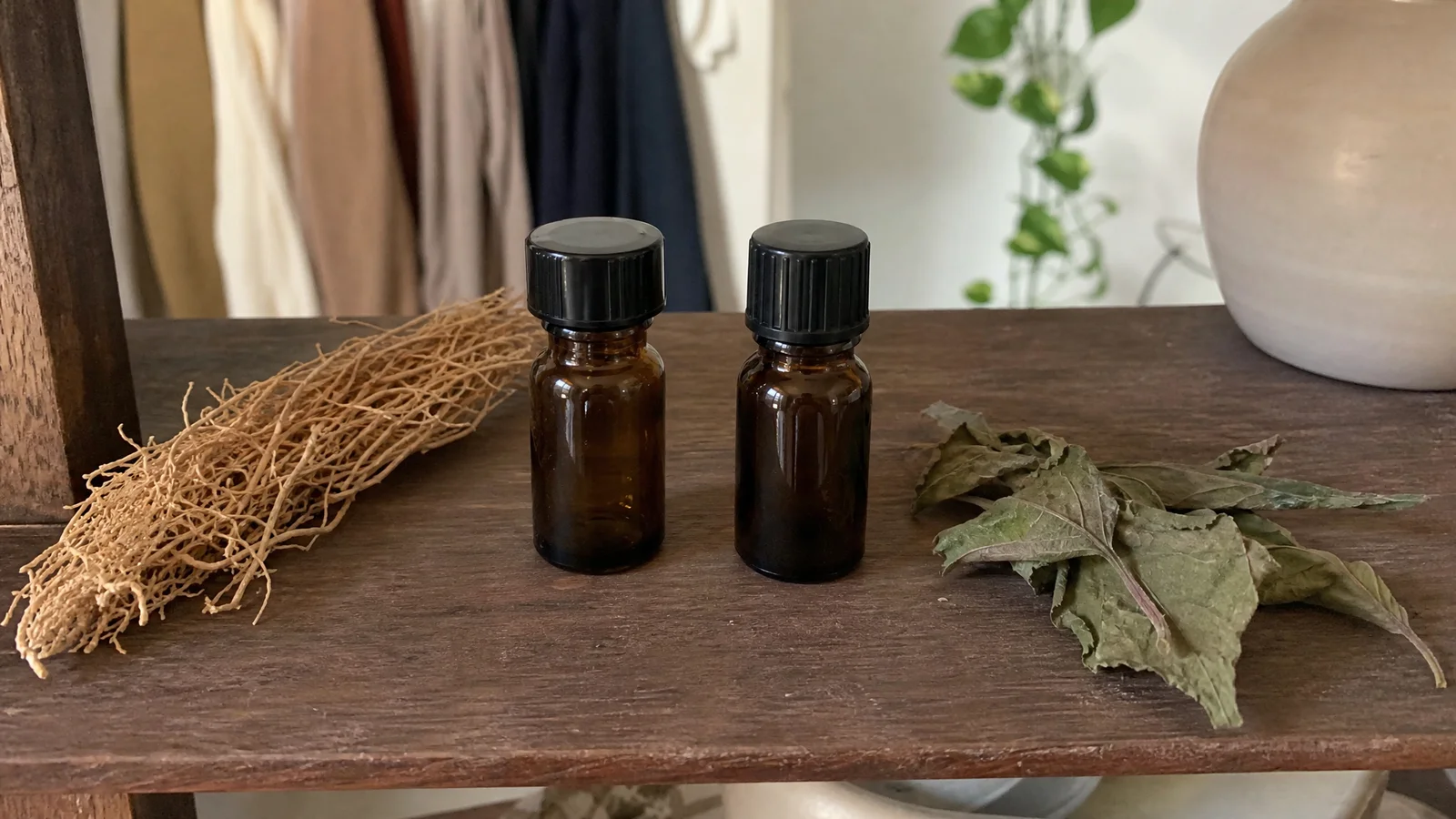
Vetiver vs Patchouli: Root Oil or Leaf Oil?
Say "earthy" to a perfumer and two bottles come to mind. Patchouli is the one with the head-shop reputation. Vetiver is the quieter cousin, woody and smoky. They sit close together on the scent map, yet they come from entirely different parts of different plants, and that difference shapes what you get.
Vetiver Essential Oil
Our own Vetiver Essential Oil, in sizes from 0.5 oz to bulk.
From $20.99
Shop Now →Leaves versus roots
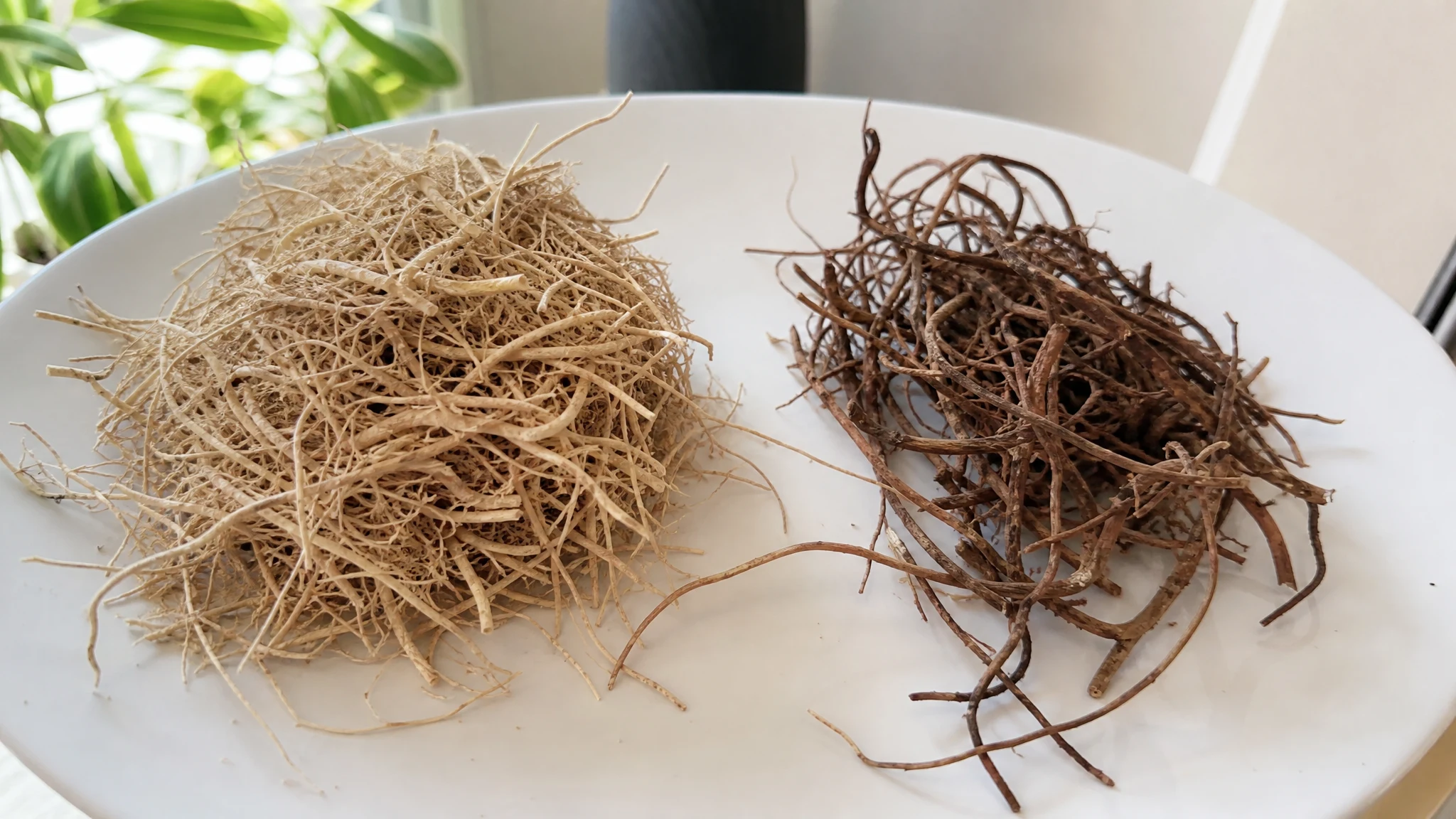
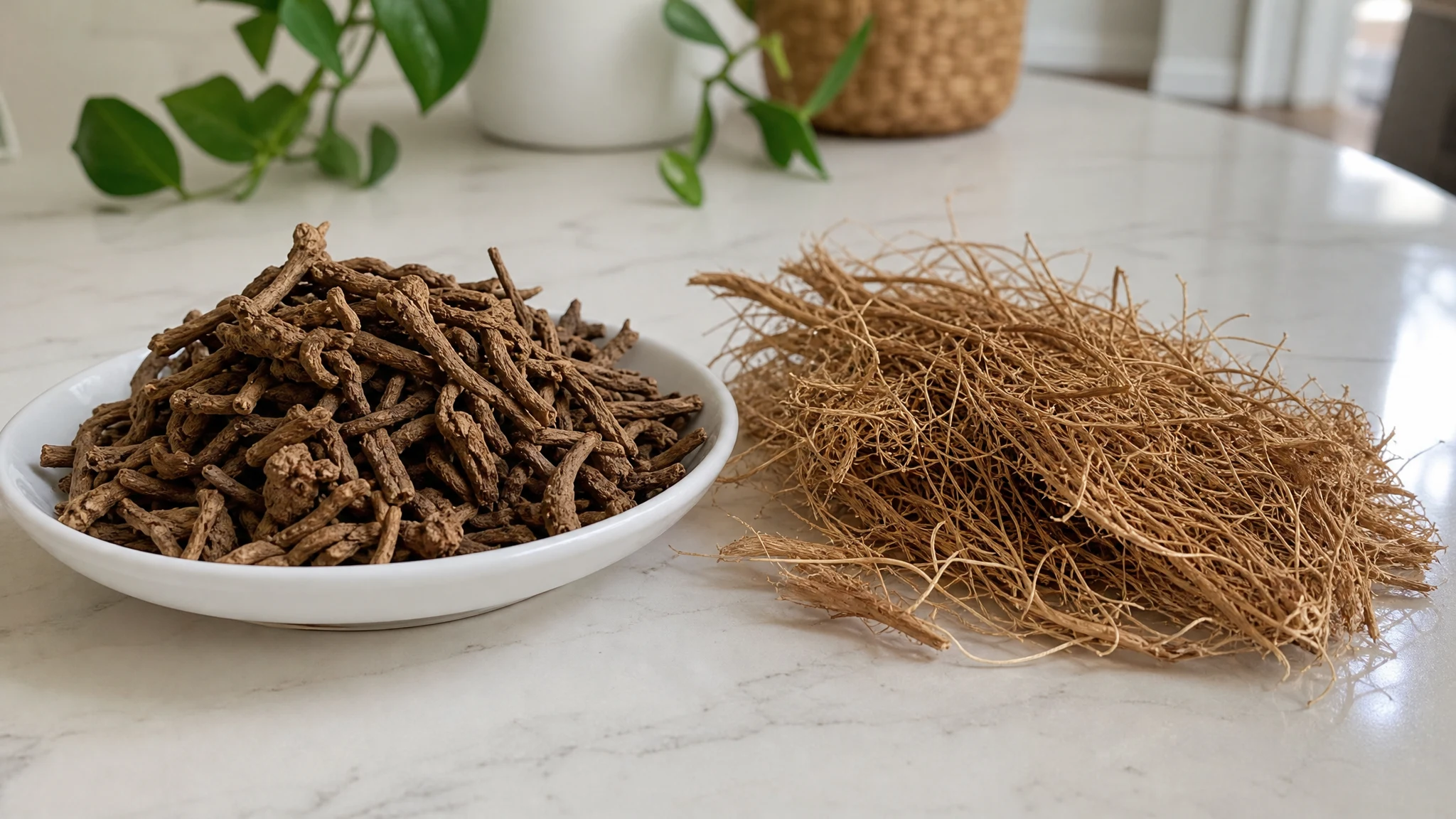
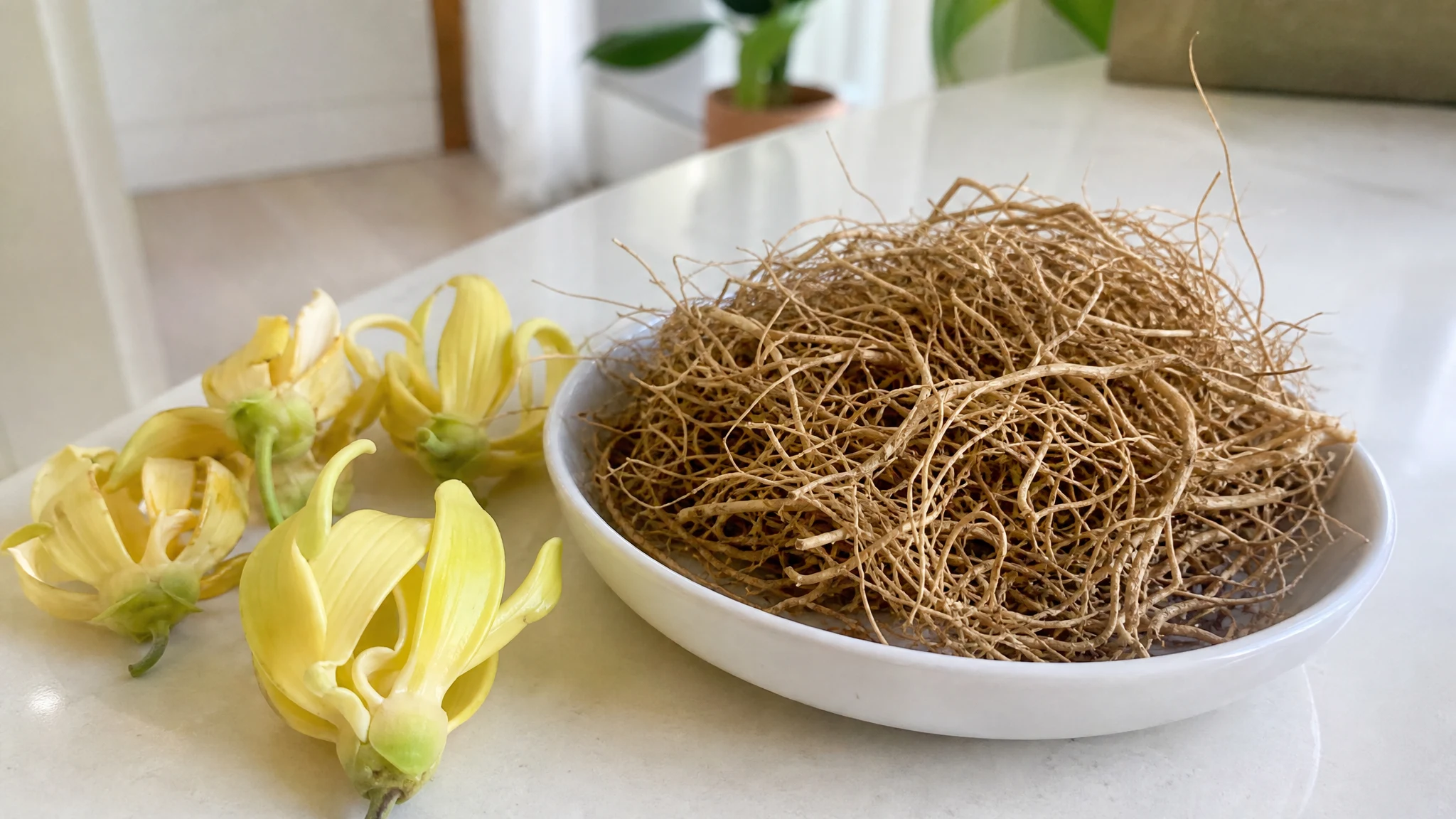
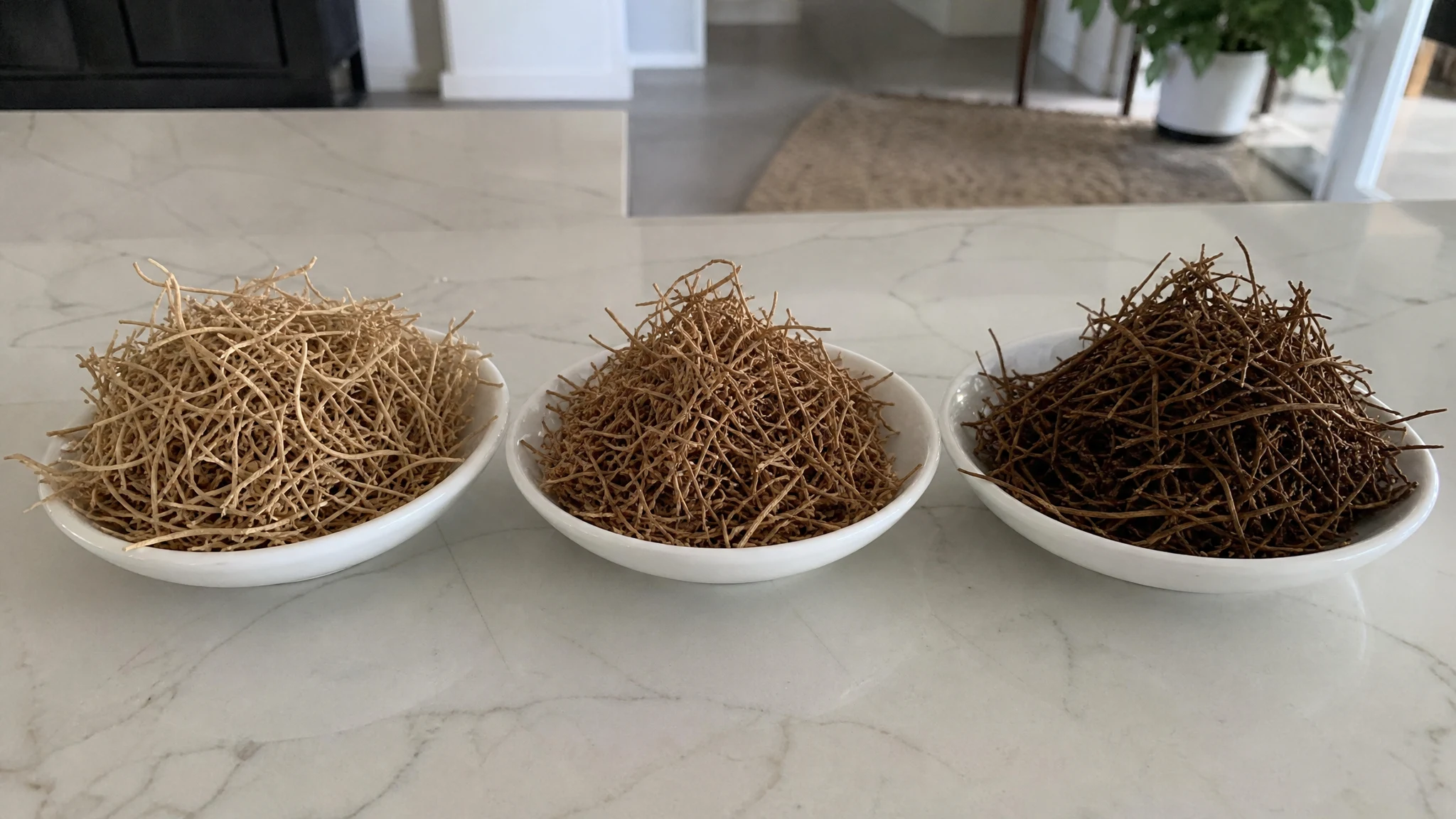
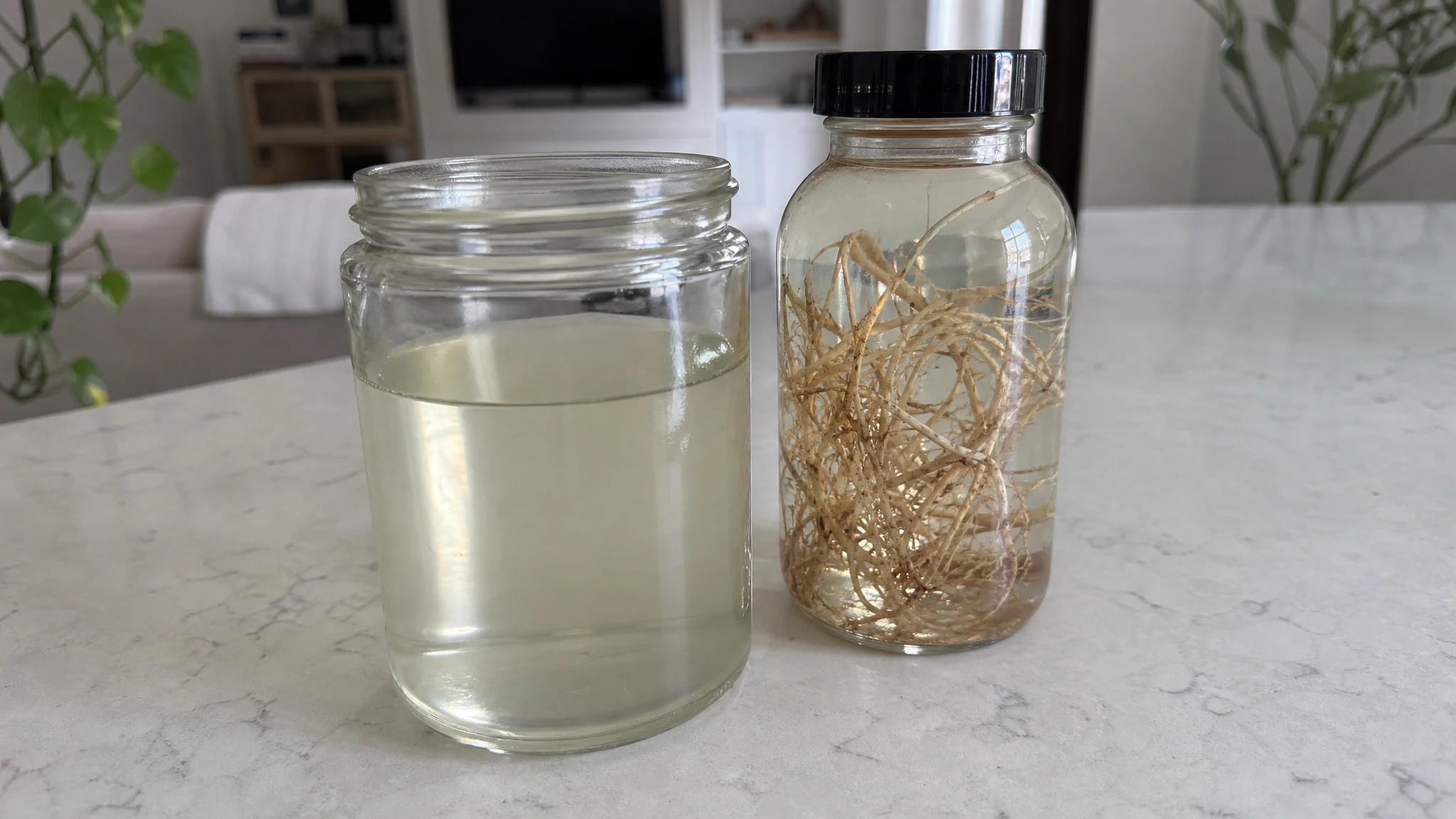
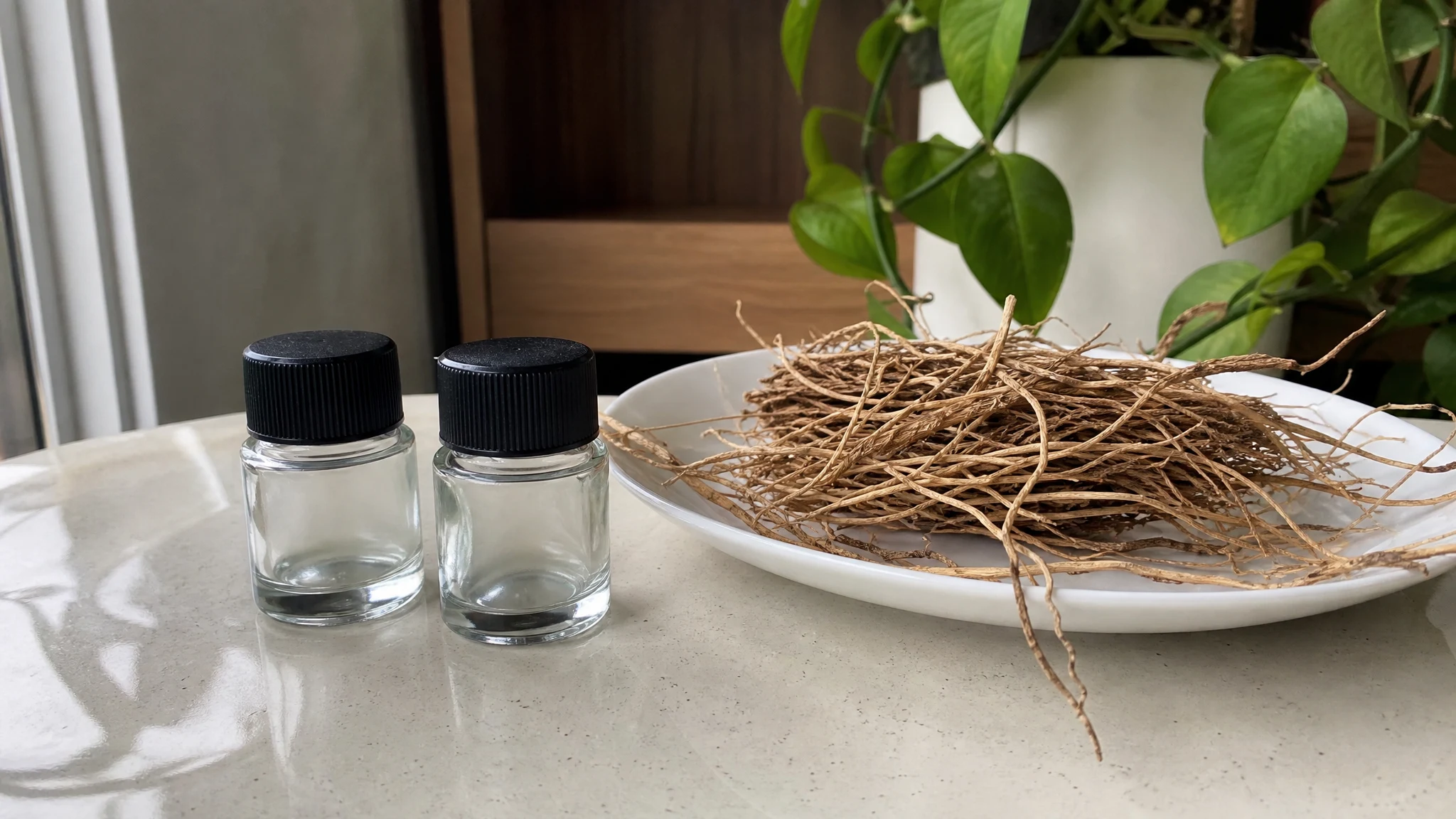
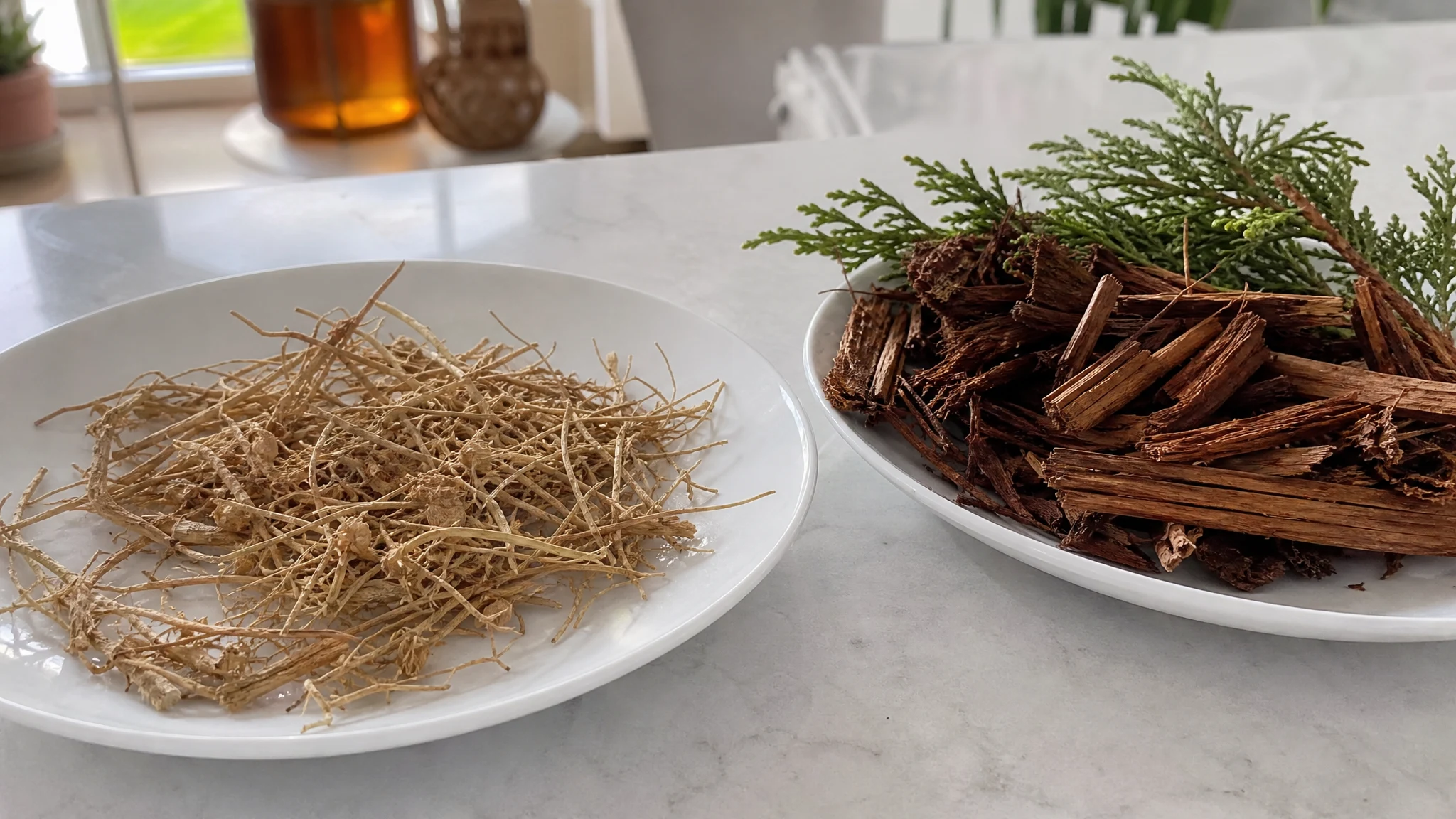
Patchouli oil is distilled from the leaves of Pogostemon cablin. A 2025 review of the plant describes patchouli alcohol as one of its characteristic compounds, alongside others such as pogostone and caryophyllene. Vetiver oil is distilled from the roots of a tall tropical grass, and ours is steam-distilled from those roots. A root oil and a leaf oil are built from different chemistry, so even when both read as earthy, expect them to pull in different directions. Smell them side by side and decide for yourself.
The trace molecule that makes vetiver
Vetiver has one of the more interesting scent stories in perfumery. Vetiver oil appears in over a third of all fragrances, and for decades nobody could say which molecule gave it its signature smell. In 2021 a research team finally showed by chemical synthesis that the answer is (+)-2-epi-ziza-6(13)en-3-one, a compound with an odor threshold of 29 picograms per litre of air. That is an astonishingly small amount. It also means that the character of a vetiver oil is carried by trace molecules, so the percentage of one named compound on a spec sheet does not tell you how a bottle will smell. Your nose is a better first test than a single number.

Putting them side by side on paper
The quickest way to understand the difference is to put one drop of each on a separate paper strip, label them, and carry them through an afternoon. Smell them straight away, again after a few minutes and once more after a few hours. You may find that one opens loud and fades while the other sits quietly; which is which is for your nose to say. Between sniffs, take a breath of fresh air so the two do not blur together.
It is a small experiment, but it tells you more than any description can. People often assume two earthy oils will smell alike, and the paper tends to prove otherwise. Vetiver is thick and slow-pouring, so a single drop is plenty.
How to think about the choice
Pick by the job.
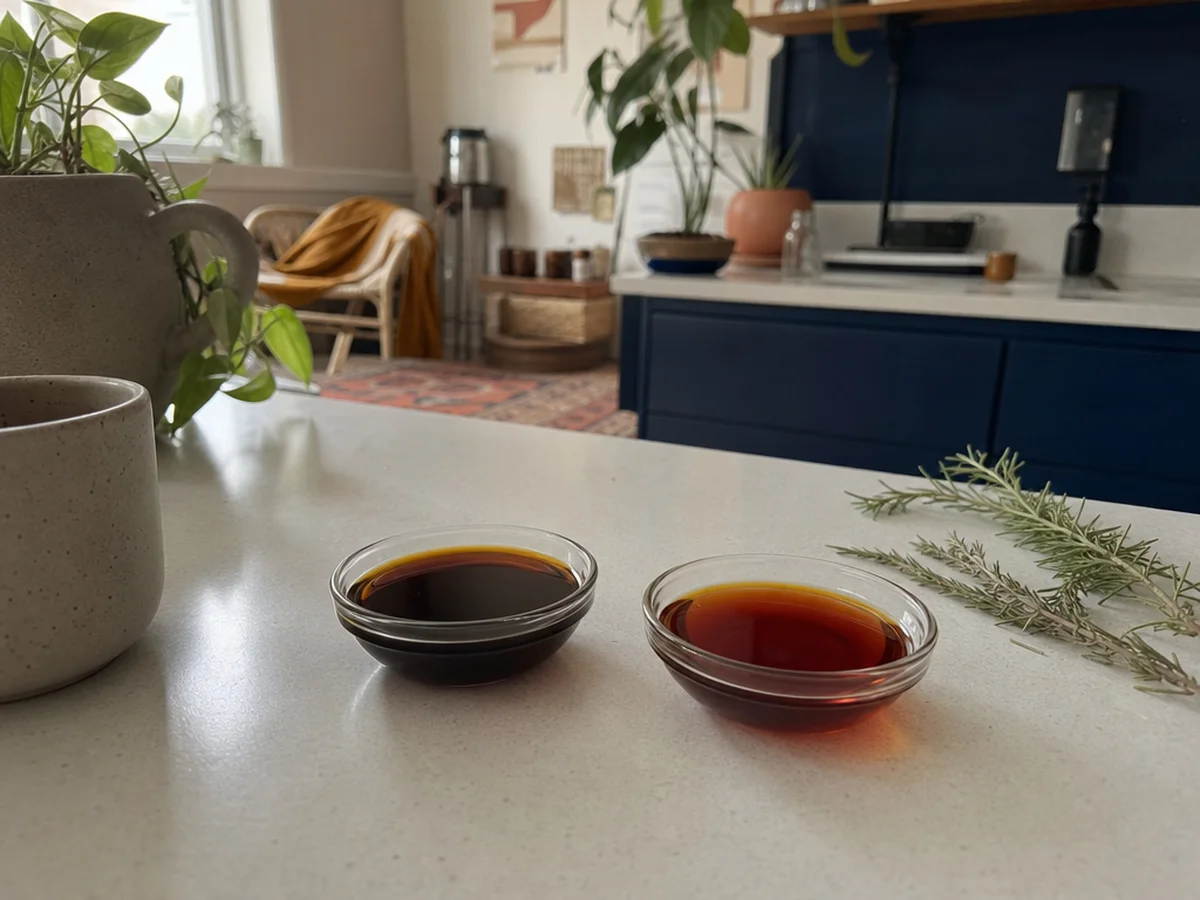
- A woody, smoky base for a perfume. Vetiver. We describe ours as a deep, earthy, smoky-sweet base note, and formulators often use it as a natural fixative. Our guide to layering vetiver shows how little you need.
- A patchouli character. We do not sell patchouli, so smell it first and choose a supplier who names the species and shares the batch report.
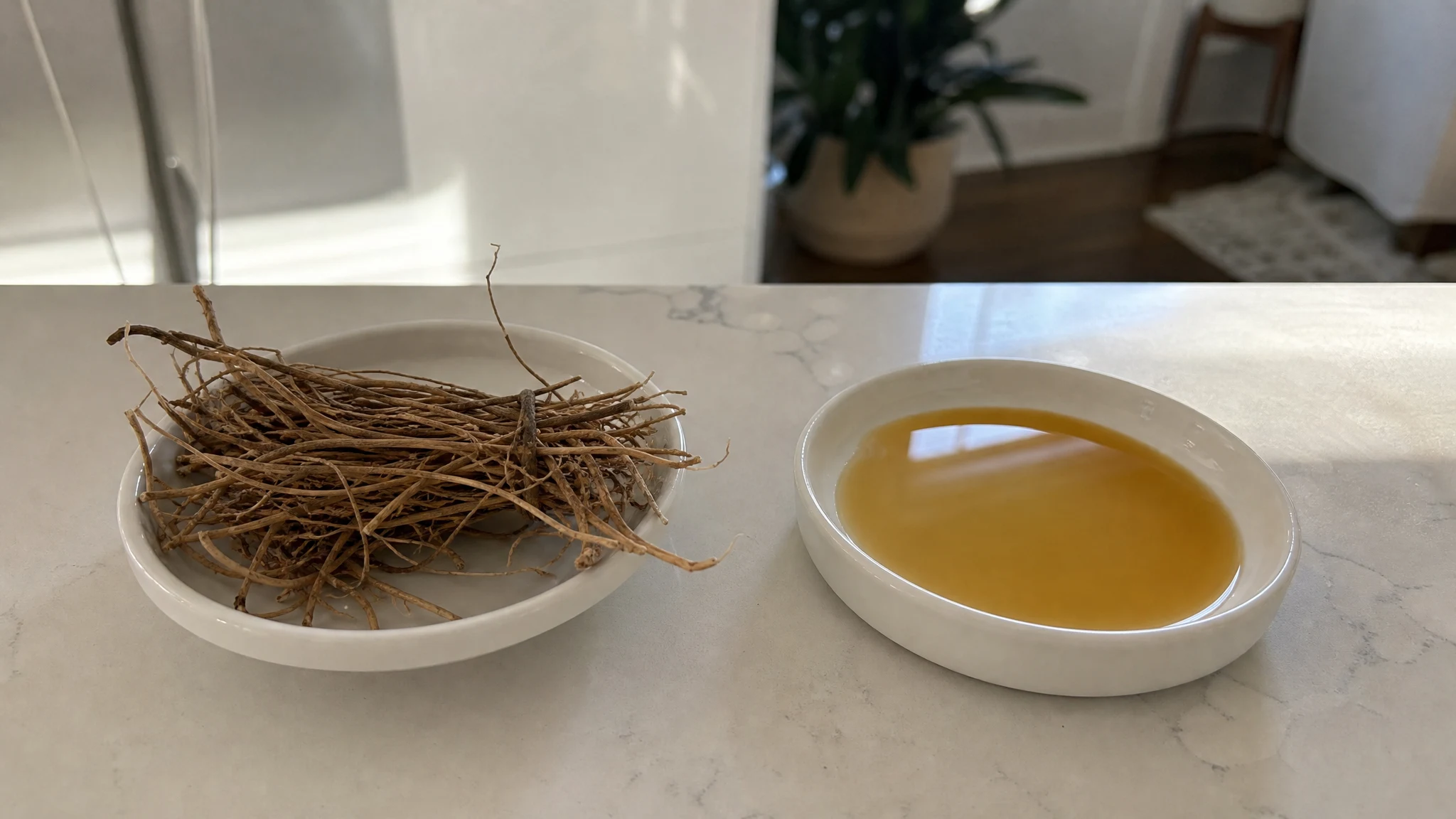
- Soap, candles, home fragrance. Either oil can be used in these, but follow the IFRA category limit in your supplier documents and test small. Vetiver is a deep amber-to-brown, so it can tint pale soaps and candles. We do not sell wax, soap base or other supplies.
- A blend of both. They get on well. Patchouli is one of the oils we list as a good vetiver partner, and our blending guide covers ratios.
What we like about vetiver in this pairing
Here is our own view, offered as a recommendation and not as a result. We like vetiver best as a quiet foundation: it does not need to be the star of a blend, and a small amount can give brighter oils something to stand on. If you want patchouli's character front and centre, let it lead and use vetiver underneath. If you want a smoky base with other oils on top, flip it around. Either way, start with less than you think you need, because vetiver is strong and a little goes a very long way.
A word on evidence
You will find lots of claims online that patchouli or vetiver does this or that for mood, sleep or the skin. The patchouli review itself says that therapeutic uses still need scientific validation, and that is the honest summary for both oils. The vetiver research is mostly rat studies, one inhaled and another on sleep and waking, and nothing that compares the two oils. So we sell ours for its aroma and for cosmetic and fragrance use, and we suggest you choose between these two on scent, not on promises.
Using vetiver on skin
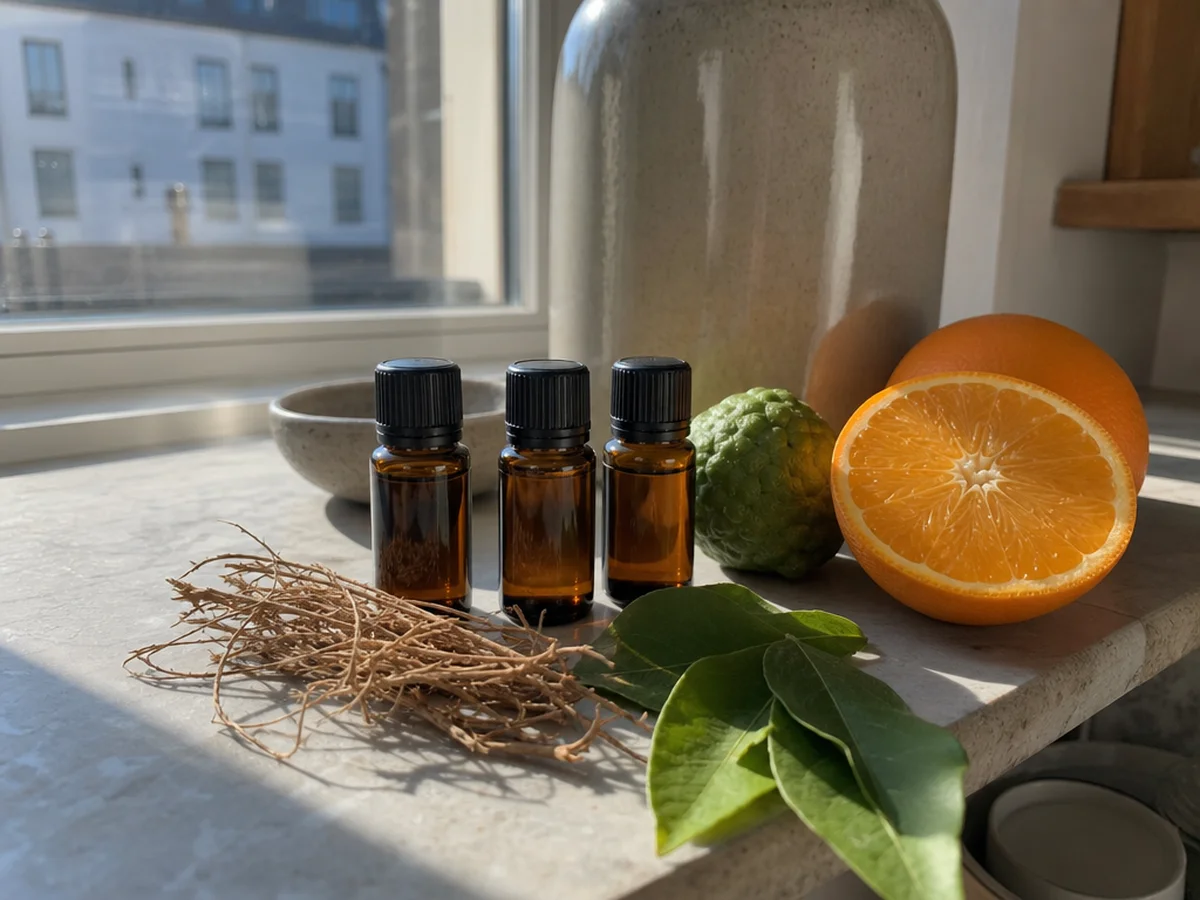
Our oil is sold neat, so you do the dilution: we recommend 0.5% to 2% in a carrier oil, and we would start at 0.5% and patch test. Keep it away from eyes, children and pets, and never take it by mouth. Anyone pregnant, nursing, on medication or with a skin condition should ask a healthcare provider first. Our safety guide has the details, and our piece on vetivone and khusimol goes deeper into the chemistry.
If you are buying vetiver in quantity or want test data for your lot, ask us in writing through the contact page. The Certificate of Analysis we publish for one batch lists density and refractive index.
The good news is that a bottle of each costs little to compare, and your nose will settle the question faster than any article can.
If you are new to both, our advice is to take your time. Give each oil a few separate sessions on different days, because your nose is not the same on a tired Tuesday as on a relaxed Saturday. The oil you keep reaching for is usually the one you will enjoy using.
Vetiver Essential Oil
Vetiver Essential Oil from our own shop, in sizes from 0.5 oz to bulk.
From $20.99
Shop Now →Sources & Further Reading
- Mrisho II et al., Unlocking the Therapeutic Potential of Patchouli Leaves: A Comprehensive Review of Phytochemical and Pharmacological Insights. Plants (Basel), 2025
- Ouyang J et al., The Smelling Principle of Vetiver Oil, Unveiled by Chemical Synthesis. Angew Chem Int Ed Engl, 2021
- Saiyudthong S et al., Anxiety-like behaviour and c-fos expression in rats that inhaled vetiver essential oil. Nat Prod Res, 2015
- Cheaha D et al., Modification of sleep-waking and electroencephalogram induced by vetiver essential oil inhalation. J Intercult Ethnopharmacol, 2016