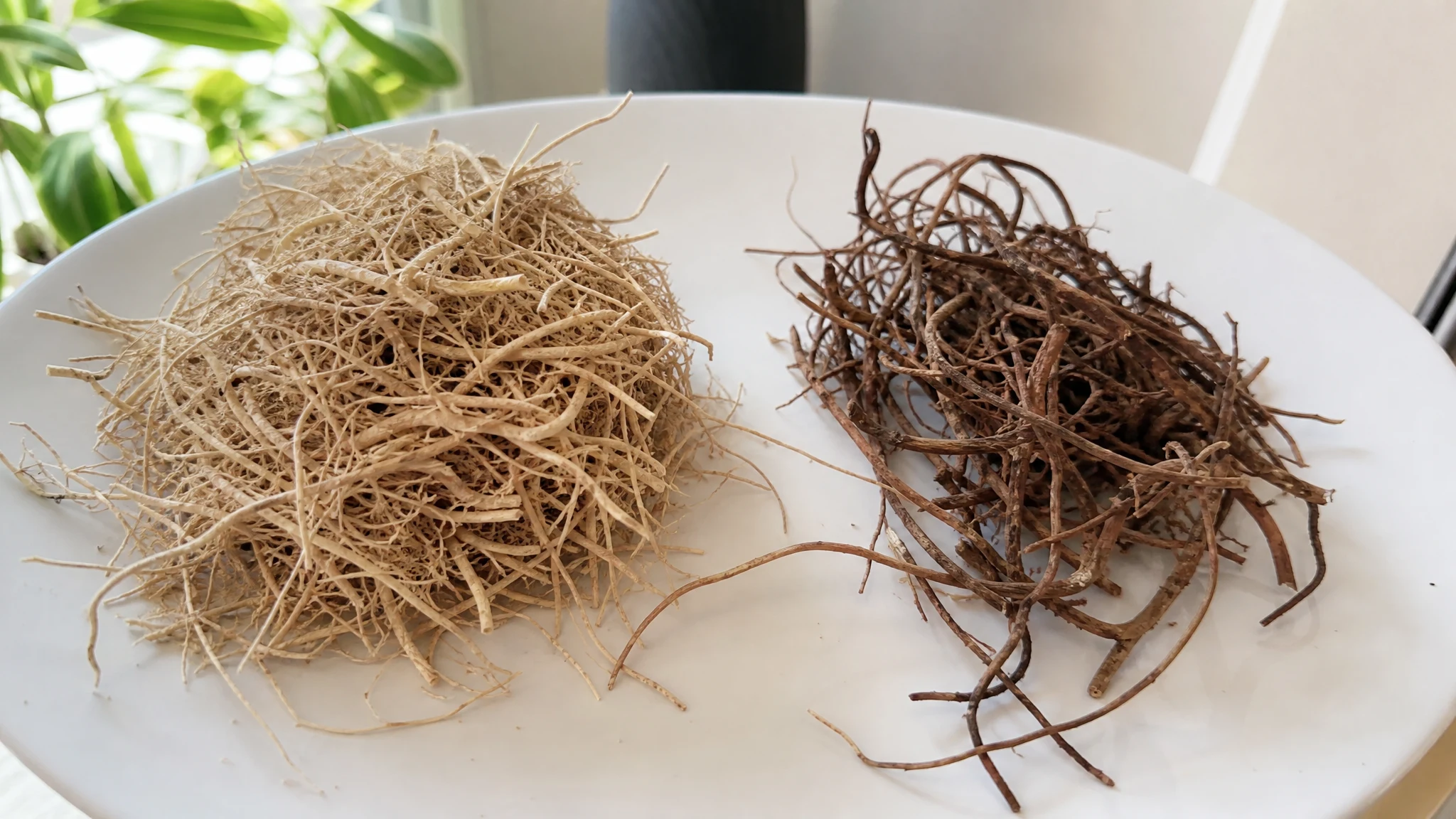
Vetiver vs Spikenard: Two Root Oils, Two Supply Stories
Spikenard and vetiver are both distilled from roots, and both turn up on lists of heavy, earthy oils. If you are choosing between them, the scent is the fun part. The supply is the part worth reading about first, because the two plants sit in very different places on the conservation map.
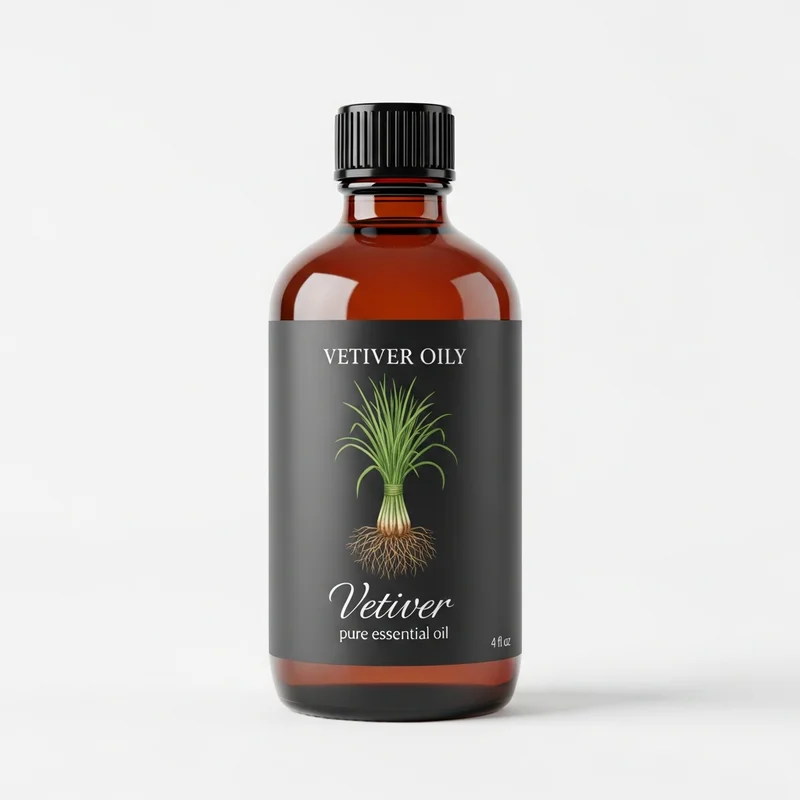
Vetiver Essential Oil
Our own Vetiver Essential Oil, in sizes from 0.5 oz to bulk.
From $20.99
Shop Now →Why spikenard comes with questions
Spikenard oil comes from Nardostachys jatamansi, a Himalayan plant that grows at high elevation on rocky ground. Robert Tisserand, writing for the Tisserand Institute, describes it as a species under real pressure. His article reports that the IUCN classed it as critically endangered in 2015, that CITES has listed it since 1997 and extended the listing from roots to the essential oil in 2007, and that most of the oil comes from wild-collected plants. Because the root is the part used, the whole plant is taken, and recovery is slow. He also reports that Nepal moved in 2017 to implement CITES locally, though he could not verify the law itself, and that a US case that year involved a company exporting spikenard oil from Nepal without the required permits.
This is one expert's article, so we treat the details as his reporting. But the practical lesson is clear. If you are buying spikenard, you are entitled to ask where the roots were collected, whether they were wild or cultivated, and whether the exporter held the right permits. A seller who can answer those questions in writing is telling you something good.
What we say about vetiver
Vetiver is a grass grown in several tropical countries and processed into oil on a large scale; a 2021 paper describes it as produced on a multiton scale and used in over a third of all fragrances. Ours is steam-distilled from roots. We make no sustainability, organic or fair-trade claim for it. If environmental questions matter to you, put them to every supplier you consider, us included, and ask for answers in writing through our contact page.
What the lab papers can tell you
A 2026 analysis of spikenard oil identified 81 constituents by gas chromatography with mass spectrometry and measured three major sesquiterpenones across 38 batches. Their contents ranged widely, the first from 0.0804% to 0.4876%, so batches of spikenard oil can differ noticeably. The paper presents this as a quality-control method, not as a statement about what the oil does for a person.
For vetiver, the Certificate of Analysis we publish covers one batch, with density and refractive index. If you need a chemical profile for your lot, ask us in writing before you rely on one. For vetiver chemistry in general, see our chemistry overview.
The "grounding" question
Both oils get described as grounding, and it is a lovely word for a scent. As a research claim, it is thin for both. Vetiver has two rat studies: one in which inhaling the oil produced an anxiolytic-like profile on a maze test, and one in which rats stayed awake longer and had less slow-wave sleep. They point in different directions, and neither involved people. We know of no human trial of either oil and nothing comparing the two, so we treat "grounding" as a description of how a smell feels, not as a finding. If you are dealing with persistent stress or sleep problems, talk to a physician.
Using vetiver
Our oil is sold neat, so you handle the dilution: we recommend 0.5% to 2% in a carrier oil, would start at 0.5% and patch test, and keep it from eyes, children and pets. We do not give guidance for spikenard, because we do not sell it and have no verified dermal figure for it. If you are pregnant, nursing or taking medication, check with your healthcare provider before using any essential oil; our safety guide covers what we can say about vetiver.
A heavy root oil is good for perfume bases and wax. It is thick and slow to pour, so warm the bottle before measuring. See our layering guide and our comparison with valerian, another root-derived plant people ask about.
On the nose and on the shelf
Heavy root oils can feel overwhelming in a small room, and vetiver is no exception. A single drop on a paper strip, waved a few inches from your face, is a gentle way to meet it. Come back after a few minutes and again after an hour; deep, earthy oils often reveal different sides as they settle. Vetiver is thick and slow-pouring, so warm the bottle in your hands and take your time.
When you do buy any root oil, jot down what the label says: the plant, the part used and any origin the seller gives, with the date. Six months later, when you want to compare a new bottle, you will be glad of the note. Good records are a quiet kind of care, and they cost nothing.
How we would choose
For a root-based base note, the question is not just which smells better but which you can buy with confidence. Ask every seller for the plant, the origin and the lot report. If spikenard appeals, make sure the answers you get are specific. If vetiver does, you know where to find us.
Whichever root oil you end up with, a drop on a paper strip and a few minutes of patience will tell you more than any list of notes.
Vetiver Essential Oil
Vetiver Essential Oil from our own shop, in sizes from 0.5 oz to bulk.
From $20.99
Shop Now →Sources & Further Reading
- Tisserand Institute, Spikenard and Sustainability
- Wang R et al., A rapid and environmental-friendly method for characterization and determination of the major sesquiterpenoid constituents in the essential oil of Nardostachys jatamansi DC. J Chromatogr A, 2026
- Ouyang J et al., The Smelling Principle of Vetiver Oil, Unveiled by Chemical Synthesis. Angew Chem Int Ed Engl, 2021
- Saiyudthong S et al., Anxiety-like behaviour and c-fos expression in rats that inhaled vetiver essential oil. Nat Prod Res, 2015
- Cheaha D et al., Modification of sleep-waking and electroencephalogram induced by vetiver essential oil inhalation. J Intercult Ethnopharmacol, 2016