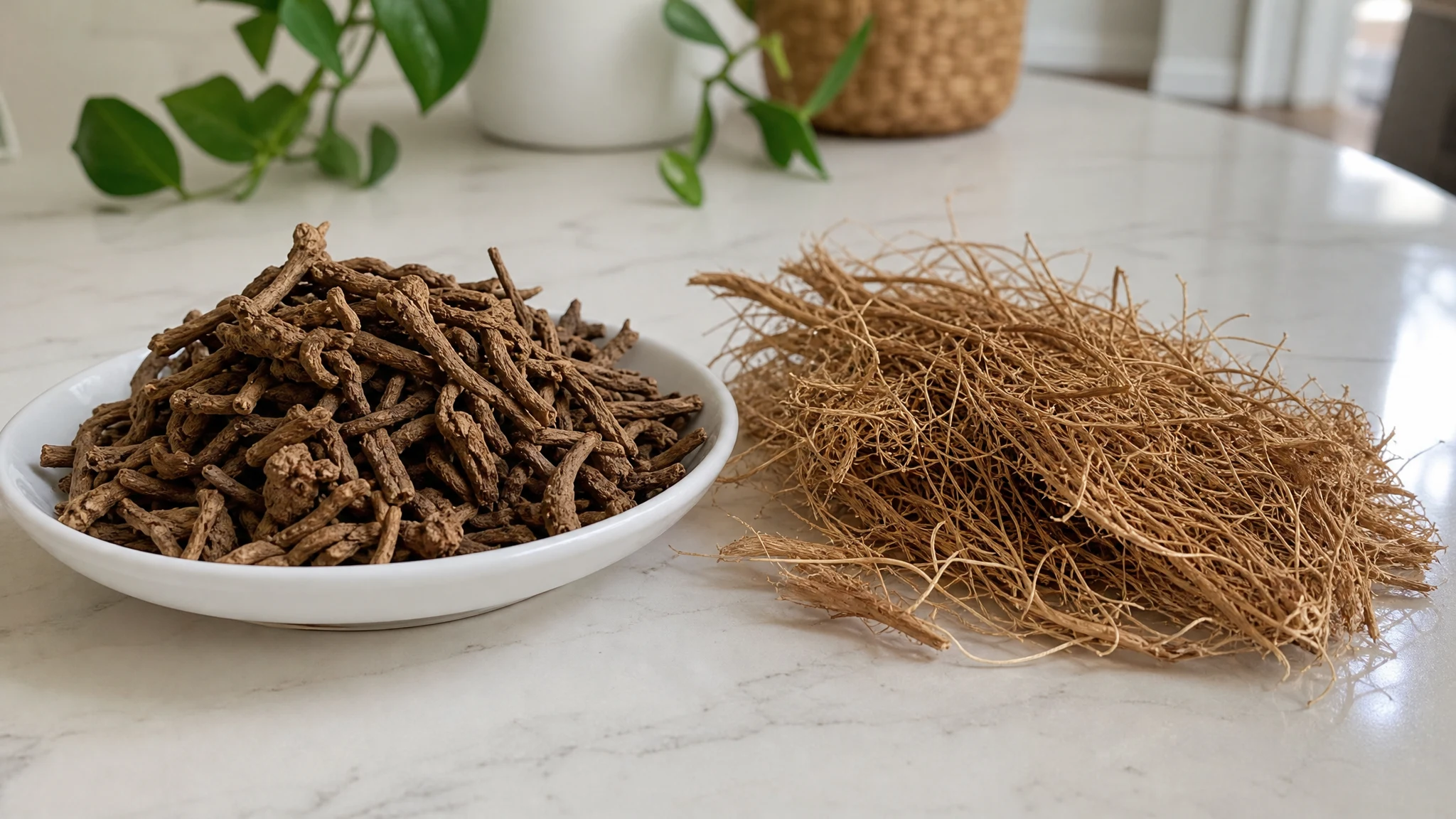
Vetiver Oil vs Valerian Root: What Sets Them Apart
Put valerian and vetiver side by side and they look like two root-based sleep aids. They are really two different things. Valerian, in nearly every study, is an extract of the root swallowed as a capsule or tincture. Vetiver, in our shop, is a steam-distilled oil that you smell or dilute onto skin. Different preparation, different route, different evidence.
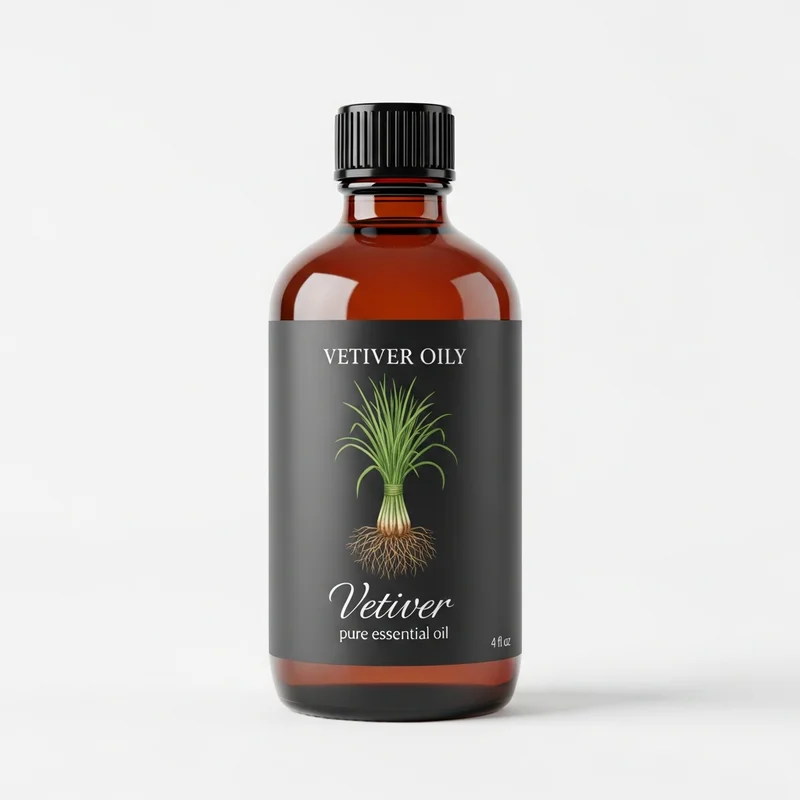
Vetiver Essential Oil
Our own Vetiver Essential Oil, in sizes from 0.5 oz to bulk.
From $20.99
Shop Now →What the valerian research says
The National Center for Complementary and Integrative Health calls the evidence on valerian for sleep problems inconsistent, and notes that the American Academy of Sleep Medicine's 2017 guideline recommended against using it for chronic insomnia in adults. It is worth reading that guideline carefully. It is a weak recommendation, which the authors explain reflects a lower degree of certainty, not a conclusion that the herb is ineffective.
The best-known supportive paper is a 2006 review that pooled 16 placebo-controlled trials with 1,093 people. Six trials that recorded a yes-or-no measure of better sleep showed a benefit, but the authors also reported that most studies had significant methodological problems, that doses and preparations varied widely, and that publication bias was likely. The picture since then is similar in spirit: the clinical results depend heavily on the preparation, dose and person.
What vetiver has
The vetiver evidence is two rat studies, and the one about sleep points the opposite way from what the marketing suggests. In it, rats that inhaled vetiver oil spent more time awake and less time in slow-wave sleep, and the authors described the oil as refreshing for alertness. In the second, rats that inhaled it at a 2.5% concentration showed an anxiolytic-like profile on a maze test. We know of no human sleep trial of vetiver oil on its own. A 2026 study of intensive care nurses used vetiver as part of a nightly massage and measured sleep quality and fatigue; scores improved in every group including the placebo group, which is a useful reminder of how much a bedtime routine can do by itself.
Why we would not call one a substitute for the other
Four differences get in the way of any direct comparison:
- Material. Valerian studies use root extracts. Nothing we know of transfers those results to a distilled oil.
- Route. Swallowing a standardised extract and smelling a vapour are not the same exposure.
- People. Valerian trials enrolled adults with sleep complaints. The vetiver studies used rats.
- Measure. Valerian studies relied largely on reported sleep quality. Vetiver's study used brain-wave recordings.
So we do not describe vetiver as a gentler valerian, or the reverse. No head-to-head study exists.
Reading the label, not just the plant
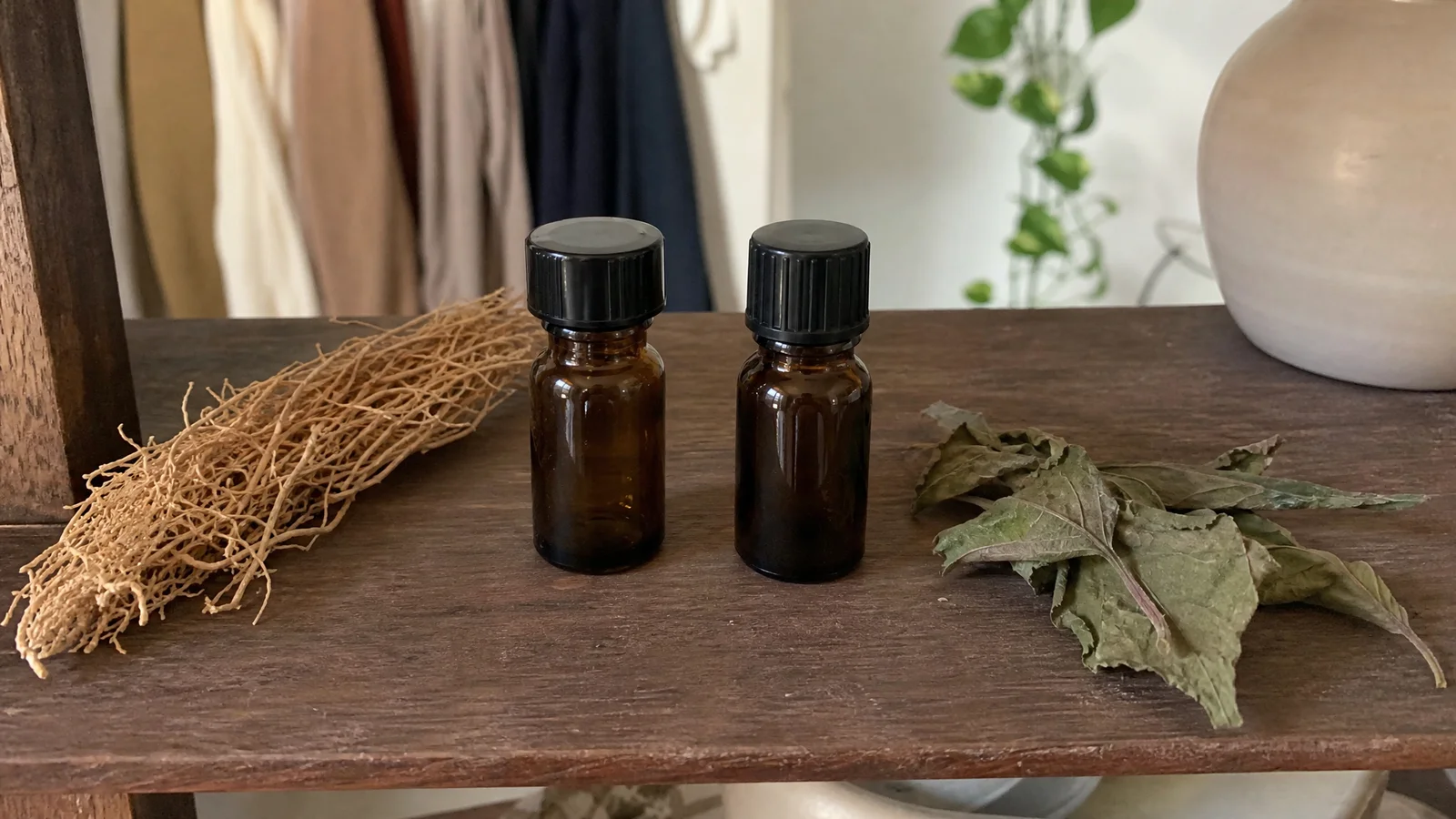
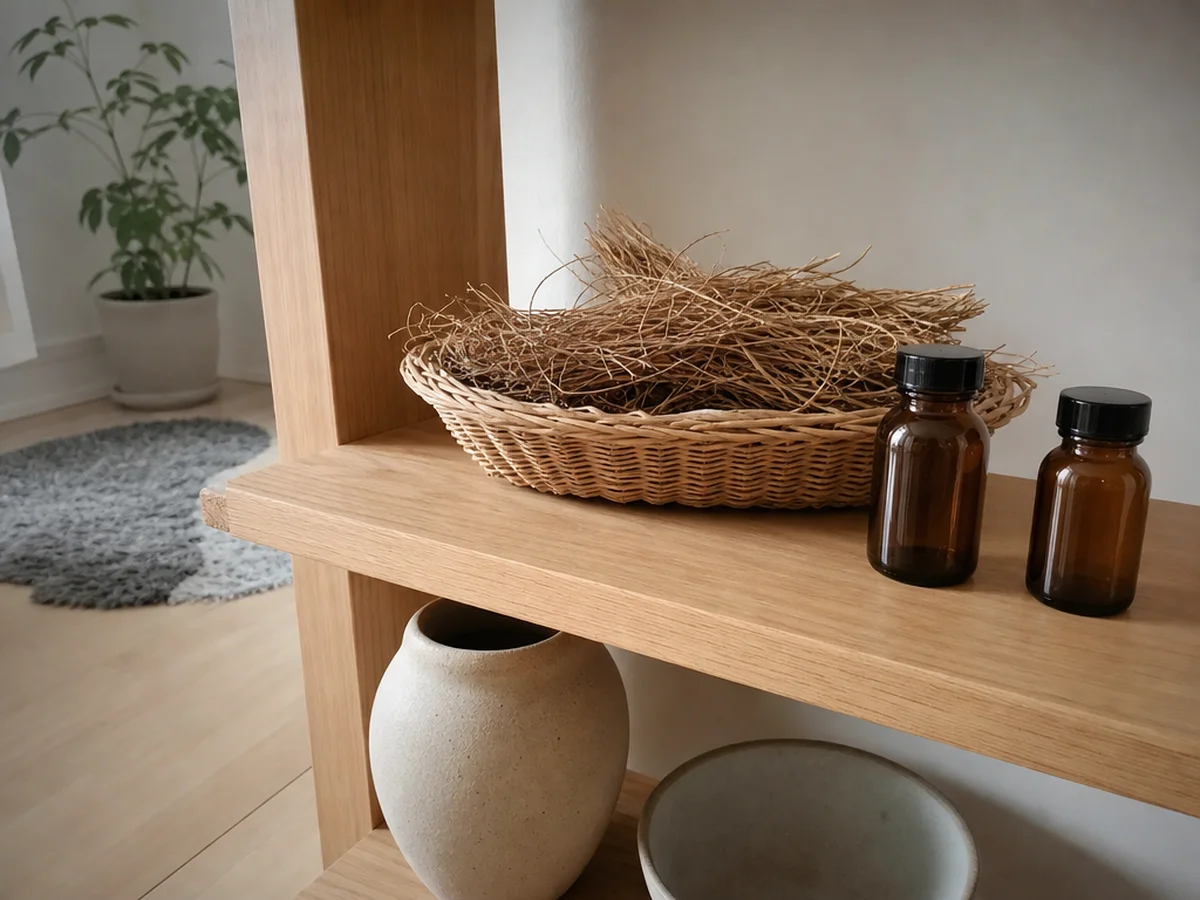
A useful habit when two products share a plant family or a reputation is to read each label as if you had never heard of either. Valerian is sold to be swallowed, as capsules or tinctures, and a pharmacist can tell you how it sits alongside anything else you take. Our vetiver arrives in an amber glass bottle with a black label, as a neat essential oil for aromatic and cosmetic use. The two shelves do not overlap, and that is a good thing to notice before you shop.

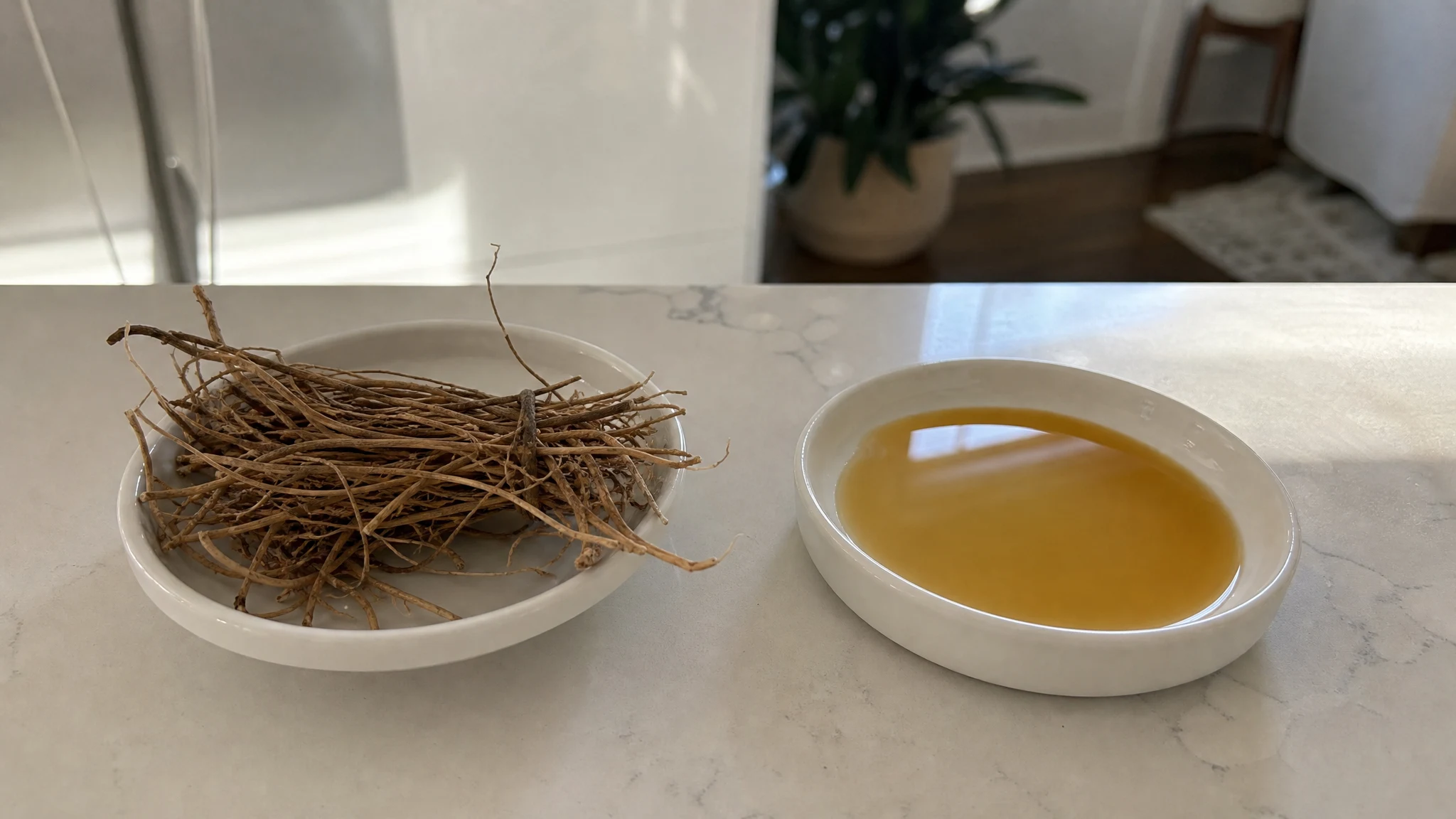
Vetiver is thick and slow-pouring. Warm the bottle in your hands for a few minutes, use a pipette for control, and remember that a little goes a very long way.
If sleep is the question
Persistent trouble sleeping deserves a conversation with a physician or sleep specialist, who can look for causes that a supplement or a scent will not touch. Valerian is a swallowed product, so a pharmacist is also a good person to ask, especially if you take medication. We sell an external, cosmetic oil, and we do not offer vetiver as a sleep product.
If you simply like the smell
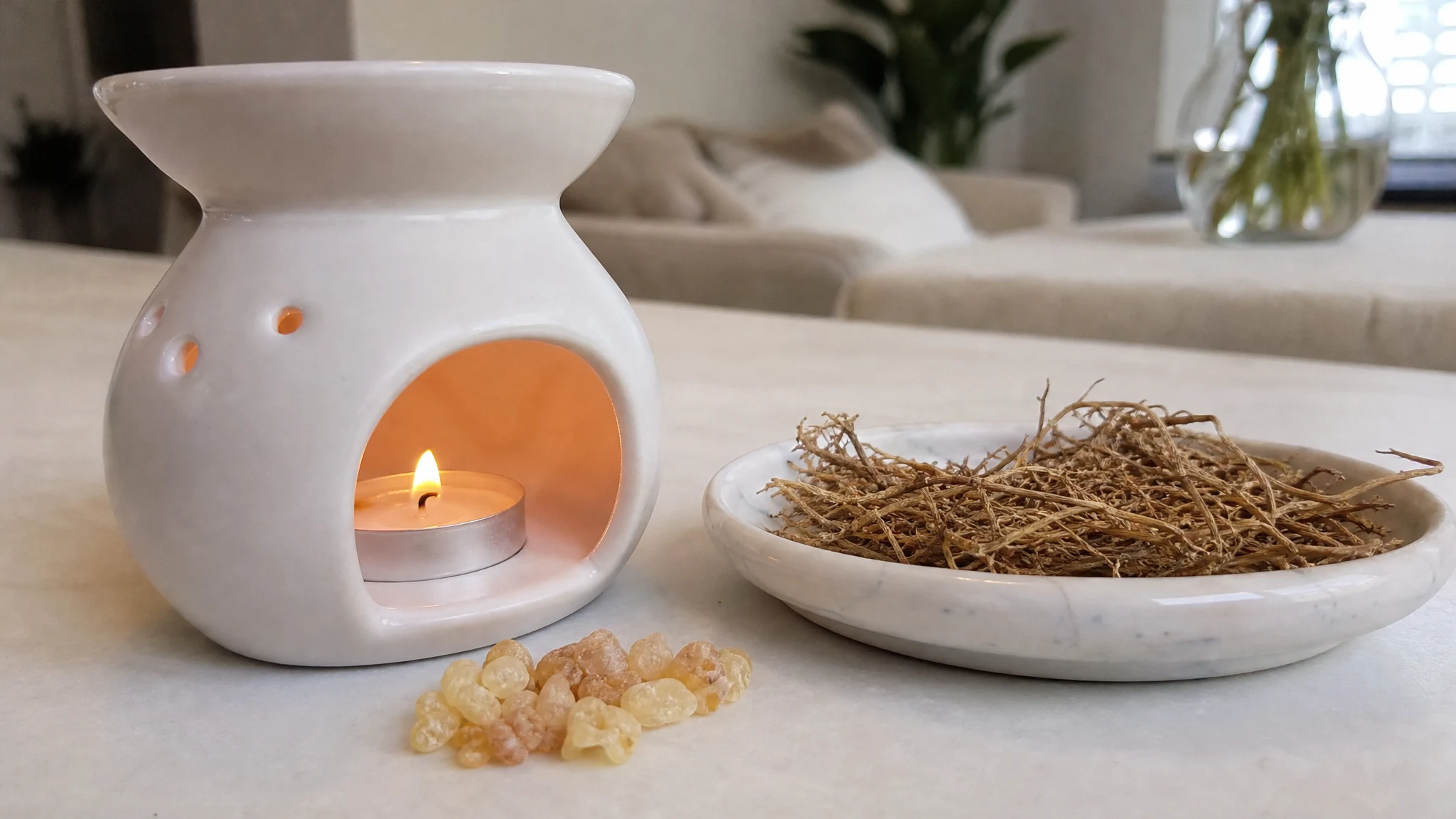
That is a fine reason to buy it. Vetiver is earthy and smoky-sweet, and some people enjoy it in an evening diffuser or in a diluted massage oil. A reed or warm-air diffuser suits it best, because the oil is thick and slow-pouring; our diffuser guide explains. Our oil is sold neat, so dilute to 0.5% to 2% in a carrier oil for skin, start at 0.5%, patch test first, and keep it away from eyes, children and pets. Never take it by mouth. Our safety guide walks through the steps, and our deeper pieces on vetiver and sleep and vetiver and cedarwood cover the studies in more detail.
If a scent ritual appeals to you, keep it plain: a lamp, a quiet corner, perhaps a paper strip with a drop of oil sitting a few feet away. A cup of something warm, a book and a phone left in another room are the kinds of habits that make an evening feel like an evening. The oil, if you use it, is just one small thing you happen to enjoy.
A good evening has many ingredients. If a scent you love is one of them, that is reason enough.
One more tip for the curious: keep your questions and your products separate. Write down what you want to know, take health questions to a clinician or pharmacist, and treat the oil shelf as the place for scent. Mixing the two is where most of the confusion starts.
Vetiver Essential Oil
Vetiver Essential Oil from our own shop, in sizes from 0.5 oz to bulk.
From $20.99
Shop Now →Sources & Further Reading
- NCCIH, Valerian: Usefulness and Safety
- Sateia MJ et al., Clinical Practice Guideline for the Pharmacologic Treatment of Chronic Insomnia in Adults: An American Academy of Sleep Medicine Clinical Practice Guideline. J Clin Sleep Med, 2017
- Bent S et al., Valerian for sleep: a systematic review and meta-analysis. Am J Med, 2006
- Cheaha D et al., Modification of sleep-waking and electroencephalogram induced by vetiver essential oil inhalation. J Intercult Ethnopharmacol, 2016
- Saiyudthong S et al., Anxiety-like behaviour and c-fos expression in rats that inhaled vetiver essential oil. Nat Prod Res, 2015
- Burkev FG et al., The Effect of Aromatherapy on Fatigue and Sleep Quality in Intensive Care Nurses: A Randomised Placebo-Controlled Trial. Nurs Crit Care, 2026