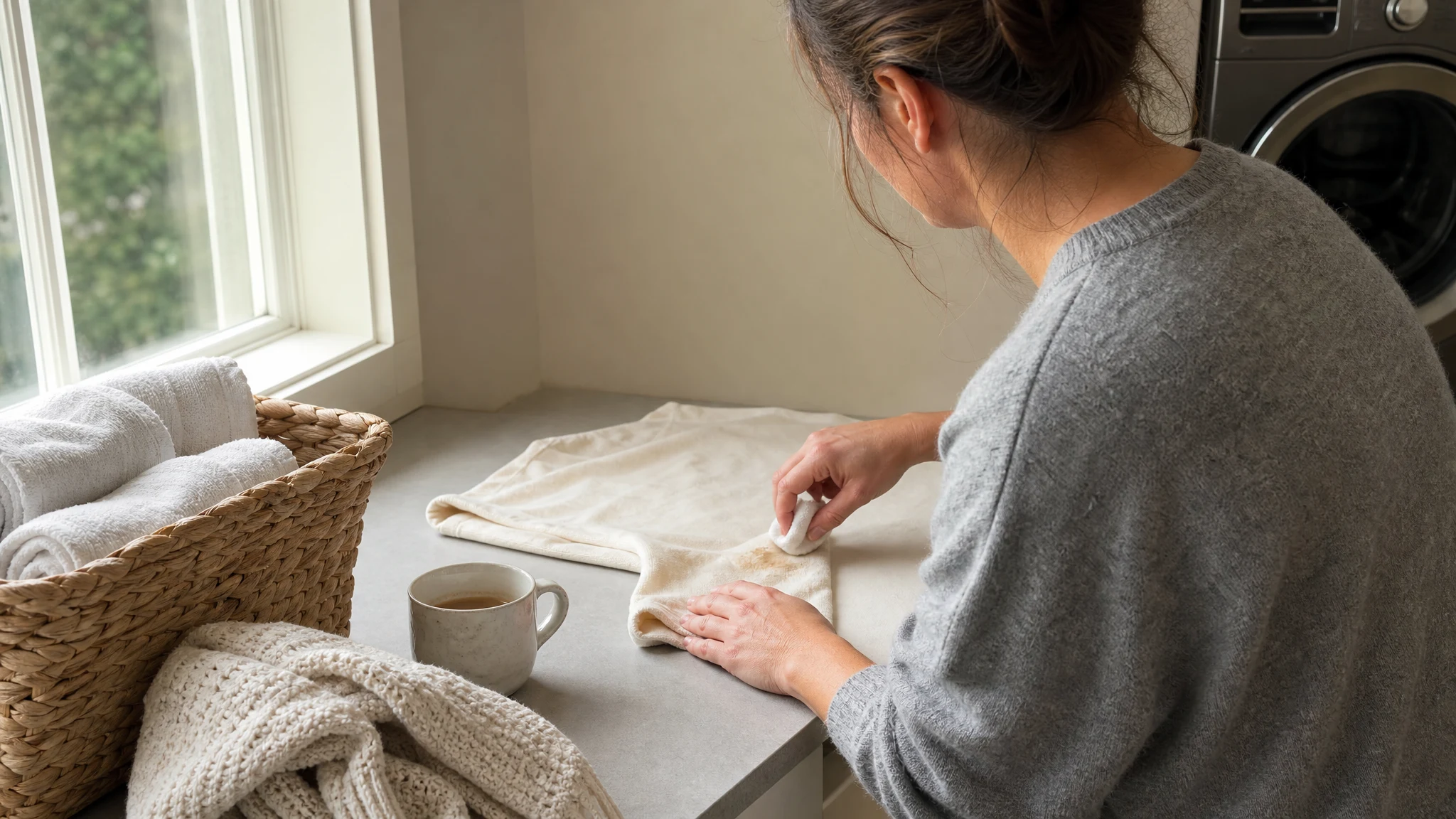
Does Vetiver Oil Stain? Getting It Out of Fabric and Wood
A drop of vetiver oil lands on a cotton tee and, a minute later, you are looking at a dark, glossy spot that is spreading slowly outward. That slow spread is the first clue: vetiver is thick, so it sits where it lands instead of vanishing. The good news is that the clean-up is ordinary laundry work, and the sooner you start, the easier it is.
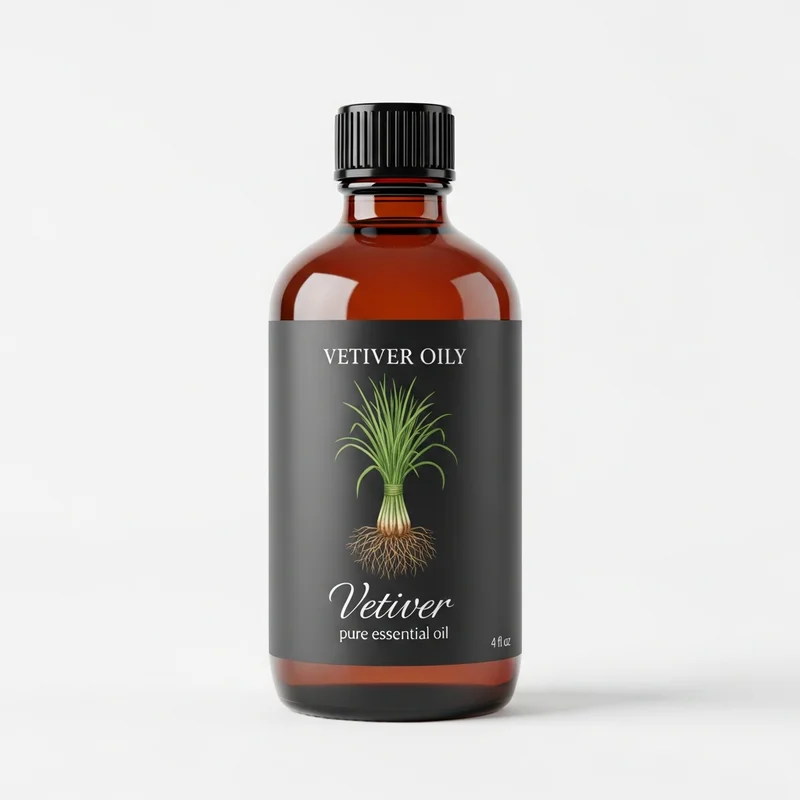
Vetiver Essential Oil
Our own Vetiver Essential Oil, in sizes from 0.5 oz to bulk.
From $20.99
Shop Now →Yes, expect a mark
Essential oils are oils, so on fabric they leave the same kind of translucent, greasy patch that salad dressing or butter does. Ours is also deep amber to brown, which is why we mention that it can tint soap and candle wax. On white or pale cloth, it is sensible to allow for a faint yellow-brown cast as well as the grease mark, and a thick oil that has been left to dry into the weave will be harder to shift than a fresh one. We would never promise that any essential oil will not stain, and vetiver is not the one to bet on.
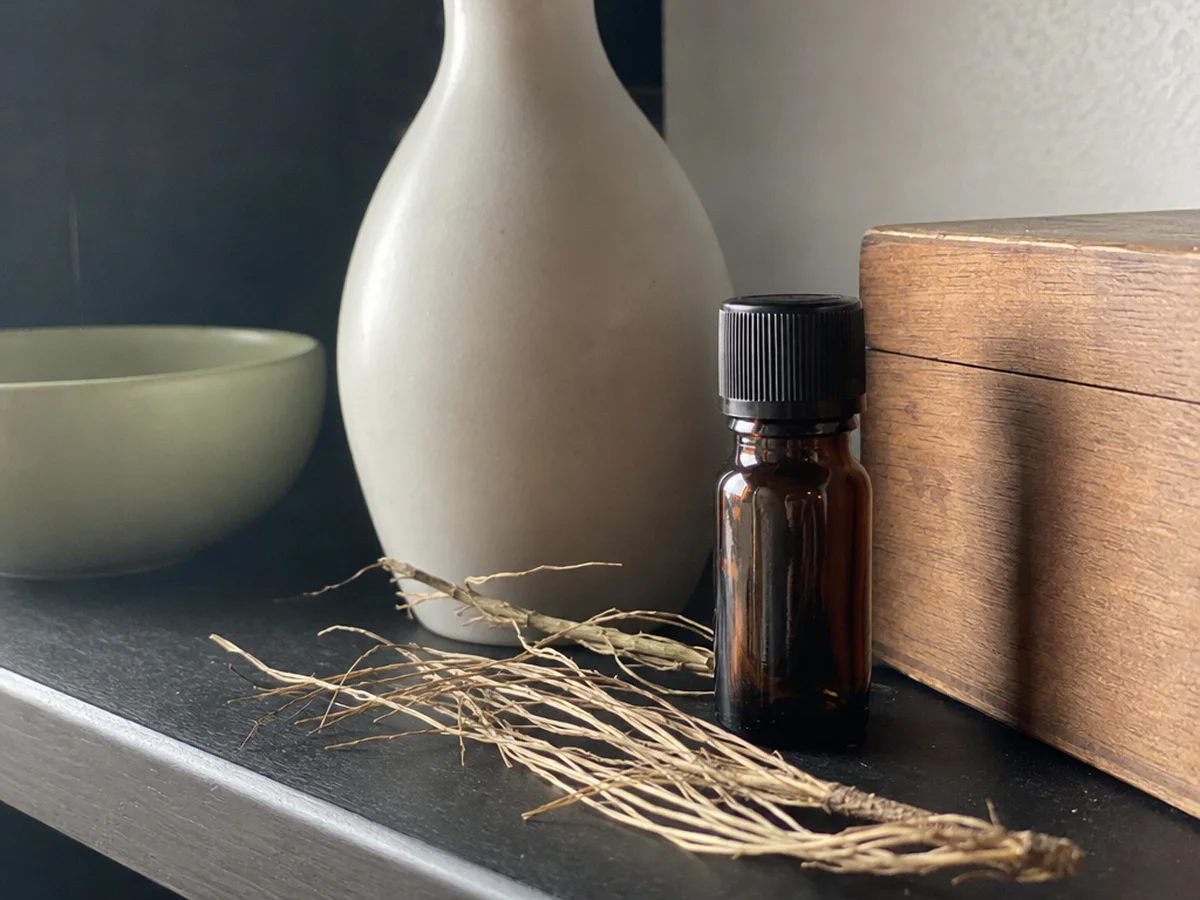
The plus side of that thickness is that you get a head start. Because vetiver pours slowly and clings, a spill is usually a bead sitting on the surface for a short while before it soaks in. Use that window.
The first two minutes
- Lift, do not rub. Press a clean cloth or paper towel onto the spot and lift straight up. If a bead is still sitting there, scoop it off with the dull edge of a spoon or a plastic card. University of Georgia Extension's guidance for oil-based stains starts the same way: blot the excess while the stain is fresh.
- Pretreat with something that cuts grease. Kansas State University Extension lists pre-wash stain remover, liquid laundry detergent or a liquid detergent booster for light grease and oil marks. A small drop of plain liquid dish detergent, worked gently into the patch with a fingertip, does the same job because it is made to break up oil.
- Wash in the hottest water the care label allows. That is Kansas State's wording, and the label always wins: a delicate that says cool should get cool.
- Check before the dryer. Dryer heat can lock in whatever oil is left, so look at the spot while the garment is still damp. If a shadow remains, pretreat and wash again, then dry.
If the oil is already dry in the fibre, the same steps still apply, they just take more repeats. Patience and a second wash beat reaching for a harsh product.
When to hand it over
Silk, wool, leather, suede and anything labelled dry-clean only are the exceptions to everything above. Water and detergent can leave rings or ruin the finish on those, so blot the excess, stop there, and take the item to a professional cleaner. Tell them it is an essential oil stain and when it happened. If you are unsure whether a fabric will tolerate water, test a hidden seam first.
Wood, stone and other surfaces
Hard surfaces behave differently because the oil can only move into the finish or the pores, not into threads. University of Georgia Extension's advice for oily stains on finished wood is a cloth dipped in just the foam of dish detergent whipped up in hot water, wiped dry straight away and polished, with a test in a hidden spot first because finishes vary. For stone such as marble, the same page suggests spreading an absorbent powder like cornstarch over the stain as soon as possible and leaving it for 24 hours so it draws the oil upward. Those pages are written for food oils, but oil is oil, so the logic carries over to a spill of vetiver; the sensible conclusion is that the faster you act, the less the surface drinks.
Carpet and upholstery are the awkward ones. Blot, scrape gently, and test any cleaner out of sight; heavy solvent products can damage backing and padding, so for a large or valuable piece a professional is the better call.
Keeping it off the cloth in the first place
- Pour over a sink or a tray, not over a favourite shirt. We suggest warming the bottle or using a pipette for better control of a thick oil; pipettes are sold at craft supply shops and pharmacies, not by us.
- Work on a surface you can wipe: glass, a baking tray, a stainless counter.
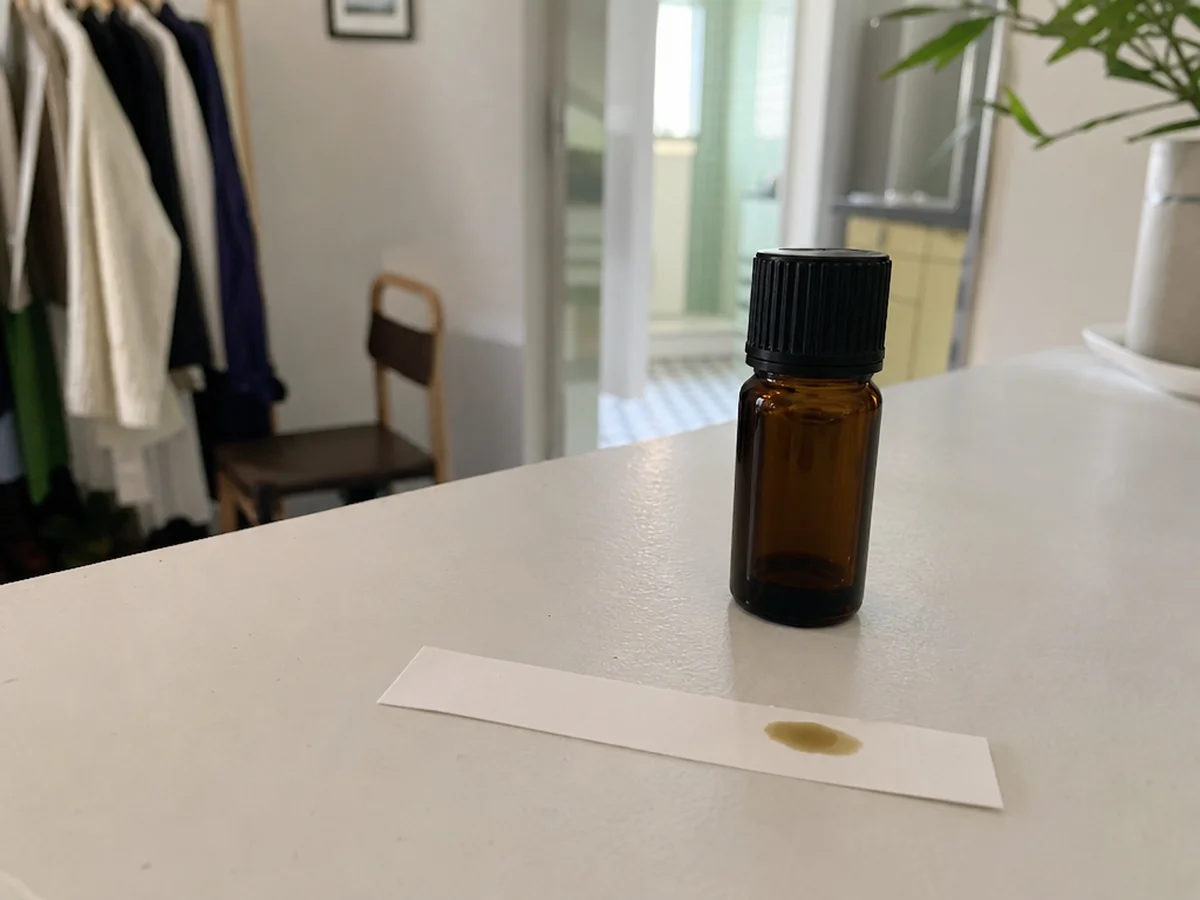
- Keep sleeves rolled back and wear an apron or an old tee when blending. Our paper test article shows how readily a thick oil leaves its mark even on plain paper.
- Store the bottle upright with the cap tight. Our storage guide covers why, and it keeps the spills away from your shelf.
The same caution applies to anything you make with it. A diluted oil still leaves a mark on cloth, and a linen spray or scented balm is no exception; our linen spray recipe includes a stain check on a hidden corner for that reason, and our piece on viscosity explains why a thick oil behaves the way it does. If skin contact is the worry rather than fabric, wash with soap and water and see our safety guide.
So, a spot of vetiver on a sleeve is an annoyance, not a disaster. Blot it, give it a little dish detergent, wash it warm as the label allows, and check it before the dryer; that is all it usually takes.
Vetiver Essential Oil
Vetiver Essential Oil from our own shop, in sizes from 0.5 oz to bulk.
From $20.99
Shop Now →Sources & Further Reading
- Remove Stains From Oil-Based Foods (University of Georgia Extension, Textiles)
- Stain Removal (K-State Research and Extension)