Vetiver Oil Paper Test: Why It Gives False Alarms
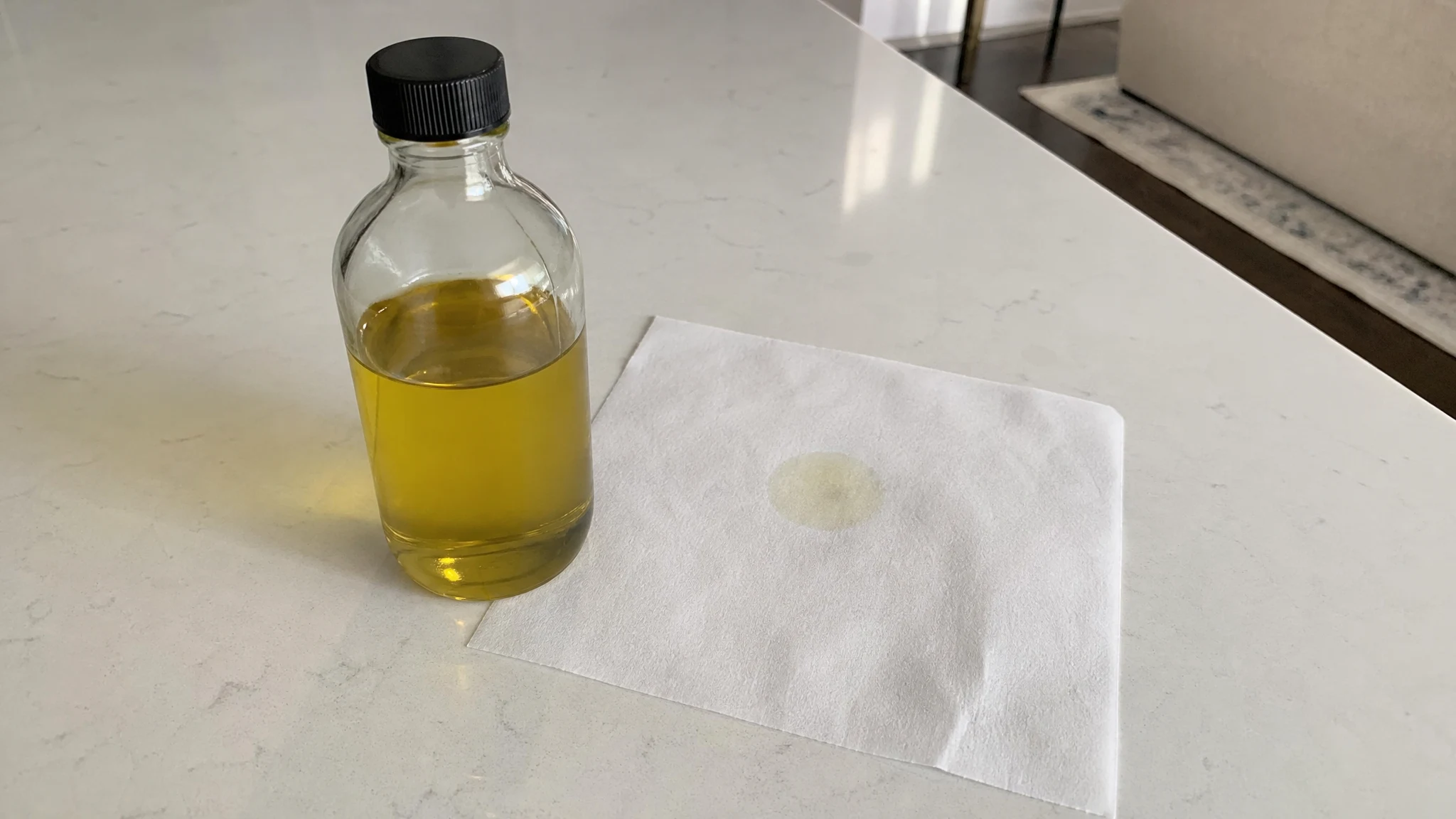
Put a drop of vetiver oil on a sheet of paper, and a few hours later you will find a dark, spreading stain. If you read the internet's favourite oil test, that looks like a failure. It is not. It is simply what a thick, slow-evaporating oil does, and it is a good reason to leave the paper test out of your vetiver routine altogether.
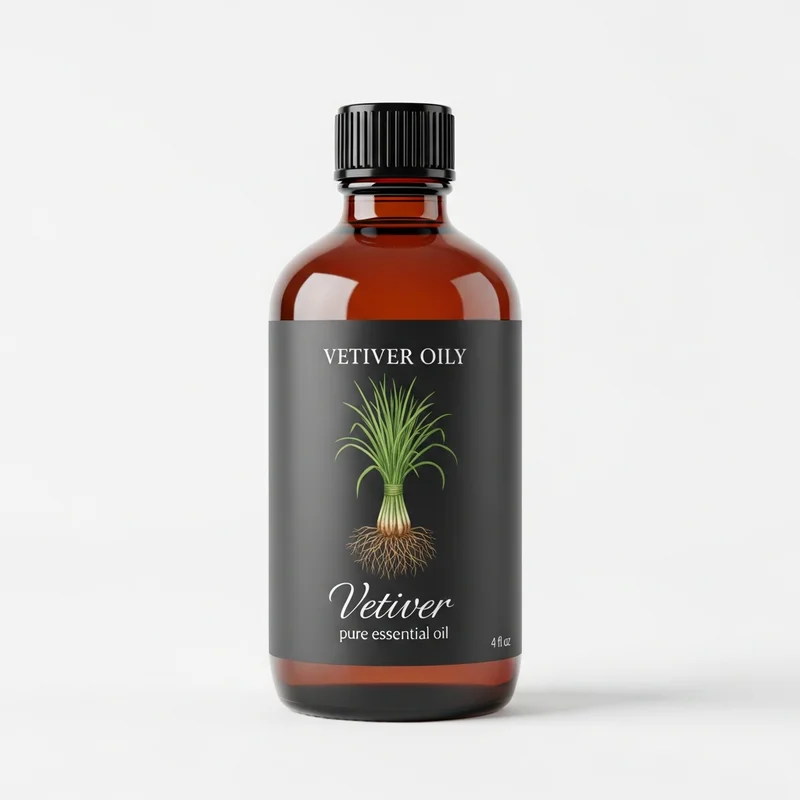
Vetiver Essential Oil
Our own Vetiver Essential Oil, in sizes from 0.5 oz to bulk.
From $20.99
Shop Now →What the paper test is good for
The Aromatic Plant Research Center ran an informal demonstration in 2021 with lavender. Plain lavender and lavender doctored with synthetic aroma chemicals both faded from the paper within about five hours, while lavender cut with a carrier oil was still visible a day later. Their conclusion was that the test only catches one kind of adulteration, dilution with a non-volatile carrier.
They also put vetiver through it. It had barely soaked in after an hour, was still a pool after two, and was still plainly there after 24 hours, and the write-up says the test can wrongly suggest a heavy oil like vetiver is impure. That is one informal demonstration, not a replicated study, but it fits the physical picture. An Indian review of the oil describes it as one of the most viscous essential oils, with an extremely slow rate of evaporation. A stain tells you vetiver is vetiver-like in its weight, and nothing more.
What vetiver is actually mixed with
The plant-resources handbook PROSEA names two historical adulterants: cheap sesquiterpenes such as caryophyllene and its derivatives, and, more cleverly, nagarmotha oil from Cyperus plants. Neither is a fatty carrier oil. They are aromatic materials chosen because they sit in the same chemical neighbourhood as vetiver, which is exactly why a paper test aimed at carrier oils would walk straight past them.

That handbook dates from 1999, so these are examples rather than statistics, and we would not trust any page that quotes a modern adulteration rate without a source. Fraud exists, but the sensible stance is attentive rather than alarmed.
What a proper check looks like
The international standard for the oil, ISO 4716:2013, is described in its catalogue entry as the quality and testing standard for vetiver essential oil. The idea behind a standard like this is a physical screen (density, refractive index, optical rotation and similar measurements) combined with a gas chromatography profile that looks for the oil's marker compounds. PROSEA calls alpha-vetivone, beta-vetivone and khusimol the fingerprints of the oil.
Even that has limits. The team that identified the key odorant in a Haitian vetiver sample noted that trace-level falsification could never be fully excluded in their analysis. Chromatography is the right tool, but it needs a competent reader and a proper reference.
What our paperwork covers
We sell one vetiver oil. The Certificate of Analysis we publish is for a single batch. It lists steam-distilled root oil, appearance and smell as complying, a relative density of 0.993 at 20 C against a standard of 0.985 to 1.020, and a refractive index of 1.525 against 1.520 to 1.528. Those are real, useful measurements, though they are physical constants and not a chromatographic profile. If you need that, or an optical rotation or acid value, ask us in writing through the contact page for the report covering your lot and get the answer in writing before you rely on it.
A better checklist for any seller
- Ask for a chromatography report for your lot. A report for a different batch does not describe yours.
- Look for a botanical name. Vetiveria zizanioides and Chrysopogon zizanioides are the same plant under an older and a current name, according to the standards catalogue.
- Do not read price or marketing words as a verdict. A grade name on a label is not itself a standard.
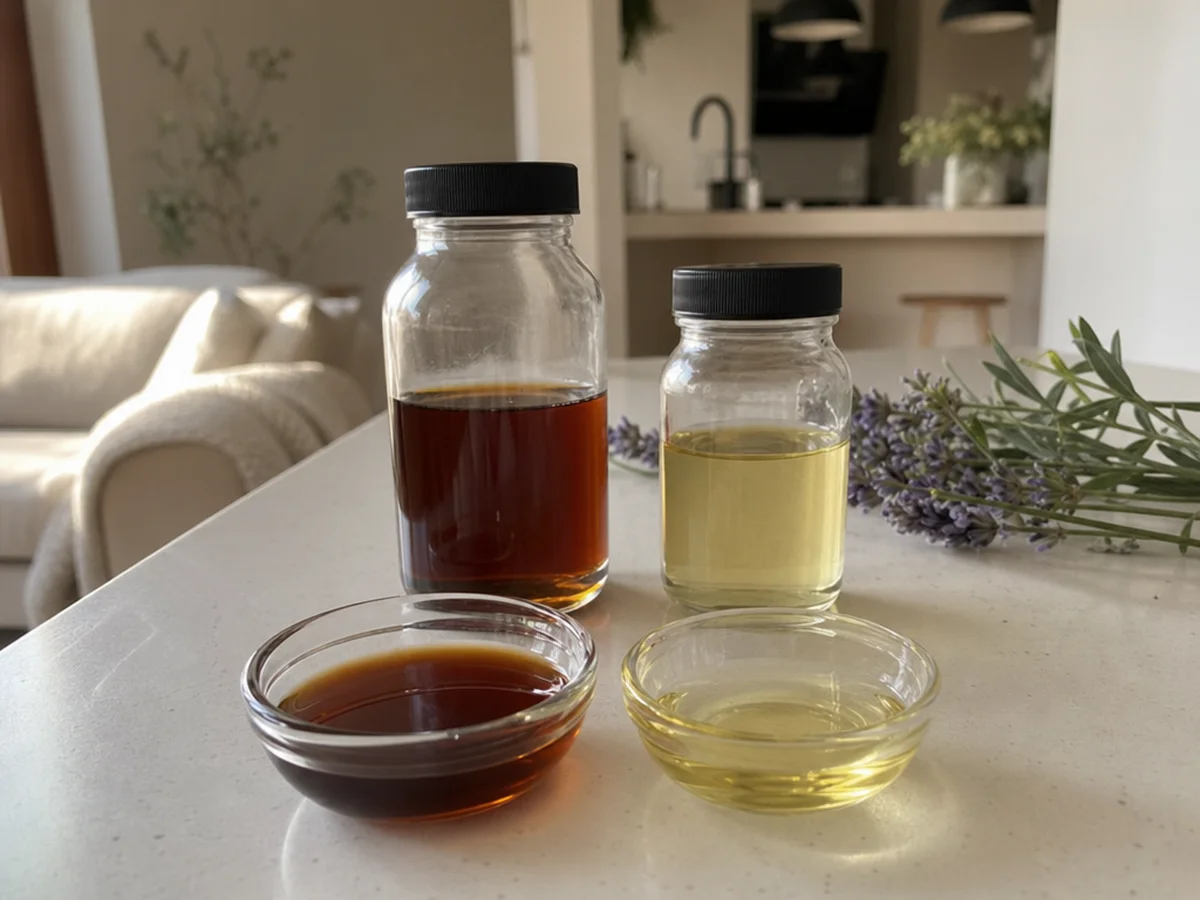
- Treat colour as a loose clue. The Indian review reports amber to dark brown oil from steam or water distillation and dark green from copper stills, so colour alone proves little either way.
If you plan to make products to sell, you will want a safety data sheet and a chromatography report from your supplier, and probably a cosmetic chemist, whatever the oil.
What to do with that sheet of paper instead
None of this means a blotter is useless. Perfumers use paper strips all day, just not as a purity test. Used as a smelling aid, a strip lets you follow a thick oil over time: the first impression, the middle, and the long, quiet tail that vetiver is known for. Write the date and the oil on the strip in pencil, since ink can bleed, and keep a few in a small jar if you like to compare impressions from one week to the next.
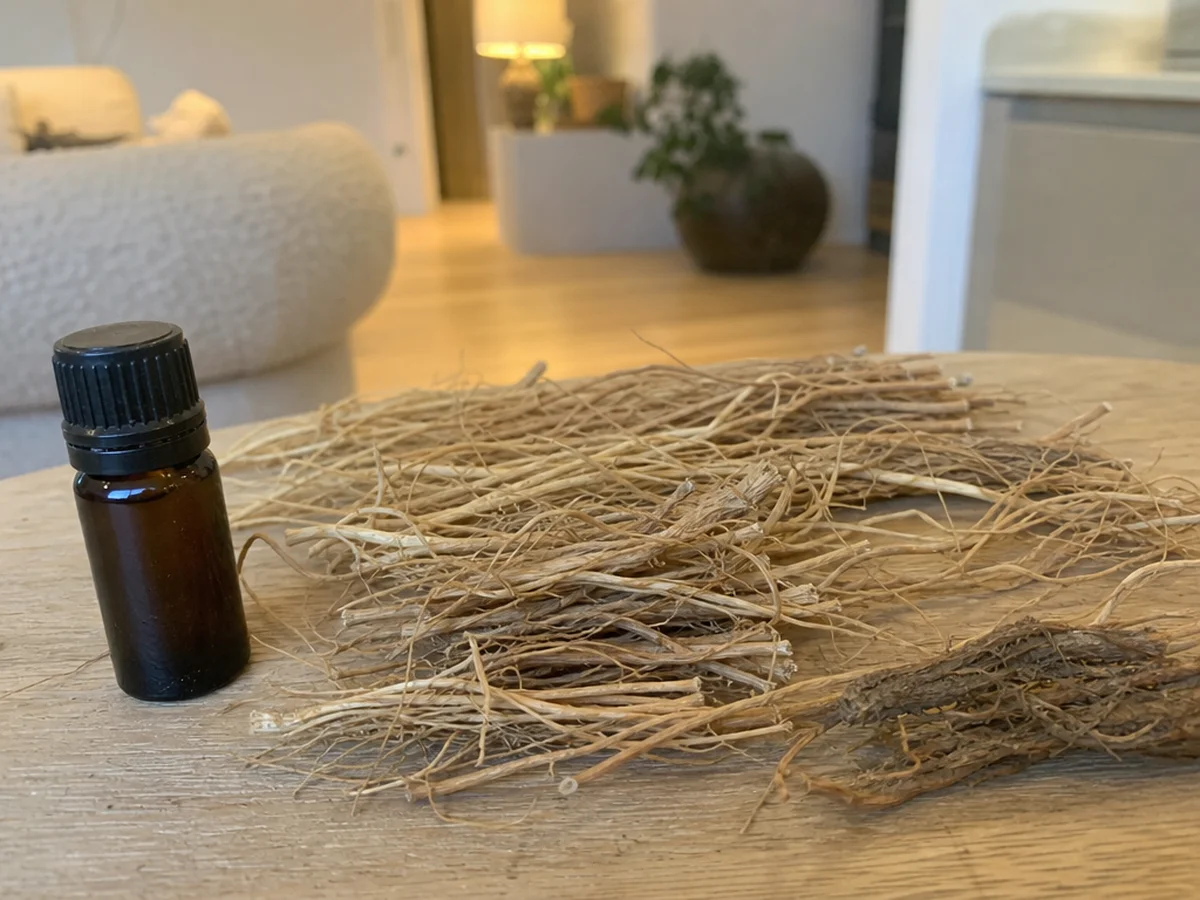
Before you open a new bottle you can also simply look and handle it. Tip the bottle gently and watch how slowly the oil moves, since we describe ours as thick and slow-pouring. Hold a drop to the light and notice the deep amber to brown colour. These are things to enjoy, not proof of anything, and we would never ask you to treat them as a verdict. They are simply part of getting acquainted with an oil that does not rush.
If the oil is cool and moving slowly, warm the bottle in your hands for a minute before pouring. It makes measuring easier and keeps drips off the label.
For more on judging a bottle, see vetiver oil grades and pricing, the thickness myth, and what vetivone and khusimol are.
The paper stays in the printer, then, and the best thing you can do with a new bottle is ask for the numbers. Our shop lists the sizes we sell, and larger quantities are on our bulk page.
Vetiver Essential Oil
Vetiver Essential Oil from our own shop, in sizes from 0.5 oz to bulk.
From $20.99
Shop Now →Sources & Further Reading
- The Paper Test, Aromatic Plant Research Center, 2021
- Other Uses, and Utilization of Vetiver: Vetiver Oil, U. C. Lavania, Third International Conference on Vetiver
- PROSEA - Plant Resources of South East Asia, vetiver entry (de Guzman and Oyen, 1999)
- ISO 4716:2013 - Vetiver Essential Oil Quality and Testing Standard, standards catalogue entry
- The Smelling Principle of Vetiver Oil, Unveiled by Chemical Synthesis, Ouyang et al., Angewandte Chemie, 2021