How to Read a Vetiver Oil Label: A Buyer's Checklist
Walk through any listing for vetiver oil and you will meet a parade of impressive words: premium, therapeutic, pharmaceutical, grade A. They sound like rungs on a ladder. They are not. Once you know what is really worth looking at on a label, buying vetiver gets a lot easier and a lot more fun.
Vetiver Essential Oil
Our own Vetiver Essential Oil, in sizes from 0.5 oz to bulk.
From $20.99
Shop Now →Why "grade" is a marketing word
Robert Tisserand, one of the best-known names in essential oil safety, wrote that there is no independent, industry standard known as "therapeutic-grade". We agree, and we do not use the term for our oil. The same goes for labels like "pharmaceutical grade" and "food grade", which are not measures of how good an essential oil is.
What does exist is a specification. ISO 4716:2013 covers vetiver oil from Réunion, China, Haiti, Indonesia, Madagascar, Brazil and the Comoros. According to its catalogue entry, it sets tests at 20 C for relative density, refractive index, optical rotation, miscibility in 80% ethanol and acid value, with limits that depend on origin, plus a gas-chromatographic profile. A specification like this tells you whether an oil falls within a range for its origin. It does not rank oils against one another.
What to look for on the bottle
A good label is plain and specific. These are the items we would look for on any vetiver oil.
- The botanical name and plant part. You will see it written as Vetiveria zizanioides or Chrysopogon zizanioides, which is the currently accepted name. Our Certificate of Analysis lists "Vetiveria zizanioides (Vetiver) Root Oil" and "Parts Used: Root".
- The extraction method. Vetiver oil is made by steam distillation of the roots, and our certificate lists steam distilled.
- A batch or lot number. Without one, no report can be tied to the bottle in your hand. Ours shows batch VETQGAVZCNC003A for the batch the certificate covers.
What a certificate can and cannot tell you
The Certificate of Analysis we publish is for that one batch. It shows relative density 0.993 at 20 C (the standard printed on it is 0.985 to 1.020) and refractive index 1.525 (standard 1.520 to 1.528), both within range, with "Complies" for appearance and smell and a best-by date. It does not include optical rotation, acid value or a GC-MS breakdown of compounds. If you need those, ask us in writing through our contact page about the report for your lot, and read it before relying on it.
We would suggest the same of any seller. A lot-specific report beats a general claim, and it is fair to ask for one. Even then, a report is a tool and not a verdict. The Tisserand Institute describes GC-MS as the core of any valuable quality control procedure, while noting that other analytical tools are sometimes appropriate too. Numbers matter most when someone who knows what they mean reads them.
Expect variety, and let your nose decide
Two good vetiver oils can read very differently. A study of three commercial Réunion oils found khusimol ranging from 0.6% to 8.9%, and a perfumer judged the lowest to have lost some of its typical character. Age changes things too. South Indian oil stored for 6 to 30 months became more viscous and denser, and its smell moved from sharp and green toward softer and more balsamic. We unpack both findings in our chemistry article and explain why a thick pour is not a quality test in our viscosity piece.
The best test you can do at home is simple. Put a drop on a paper blotter, not skin. Smell it at once, then after 15 minutes, an hour and several hours. Vetiver evaporates slowly, so the first sniff is only the opening. Jot down what you notice: earthy, smoky, sweet, green, rooty. We describe ours as deep, earthy and smoky-sweet, and the shelf life as typically 6 to 8 years when stored in a cool, dark place away from light.
A short checklist to take with you
- Is the botanical name printed, and does it say which part of the plant was used?
- Does the label or listing say how the oil was extracted?
- Is there a batch or lot number you could quote in a message?
- Does the seller publish a report, and does it say which batch it covers?
- Are the claims about the oil about its smell and uses, or about treating something?
If a listing cannot answer these, it is fair to ask. A seller who knows the oil will usually be glad to explain.
What a good bottle looks like on the shelf
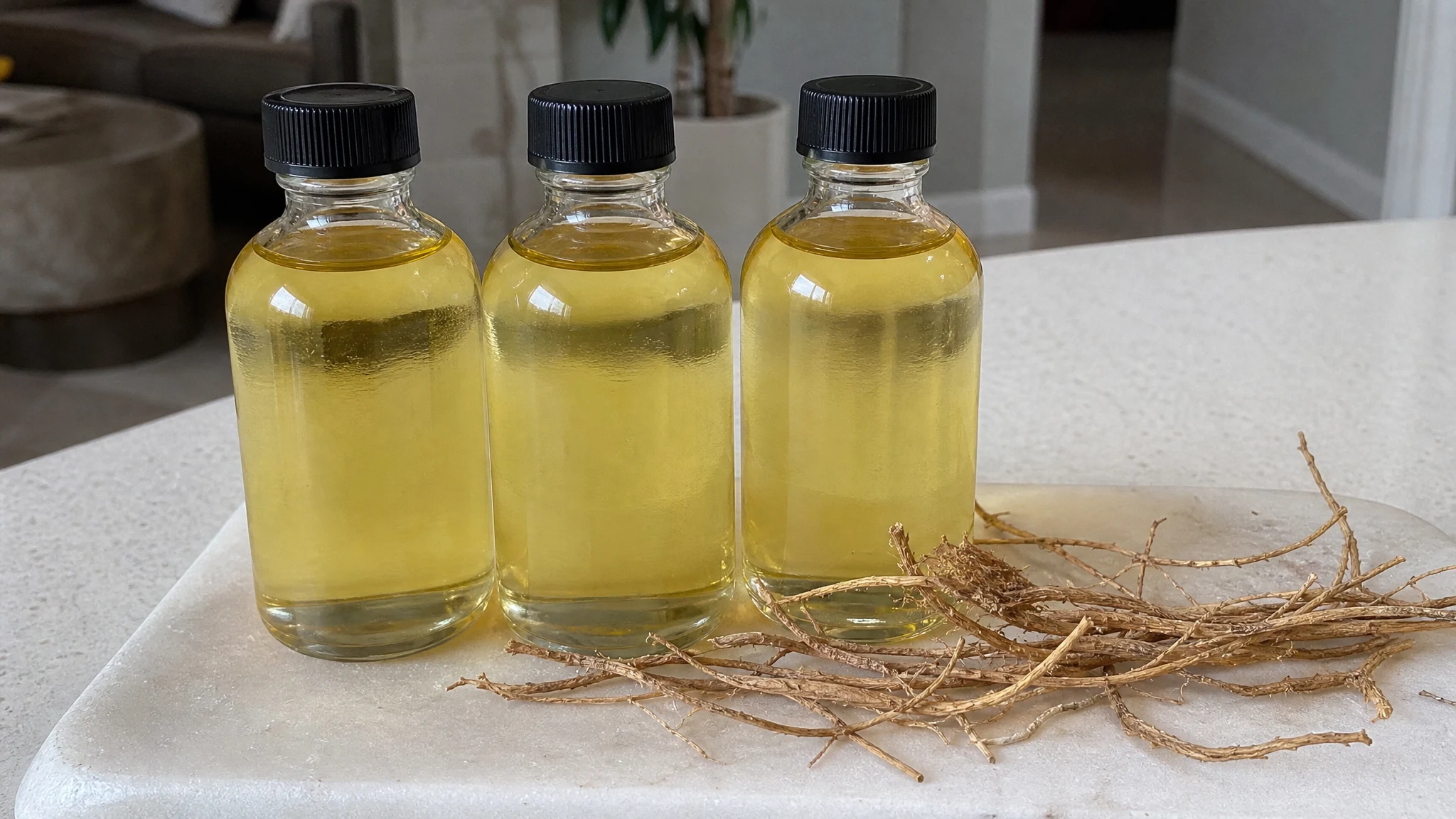
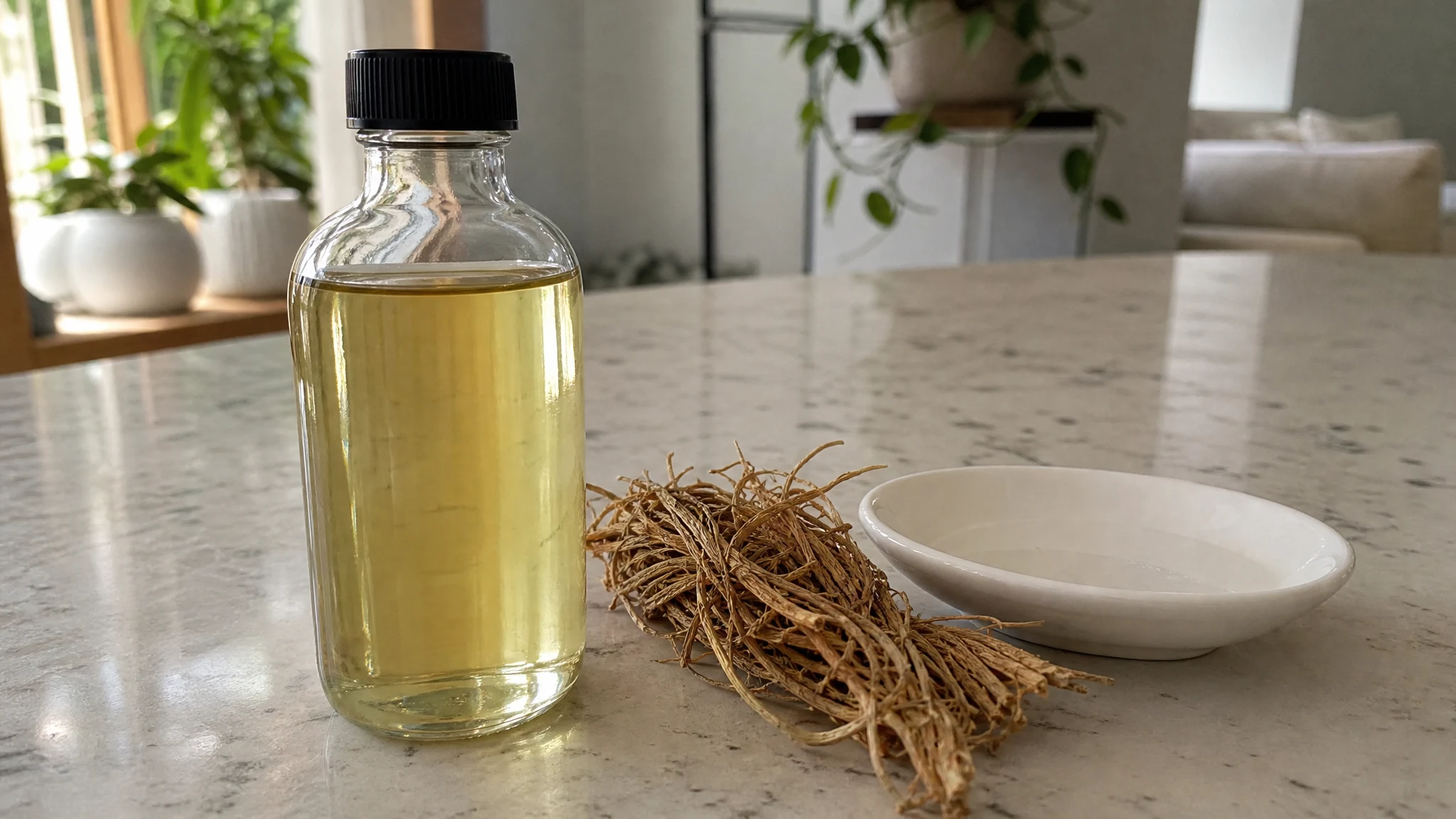
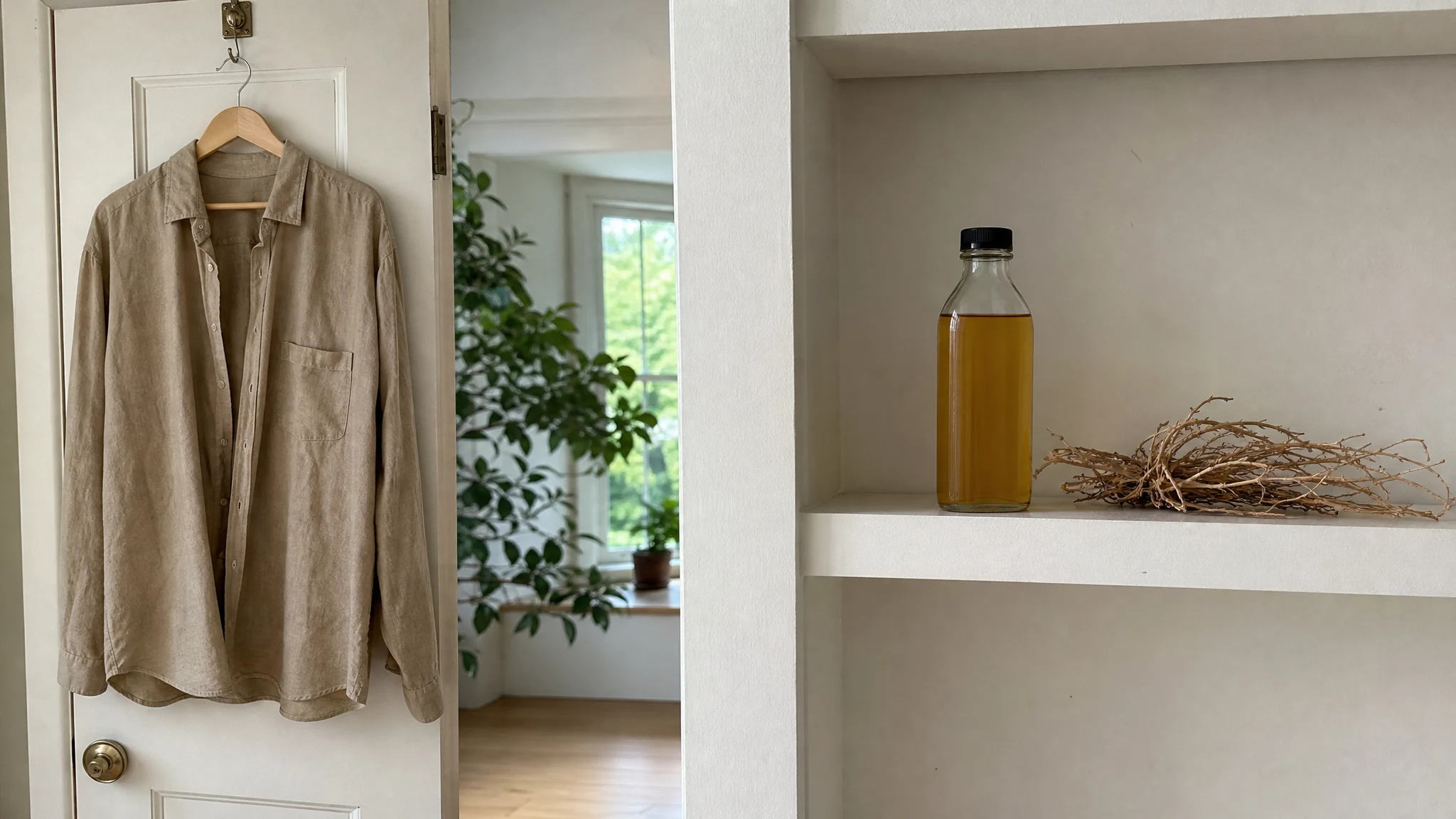
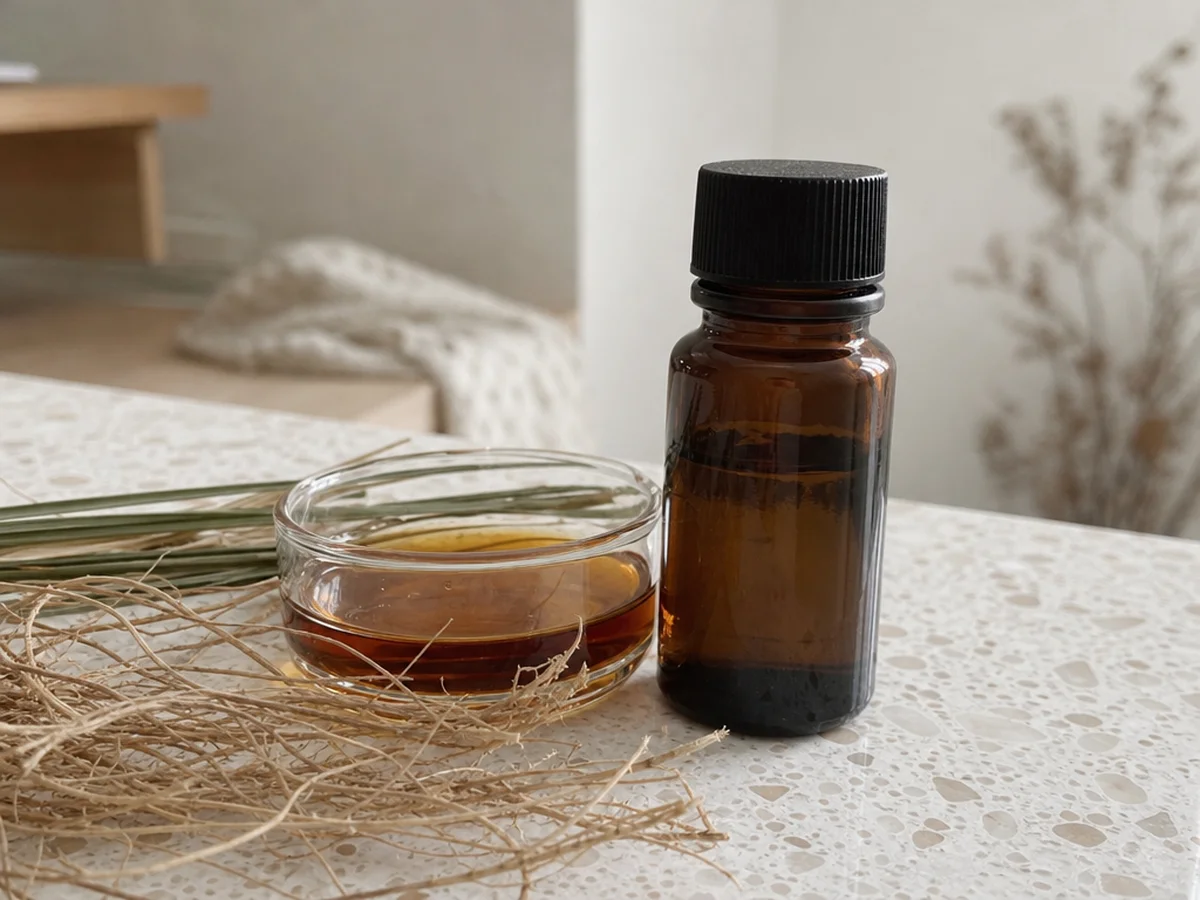
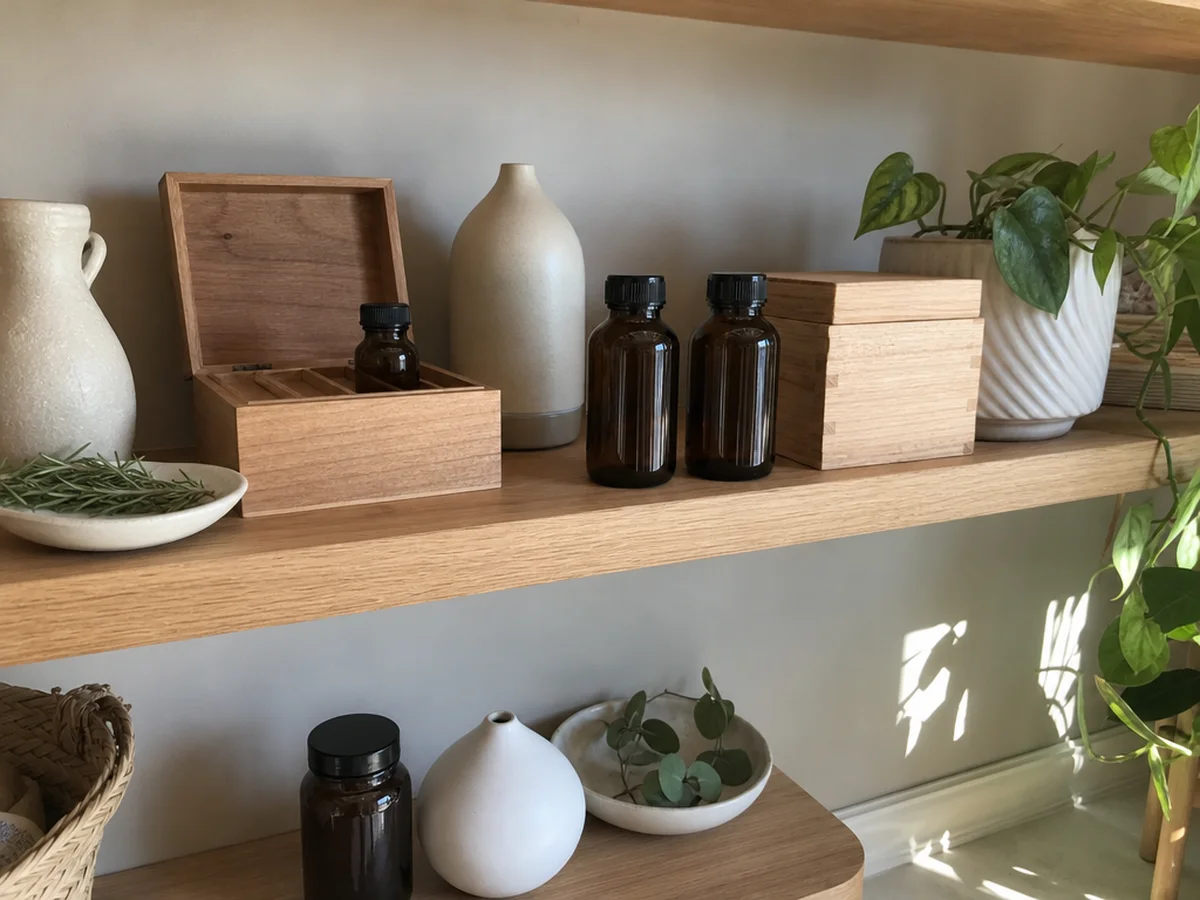
Vetiver is thick, dark and slow-pouring, and its color runs from amber toward brown. A dark glass bottle with a tight cap keeps it away from light. Do not worry if the oil looks different from one photo to another, because color and thickness are poor guides on their own. Judge by the paperwork and by your nose.
Set your expectations for the first sniff
The first smell from the bottle can be stronger and sharper than the oil on a strip an hour later. Give it time. Earthy, smoky and sweet notes come forward as the opening fades, and that slow reveal is part of why people keep coming back to it.
Price, size and what to do with it
For current prices and the full range of sizes, see the shop page. If you are buying for a business, our wholesale page covers samples, private label and larger quantities.
Buy the way a perfumer shops: ask a few direct questions, smell patiently, and trust the specifics over the adjectives.
Take your time with the label, smell the oil patiently, and ask for specifics before you decide.
Vetiver Essential Oil
Vetiver Essential Oil from our own shop, in sizes from 0.5 oz to bulk.
From $20.99
Shop Now →Sources & Further Reading
- Robert Tisserand, Therapeutic grade oils - read all about it!
- ISO 4716:2013 - Vetiver Essential Oil Quality and Testing Standard (iTeh Standards catalogue)
- Tisserand Institute, GC-MS analysis: what it can and cannot do
- Burger et al., Vetiver Essential Oil in Cosmetics: What Is New? (Medicines, 2017)
- Dubey, Chhonkar and Raghav, Effect of Period of Storage on Physico-chemical Properties and Major Constituents of South Indian Vetiver (Vetiveria zizanioides Linn.) Oil (Indian Forester, 2011)