Can Vetiver Scent Trigger Memories? A Careful Look
Few senses reach memory as quickly as smell. A whiff of woodsmoke, wet earth or a particular soap can carry you straight back to a place you have not thought about in years. Vetiver, with its deep, earthy, smoky-sweet aroma, is exactly the kind of scent that tends to stir something. For most people that is a pleasure. For someone living with trauma, it deserves a more careful conversation.
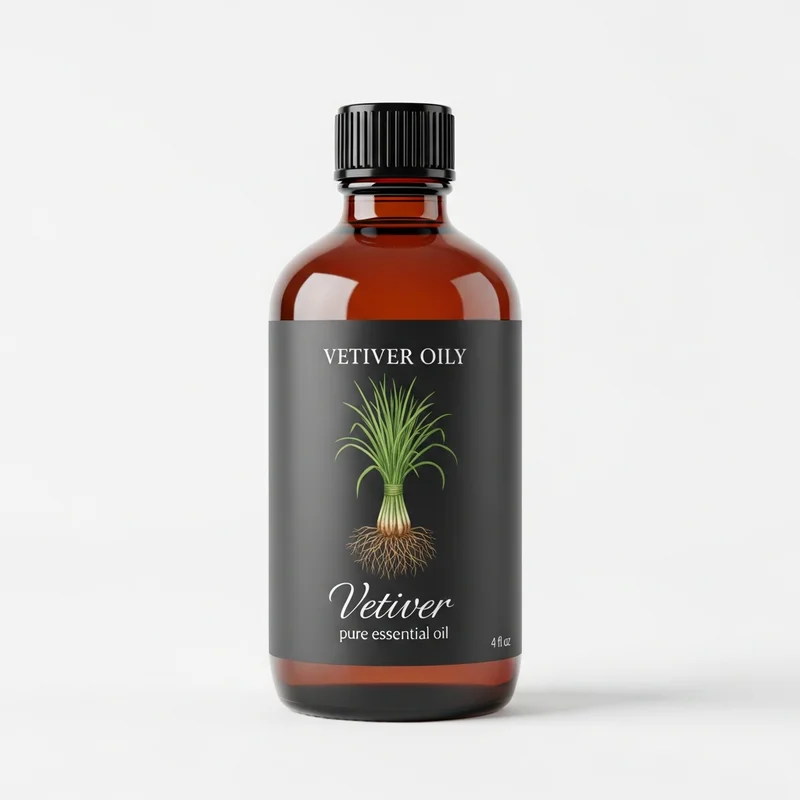
Vetiver Essential Oil
Our own Vetiver Essential Oil, in sizes from 0.5 oz to bulk.
From $20.99
Shop Now →Where we stand
We sell vetiver as an aromatic and cosmetic oil, and we do not offer it for PTSD, anxiety or any other condition. On 5 November 2026 we searched Europe PMC for vetiver together with PTSD and posttraumatic stress and found two records, neither a study of vetiver oil in people with PTSD. One search proves little, but it matches what we would expect: this is a question nobody has tested.
What does have good evidence behind it is professional care. The 2023 clinical practice guideline from the US Department of Veterans Affairs and Department of Defense contains 34 recommendations. For PTSD treatment it favours specific, structured psychotherapies, naming prolonged exposure, cognitive processing therapy and eye movement desensitization and reprocessing, and it recommends paroxetine, sertraline or venlafaxine as medication options. Aromatherapy is not part of its recommendations, which reflects the absence of evidence rather than a verdict. If you are living with trauma, a physician, psychiatrist or psychologist is the right first call. In the US, anyone struggling or thinking about suicide can call or text 988 or chat at 988lifeline.org, and 911 is there for emergencies.
Why scent and trauma are so closely linked
Here is the part most articles about vetiver and trauma leave out: smell cuts both ways. A review of case reports describes patients whose PTSD symptoms were set off by smells, or in whom an odour was a central part of re-experiencing, and argues that questions about smells belong in the routine assessment of intrusive memories. It also notes that scent cues might one day be useful in therapy, which shows how much remains to be learned.
A later brain-imaging study made the point more concretely. Eight combat veterans with PTSD and eight without were exposed to several smells, including diesel, which was linked to combat memories. The veterans with PTSD found diesel unpleasant and distressing, reported more symptoms and anxiety, and showed more activity in the amygdala and related regions. The veterans without PTSD showed much less response. The sample was small, and the smell chosen was a personal reminder, but the lesson is clear: what matters is the memory attached to the smell, not the smell itself.
Reasoning from that, an earthy, smoky aroma could be comforting to one person and tied to something painful for another, and nobody can predict which from the outside. That is why we think of vetiver as a personal choice and not a prescription.
The smells that belong to you
Think for a moment about your own short list. Most of us carry a few scents that open a door without being asked: a grandparent's kitchen, a school hallway, a certain rain on a certain kind of pavement. Nobody chose those; they simply got attached to a moment. Vetiver is earthy and smoky-sweet, so it sits close to a lot of ordinary memories of soil, wood smoke and damp cellars, which may be part of why people react to it so strongly, one way or the other.
If you are curious how it lands for you, notice the very first thing that comes to mind and whether that thing is welcome. There is no right answer. A smell that makes one person think of a garden after rain may remind another of something they would rather not revisit, and either response is simply information about you.
If you would like to try it anyway
Treat it the way you would any new aroma, with small steps and an easy exit. The suggestions below are ours, built from the research above.
- Try it in a place where you feel safe. Smell the bottle for a few seconds from a few inches away, with permission to stop whenever you like.
- Tell your therapist if a scent becomes a trigger. They will know what to do with that information, and it may help them too.
- Keep it diluted on skin. We recommend 0.5% to 2% in a carrier oil with a patch test first. The Tisserand Institute suggests 0.5% to 1.2% for the face and 1% to 3% for body oils, so we start at the lower end, and it lists 0.2% to 1% for sensitive skin.
- Diffuse briefly. Tisserand suggests 30 to 60 minutes on, then 30 to 60 minutes off, and our diffuser post covers the details.
- Do not swallow it. See our post on swallowing vetiver oil.
- Mention it to your prescriber or pharmacist if you take medicines for sleep, mood or anxiety. Nothing we know of describes interactions with vetiver oil, and that is not the same as saying there are none.
It also helps to keep the first meeting small. Vetiver is thick and slow-pouring, and a little goes a very long way, so a single paper strip dipped and waved a few inches from your nose is usually plenty. You do not need a room full of scent to find out whether you like it, and a small dose makes it easier to stop and put the bottle away if you do not.
The vetiver research that exists is mostly laboratory and animal work. A 2025 review of the plant's medical literature describes it as largely preclinical, and the best-known study had rats inhale the oil for seven minutes before a maze test. That tells us what happened in rats under particular conditions, and nothing about human trauma. Our posts on anxiety and stress and sleep go through the same evidence in more detail, and the safety guide covers handling.
Scent can be a quiet pleasure, and the people who support you through trauma are the ones who can tell you how it fits into your life. Our shop lists the sizes we sell, and larger quantities are on our bulk page.
Vetiver Essential Oil
Vetiver Essential Oil from our own shop, in sizes from 0.5 oz to bulk.
From $20.99
Shop Now →Sources & Further Reading
- Schnurr PP et al., 2024. The Management of Posttraumatic Stress Disorder and Acute Stress Disorder: Synopsis of the 2023 U.S. Department of Veterans Affairs and U.S. Department of Defense Clinical Practice Guideline. Ann Intern Med. PubMed 38408360
- National Institute of Mental Health. Traumatic Events and Post-Traumatic Stress Disorder (PTSD). nimh.nih.gov
- Vermetten E, Bremner JD, 2003. Olfaction as a traumatic reminder in posttraumatic stress disorder: case reports and review. J Clin Psychiatry. PubMed 12633130
- Vermetten E et al., 2007. Positron tomographic emission study of olfactory induced emotional recall in veterans with and without combat-related posttraumatic stress disorder. Psychopharmacol Bull. PubMed 17285093
- Gunasekar CJ et al., 2025. Pharmacological and Therapeutic Potential of Chrysopogon zizanioides (Vetiver): A Comprehensive Review of Its Medicinal Applications and Future Prospects. Biomolecules. PubMed 41008619
- Saiyudthong S et al., 2015. Anxiety-like behaviour and c-fos expression in rats that inhaled vetiver essential oil. Nat Prod Res. PubMed 25553641
- Tisserand Institute. Dilution for essential oils. tisserandinstitute.org
- Tisserand Institute. Safety guidelines for diffusing essential oils at home. tisserandinstitute.org